Window-to-Wall Ratio: Energy Code Limits and Design Tradeoffs for Commercial Facades

Window-to-wall ratio (WWR) is the percentage of a building's gross above-grade exterior wall area that is glazed. Under ASHRAE 90.1-2022 — the energy standard adopted or referenced by the majority of U.S. jurisdictions, including New York City, Chicago, and Boston — the maximum vertical fenestration area for most commercial buildings is 40% of gross above-grade wall area. This limit applies to the prescriptive compliance path. Architects who design facades with more than 40% glazing must either demonstrate compliance through the performance path — an energy model that shows the building as a whole meets the energy standard — or redesign the facade to bring WWR within the prescriptive limit. On high-rise residential and mixed-use projects in dense urban markets, where glazed facades are frequently a client expectation, this constraint shapes facade design from the earliest schematic phases.
Understanding what the limit actually measures, when exceptions apply, and what facade design strategies are available within it is practical knowledge for every architect and developer working in markets where ASHRAE 90.1 compliance is required.
How Window-to-Wall Ratio Is Calculated
WWR calculation under ASHRAE 90.1-2022 uses a specific definition of both terms:
- Fenestration area — the rough opening area of all vertical glazed openings in the exterior wall, including windows, glazed doors, glazed spandrel zones, and vision glass in curtain wall assemblies. The measurement is the rough opening, not the visible glass area, so frame material is included in the fenestration area count.
- Gross above-grade wall area — the total exterior wall area from the top of the floor slab at grade to the top of the roof assembly, measured on the exterior face. This includes opaque wall area, window area, door area, and any other exterior wall component above grade.
The ratio is calculated per orientation — north, south, east, west — or as an average across the whole building, depending on the compliance path selected. The 40% limit applies to the whole-building average in the prescriptive approach. Individual orientations can exceed 40% if the total building average remains at or below 40%, which gives architects meaningful latitude to concentrate glazing on preferred orientations while keeping opaque area on less favorable exposures.
The ASHRAE 90.1-2022 Vertical Fenestration Limit: What 40% Means in Practice
The 40% maximum vertical fenestration area in ASHRAE 90.1-2022 Section 5.5.4.4.1 reflects the energy penalty associated with glazing: glass transmits significantly more heat in both directions — inward solar gain in summer, outward heat loss in winter — than an insulated opaque wall assembly of equivalent area. The standard sets the 40% limit as the threshold above which the aggregate energy penalty from glazing becomes difficult to offset with glazing performance improvements alone.
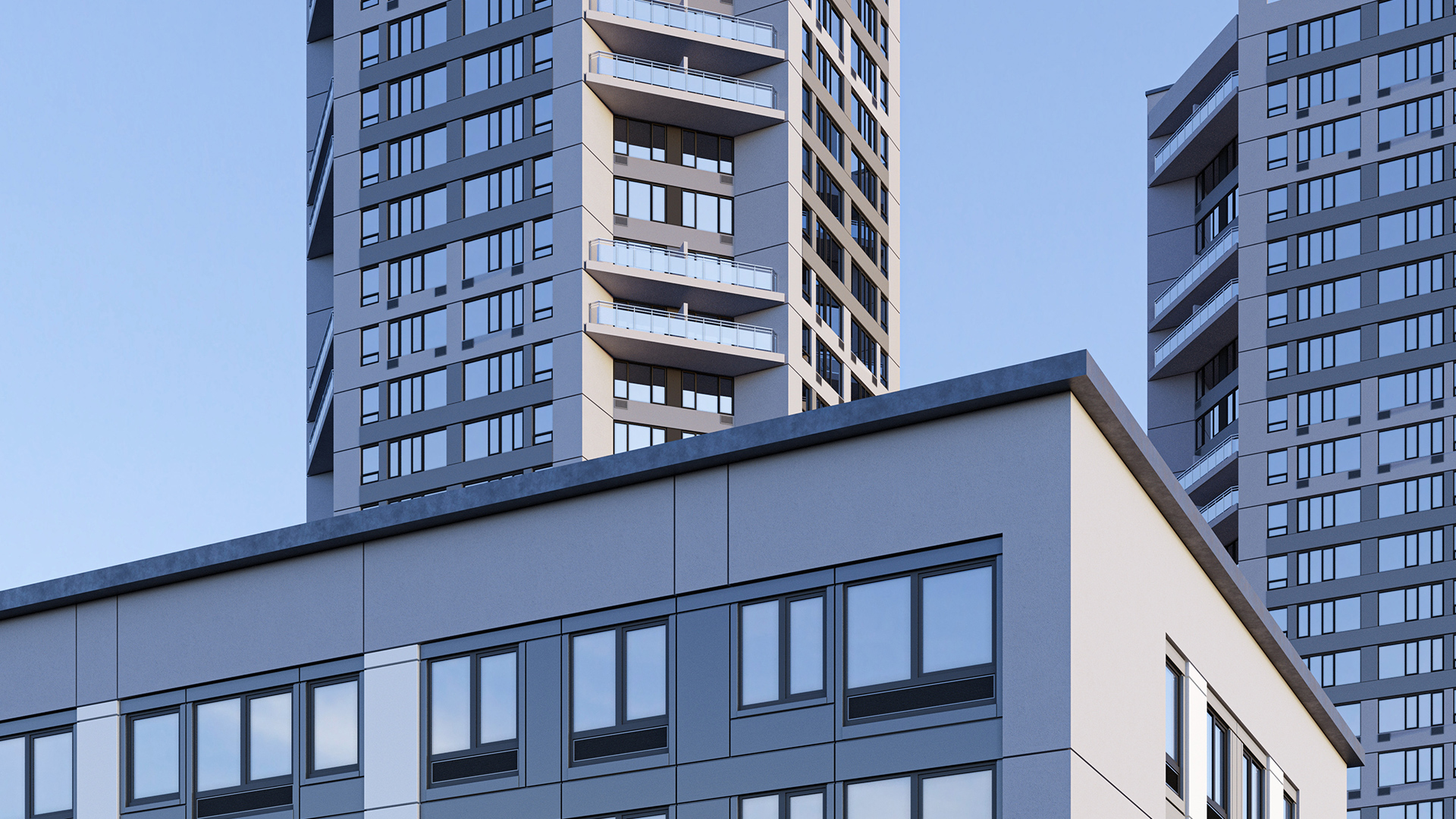
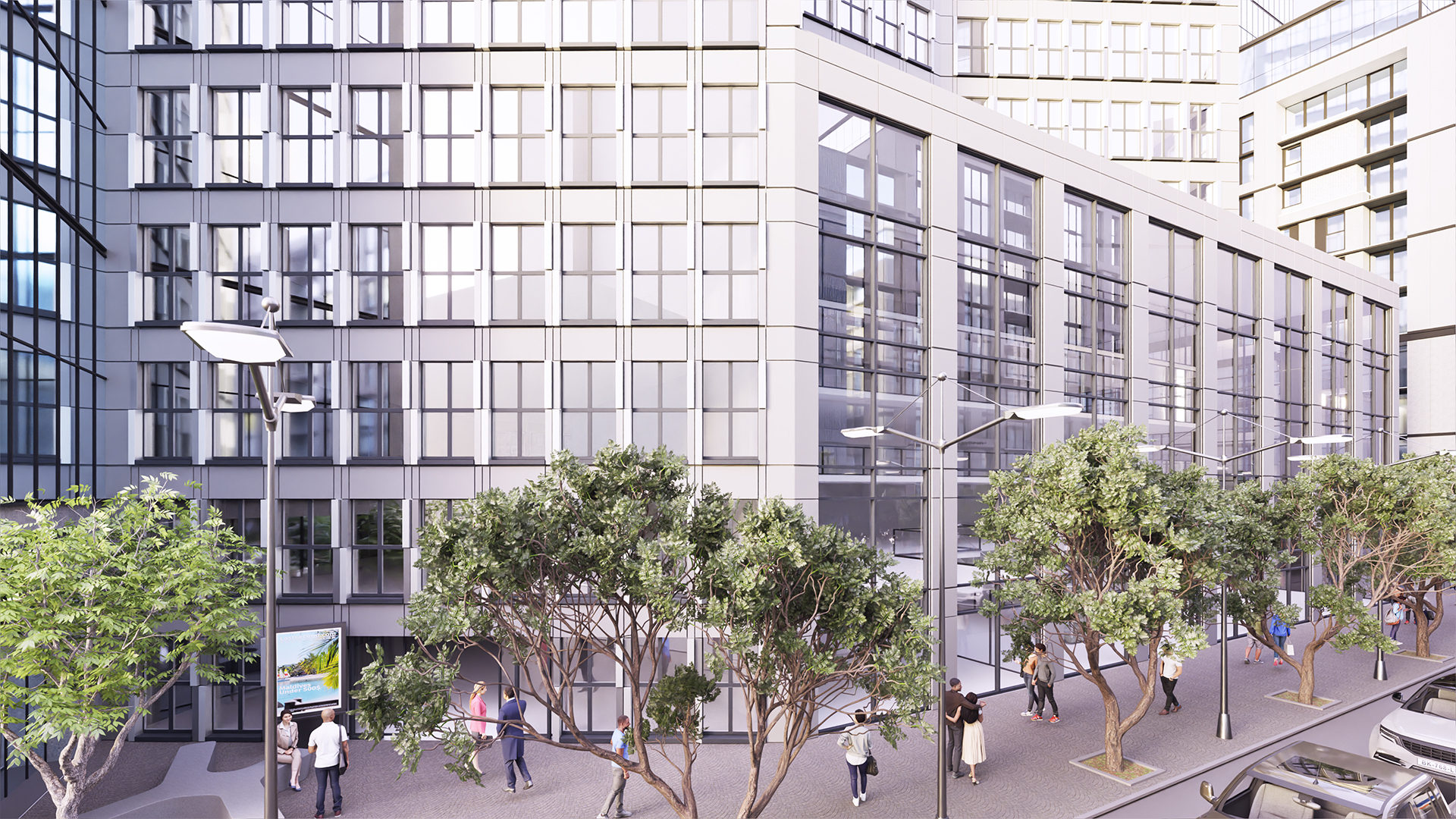
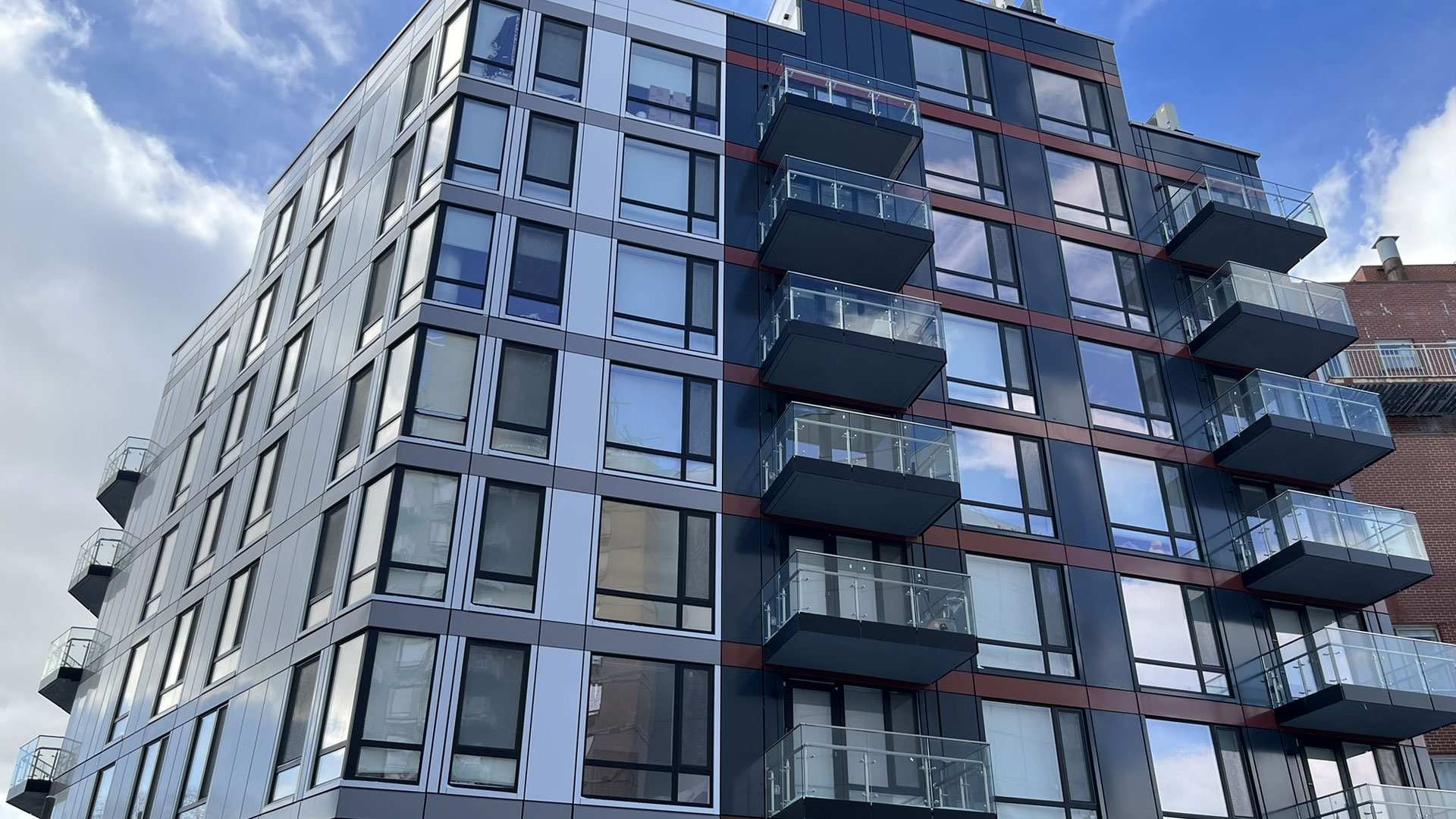
In practice, 40% WWR on a typical high-rise floor plate leaves room for meaningful glazed area — substantial ribbon windows or punched window bays — without requiring a full-floor glazed curtain wall. A building with 60% opaque exterior wall and 40% glazing can achieve an exterior appearance that reads as predominantly glazed when the glazing is concentrated at vision-height zones and the opaque zones use high-quality cladding materials.
Two additional parameters interact with the WWR limit:
- U-factor requirement. ASHRAE 90.1-2022 sets maximum U-factor (thermal transmittance) requirements for vertical fenestration by climate zone and construction type. In Climate Zone 4A (New York City), the maximum U-factor for vertical fenestration in commercial buildings under the prescriptive path is 0.38 Btu/h·ft²·°F. In Climate Zone 5A (Chicago, Boston), the maximum is 0.36. Higher-performance glazing — triple-pane, thermally broken frames — is required as climate severity increases.
- Solar Heat Gain Coefficient (SHGC). ASHRAE 90.1-2022 also sets maximum SHGC values for vertical fenestration by climate zone and orientation. In warmer climates and south-facing exposures, lower SHGC (more solar control) is required. SHGC requirements interact with WWR: at higher WWR values, lower SHGC becomes increasingly important to control cooling loads.
Why Architects and Developers Push Against the 40% Limit
The tension between energy code WWR limits and design intent is real and persistent. Several factors drive architectural pressure toward higher glazing ratios:
- Occupant preference for natural light. Residential and office tenants consistently report preference for high-glazed facades. In multifamily residential high-rise — a primary market segment in NYC, Boston, and Chicago — floor-to-ceiling glass is a marketable feature that commands premium rents in many submarkets.
- Structural efficiency. Full-floor glazed assemblies — where the exterior wall is entirely glass and framing with no opaque zone — simplify structural coordination by eliminating the mixed-assembly conditions that arise when opaque cladding and glazing meet at the same floor line.
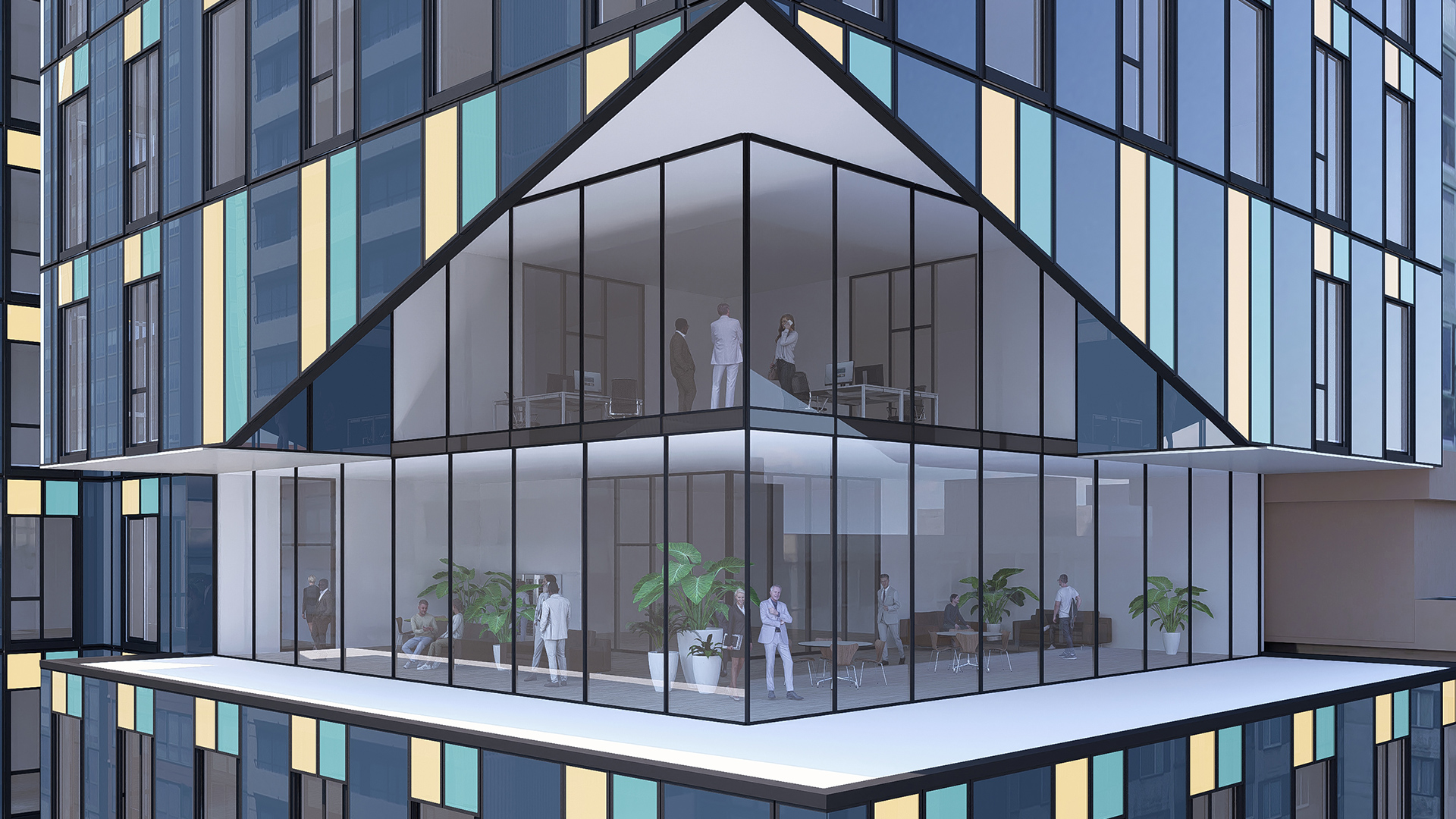
- Contemporary architectural expression. Full-glass tower facades remain a dominant commercial aesthetic in U.S. urban markets. Clients commissioning towers with strong brand or market positioning frequently specify high-glazed facades as a design priority.
These pressures do not make the energy code limit disappear — they make it a design problem that must be resolved, not ignored.
Prescriptive Path vs. Performance Path: The Two Compliance Routes
ASHRAE 90.1-2022 provides two primary compliance paths for commercial building energy performance:
- Prescriptive path. The building meets a defined set of component requirements — maximum U-factor, maximum SHGC, maximum WWR, minimum insulation R-values — without energy modeling. This is the simpler approach for straightforward projects and the path that imposes the 40% WWR cap directly. A project that exceeds 40% WWR cannot use the prescriptive path.
- Performance path (energy cost budget method or ASHRAE 90.1 Appendix G). The building's energy performance is modeled and compared to a code-compliant baseline building of the same size and configuration. If the proposed building's annual energy cost is equal to or lower than the baseline, it is compliant — regardless of WWR. A building with 60% or 70% WWR can demonstrate prescriptive non-compliance but performance compliance if the glazing system, mechanical system, and lighting design together produce equivalent or better overall energy performance than the baseline.
The performance path provides a compliance route for high-glazed facades, but it requires an energy model, a commissioning plan, and ongoing documentation that the prescriptive path does not. It also creates a dependency between the facade designer and the mechanical engineer: high WWR typically requires a more efficient HVAC system to achieve energy model compliance, and the two must be designed together rather than sequentially.
Design Strategies for Managing WWR Within the Prescriptive Limit
Several facade design strategies allow architects to achieve high-glazed appearances within the 40% prescriptive limit:
- Orientation-based glazing distribution. Concentrate glazing on north and east orientations — where solar gain is lower — and use opaque cladding on south and west exposures where solar gain is highest. This allows high glazing ratios on the preferred facades while the whole-building average stays within 40%.
- High-performance glazing in the glazed zones. Low U-factor and low SHGC glazing in the vision zones allows the opaque zones to use less insulation than would otherwise be required, freeing up the prescriptive budget for other envelope components. Better glazing performance partially offsets the energy impact of glazed area.
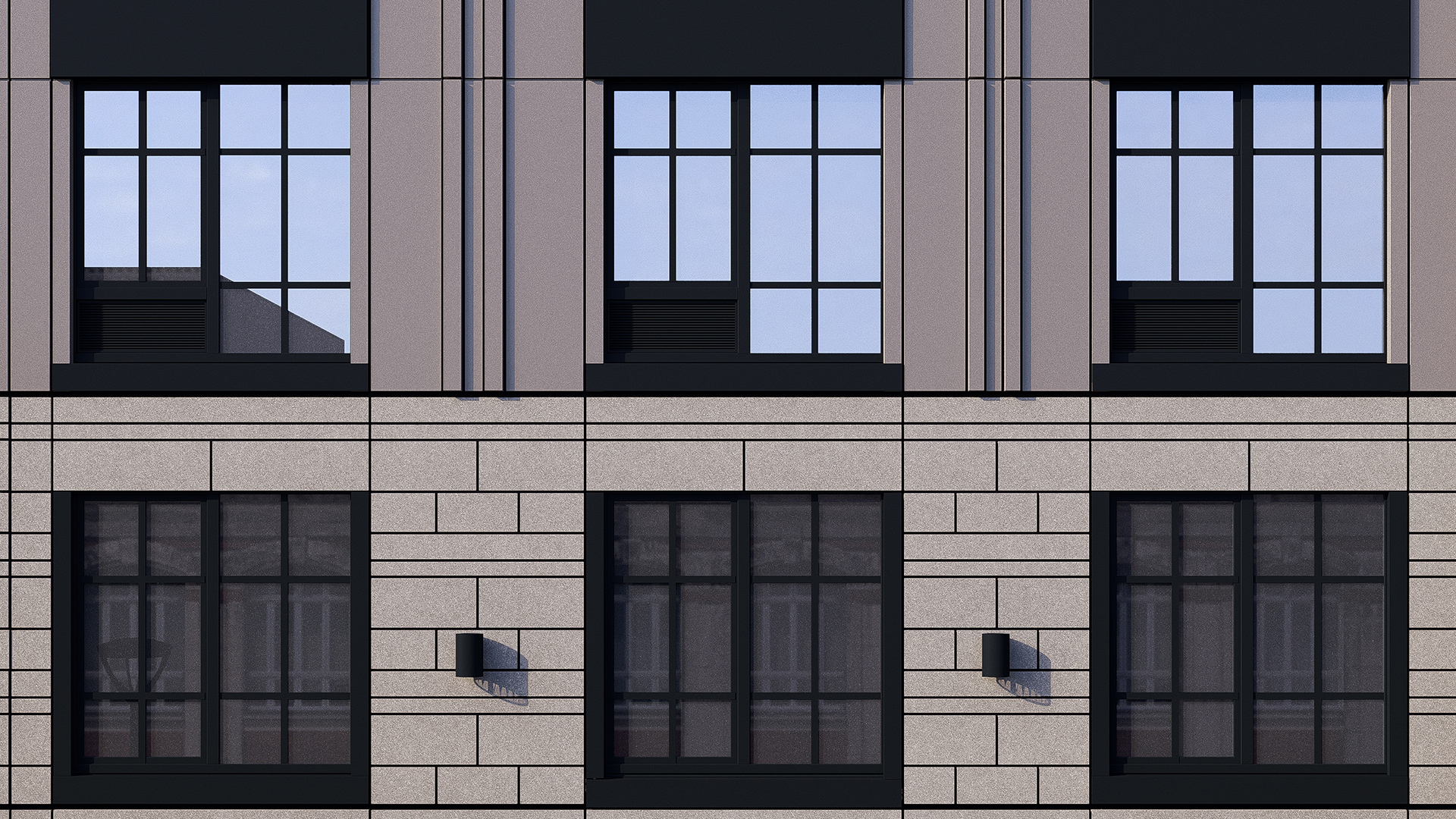
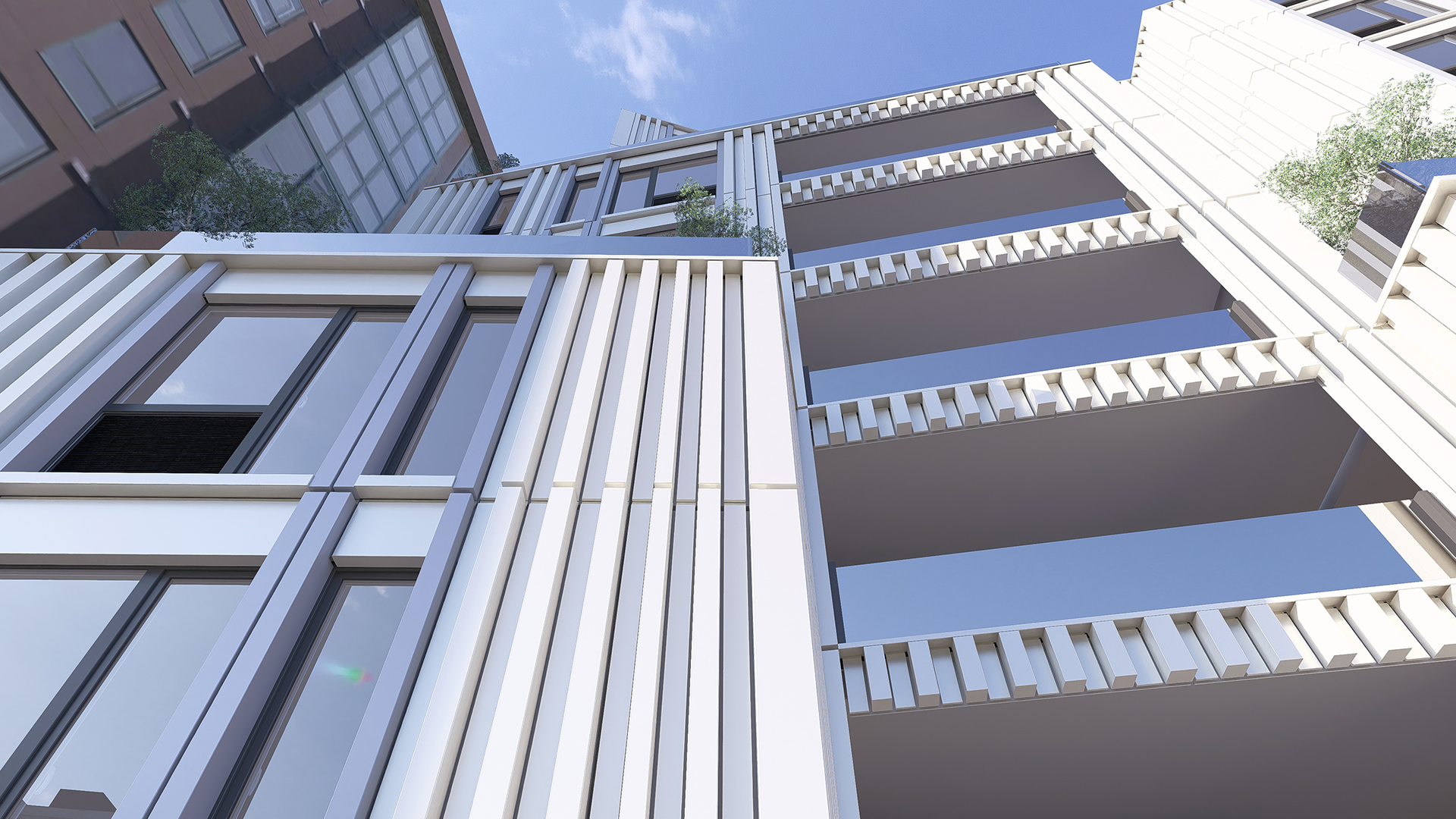
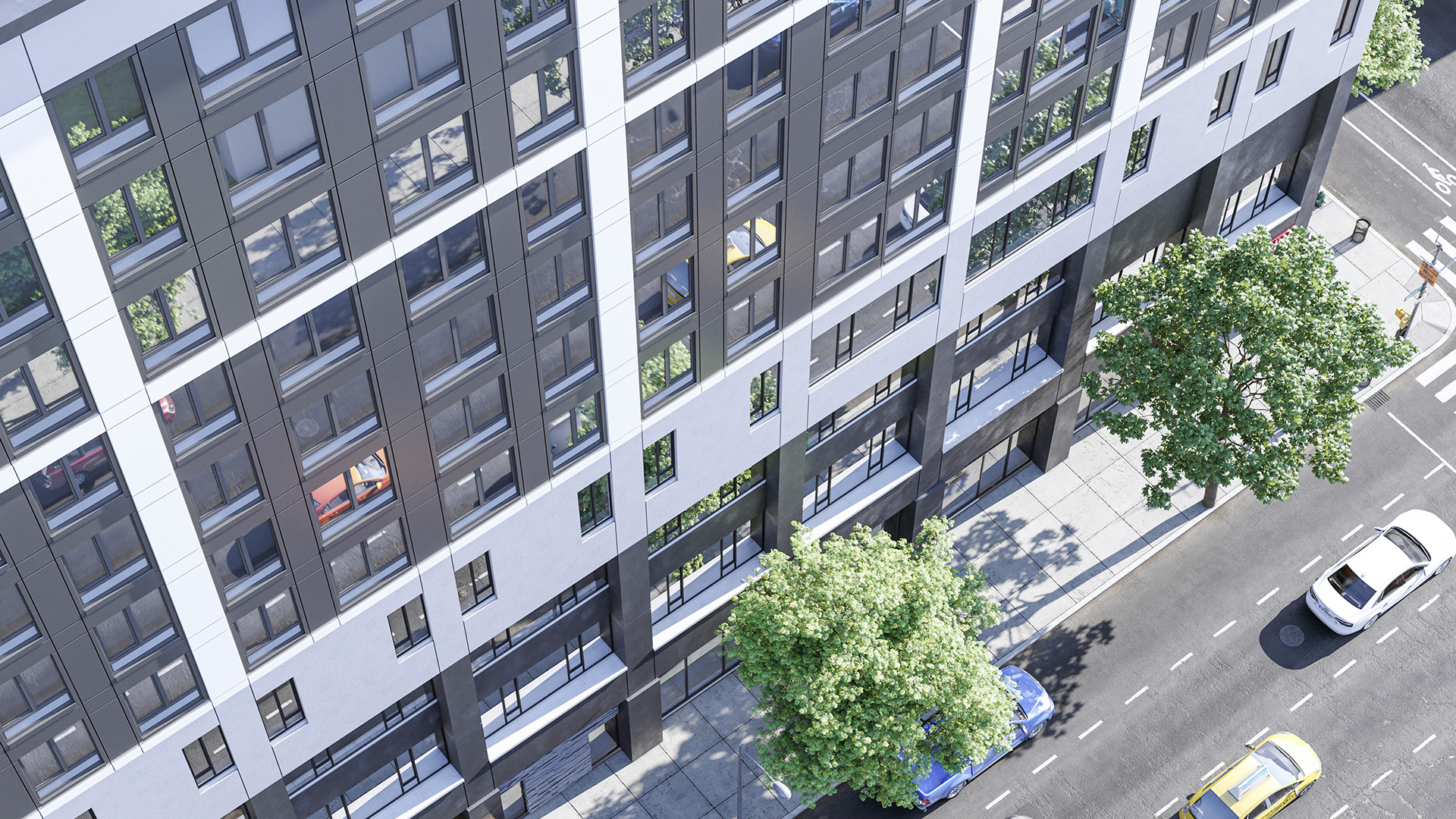
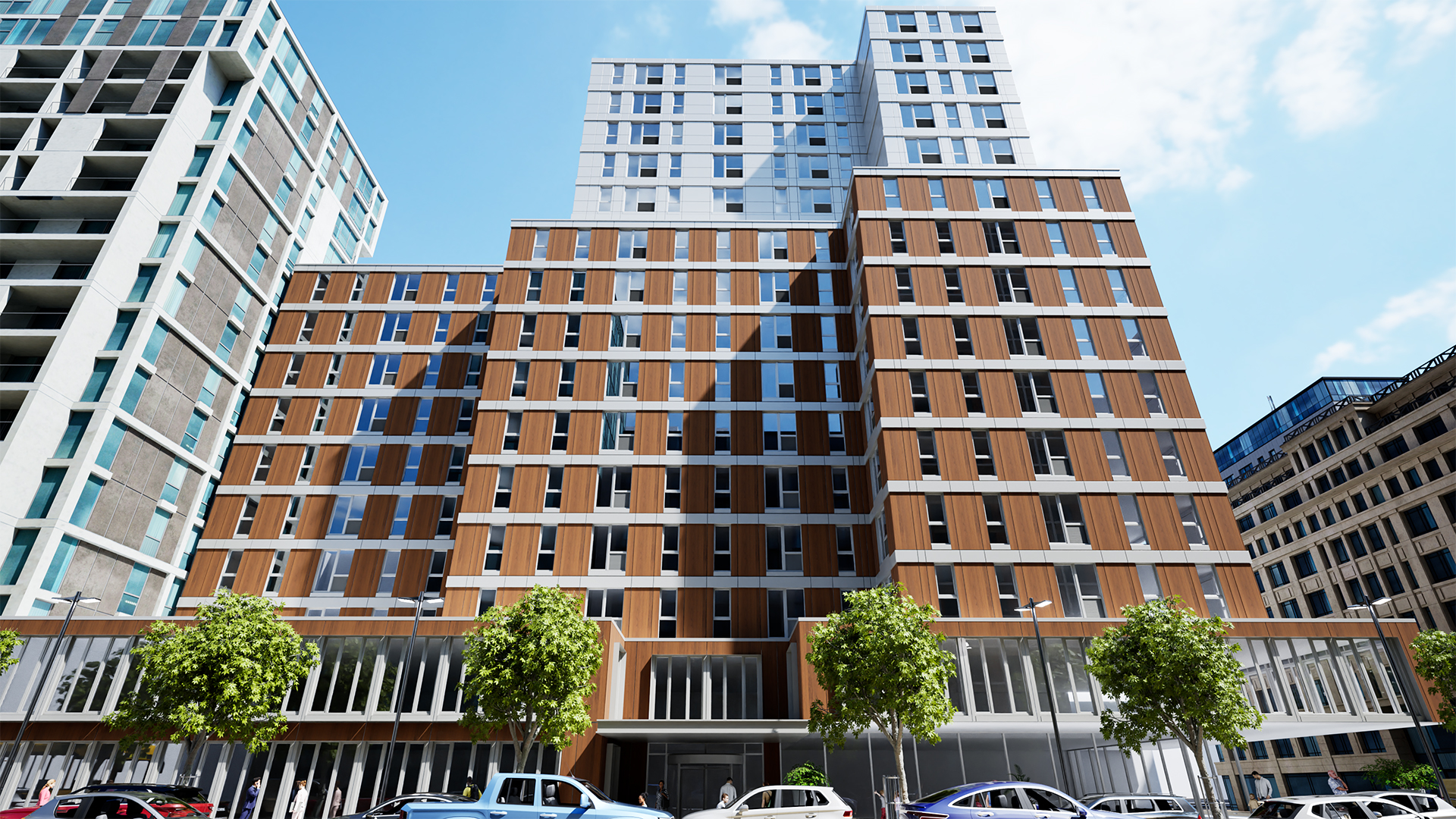
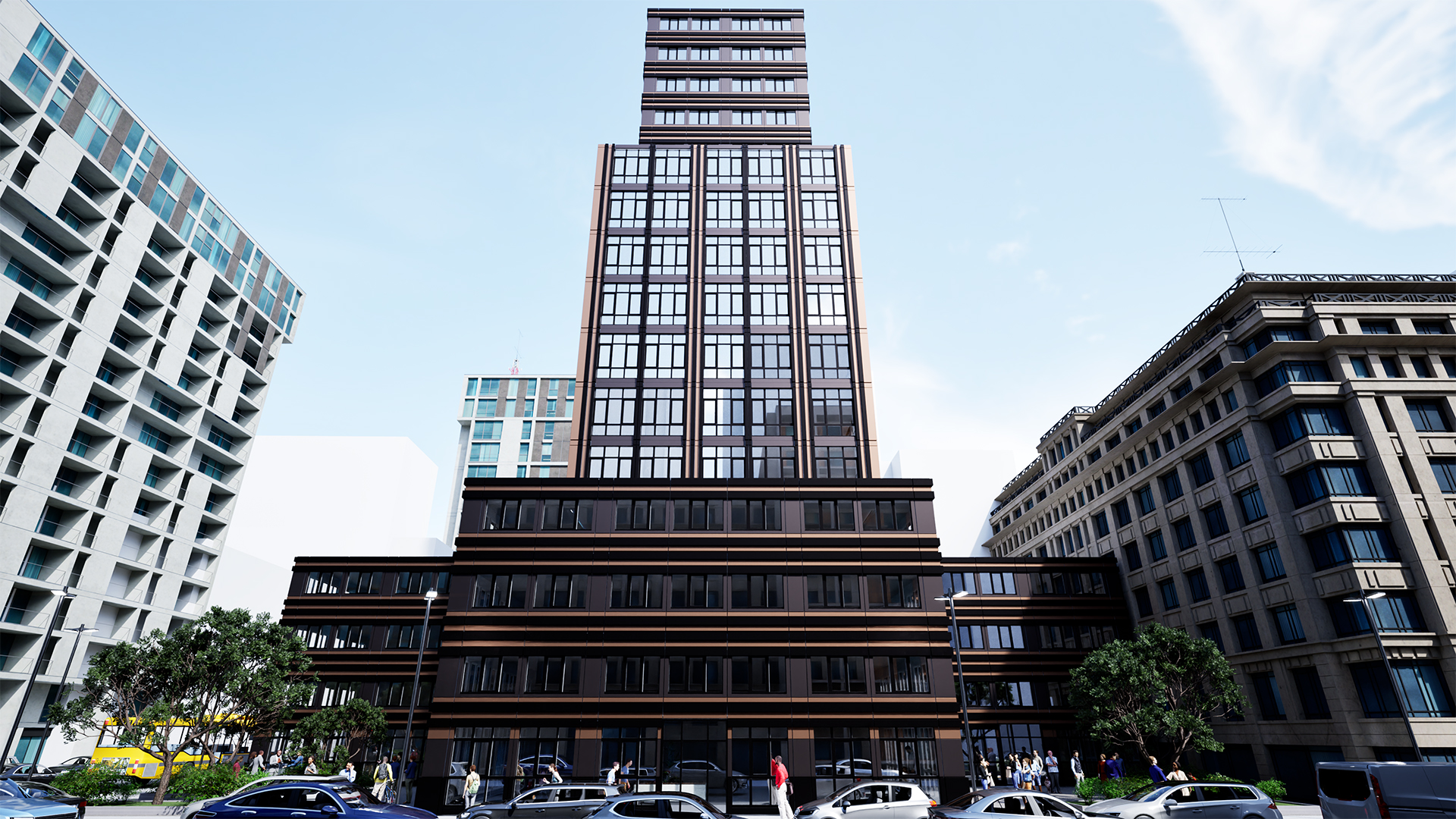
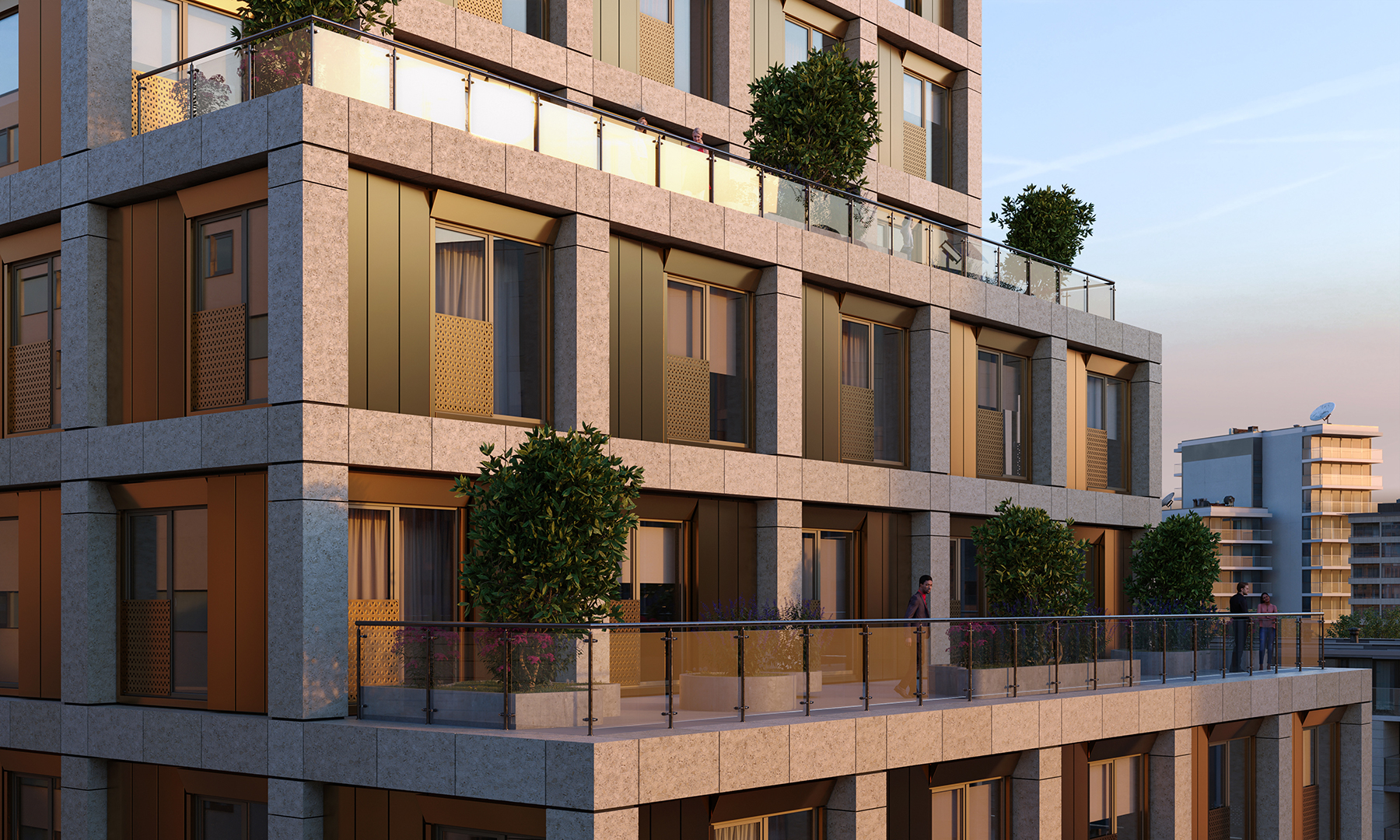
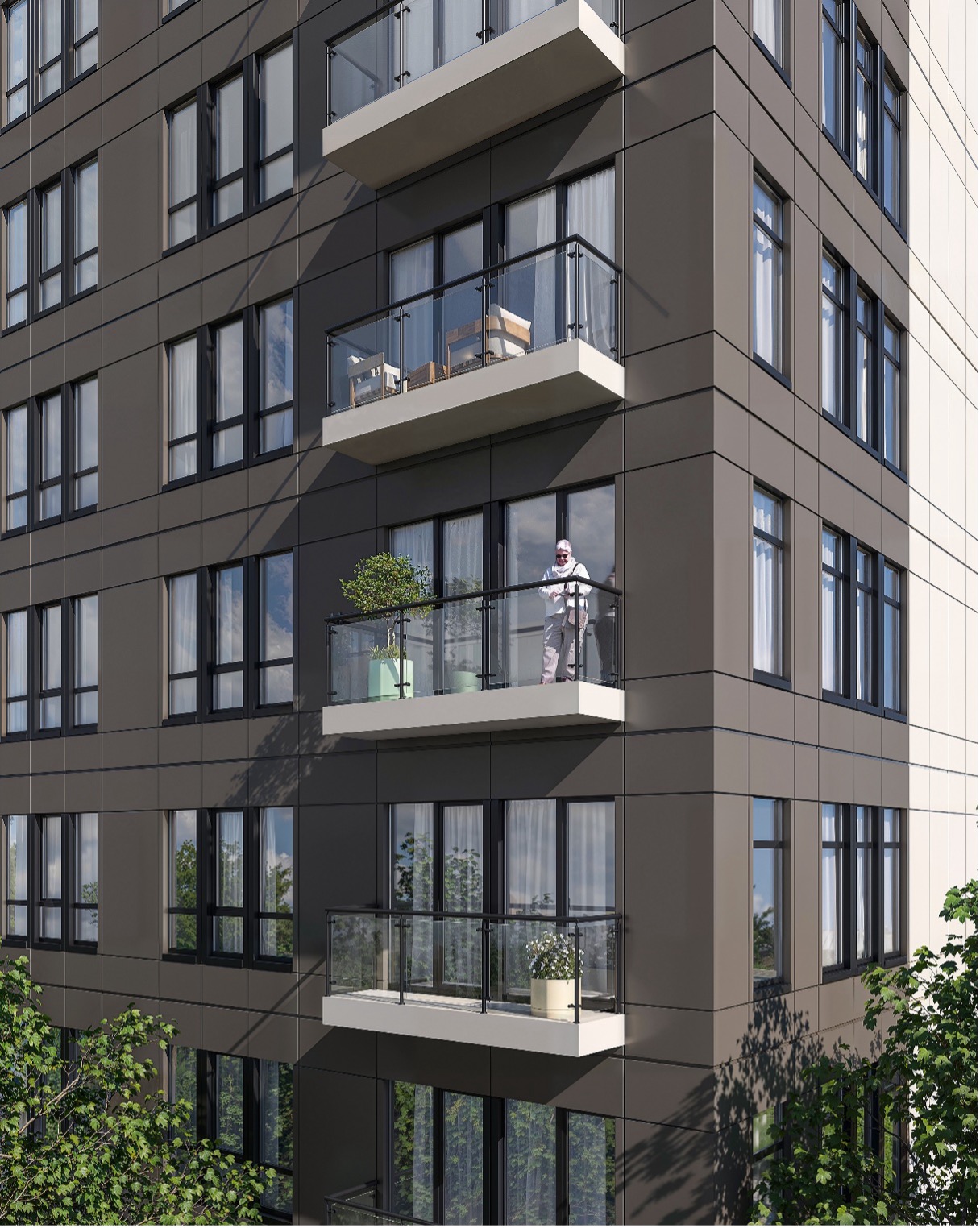
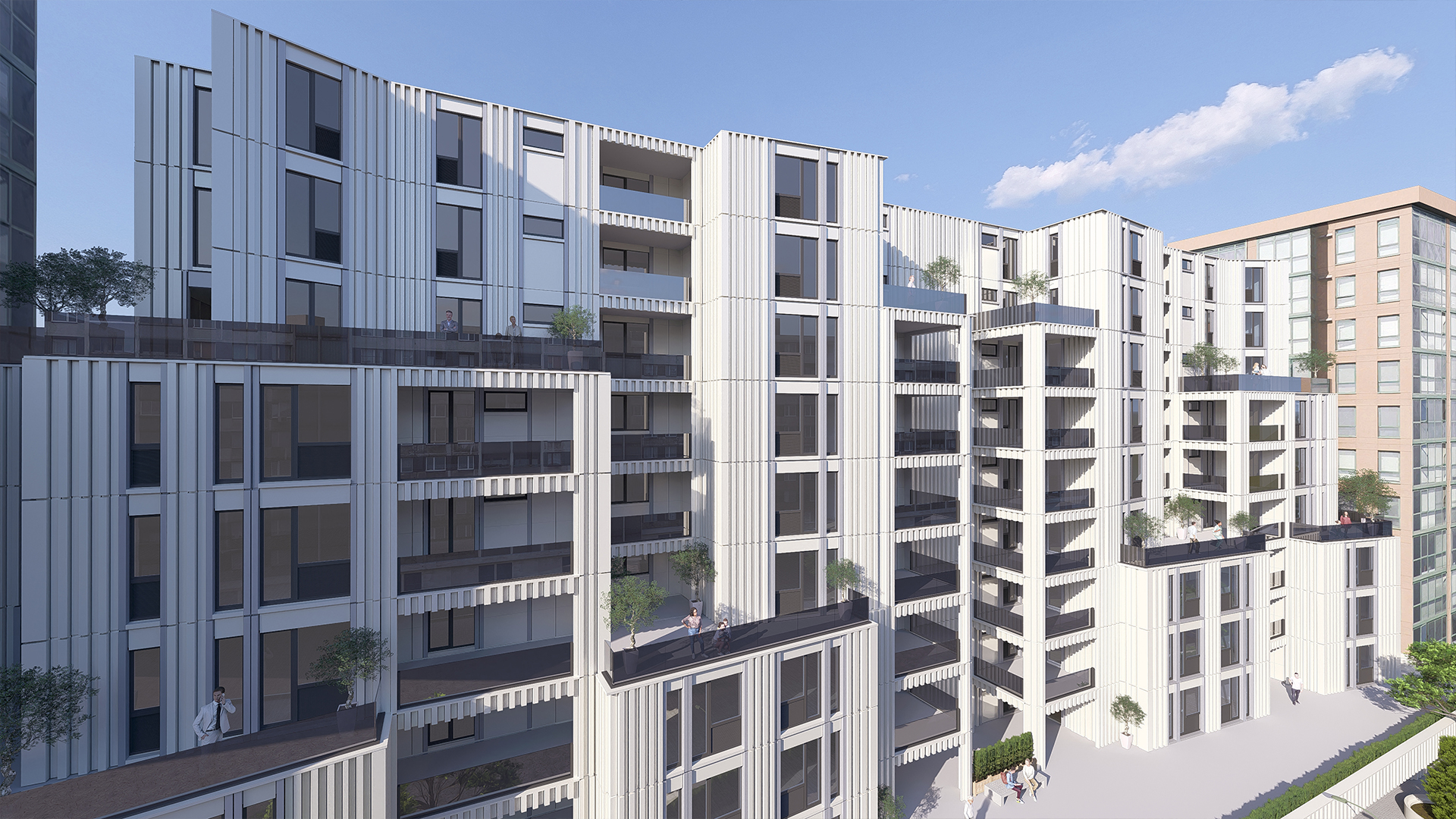
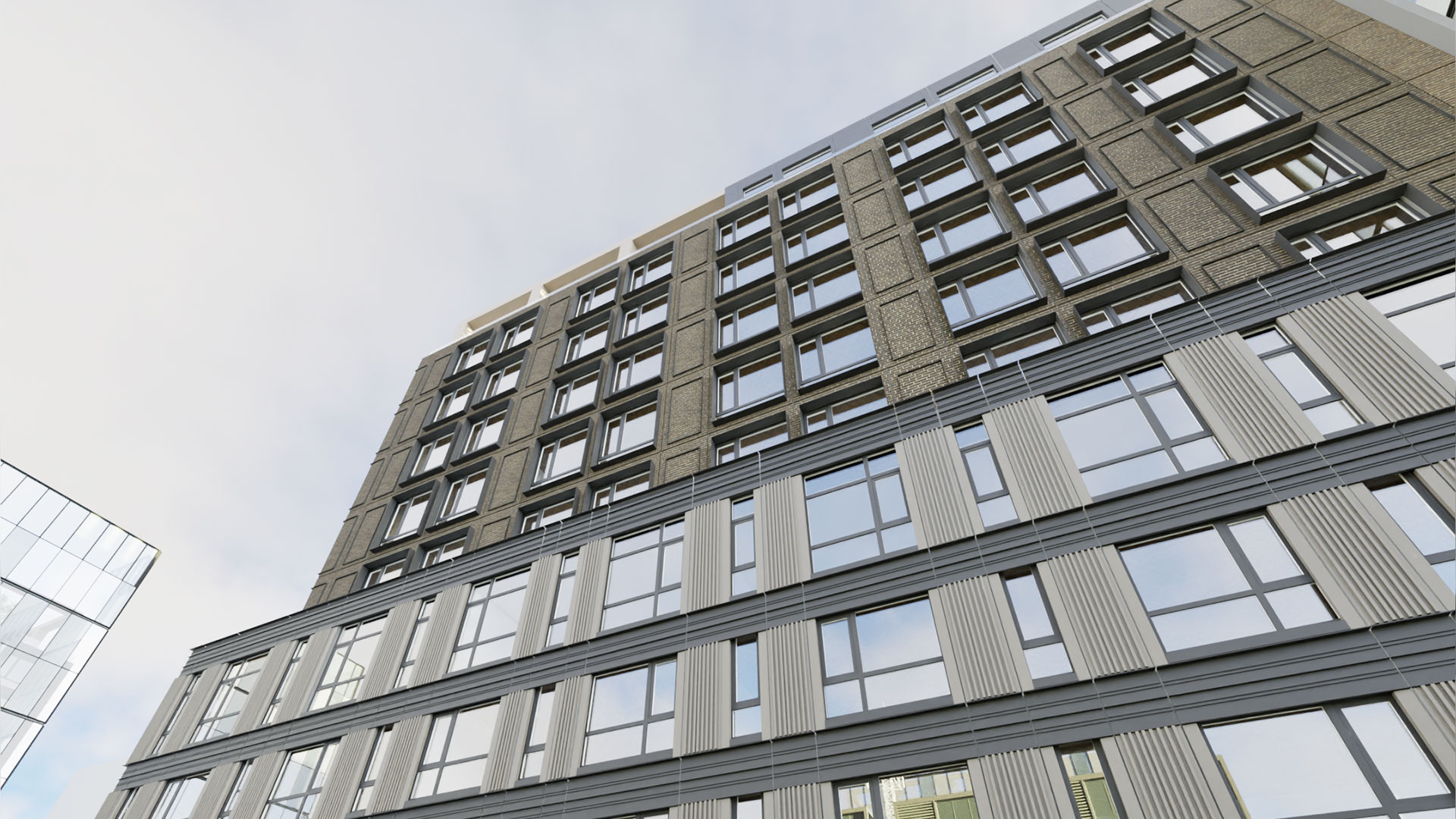
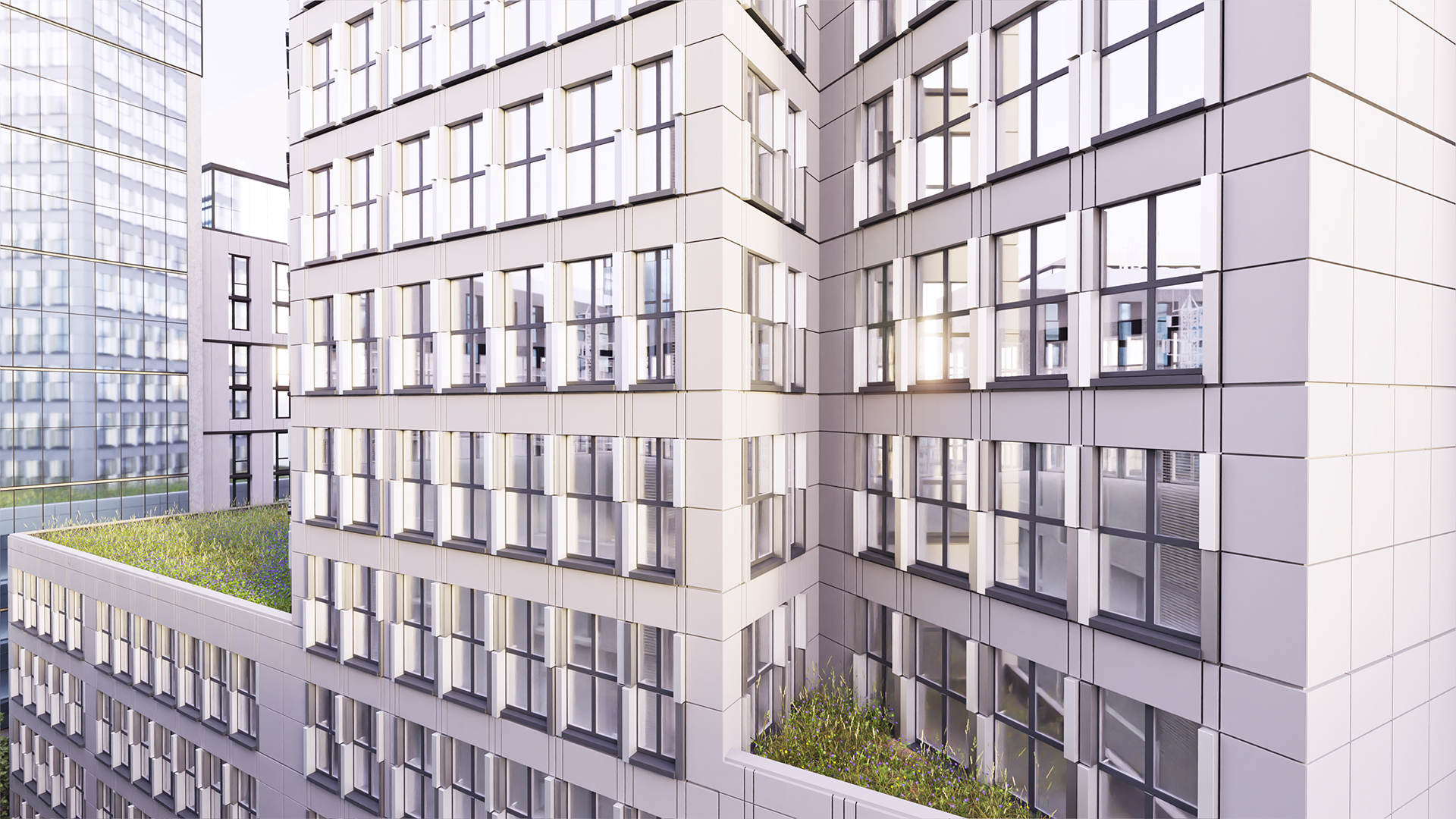
- Opaque spandrel zones with high-quality cladding. On a high-rise facade, the zone between floor slab and the underside of the next floor above is typically opaque — a spandrel zone. Designing the spandrel with high-quality cladding material — aluminum and ACM, Architectural Stone — that matches the visual weight of the glazed zones reduces the aesthetic distinction between glazed and opaque areas, producing an exterior that reads as more uniformly glazed than the WWR calculation reflects.
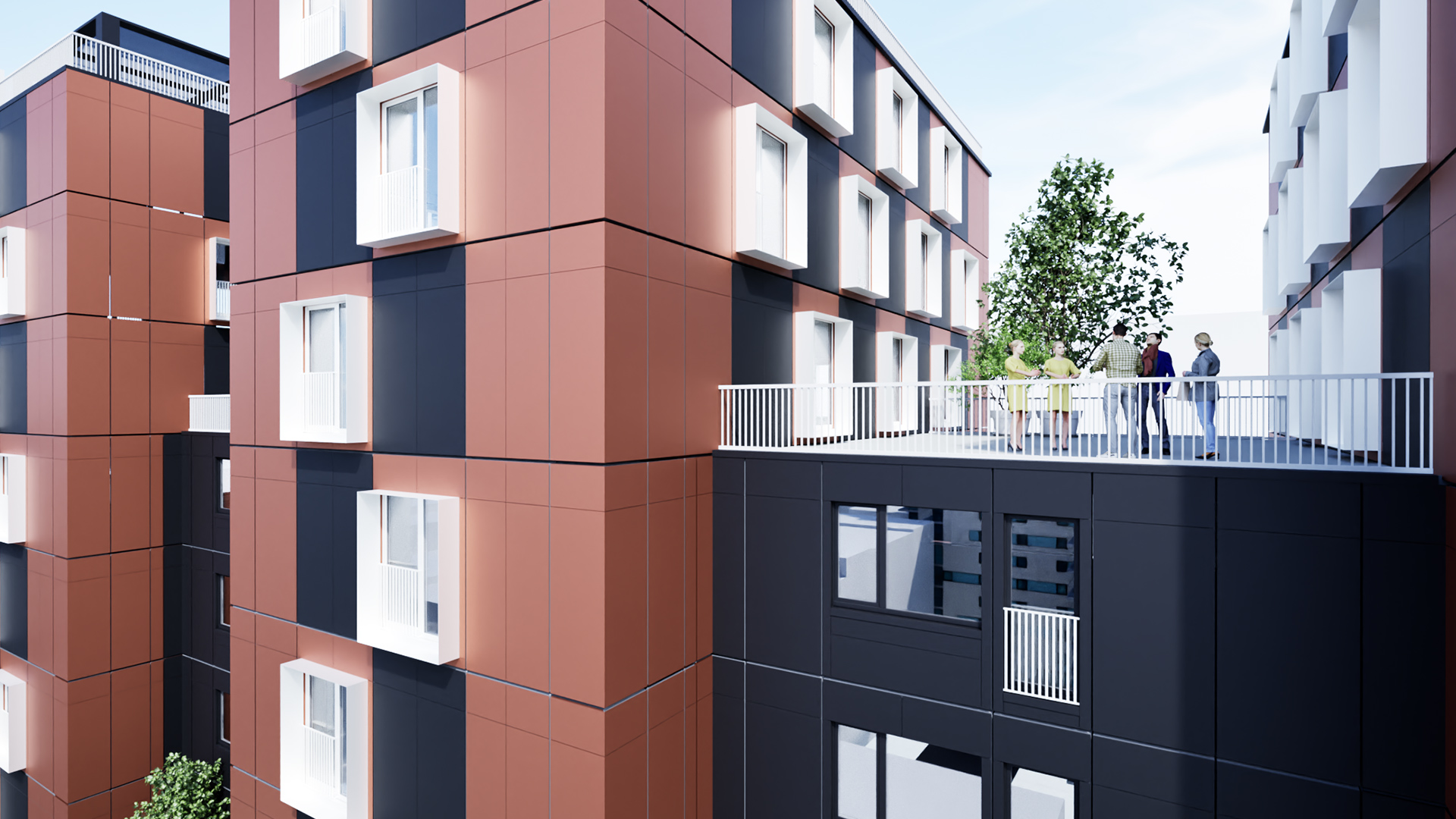
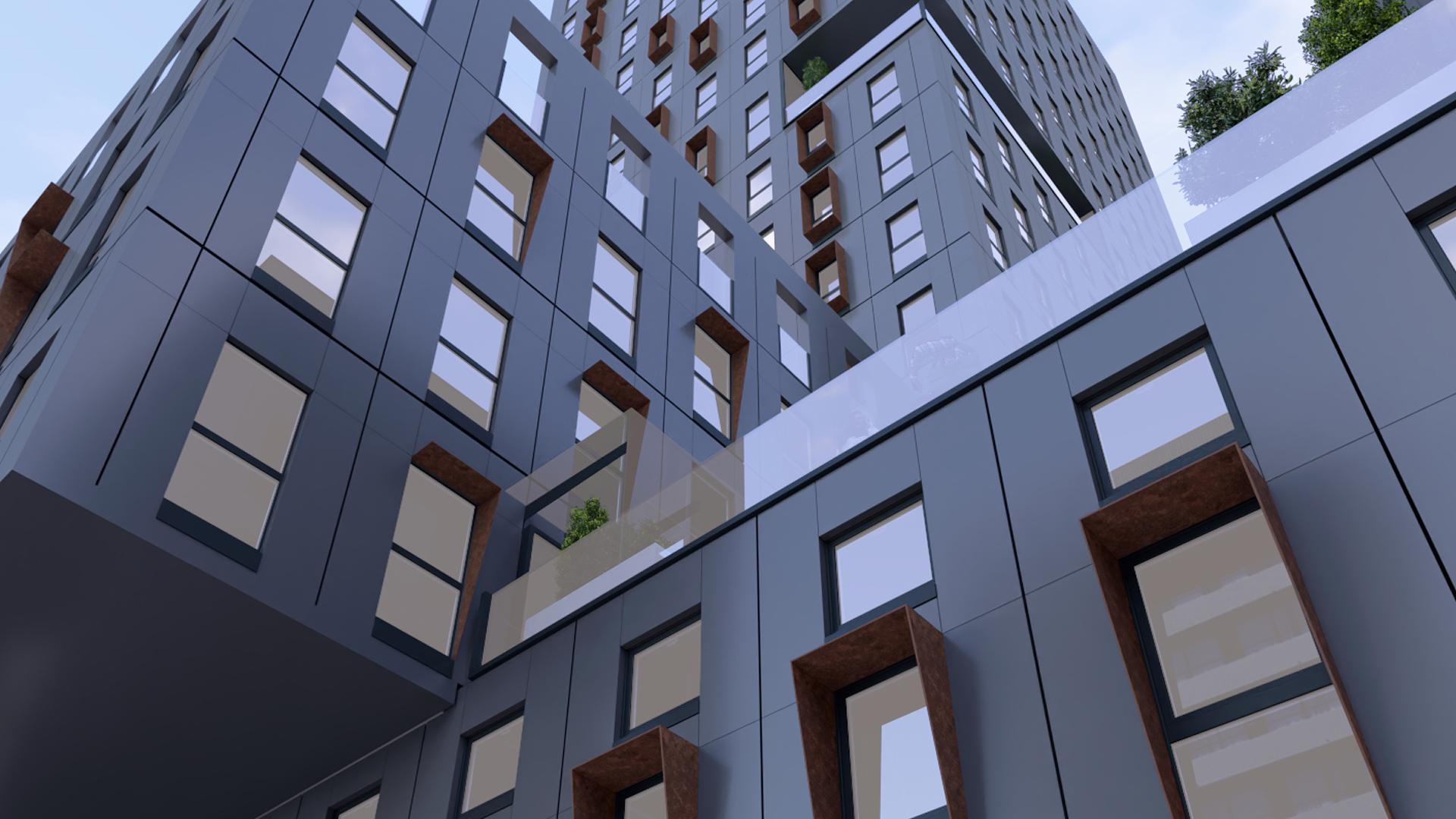
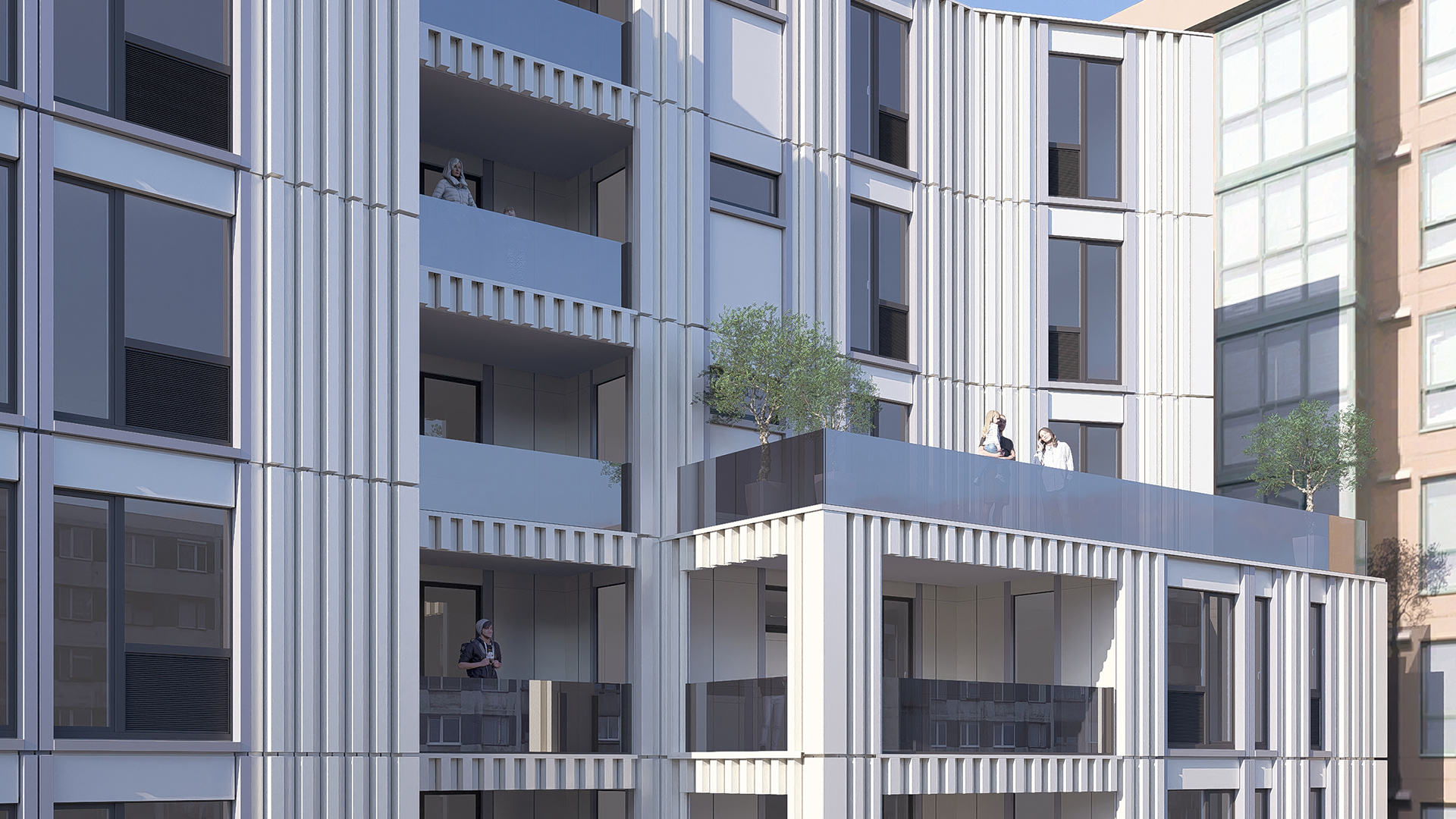
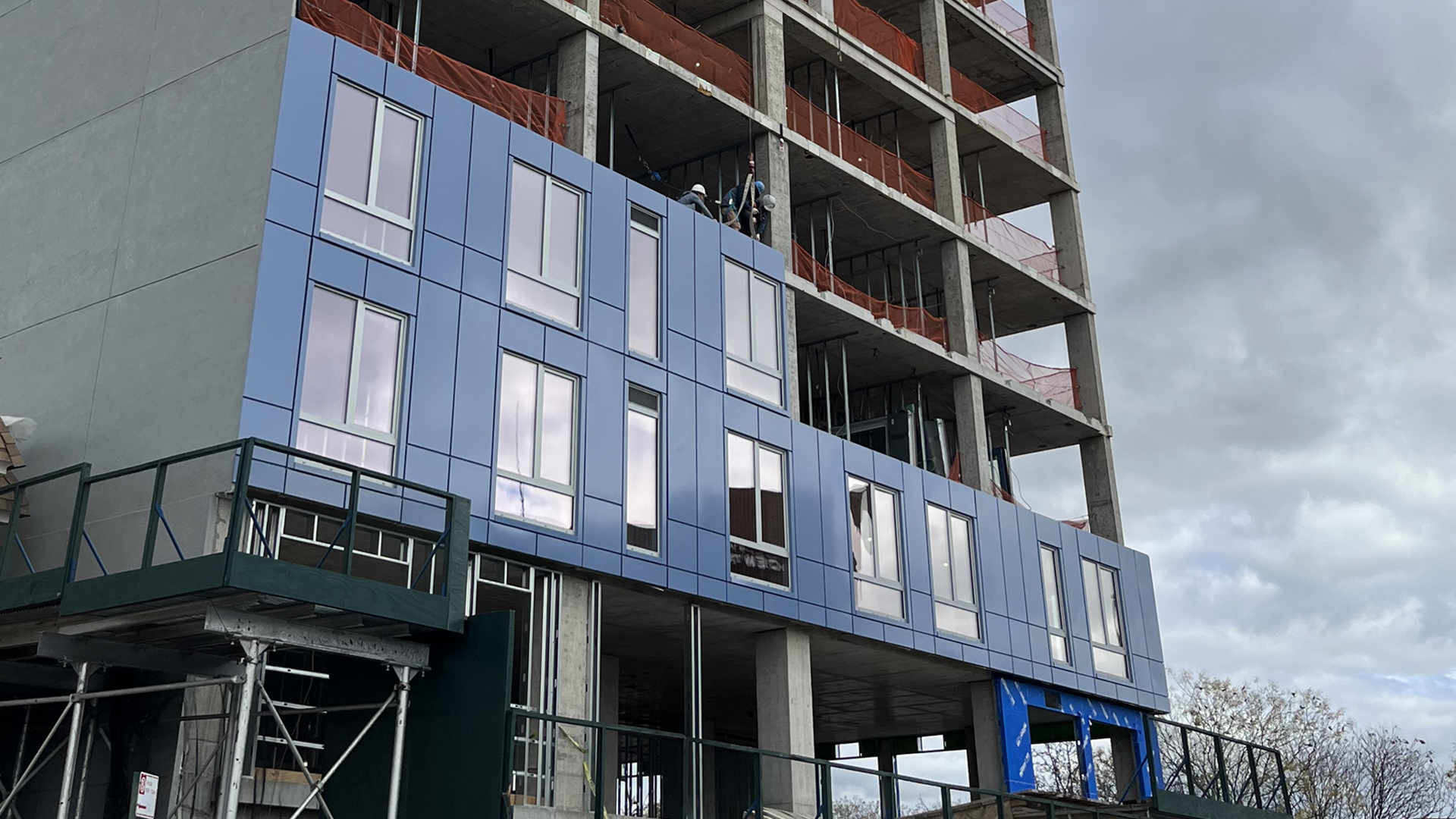
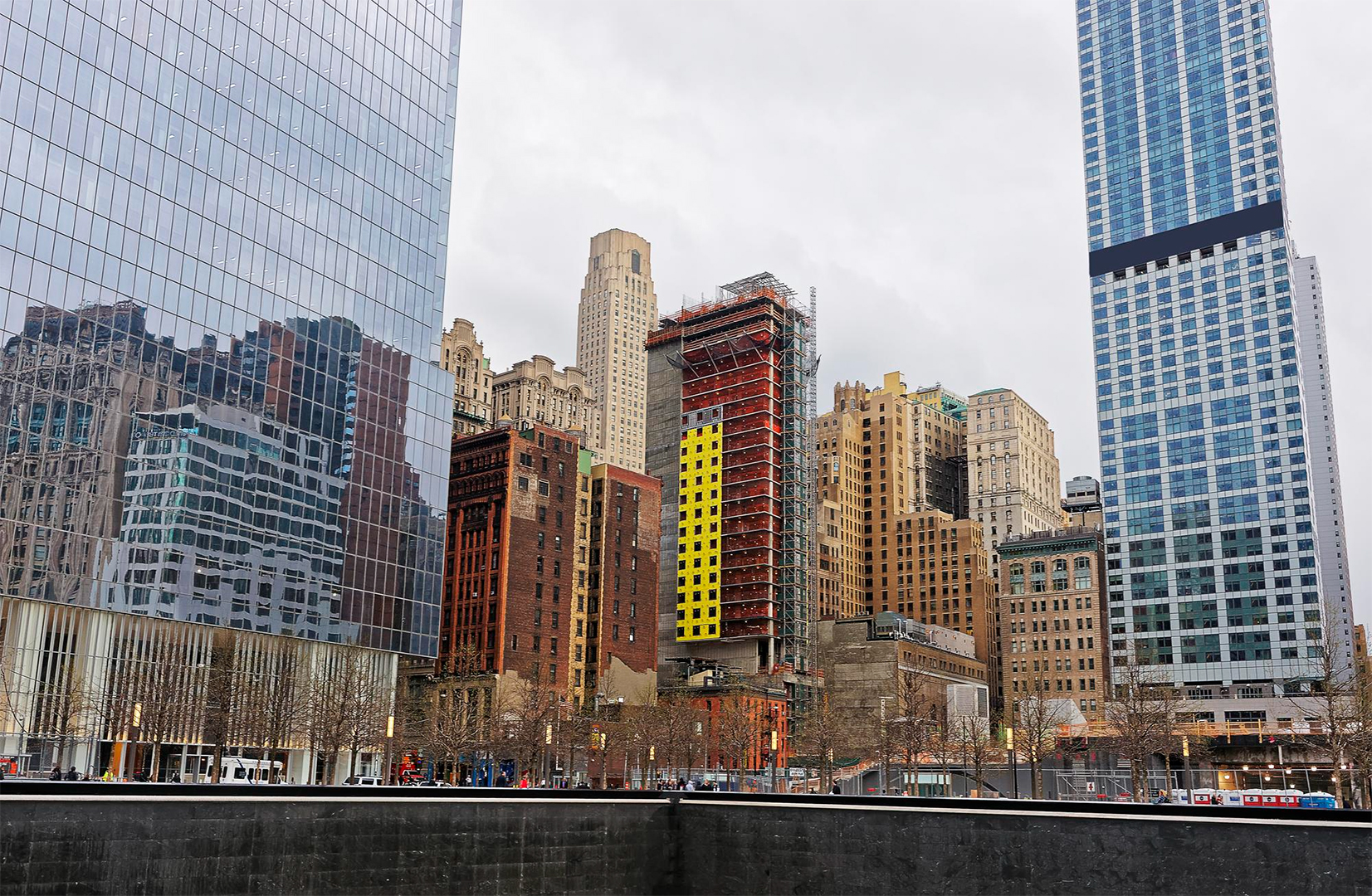
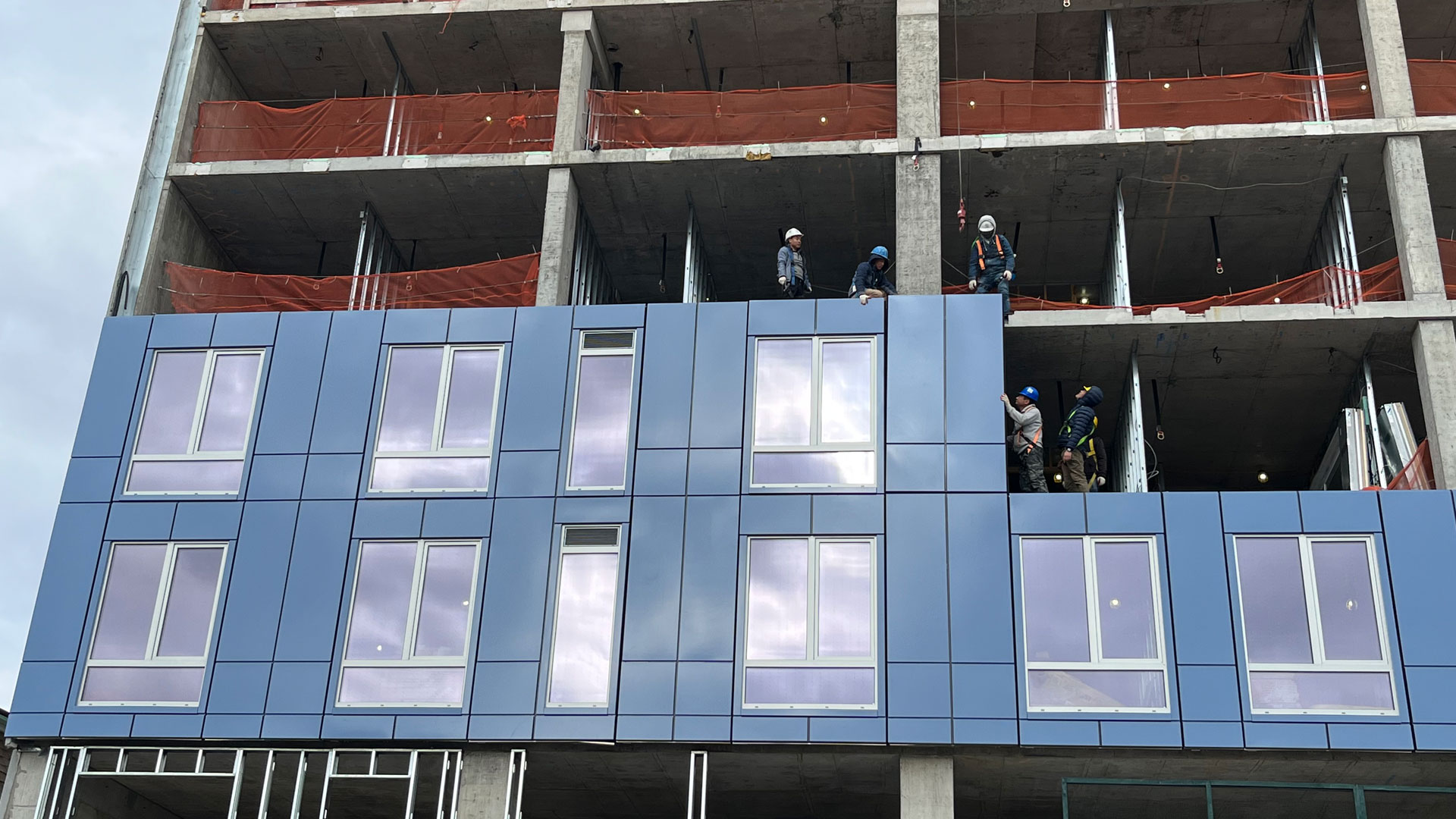
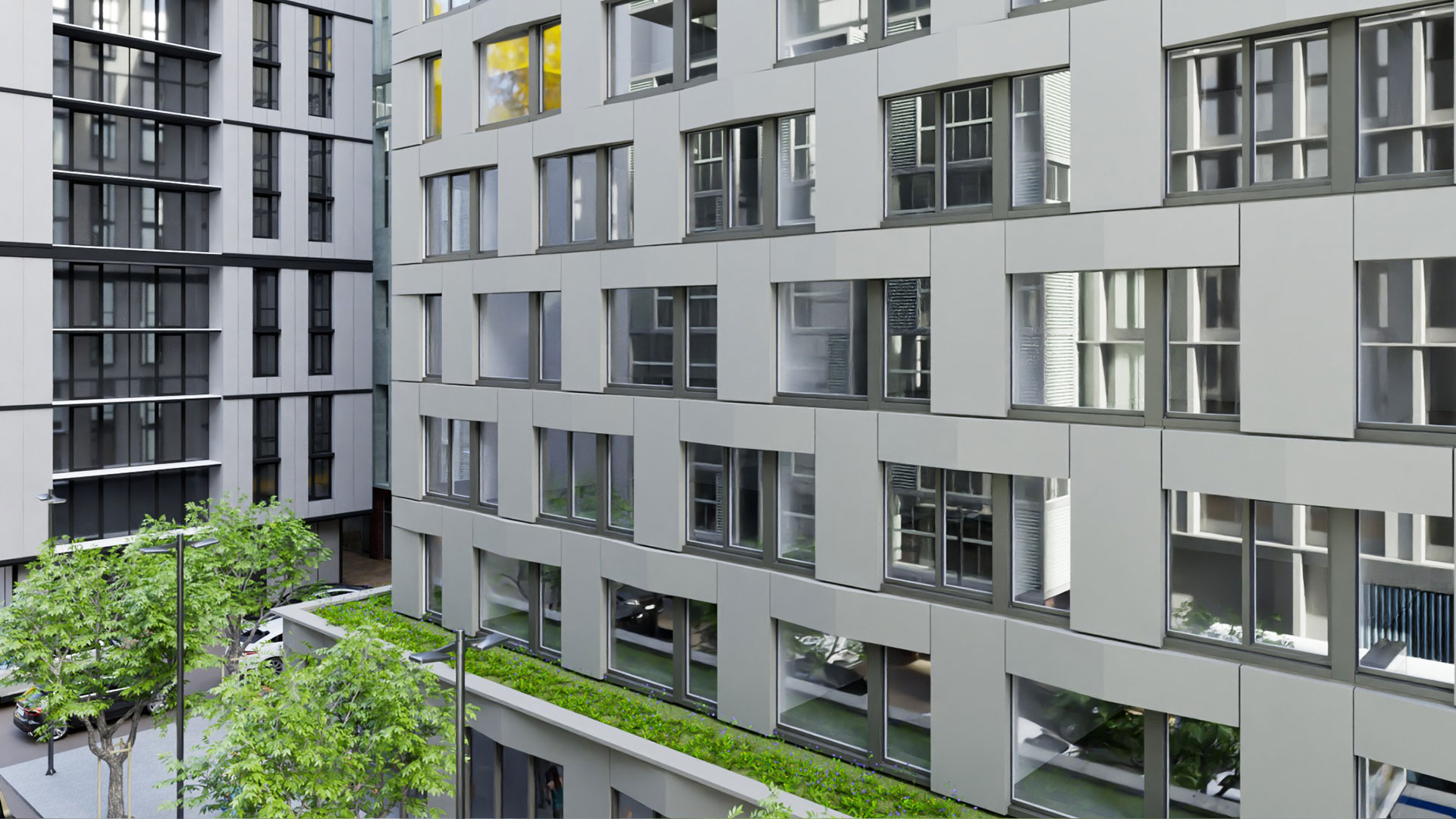
- Modular facade design. Facades designed in repeating modules — where each module contains a fixed ratio of glazed to opaque area — allow the WWR to be set precisely at the design stage and maintained consistently across the elevation. When the module is factory-assembled, the glazed-to-opaque ratio is fixed in production rather than approximated in the field.
How D Wall® Modular Building Components Address WWR
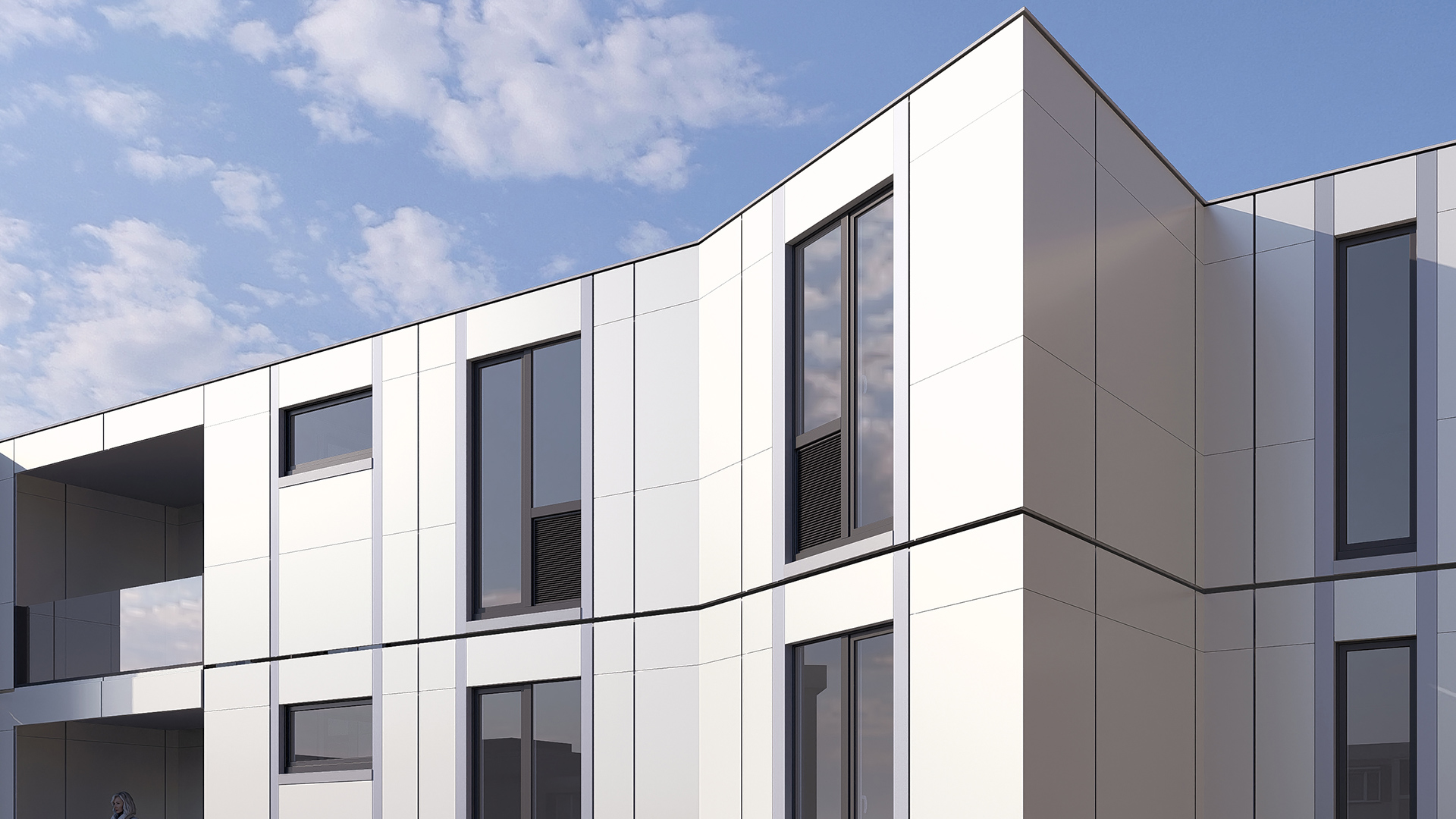
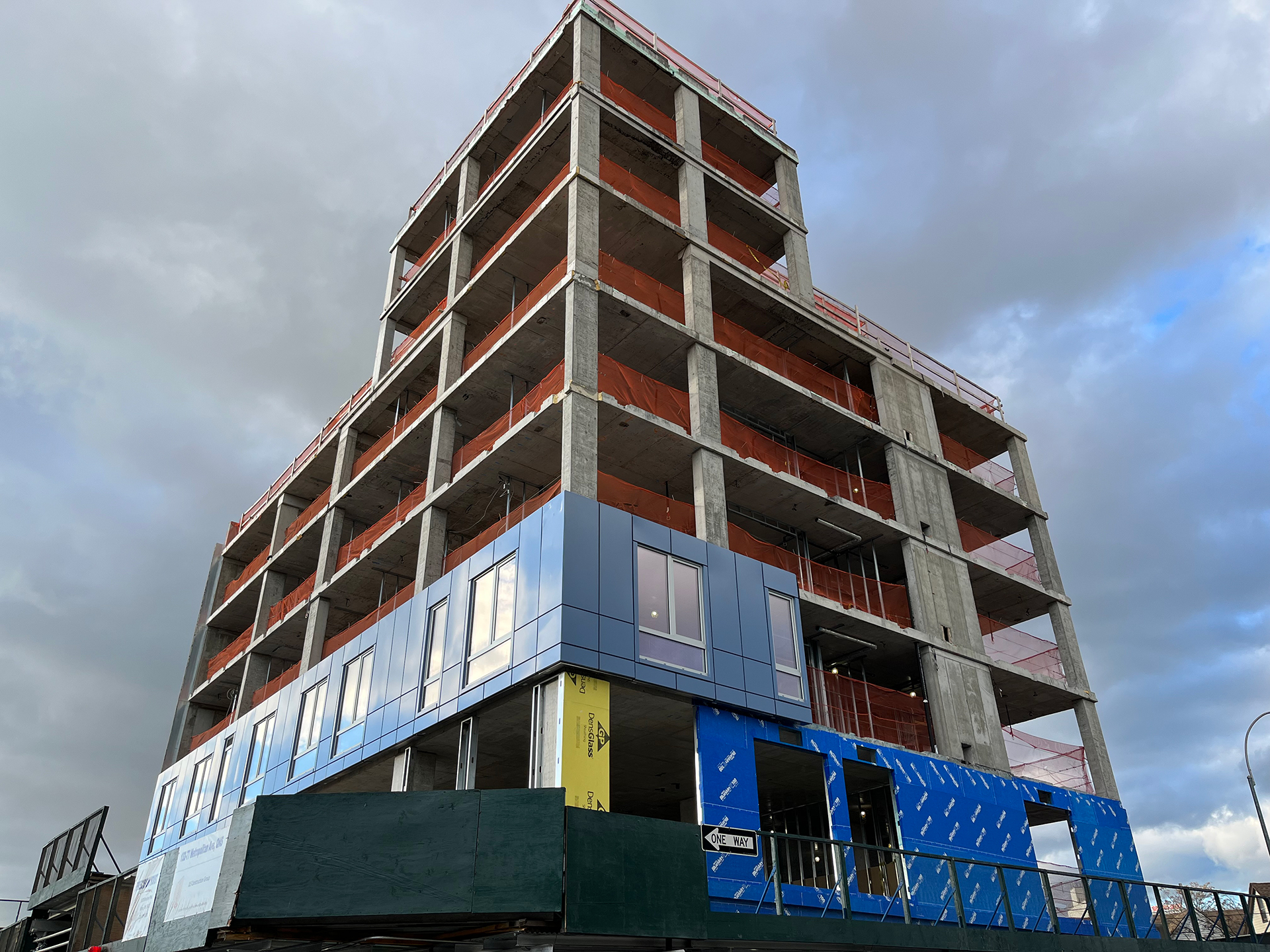
D Wall® modular building components for exteriors are available in configurations ranging from fully opaque ACM or Architectural Stone to partially glazed — with the glazed-to-opaque ratio set at the component design stage by Dextall's technical team.
Dextall's specialists work with architects to test different WWR configurations across the full facade elevation and calculate the whole-building WWR early in the design process, without producing separate energy model inputs. A facade design that starts at 55% WWR can be adjusted — increasing spandrel zone depth, reducing window height, redistributing glazing by orientation — with the updated WWR confirmed quickly. The iteration that would take weeks in conventional design coordination is resolved in the design engagement with Dextall's team.
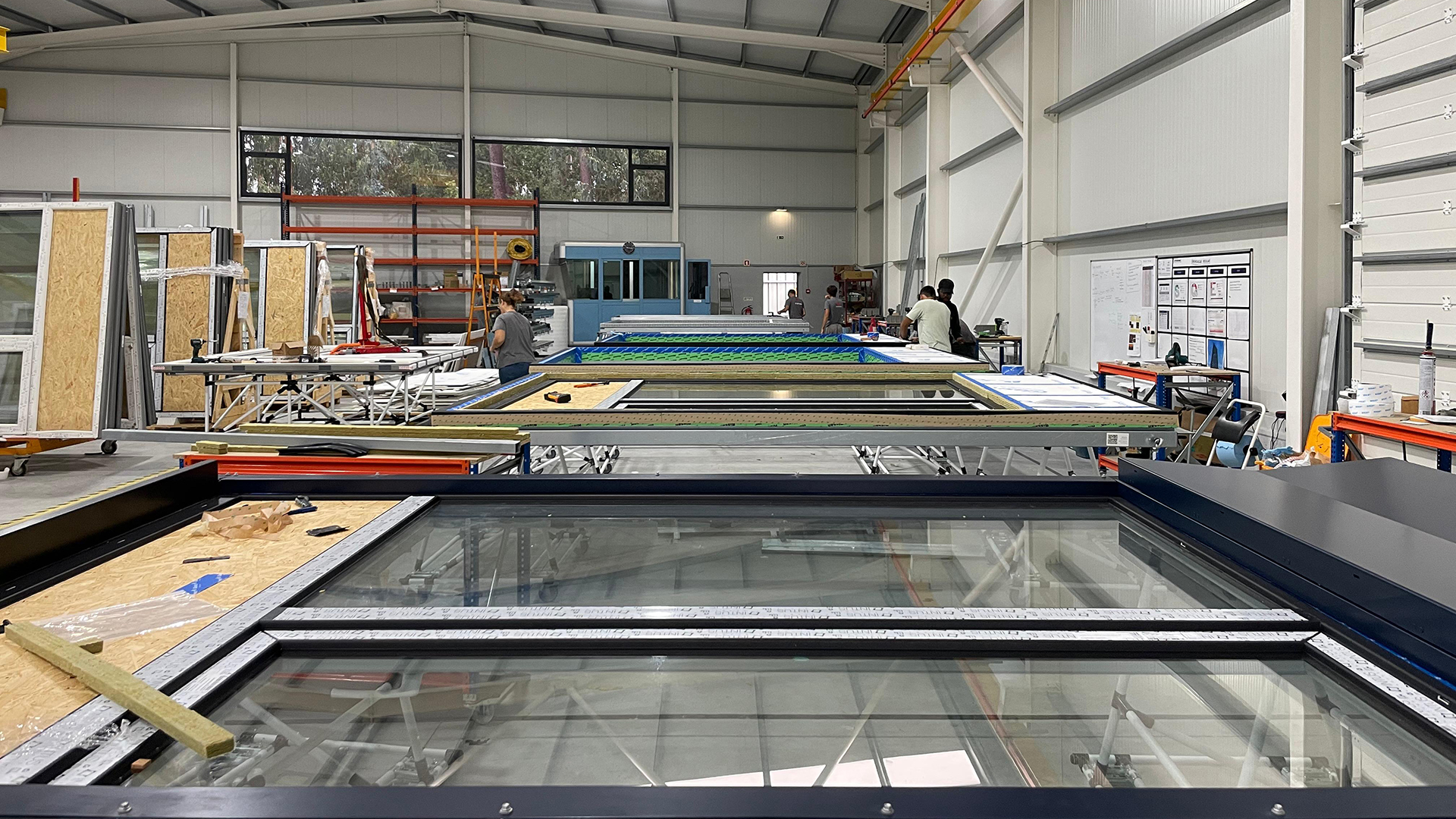
Because D Wall® is factory-assembled, the WWR confirmed in the design phase is the WWR that is built. The window size, the spandrel zone depth, and the ratio of glazed to opaque area are fixed in factory production — not approximated in field conditions where window setting tolerances and sealant joint widths affect the actual installed ratio. For projects where WWR is a code compliance parameter, factory precision in the installed assembly matters.
For project teams working on high-rise commercial facades in ASHRAE 90.1 jurisdictions, the combination of Dextall's design coordination approach and D Wall®'s factory-controlled production addresses the prescriptive compliance question at the design stage rather than after construction documents are complete. Contact Dextall at dextall.com to explore configuration options for your project.
Key Takeaways
- ASHRAE 90.1-2022 limits vertical fenestration to 40% of gross above-grade wall area for most commercial buildings under the prescriptive compliance path. Buildings that exceed this limit must use the performance path — an energy model demonstrating whole-building compliance.
- WWR is calculated as a whole-building average, not per orientation. Glazing can be distributed unequally across orientations as long as the total average remains at or below 40%, giving architects latitude to concentrate glazing where it performs best.
- U-factor and SHGC requirements interact with the WWR limit. Higher WWR requires better glazing performance — lower U-factor and lower SHGC — to achieve prescriptive compliance as the energy penalty from additional glazing area increases.
- High-quality opaque cladding in spandrel zones — aluminum and ACM, Architectural Stone — reduces the visual distinction between glazed and opaque areas, allowing facades that read as heavily glazed while maintaining code-compliant WWR.
- Factory-assembled exterior building components fix the WWR in production. The glazed-to-opaque ratio set at the design stage is the ratio installed on the building — eliminating field variation that affects the actual installed WWR in conventionally built facades.
FAQ
What is window-to-wall ratio and how is it calculated?
Window-to-wall ratio (WWR) is the percentage of a building's gross above-grade exterior wall area that is glazed. It is calculated by dividing the total rough opening area of all vertical glazing — windows, glazed doors, curtain wall vision glass — by the total above-grade exterior wall area, including both opaque and glazed surfaces. ASHRAE 90.1-2022 calculates WWR as a whole-building average across all orientations for the prescriptive compliance path.
What is the maximum WWR allowed by ASHRAE 90.1-2022?
ASHRAE 90.1-2022 Section 5.5.4.4.1 sets a maximum vertical fenestration area of 40% of gross above-grade wall area for most commercial buildings under the prescriptive compliance path. Buildings that exceed 40% WWR must use the performance path — demonstrating that the whole-building annual energy cost is equal to or lower than an ASHRAE 90.1-compliant baseline building of the same size and configuration.
Can a high-rise building with more than 40% glazing still comply with ASHRAE 90.1?
Yes, through the performance path. A building with 55% or 65% WWR can demonstrate ASHRAE 90.1 compliance if an energy model shows that the proposed building's annual energy cost is equal to or lower than the code baseline. Achieving performance compliance at high WWR typically requires low U-factor glazing, low SHGC, an efficient HVAC system, and a lighting design that offsets the energy penalty of additional glazed area. The performance path requires an energy model and is more documentation-intensive than the prescriptive path.
How does facade system selection affect WWR compliance?
Facades designed in repeating modules — where each module has a fixed ratio of glazed to opaque area — allow the WWR to be set precisely at the design stage and maintained consistently across the elevation. Factory-assembled exterior building components fix the glazed-to-opaque ratio in production, meaning the WWR calculated at design is the WWR installed on the building. Field-assembled systems introduce tolerance variation that can affect the actual installed WWR.
What U-factor is required for commercial glazing in New York City under ASHRAE 90.1?
New York City is in ASHRAE Climate Zone 4A. Under ASHRAE 90.1-2022, the maximum U-factor for vertical fenestration in commercial buildings (other than fixed fenestration) under the prescriptive path in Climate Zone 4A is 0.38 Btu/h·ft²·°F. This requirement applies to the whole glazing assembly — glass and frame — not the center-of-glass U-factor alone. Higher-performance glazing with thermally broken frames is typically required to meet this threshold on commercial high-rise projects.
Sources

















.jpeg)

-Compliance-for-NYC-Multifamily-%26-Co-Op-Facades.jpg)


















_format(webp).avif)
_format(webp)%20(6).avif)
_format(webp)%20(5).avif)
_format(webp)%20(4).avif)
_format(webp)%20(2).avif)
_format(webp)%20(3).avif)


.avif)
_format(webp)%20(2).avif)