ACM Cladding and NFPA 285: Fire Compliance Guide for High-Rise Projects

ACM cladding assemblies require NFPA 285 compliance on any building over 40 feet tall that uses foam plastic insulation in the exterior assembly — a requirement enforced by International Building Code Section 1403.5. The test evaluates how fire propagates vertically and laterally across a two-story wall mock-up, and passing it is not automatic: ACM with a standard polyethylene core does not pass. Only assemblies with fire-rated mineral-filled or FR cores, combined with the correct insulation and substrate, consistently achieve compliance. If you are specifying ACM cladding for a high-rise project, understanding NFPA 285 is not optional.
After the Grenfell Tower fire in London in June 2017 — which killed 72 people and was partly attributed to ACM cladding with a combustible polyethylene core — code enforcement around NFPA 285 intensified across the United States. New York City, Boston, and Chicago have all tightened their review of exterior assemblies containing composite materials. Specifying the wrong ACM core type, or failing to confirm that the full assembly — not just the ACM product in isolation — has been tested, creates both safety risk and liability exposure that falls on the architect of record.
What NFPA 285 Actually Tests
NFPA 285 — the standard fire test method for exterior assemblies containing combustible components — measures two things: vertical fire spread up the exterior face of a building, and lateral fire spread into the wall cavity.
The test is conducted on a full-scale two-story mock-up, approximately 17 feet wide and 24 feet tall. A fire is ignited in the first-floor room through a window opening. Thermocouples placed at the second-floor window opening, on the exterior face of the assembly, and inside the wall cavity record temperatures at set intervals. To pass, temperature at the second-floor window must remain below 1,000°F and flame propagation must not reach the top of the assembly within the test duration.
This matters because the test evaluates the complete assembly — not individual components. An ACM product may carry an ASTM E84 Class A rating from the Steiner Tunnel test, but that does not constitute NFPA 285 compliance. The full assembly — ACM, substrate, insulation type, air barrier, framing, and joint treatment — must be tested together. Architects who rely on an ACM manufacturer's ASTM E84 data alone, without requesting the NFPA 285 tested assembly report, leave a critical compliance gap that permit reviewers in NYC and Chicago now routinely flag.
Which ACM Core Types Pass NFPA 285
The core material inside the ACM is the primary variable in NFPA 285 performance. Three core types are in common use:
- Polyethylene (PE) core — the most common and least expensive ACM core. PE is highly combustible and was present on the Grenfell Tower facade. PE-core ACM does not pass NFPA 285 for high-rise applications and is prohibited in many jurisdictions for use above 40 feet on Type I and Type II buildings.
- Fire-retardant (FR) core — contains a mineral filler mixed with a reduced percentage of polyethylene. FR-core ACM can pass NFPA 285 when tested as part of a compliant assembly, but performance depends heavily on the other components present. A tested assembly report — not just the FR-core data sheet — is required to confirm compliance.
- Mineral-filled core — contains no organic binder. Composed primarily of inorganic mineral compounds, typically aluminum hydroxide. Achieves the highest fire classification and passes NFPA 285 in the widest range of assembly configurations. In Europe, this category is classified A2 under EN 13501-1, the equivalent non-combustibility standard.
The IBC does not mandate a specific core type — it requires the tested assembly to pass NFPA 285. In practice, mineral-filled core ACM provides the most predictable compliance path and the fewest constraints on the rest of the assembly, which is why it has become the default specification for high-rise commercial projects in NYC and Chicago.
When NFPA 285 Is Required by the IBC
IBC Section 1403.5 requires NFPA 285 compliance for exterior wall assemblies containing foam plastic insulation in buildings of Type I, II, III, or IV construction. This applies to virtually every commercial high-rise in the United States.
The requirement is triggered by foam plastic insulation — not by ACM itself. However, nearly all modern high-rise exterior assemblies include continuous insulation, and the most common types — polyisocyanurate, EPS, and XPS — are foam plastics. The combination of foam plastic insulation and ACM cladding creates the assembly type covered by IBC 1403.5, making NFPA 285 compliance mandatory.
In New York City, the NYC Building Code 2022 applies this requirement to buildings across all occupancy groups. Boston (IBC 2021) and Chicago (IBC 2018 with local amendments) apply equivalent requirements. Projects in Florida's High-Velocity Hurricane Zone have additional testing requirements through Miami-Dade Notice of Acceptance (NOA), which run parallel to NFPA 285 and do not substitute for it.
How to Write an NFPA 285-Compliant Specification
Several recurring errors in ACM cladding specifications create compliance problems at permit review or during shop drawing submissions. The following practices eliminate the most common gaps:
- Specify the tested assembly, not just the product. Require the contractor to submit the full NFPA 285 test report for the complete assembly — ACM product, core type, substrate, insulation type and thickness, air barrier, and framing — not a product data sheet or an ASTM E84 certificate.
- Name the insulation type and thickness. The insulation used in the tested assembly must match what is installed on the project. Substituting a different foam plastic product — even one with an equivalent R-value — may invalidate the tested assembly's compliance.
- Use the correct language. Write "NFPA 285 compliant assembly" rather than "fire-rated ACM." The latter has no defined meaning in the IBC and does not establish a compliance basis during permit review.
- Include the coating standard. For aluminum exterior cladding, AAMA 2605 is the highest-performing coating standard and the most commonly specified on high-rise projects in New York City. It should appear in the specification alongside the NFPA 285 assembly requirement.
- Require documentation at submittal stage. Do not wait until installation to verify compliance. The tested assembly report should be part of the shop drawing submittal package — a condition of approval, not an afterthought.
Four Questions to Ask Any ACM Cladding Manufacturer
Before approving an ACM cladding submittal for a high-rise project, four questions define minimum due diligence:
- Does your tested assembly for this project's configuration — including our specified insulation type and substrate — hold a current NFPA 285 test report?
- What is the ACM core type: polyethylene, fire-retardant, or mineral-filled?
- What coating standard is applied to the aluminum components: AAMA 2604 or AAMA 2605?
- Can you provide the tested assembly report for inclusion in our permit submission?
A manufacturer who cannot answer all four with documentation is not a compliant submittal. These are not exceptional requests — they are minimum requirements for any commercial high-rise project in a jurisdiction that has adopted IBC 2018 or later.
How Factory Assembly Simplifies NFPA 285 Compliance
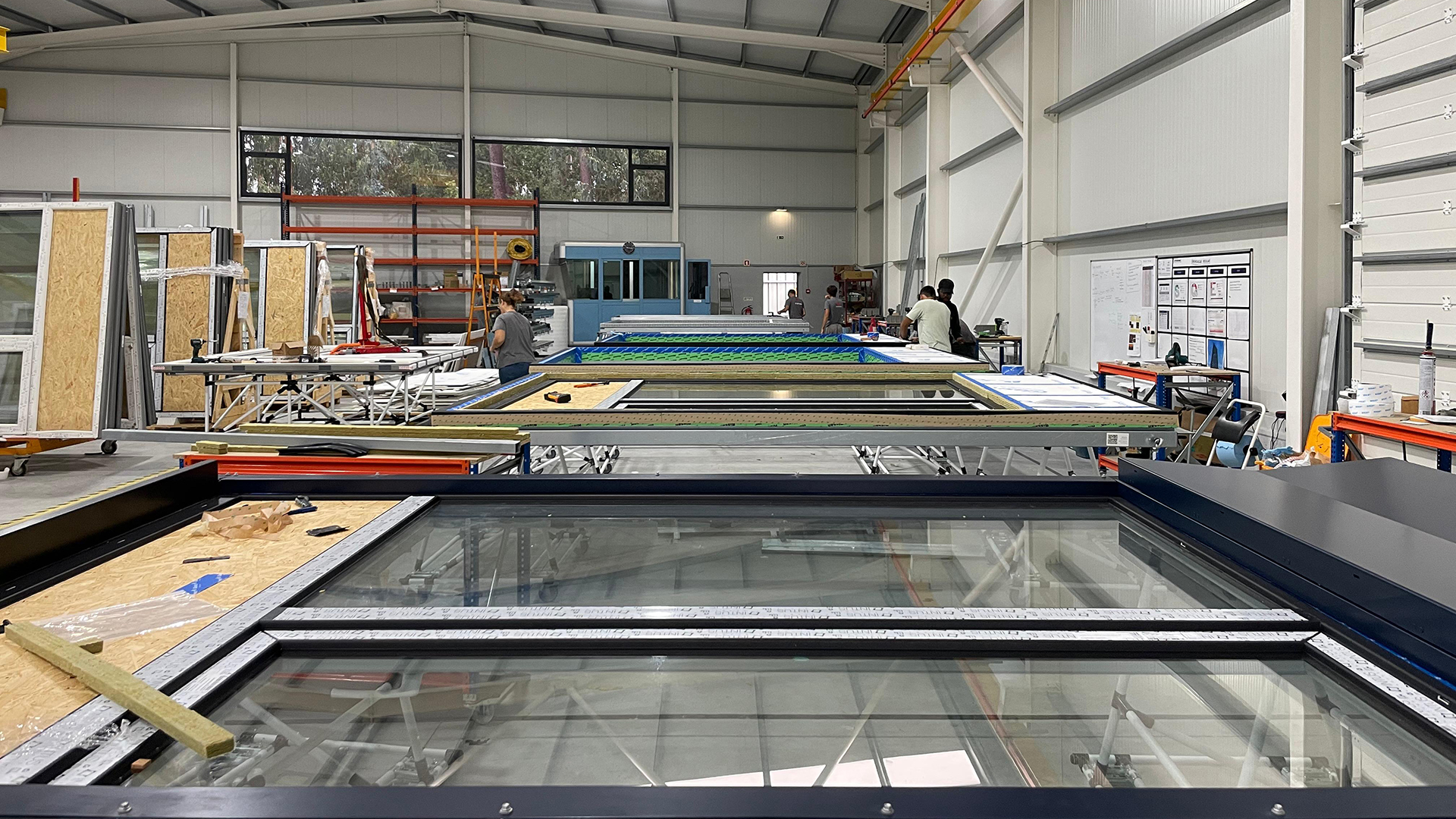
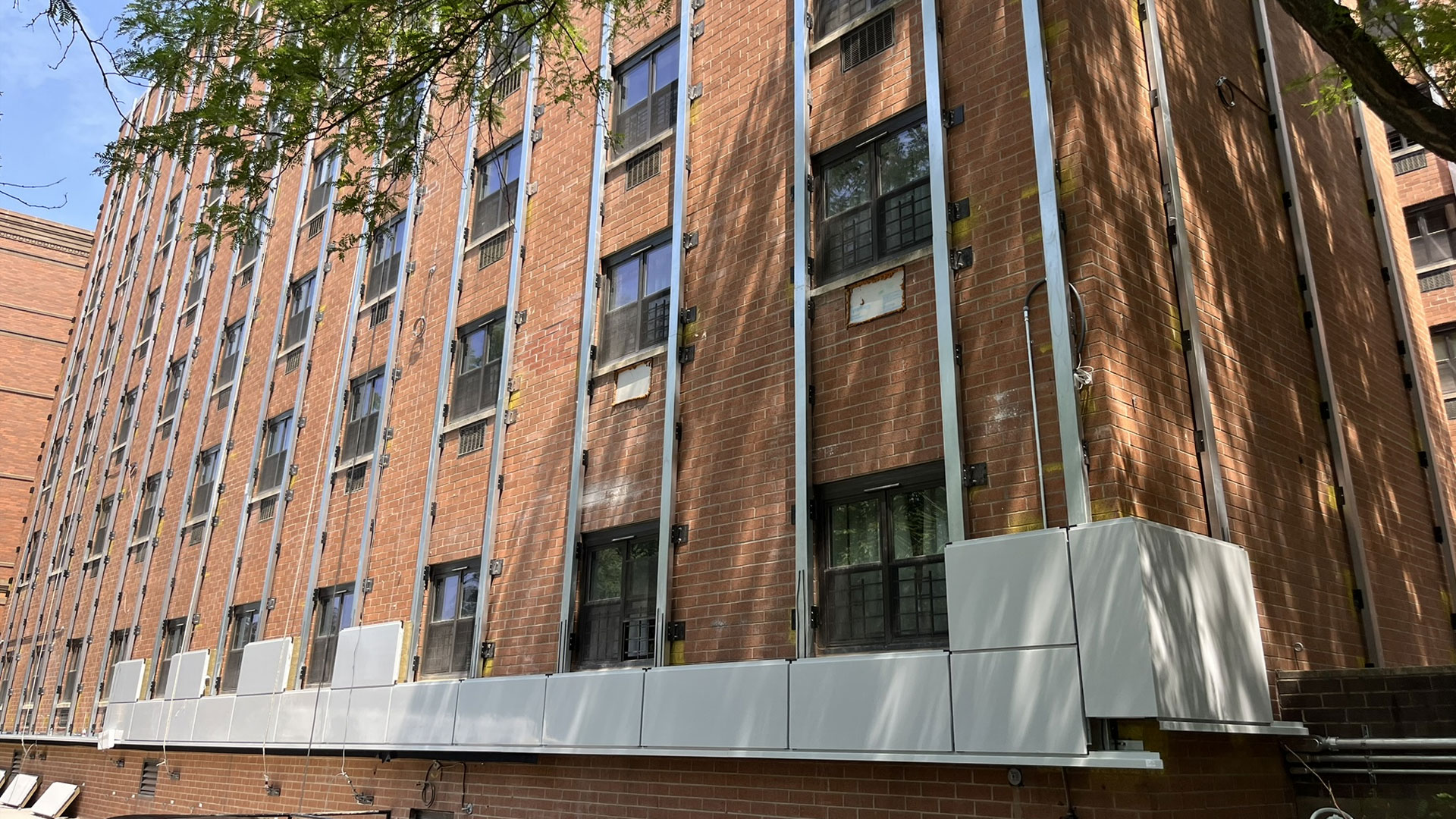
One of the less-discussed advantages of factory-assembled exterior building components is the direct impact on NFPA 285 compliance. Field-assembled exterior systems introduce substitution risk at every stage: the insulation product on delivery day, the air barrier brand available from the local distributor, the adhesive the installer has on hand. Each substitution is a potential deviation from the tested assembly.
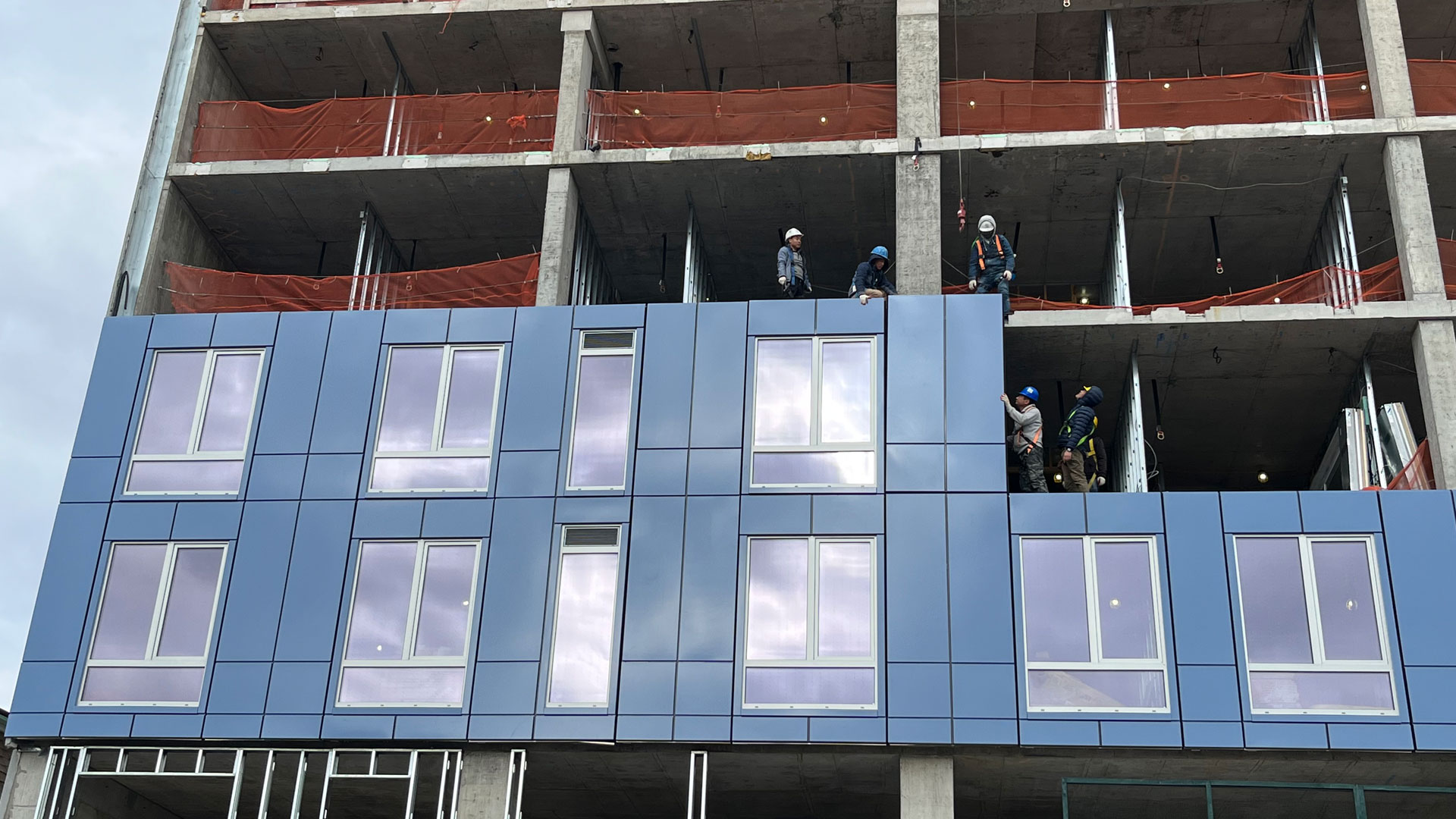
Factory-assembled components eliminate that variable. The insulation type, ACM core, substrate, air barrier, and joint treatment that constitute the NFPA 285-tested assembly are fixed at the factory and do not change between the test report and the delivered component. What passes the test is what goes on the building.
Non-combustible facade design is straightforward when the assembly is controlled. It becomes complicated when the tested configuration and the installed configuration diverge — something that field assembly makes structurally likely and factory assembly makes structurally impossible.
D Wall® Modular Building Component for Exteriors: NFPA 285 Compliance
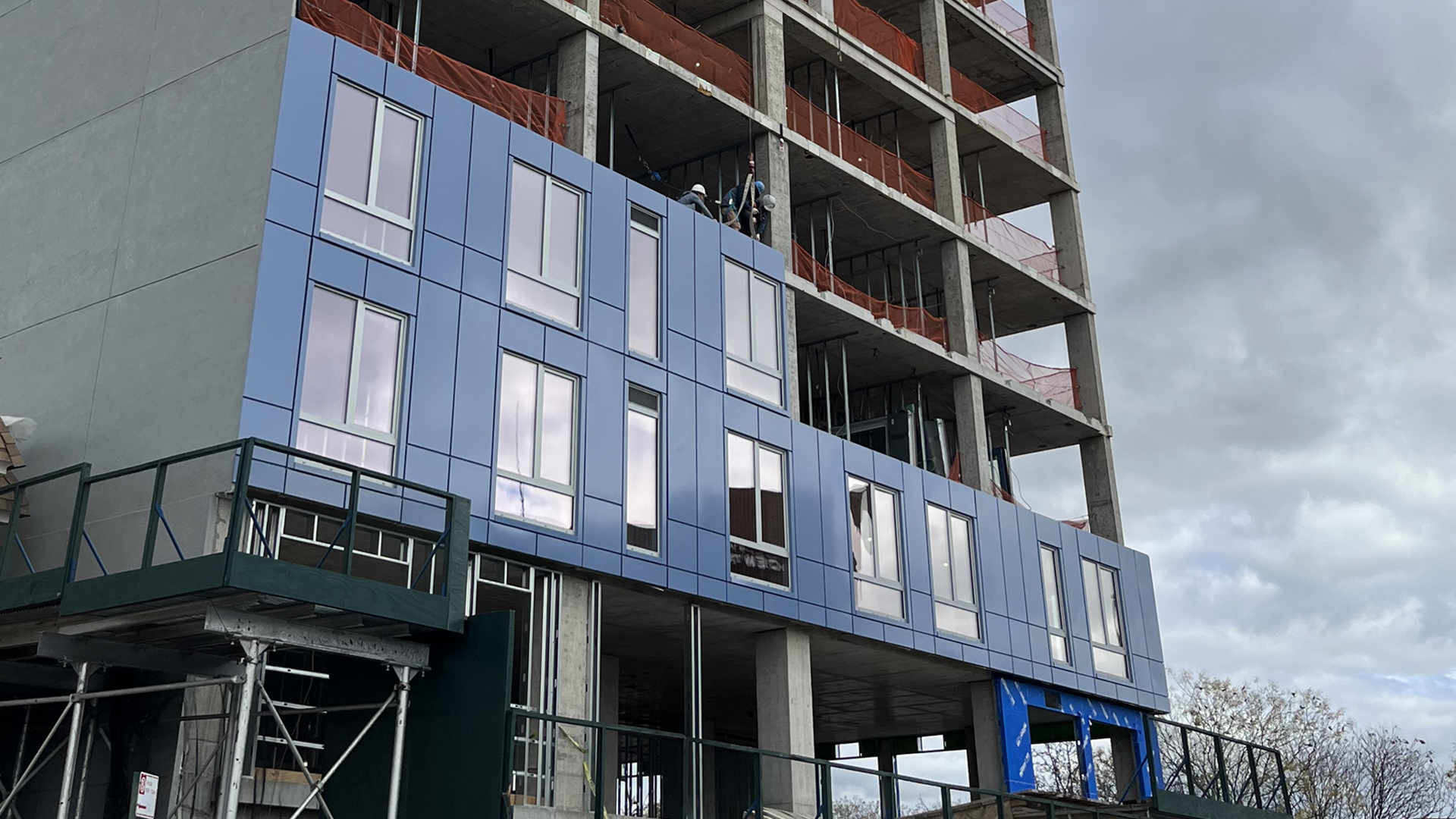
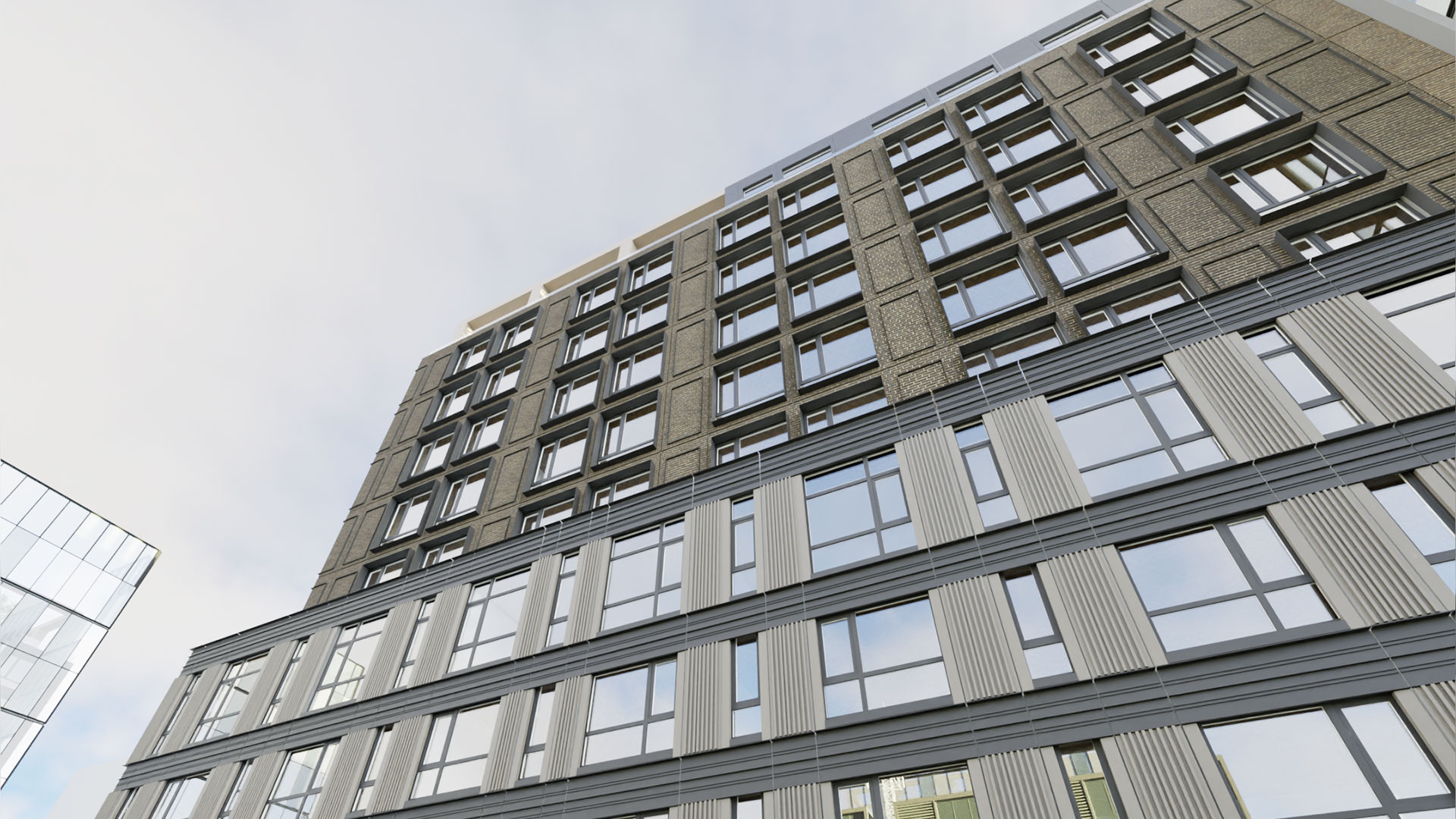
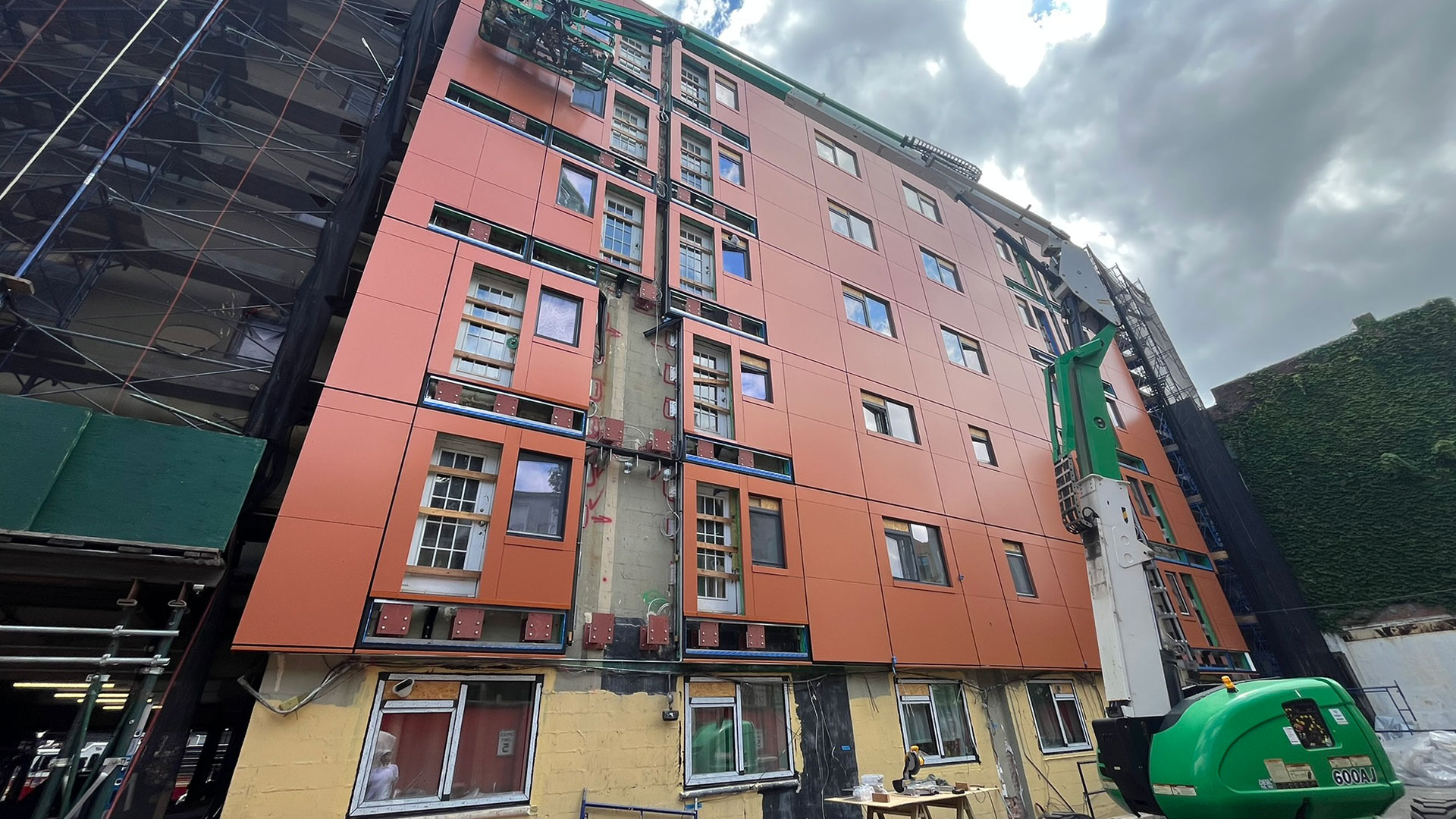
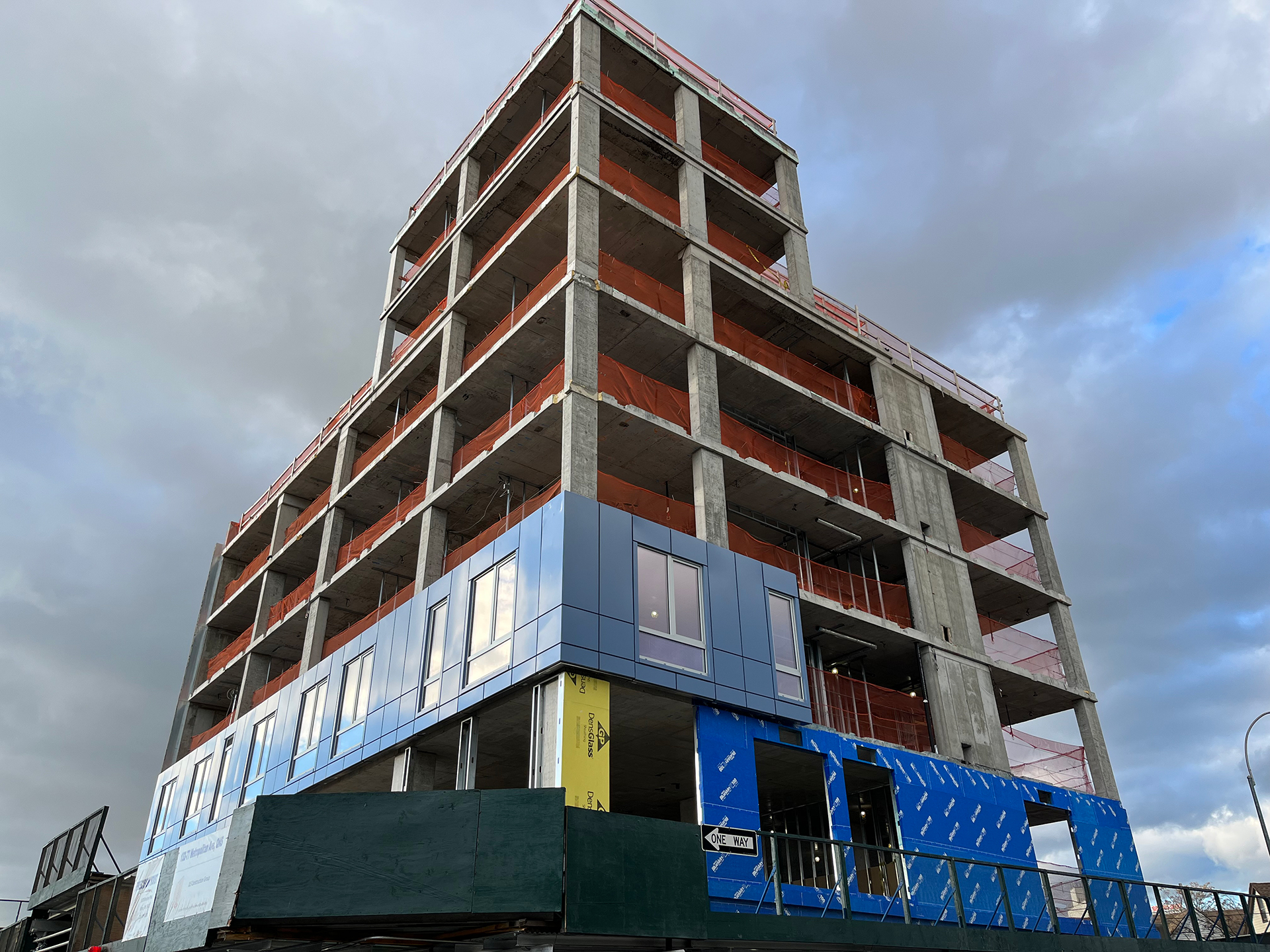
D Wall® modular building components for exteriors use aluminum framing with ACM as the core cladding material. D Wall® has passed NFPA 285 testing, and the full tested assembly documentation is available to architects and specifiers at the submittal stage — formatted for inclusion in permit applications.
The aluminum components are coated to AAMA 2605, the highest-performing architectural coating standard and the default specification for commercial high-rise projects in New York City. AAMA 2604 is available upon request for projects where that standard applies.
Because D Wall® is factory-assembled, the configuration that passed NFPA 285 testing — ACM type, insulation, substrate, air barrier, and joint treatment — is the configuration delivered to the site. There is no field assembly stage where substitutions can occur. This is what fire-resistant exterior cladding looks like in practice: documented, controlled, and traceable from the factory test report to the installed component.
For project-specific NFPA 285 documentation and submittal support, contact Dextall's technical team at dextall.com.
Key Takeaways
- NFPA 285 evaluates the complete exterior wall assembly — not individual ACM components. An ASTM E84 rating does not satisfy NFPA 285 requirements.
- ACM with a polyethylene core does not pass NFPA 285. Mineral-filled core ACM provides the most reliable compliance path for high-rise projects.
- IBC Section 1403.5 triggers NFPA 285 for any assembly combining foam plastic insulation and ACM on Type I–IV buildings — which covers virtually all commercial high-rise construction in the United States.
- Specifications should name the tested assembly configuration, the insulation type, and the coating standard. AAMA 2605 is the correct coating standard for high-rise exterior aluminum in NYC.
- Factory-assembled exterior building components maintain the tested assembly configuration from production to installation, eliminating the field substitution risk that most commonly causes NFPA 285 compliance failures.
FAQ
What is NFPA 285 and when is it required?
NFPA 285 is a full-scale fire test that evaluates how fire propagates across a two-story exterior wall assembly containing combustible components. It is required by IBC Section 1403.5 for exterior assemblies that combine foam plastic insulation with cladding materials on buildings of Type I, II, III, or IV construction — which includes the majority of commercial high-rise buildings in the United States.
Does an ASTM E84 Class A rating satisfy NFPA 285?
No. ASTM E84 (the Steiner Tunnel test) evaluates a material's flame spread and smoke development in isolation. NFPA 285 evaluates the complete assembly — ACM, insulation, substrate, air barrier, and framing — under conditions that simulate a real building fire. A Class A ASTM E84 rating on an ACM product does not demonstrate that the full assembly passes NFPA 285.
Which ACM core type is required for high-rise buildings?
The IBC does not specify a core type — it requires the tested assembly to pass NFPA 285. However, polyethylene-core ACM does not pass NFPA 285 for high-rise applications. Mineral-filled core ACM provides the most reliable compliance path and has become the standard specification for commercial projects over 40 feet in NYC, Boston, and Chicago.
What coating standard applies to aluminum exterior cladding in NYC?
AAMA 2605 is the highest-performing coating standard for architectural aluminum and the standard most commonly specified on commercial high-rise projects in New York City. It requires 70% PVDF resin-based coatings and carries a 10-year minimum chalk and fade warranty. AAMA 2604 is a lower-performance standard appropriate for projects with less demanding durability requirements.
How does factory assembly affect NFPA 285 compliance?
Factory-assembled exterior building components maintain the exact configuration — ACM type, insulation, substrate, air barrier — that was used in the NFPA 285 tested assembly. Field-assembled systems are subject to material substitutions during installation that can deviate from the tested configuration. Factory assembly eliminates this risk by fixing the assembly in production before it reaches the site.
Sources
- NFPA 285: Standard Fire Test Method for Evaluation of Fire Propagation Characteristics of Exterior Non-Load-Bearing Wall Assemblies Containing Combustible Components — NFPA.org
- IBC 2021, Chapter 14, Section 1403.5: Foam Plastic Insulation — International Code Council
- Independent Review of Building Regulations and Fire Safety (Hackitt Review, 2018) — UK Government
- Non-Combustible Facades: Why It Matters for High-Rise Design — Dextall
- Fire-Resistant Exterior Cladding: Dextall's Approach — Dextall































.jpeg)


-Compliance-for-NYC-Multifamily-%26-Co-Op-Facades.jpg)



























_format(webp).avif)
_format(webp)%20(6).avif)
_format(webp)%20(5).avif)
_format(webp)%20(4).avif)
_format(webp)%20(2).avif)
_format(webp)%20(3).avif)


.avif)
_format(webp)%20(2).avif)