Local Law 97: How Facade Upgrades Help NYC Buildings Meet

Local Law 97 is forcing NYC buildings to cut emissions fast - or start paying serious fines. Most owners rush to think about boilers, chillers, or heat pumps. But the biggest energy leak is often hiding in plain sight: the facade.
A leaky, poorly insulated building envelope can make even the most efficient mechanical systems struggle. Upgrading the facade with high-performance, prefabricated systems doesn't just save energy - it can reshape your entire LL97 compliance strategy.
Why Local Law 97 Puts the Spotlight on the Building Envelope
Local Law 97 isn't just about cleaner equipment - it's about cutting the total emissions from a building, year after year. That's why the law inevitably points straight at the building envelope: the facade, walls, windows, and insulation that control how much heating and cooling a building actually needs.
If the envelope leaks energy, even the best heat pumps and electrification strategies will struggle to keep emissions under the LL97 limits. Tightening up the facade becomes one of the most powerful levers owners have to reduce loads, avoid penalties, and unlock long-term, predictable compliance.
LL97 Emissions Limits and Why Existing Envelopes Are the Weak Link
Local Law 97 sets annual carbon caps for most NYC buildings over 25,000 sq ft. Go over your limit and you're looking at recurring fines of $268 per metric ton of CO₂e above the cap - every single year.
For many buildings, the main problem isn't only old equipment - it's the envelope. Common weak points:
- Aging windows with poor thermal performance
- Little or no insulation in walls and spandrels
- Thermal bridges at slabs, balconies, and parapets
- Air leakage through cracks, joints, and deteriorated materials
The result: your building needs far more heating and cooling than it should, pushing emissions up and making LL97 compliance much harder and more expensive.
Envelope-First LL97 Strategy: High-R, Airtight and Prefabricated
An envelope-first strategy starts with one question: how can we reduce the load before we upgrade the systems?
High-performing LL97 retrofits usually focus on:
- High R-value - better insulated walls and glazing to cut heat loss and gain
- Airtightness - continuous air barriers to stop uncontrolled infiltration
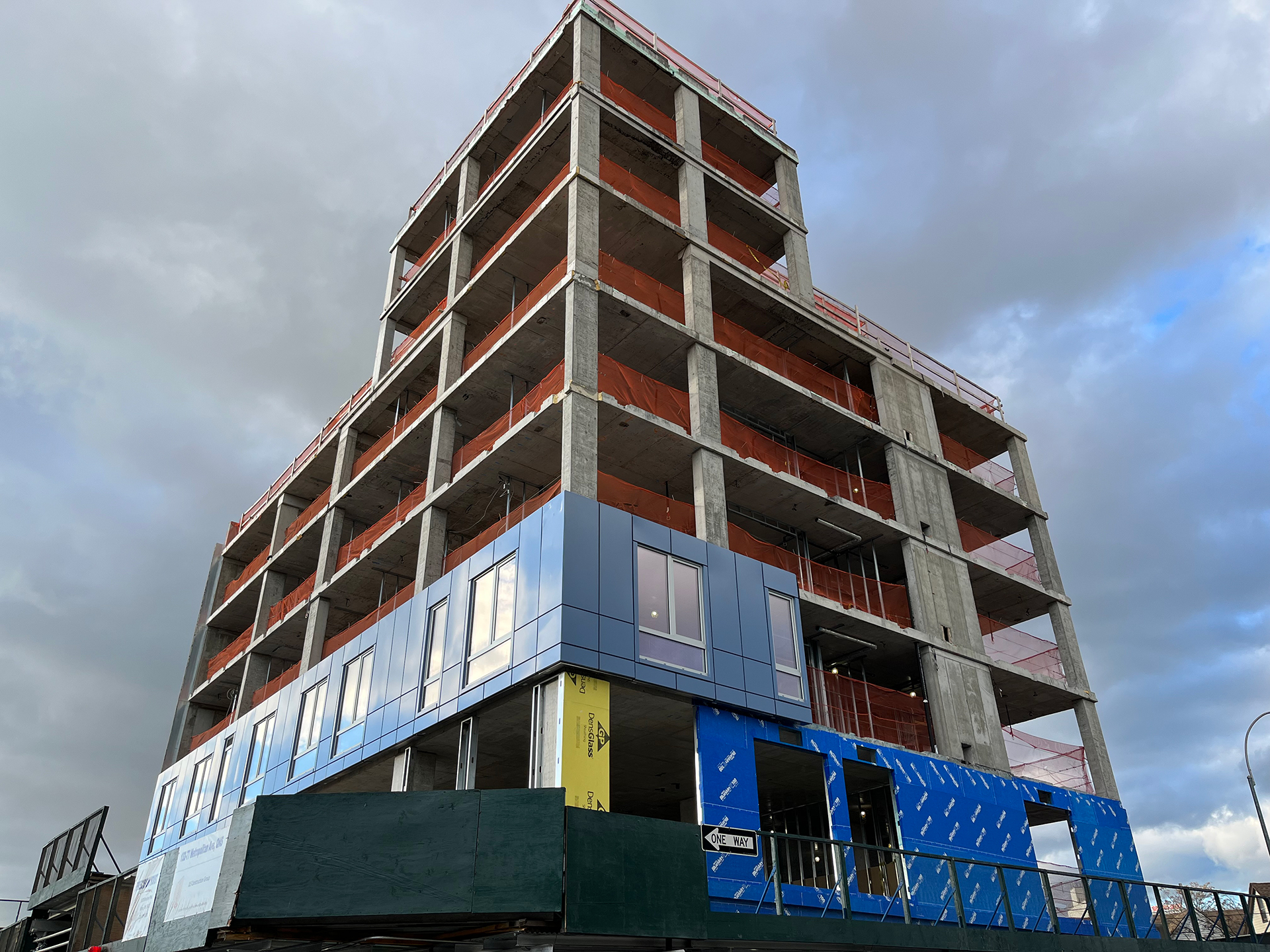
- Prefabrication - factory-built facade panels that install quickly and cleanly
With prefabricated facade systems, insulation, air/vapor control, windows, and cladding come as a single, tested package. That helps:
- Lower energy use so future heat pumps and electrification actually pay off
- Make LL97 modeling more predictable and favorable
- Reduce on-site disruption, scaffolding time, and tenant impact
For many NYC buildings, attacking LL97 at the envelope is what turns compliance from a looming penalty into a strategic upgrade.
Designing LL97 Retrofits With Prefab Facades and High-Performance Systems
For most NYC buildings, meeting Local Law 97 isn't just about swapping boilers for heat pumps - it's about lowering the load first. That's where prefabricated, high-performance facades change the game: they cut heating and cooling demand, make electrification feasible, and help owners hit emissions targets without endless on-site construction.
Smart LL97 retrofits treat the facade, heat pumps, and controls as one coordinated package, not separate projects. Prefab systems make that integration faster, cleaner, and more predictable.
Modeling LL97 Payback: Facades, Electrification and Heat Pumps
From an owner's perspective, LL97 is about risk, fines, and ROI. A solid model should:
- Show how a high-R, airtight facade reduces heating and cooling loads
- Use those lower loads to right-size heat pumps and cut fossil fuel use
- Compare scenarios: do nothing vs. systems-only vs. envelope + systems
- Quantify both energy savings and LL97 penalties avoided
When you run the numbers this way, envelope-first strategies often deliver shorter payback and more reliable compliance than focusing on mechanical upgrades alone.
Dextall High-Performance Facade System for LL97 Retrofits
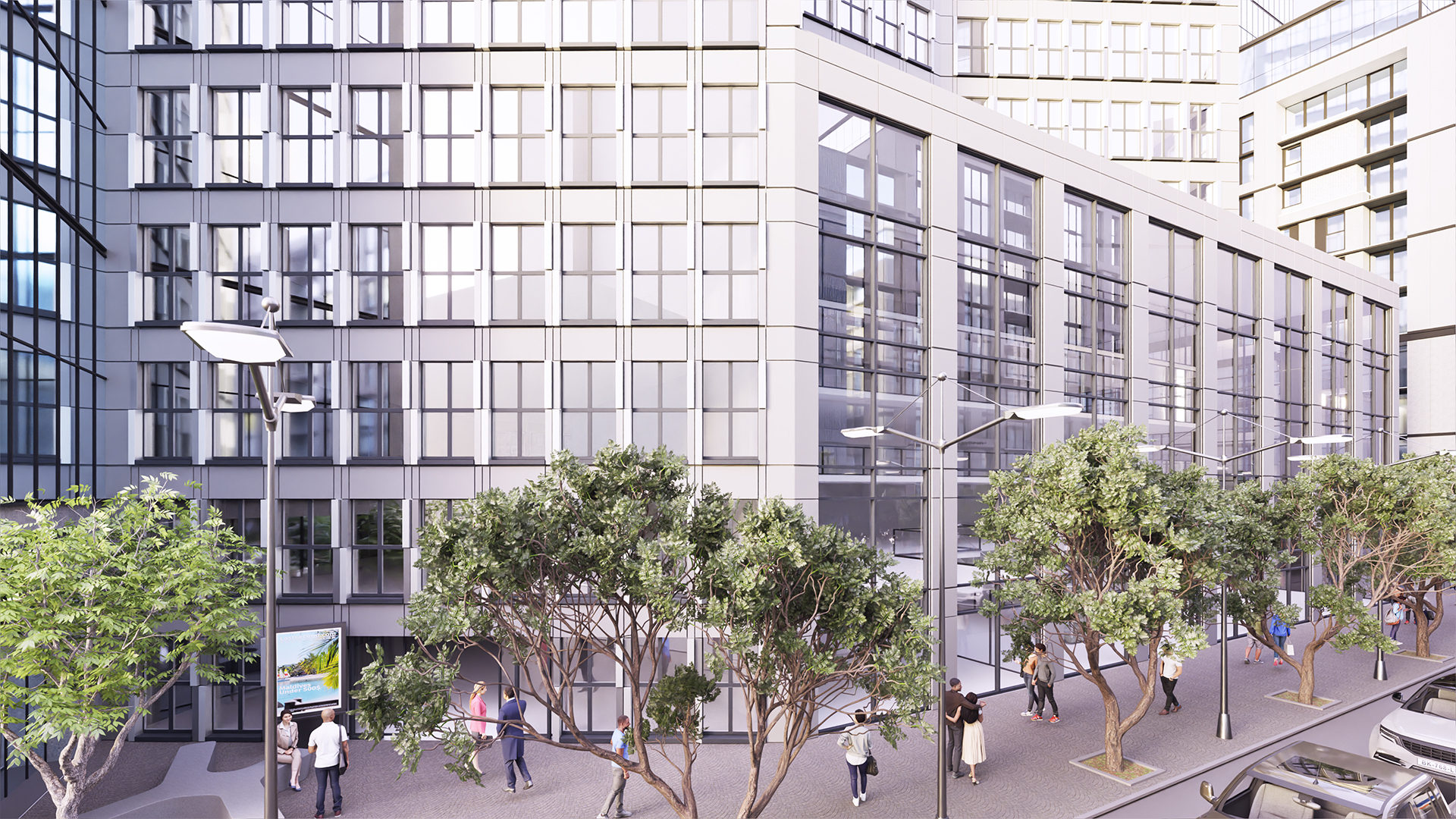
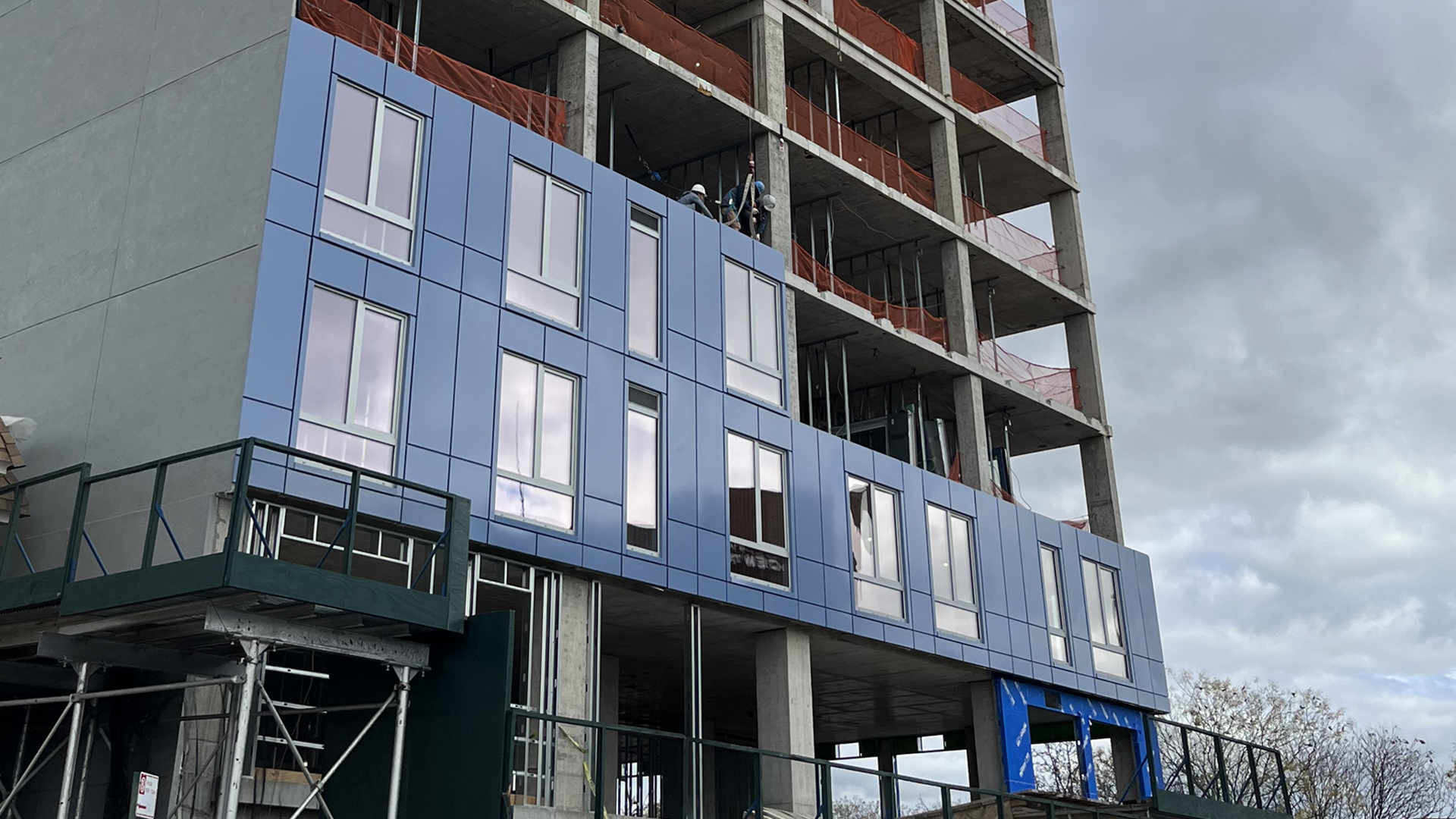
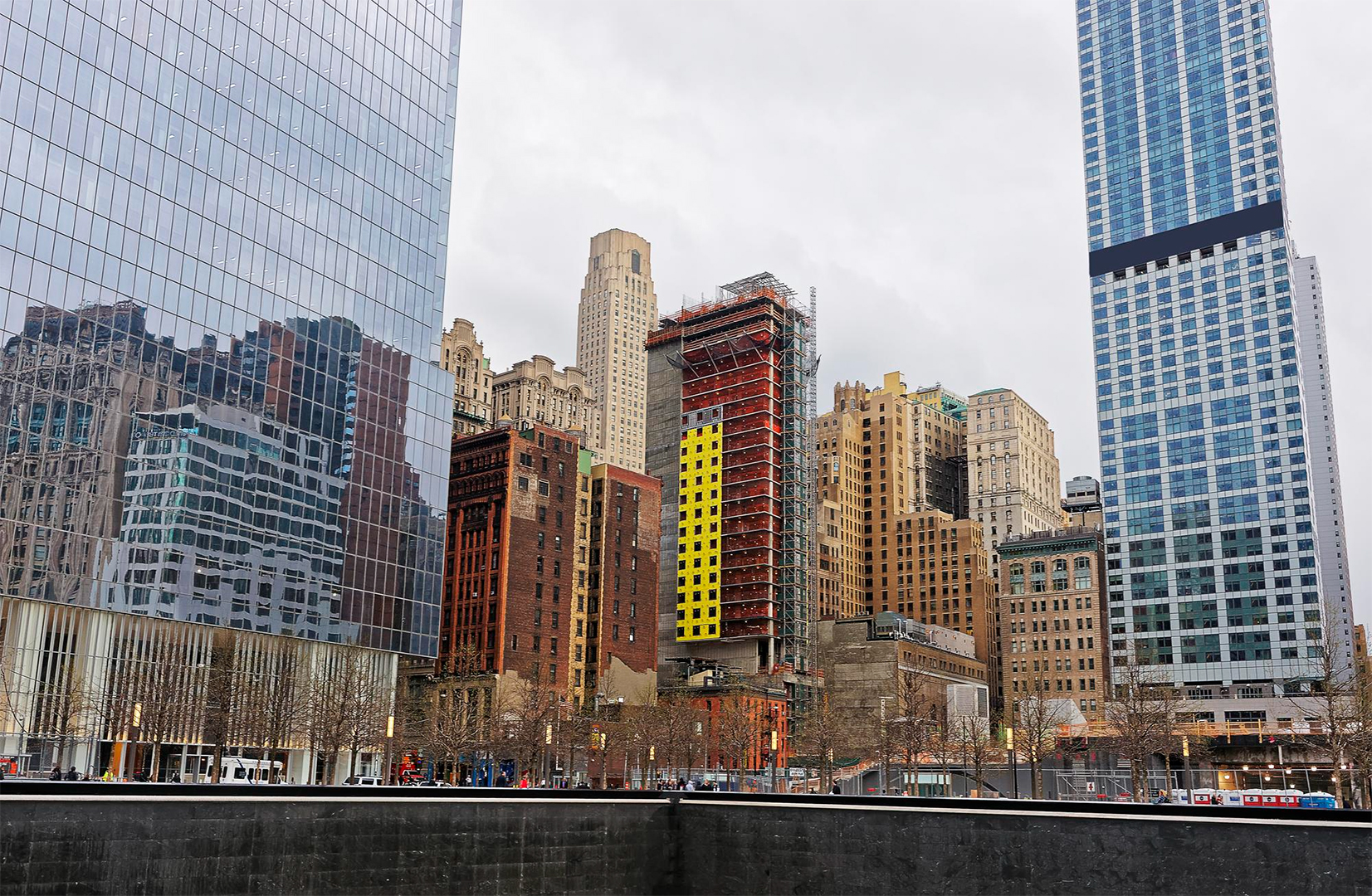
Dextall brings a focused, high-performance solution to this exact problem. It's a factory-built, unitized facade system designed for existing buildings that need serious envelope improvements to satisfy LL97.
What makes Dextall stand out for LL97 retrofits:
Integrated, high-performance panels
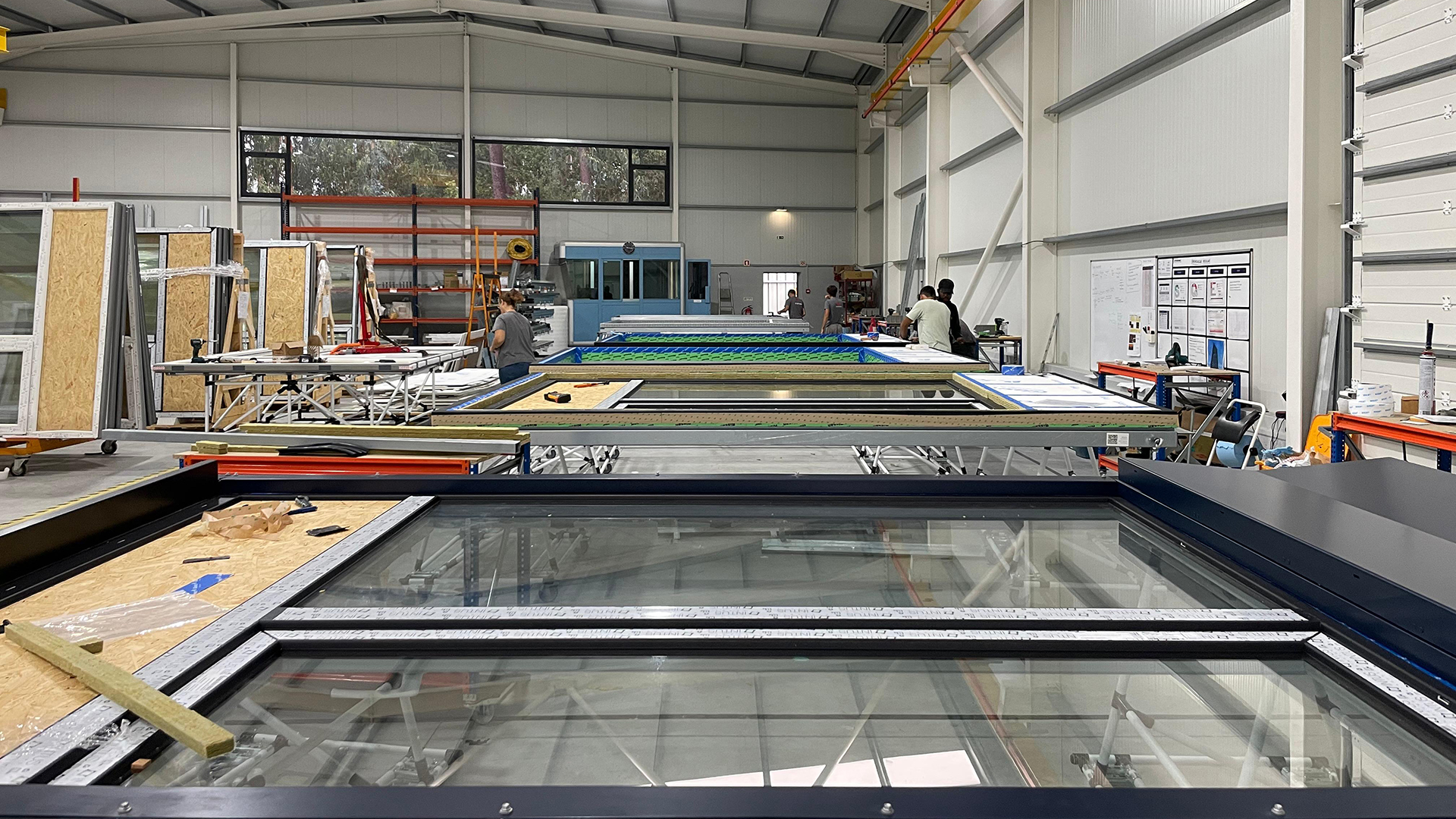
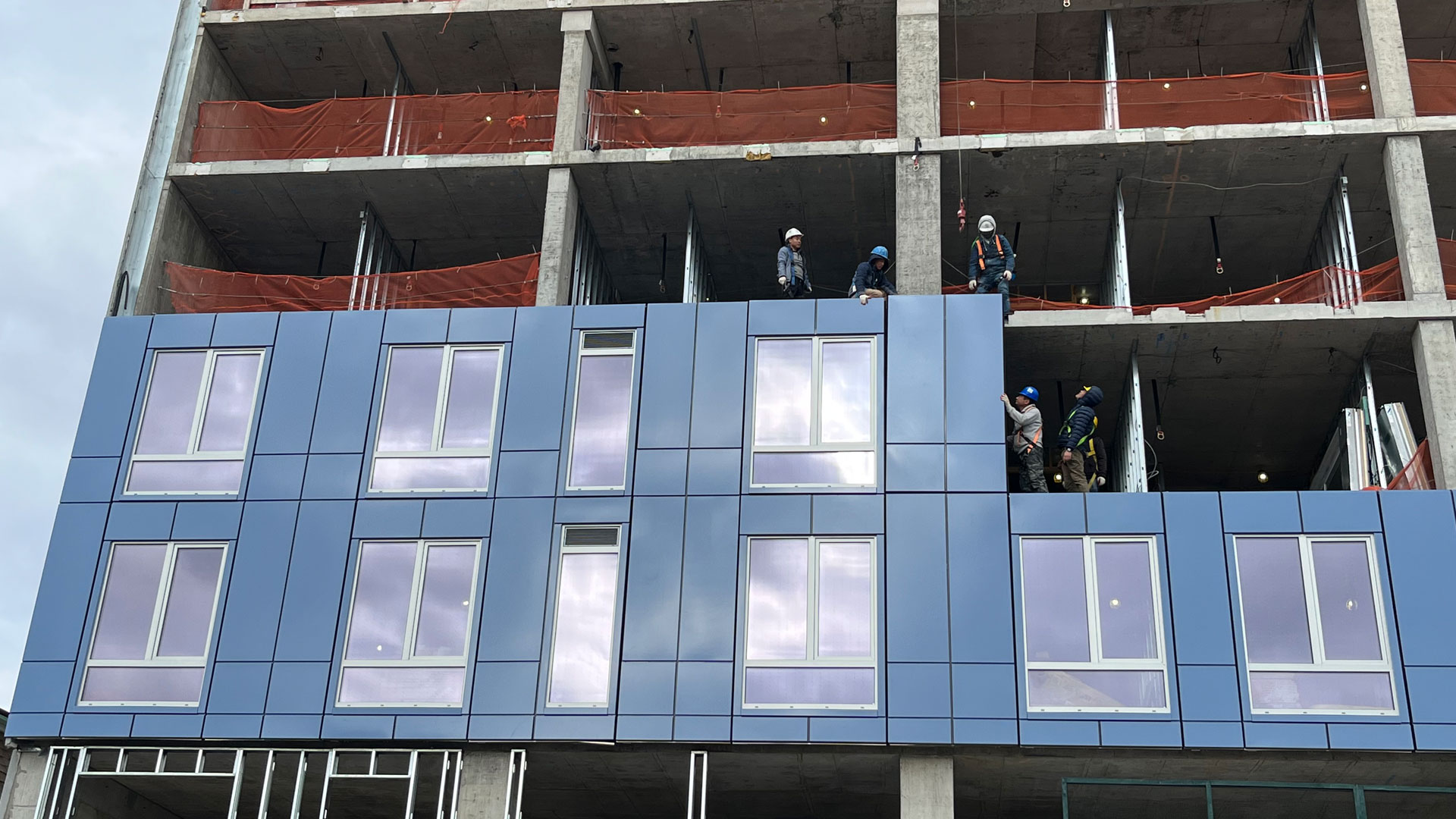
Insulation, air and vapor control, structure, and cladding are combined into one prefabricated panel, helping achieve consistent high R-values and airtightness.
Scaffold-free, faster installation
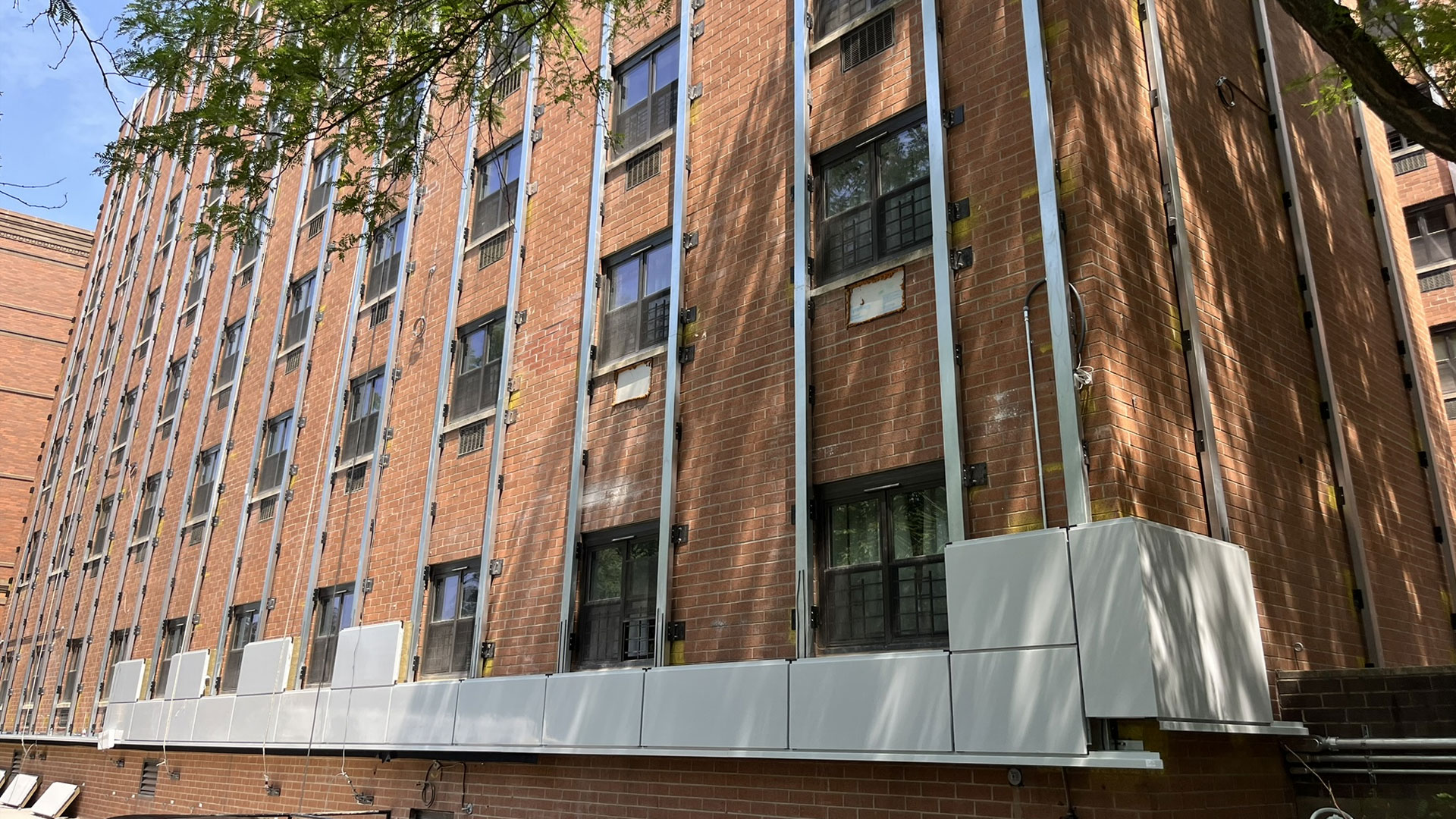
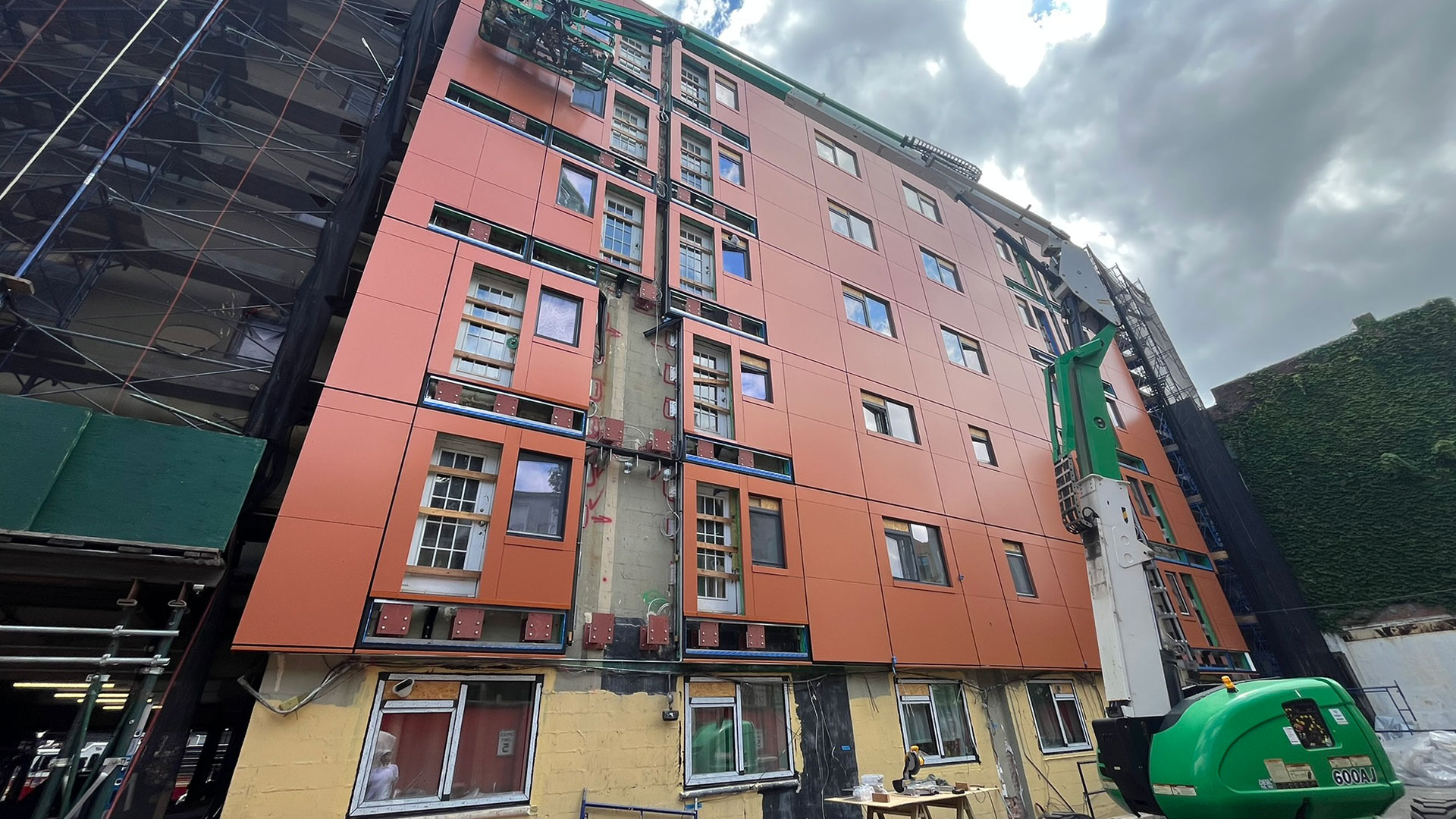
Dextall is engineered for installation with minimal scaffolding and reduced on-site time, which is critical in NYC: less disruption, fewer logistics issues, and a cleaner construction process.
LL97-aligned performance
Because the system's thermal and airtightness performance is known and repeatable, it fits neatly into LL97 energy and carbon models, making it easier to forecast load reductions and penalties avoided.
Design flexibility plus performance
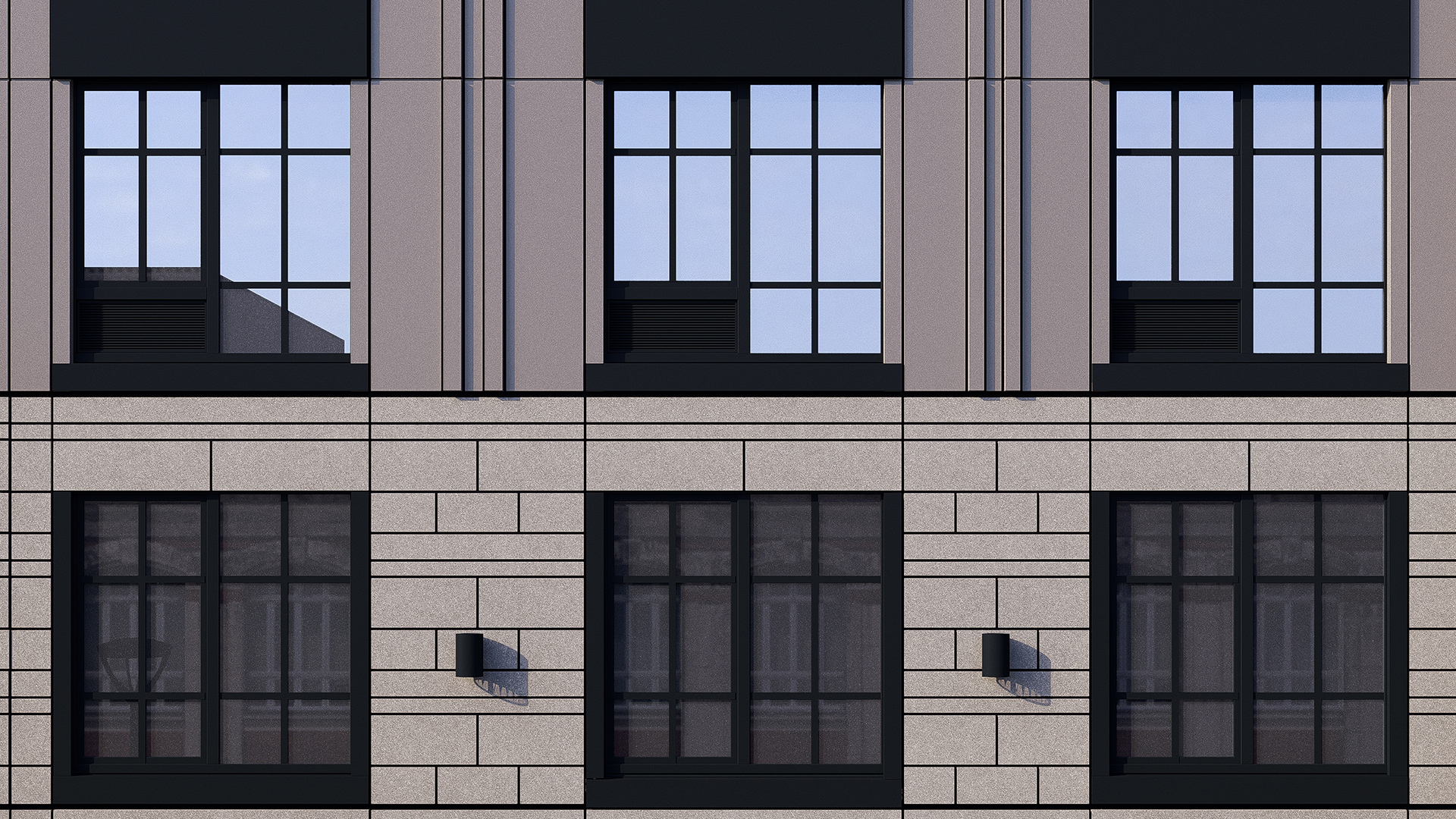
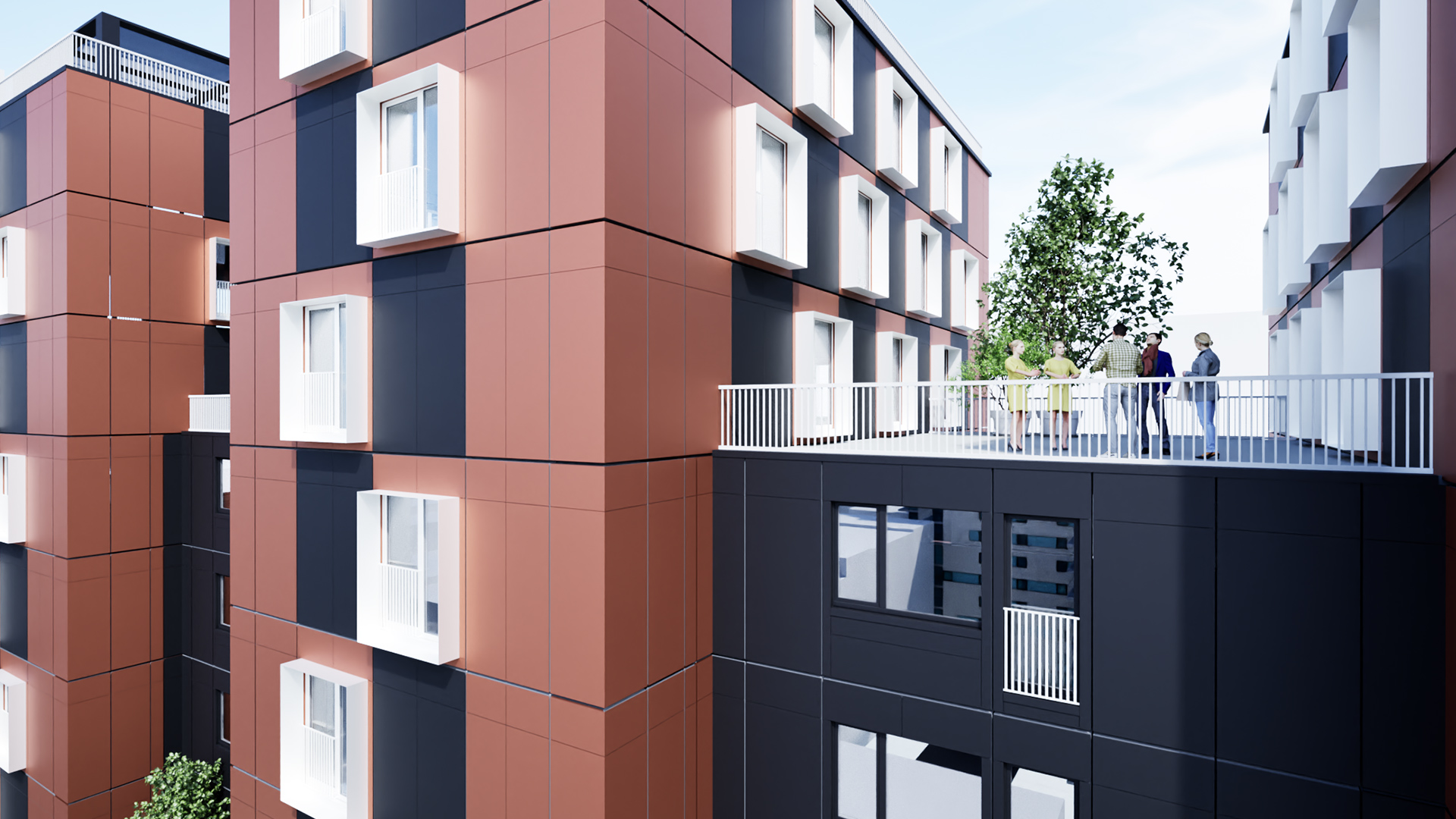
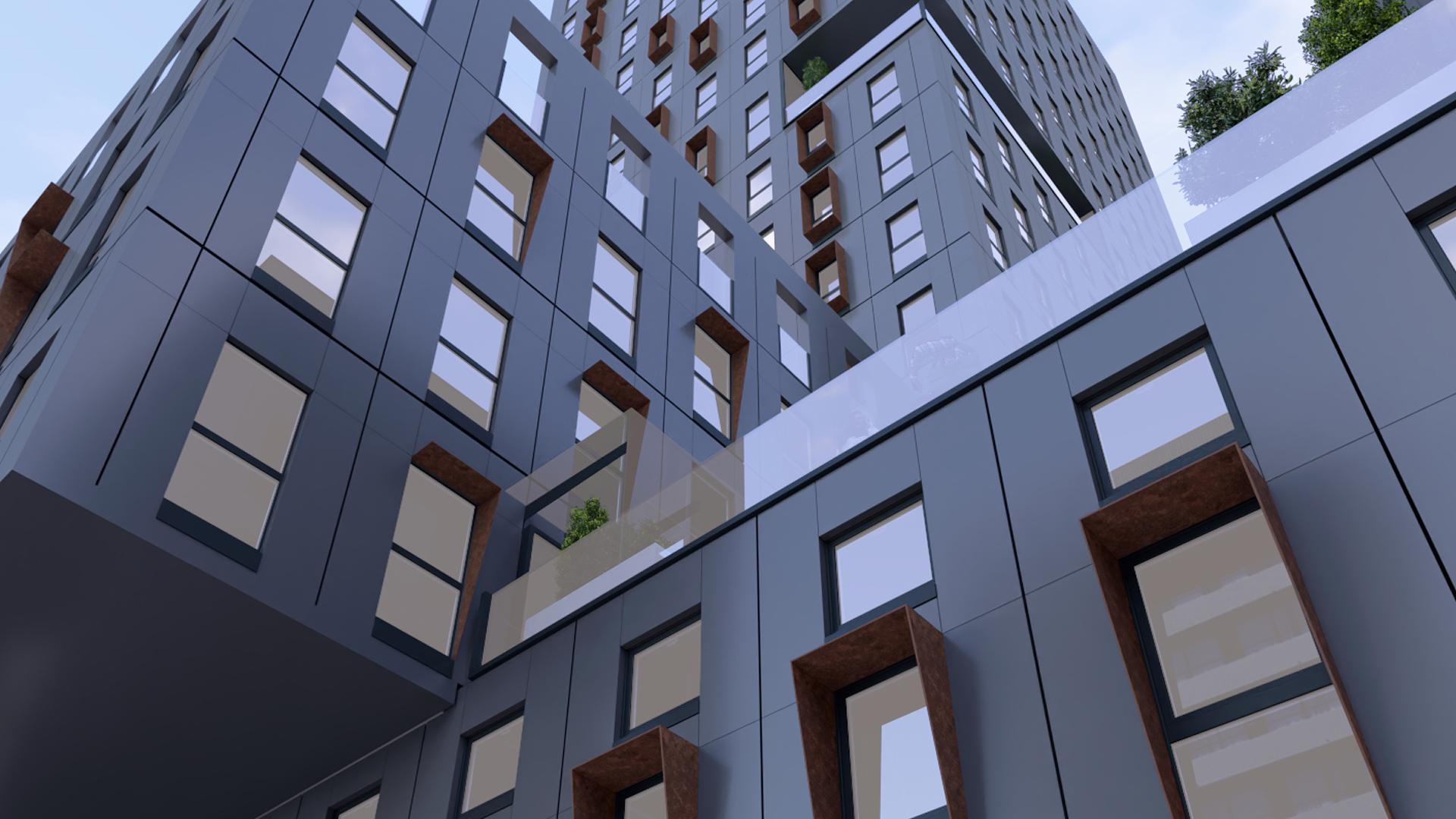
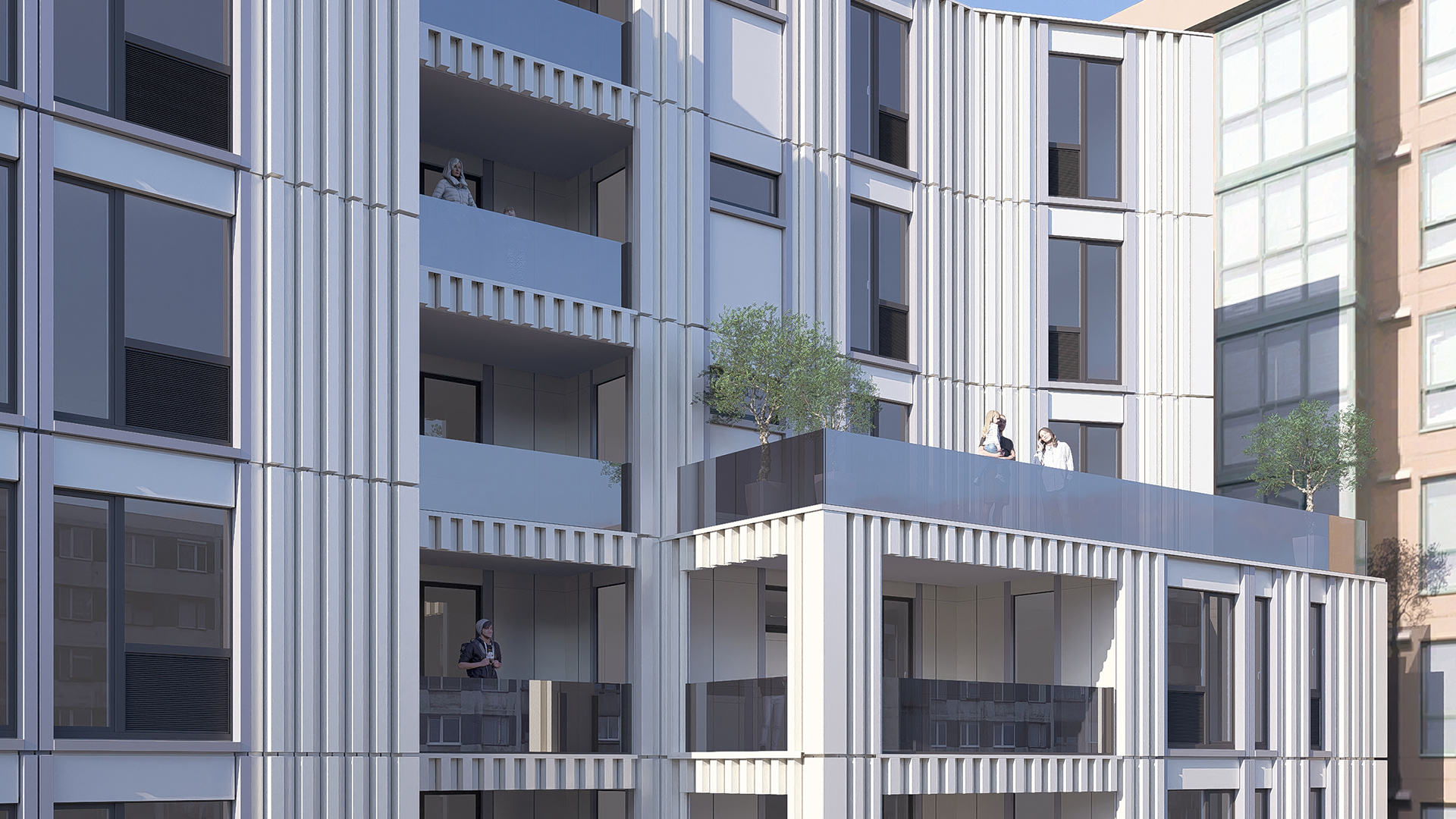
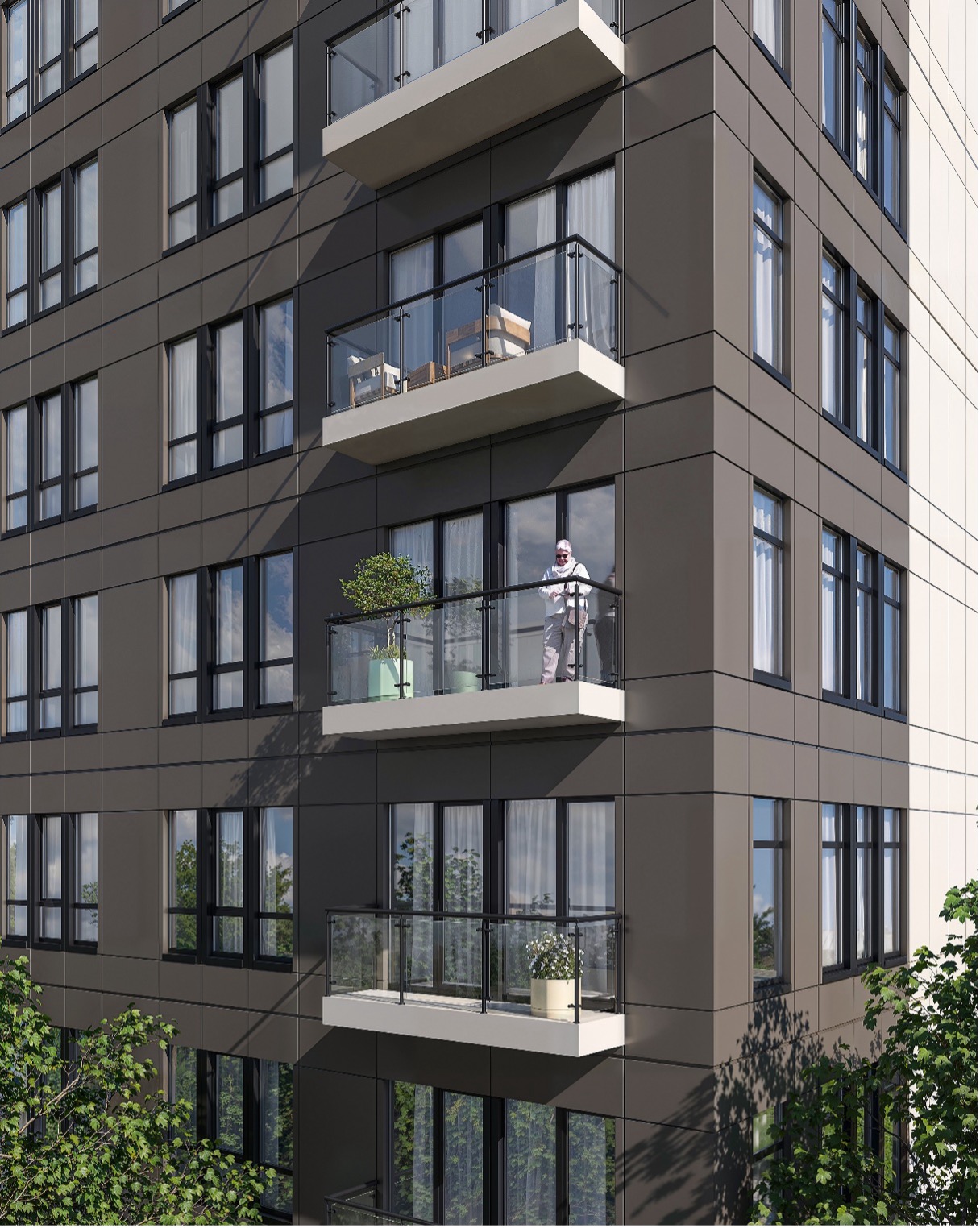
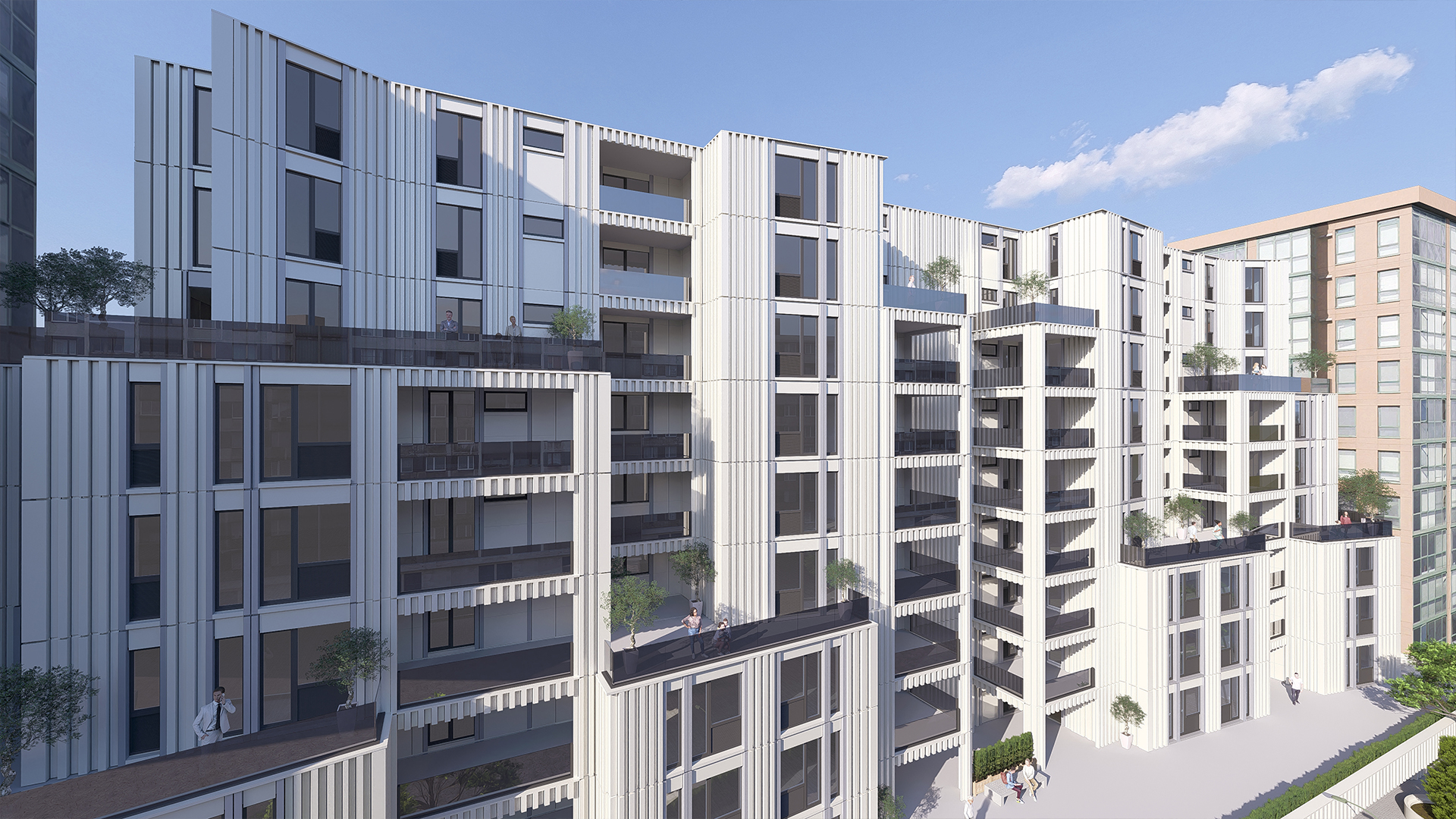
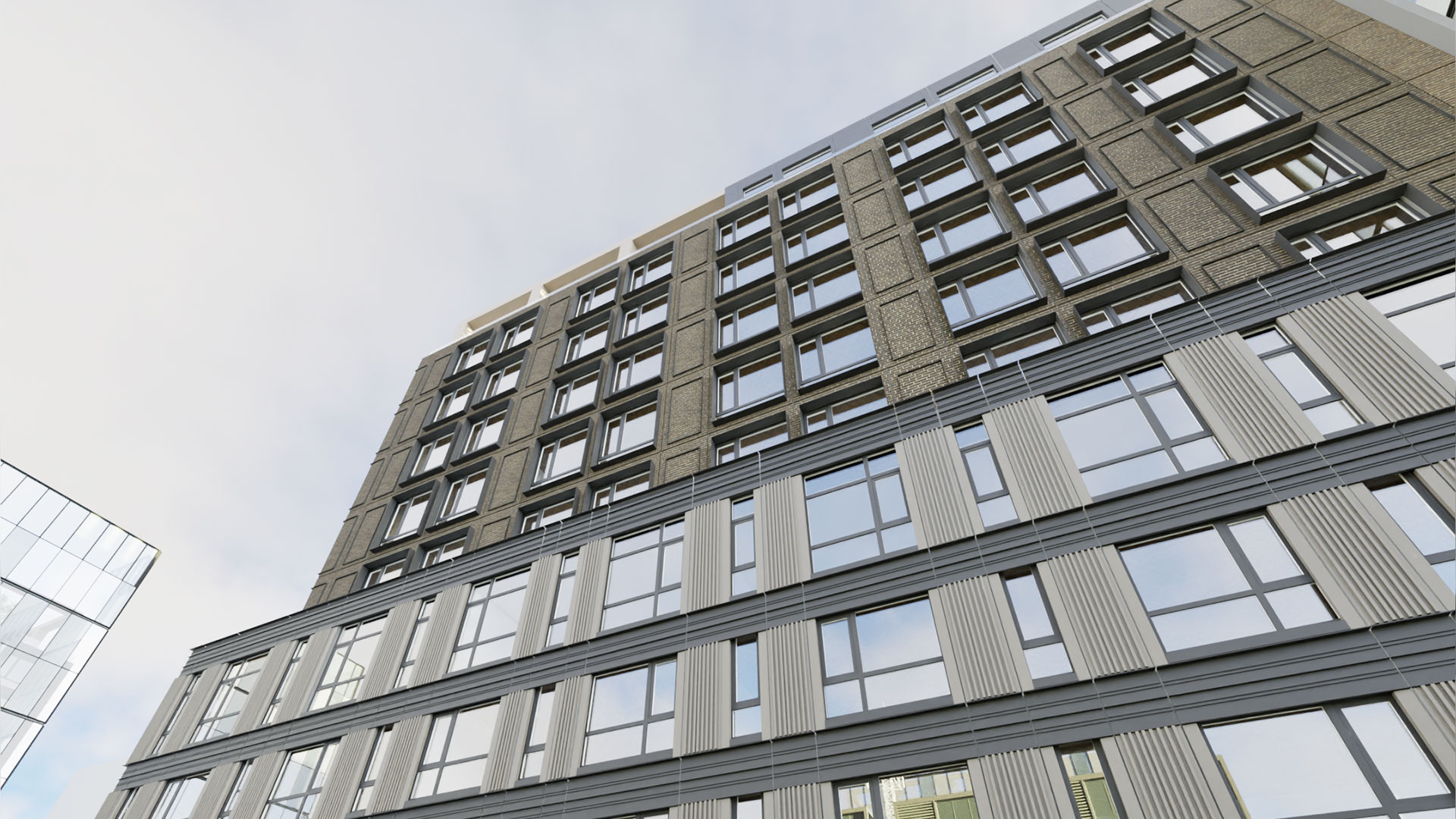
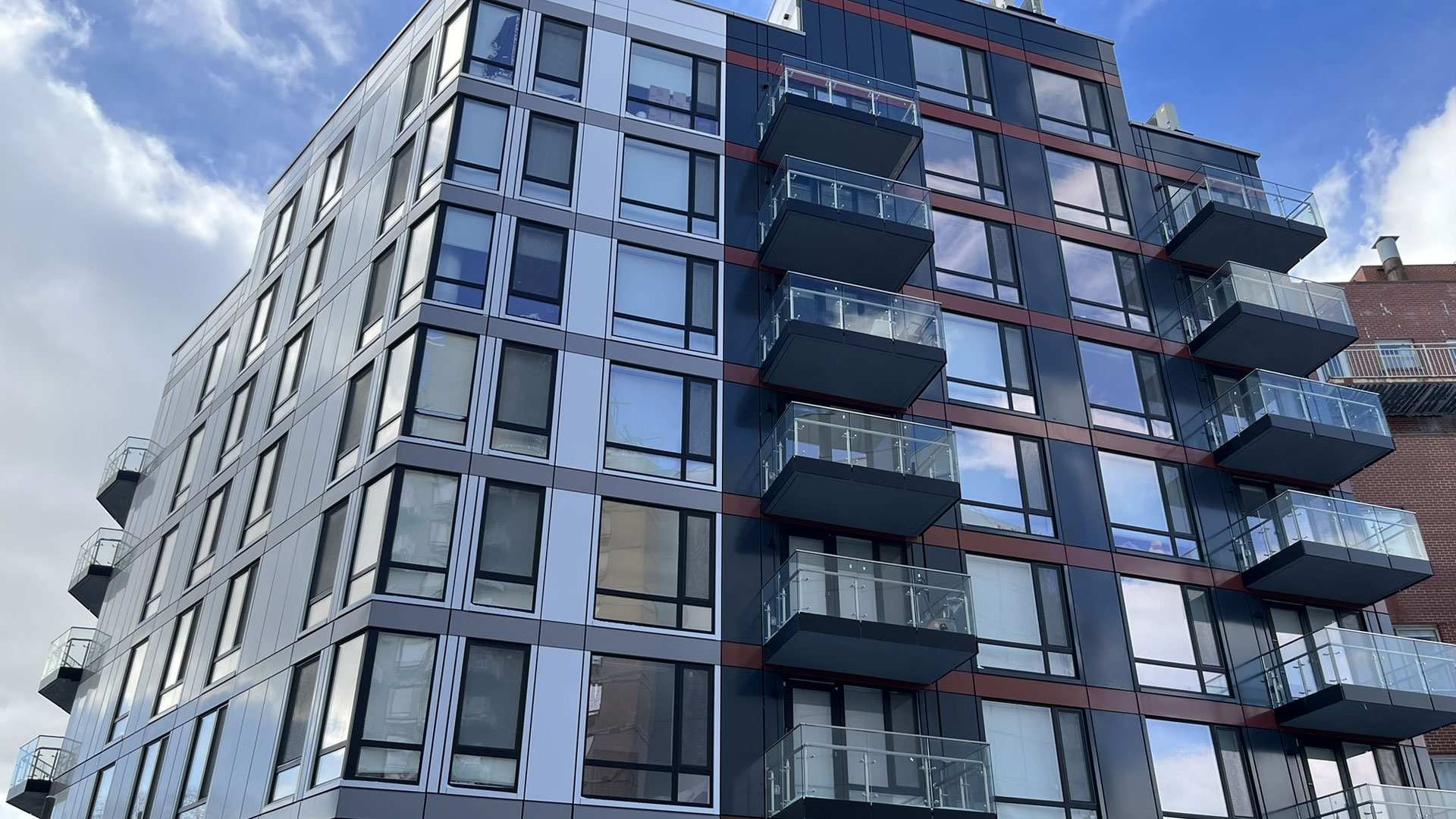
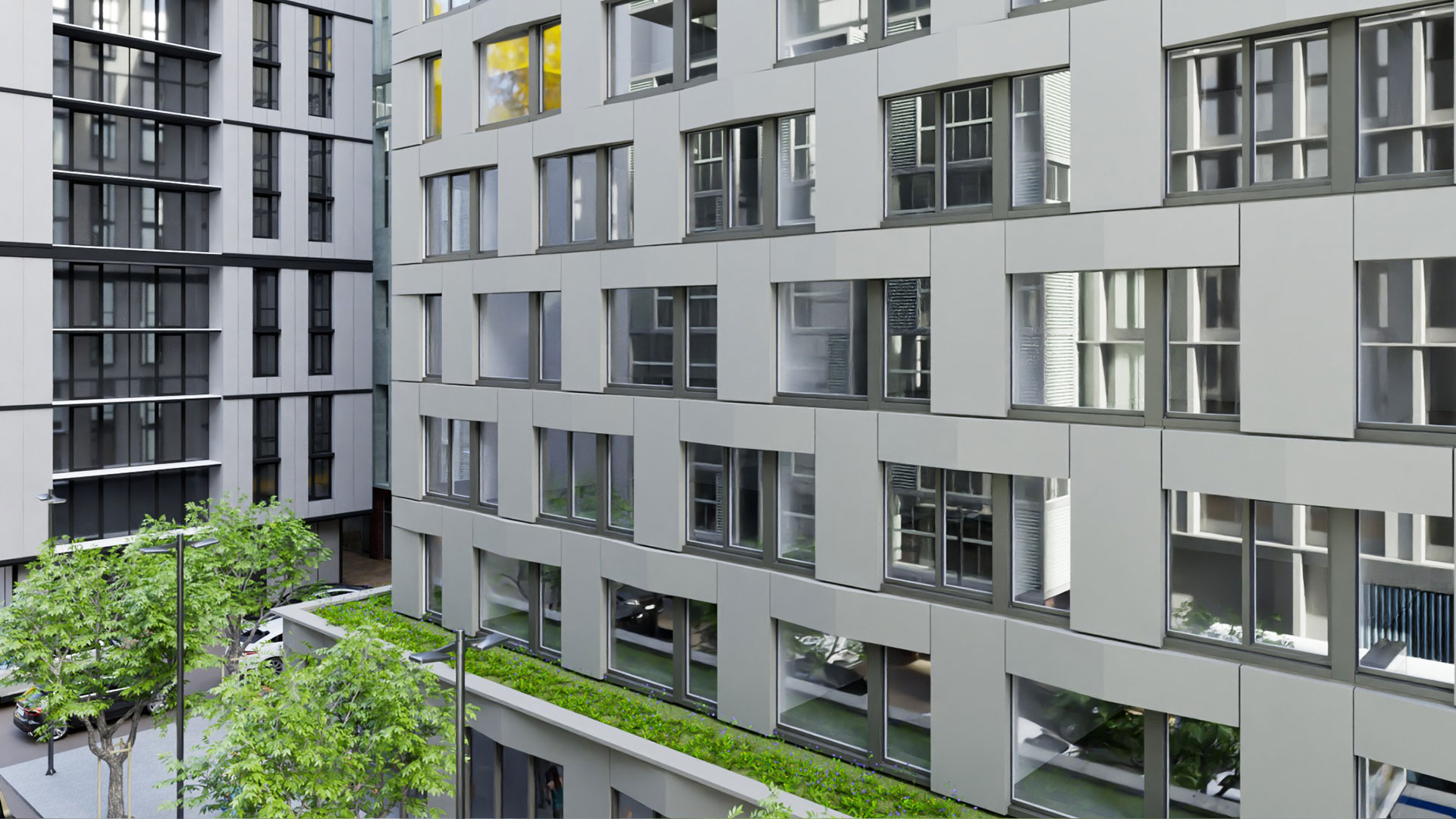
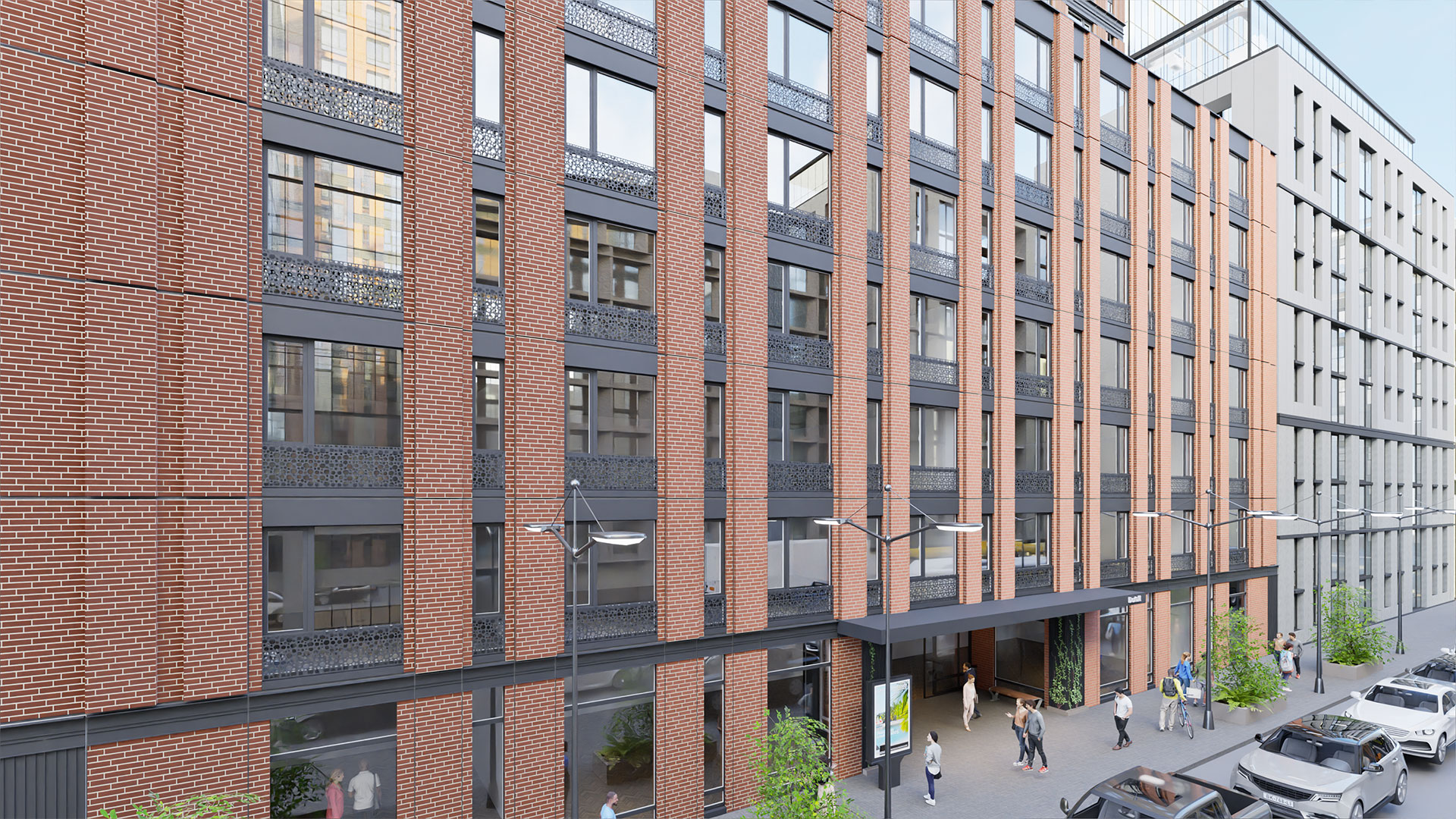
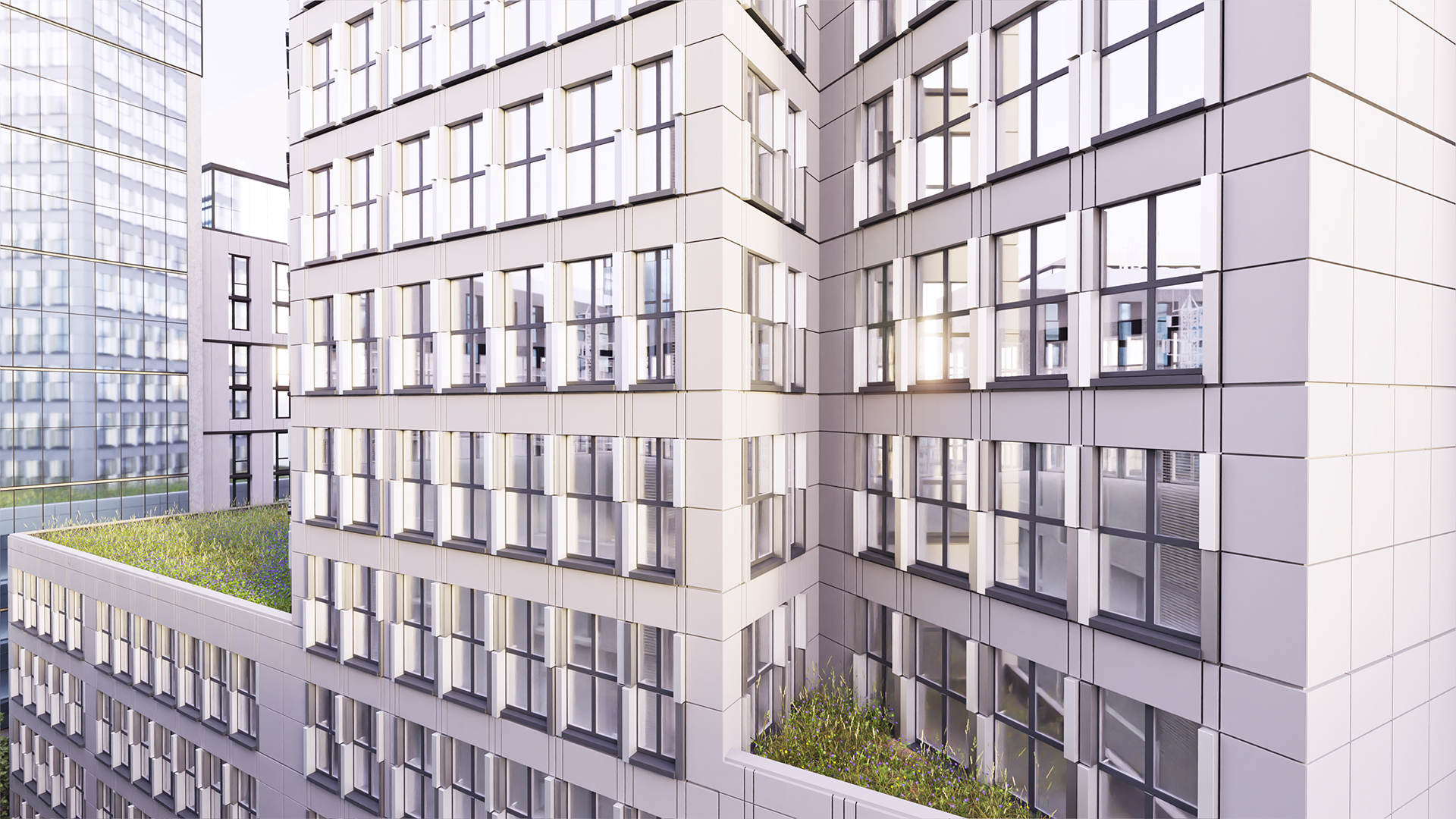
Owners don't have to choose between aesthetics and compliance: Dextall supports modern facade designs while still delivering the envelope performance needed for deep emissions cuts.
In short, for buildings treating LL97 as a chance to upgrade - not just avoid fines - Dextall offers a niche, high-performance facade solution that helps make the envelope the strongest part of the compliance strategy.
FAQ: Facades, Local Law 97 and Dextall
How does my facade affect Local Law 97 compliance?
The facade controls how much heating and cooling your building needs. A leaky envelope means higher energy use, higher emissions, and a harder time staying under LL97 limits.
Can a facade upgrade really lower LL97 fines?
Yes. A better envelope reduces loads, which cuts emissions. That can shrink — or in some cases avoid — recurring LL97 penalties.
What makes Dextall different from a typical reclad?
Dextall uses factory-built, unitized panels with integrated insulation, air/vapor control, and cladding, so performance is consistent and installation is much faster than traditional, layer-by-layer site work.
Is a Dextall retrofit disruptive for tenants?
It's designed to minimize disruption: panels are installed from the exterior with limited scaffolding and shorter on-site time, often allowing tenants to stay in place.
Does Dextall help with LL97 payback math?
Yes. By cutting loads and enabling smaller, more efficient mechanical systems, Dextall can improve energy savings and reduce LL97 penalties, making the overall retrofit payback more attractive.





















.jpeg)


-Compliance-for-NYC-Multifamily-%26-Co-Op-Facades.jpg)
















_format(webp).avif)
_format(webp)%20(6).avif)
_format(webp)%20(5).avif)
_format(webp)%20(4).avif)
_format(webp)%20(2).avif)
_format(webp)%20(3).avif)


.avif)
_format(webp)%20(2).avif)