AAMA 2604 vs. AAMA 2605: Coating Standards for Aluminum Exterior Cladding
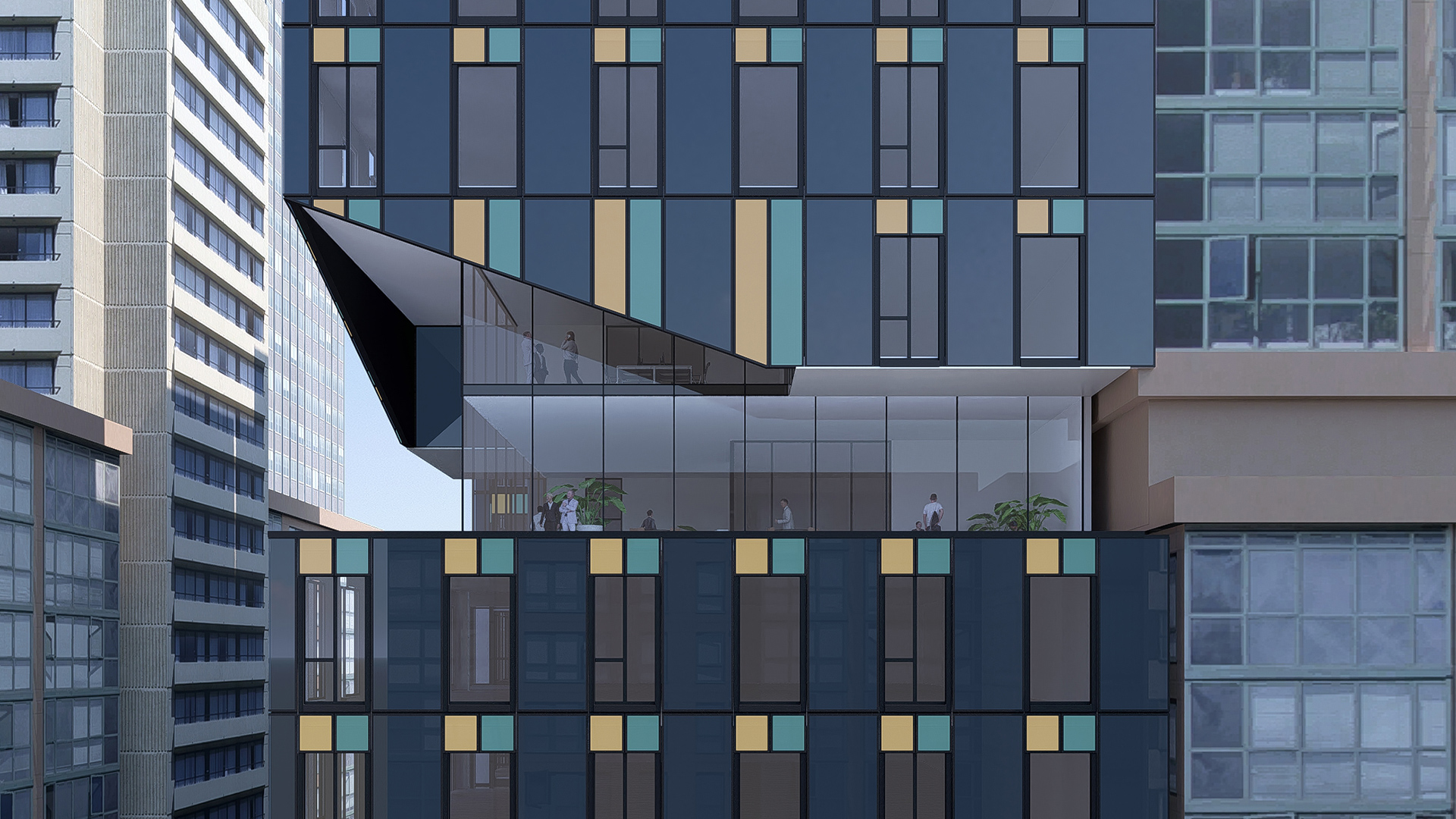
AAMA 2605 is the correct coating standard for aluminum exterior cladding on commercial high-rise projects in New York City, Boston, and Chicago. AAMA 2604 is a lower-performance standard appropriate for less demanding exposure conditions and shorter expected service lives. The practical difference between the two is not subtle: AAMA 2605 requires a minimum 70% PVDF resin content in the coating system and carries a 10-year chalk and fade warranty; AAMA 2604 requires a minimum 50% PVDF resin content and a 5-year warranty. On a building with a 50-year service expectation, that gap in initial coating performance compounds into measurable differences in long-term maintenance cost and facade appearance. Specifications that write "painted finish, AAMA 2604 or 2605" allow contractors to select the cheaper option every time.
Both standards are published by the Fenestration and Glazing Industry Alliance (FGIA), the organization that absorbed the American Architectural Manufacturers Association. Both apply to organic coatings on aluminum extrusions and aluminum composite material used in exterior applications. Neither standard is self-enforcing: compliance depends on specifiers who understand what they are requiring and contractors who submit documentation that proves it. This guide explains what separates these two standards, when each is appropriate, and what a compliant specification looks like.
What AAMA Coating Standards Cover
The AAMA coating standard series — 2603, 2604, and 2605, in ascending performance order — establishes minimum requirements for organic coatings applied to aluminum used in exterior architectural applications. Each standard defines:
- Minimum resin content in the coating system (measured as a percentage of PVDF or other fluoropolymer resin by weight in the dry film)
- Performance thresholds for UV exposure, color retention, chalk resistance, humidity resistance, and salt spray resistance, measured by ASTM test methods
- Minimum warranty periods that coating manufacturers must provide when their product is applied and tested to the standard
The standards do not specify a brand — Kynar 500® (Arkema) and Hylar 5000® (Solvay) are the most widely used 70% PVDF resin systems that meet AAMA 2605, but the standard is not tied to either. Any coating system that passes the AAMA 2605 test battery is compliant, regardless of brand.
A critical point that specification writers frequently overlook: the standards apply to the complete coating system — primer, finish coat, and clear coat where applicable — not to individual layers. A finish coat with 70% PVDF applied over a non-compliant primer does not satisfy AAMA 2605. The whole system must be tested and certified together.
AAMA 2603: The Baseline Standard
AAMA 2603 covers polyester-based organic coatings — the lowest performance tier in the series. It requires a 1-year minimum warranty and imposes modest thresholds for UV and humidity resistance. AAMA 2603 is appropriate for interior architectural aluminum and for exterior applications in very low-exposure environments. It is not appropriate for exterior cladding on commercial high-rise construction and should not appear as an acceptable standard in specifications for that application. It is mentioned here because specifications occasionally allow "AAMA 2603 or better" as a catch-all — a phrase that permits contractors to supply the lowest-performing coating the market produces.
AAMA 2604 vs. AAMA 2605: The Technical Difference
The two standards share the same test battery but differ in the thresholds that the coating system must achieve to pass. The table below describes the key parameters in plain language:
- PVDF resin content — AAMA 2604: minimum 50% by weight in the dry film. AAMA 2605: minimum 70% by weight in the dry film. Higher PVDF content is the primary driver of UV stability and long-term color retention.
- Chalk resistance — AAMA 2604: maximum rating of 8 (ASTM D4214) after 5 years of Florida south-facing outdoor exposure. AAMA 2605: maximum rating of 8 after 10 years of the same exposure. The longer test period at the same threshold means AAMA 2605 coatings must maintain appearance under a decade of accelerated UV exposure.
- Color change (fade) — AAMA 2604: maximum 5 delta-E units after 5 years outdoor exposure. AAMA 2605: maximum 5 delta-E units after 10 years. Same threshold, twice the exposure duration.
- Humidity resistance (ASTM D2247) — AAMA 2604: 3,000 hours. AAMA 2605: 4,000 hours.
- Salt spray resistance (ASTM B117) — AAMA 2604: 3,000 hours with no more than 1/16 inch creepage from scribe. AAMA 2605: 4,000 hours at the same threshold.
- Minimum warranty — AAMA 2604: 5 years chalk and fade. AAMA 2605: 10 years chalk and fade.
In practical terms: AAMA 2605 coatings are formulated to maintain acceptable appearance for at least twice as long as AAMA 2604 coatings under the same outdoor conditions. On a building expected to stand for 50 years, the first repaint cycle may arrive 15 to 20 years earlier under AAMA 2604 than under AAMA 2605 — a maintenance cost that is certain to exceed the initial premium for the higher-performing coating system.
Which Standard Your Project Requires
Several factors determine the appropriate coating standard for a given project:
- Building height. Upper floors of high-rise buildings receive more direct UV exposure than lower floors, which are partially shielded by neighboring structures. For buildings above 10 stories in urban markets, AAMA 2605 is the standard specification.
- Geographic exposure. Coastal environments — Miami, Boston's waterfront, Lower Manhattan — expose cladding to salt air that accelerates corrosion. AAMA 2605 salt spray resistance requirements (4,000 hours) are appropriate for coastal exposure. AAMA 2604 (3,000 hours) is marginal.
- Color specification. Dark colors retain heat and experience greater thermal stress at the coating surface. Dark-colored cladding on south and west exposures ages faster than light colors. AAMA 2605 is appropriate for any dark color specification on an exterior high-rise facade.
- Owner expectations and warranty period. For institutional owners, REITs, and long-term holders who expect to own the building for 30 or more years, AAMA 2605 is the standard that aligns with their maintenance cost expectations. AAMA 2604 is appropriate when the owner expects to hold for a shorter period or when the project budget explicitly accepts higher maintenance risk in exchange for lower initial cost.
- Local code or agency requirements. New York City's Department of Design and Construction specifies AAMA 2605 for publicly funded exterior aluminum on new construction. Other jurisdictions vary, but commercial high-rise practice in NYC, Boston, and Chicago has converged on AAMA 2605 as the market standard.
How to Write the Specification Correctly
The most common specification errors involving AAMA coating standards create exactly the problem they are meant to prevent: contractors who supply AAMA 2604 on a project designed for AAMA 2605 performance.
- Do not write "AAMA 2604 or 2605." This construction allows the contractor to select AAMA 2604 in all cases. If AAMA 2605 is the design intent, write "AAMA 2605" without alternatives.
- Require certification documentation at submittal. The contractor should submit the coating manufacturer's certification that the specific color and finish system meets AAMA 2605. This is a standard document that compliant coating manufacturers issue — it should be a condition of shop drawing approval.
- Specify the complete system. Write "AAMA 2605 coating system, including primer, finish coat, and clear coat where applicable, as certified by the coating manufacturer." This prevents the substitution of non-compliant primers under a compliant finish coat.
- Name the warranty requirement explicitly. "Coating manufacturer's 10-year warranty against chalk and fade per AAMA 2605" — this language makes the warranty a contractual requirement, not an optional offering from the manufacturer.
- Cross-reference with the cladding product specification. AAMA 2605 should appear in the same specification section as the cladding substrate — whether aluminum extrusion, aluminum composite material, or factory-assembled exterior building component. Separating the coating standard from the product specification creates a gap that submittals can fall through.
D Wall® Modular Building Components and AAMA 2605
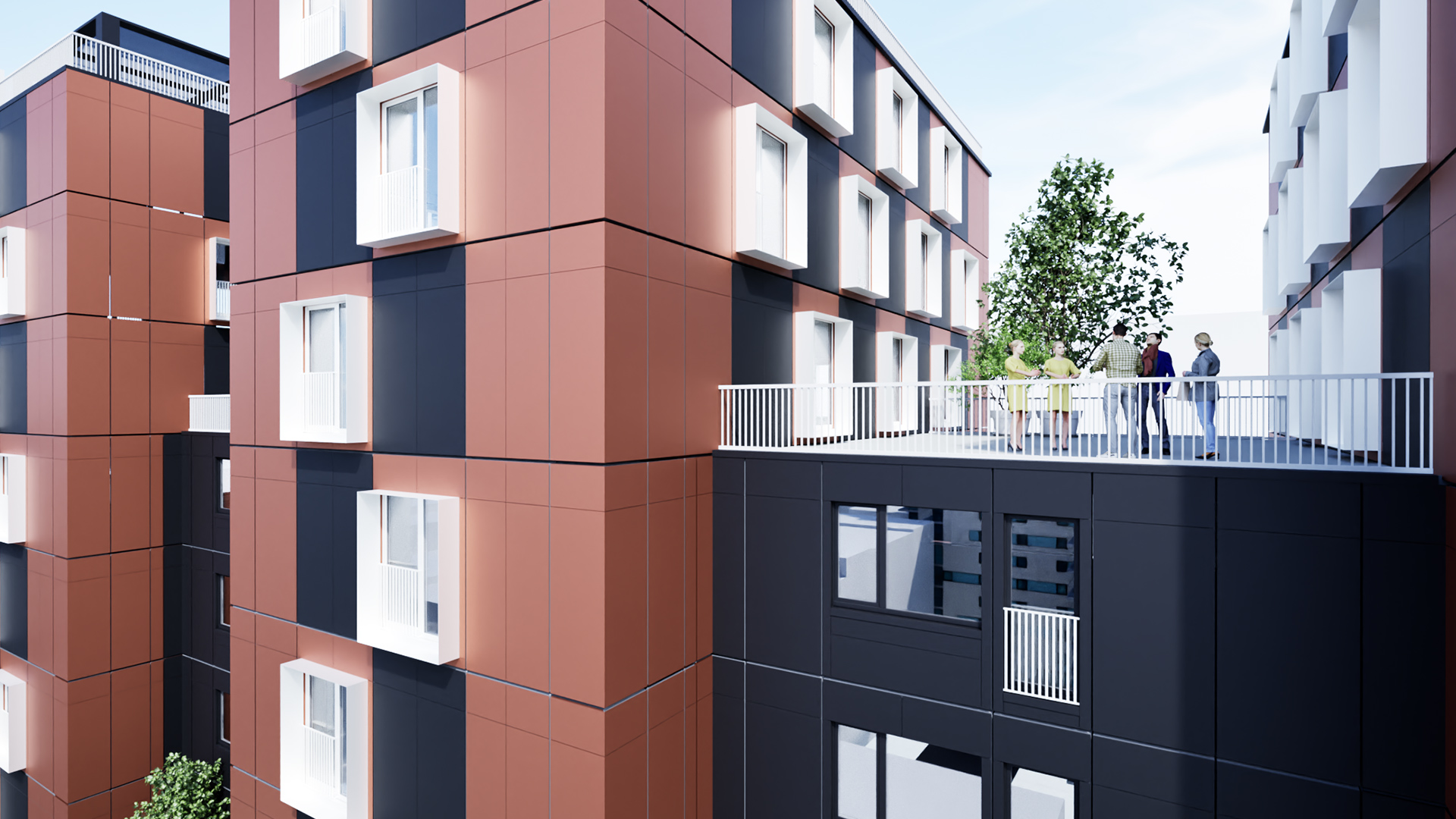
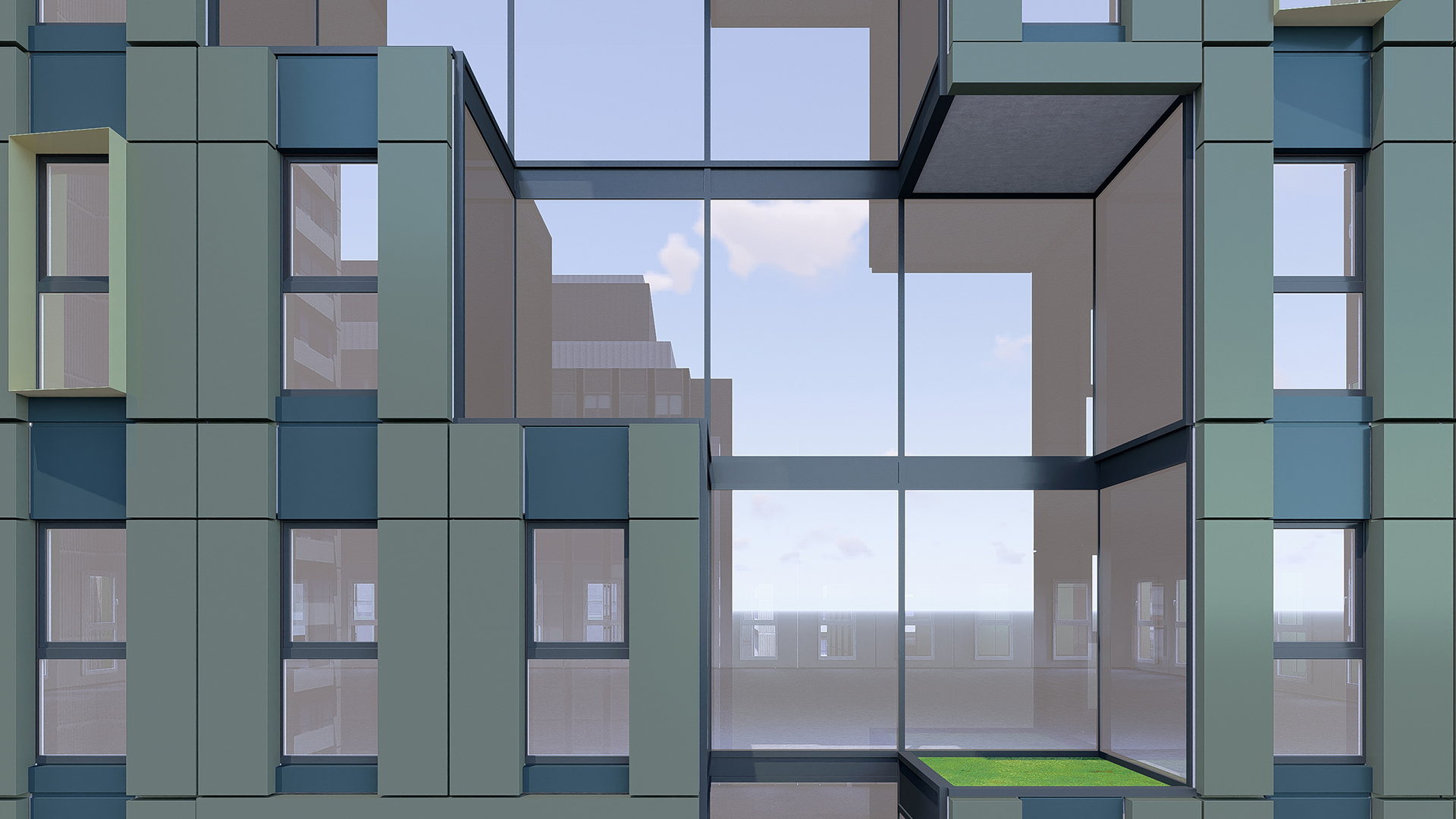
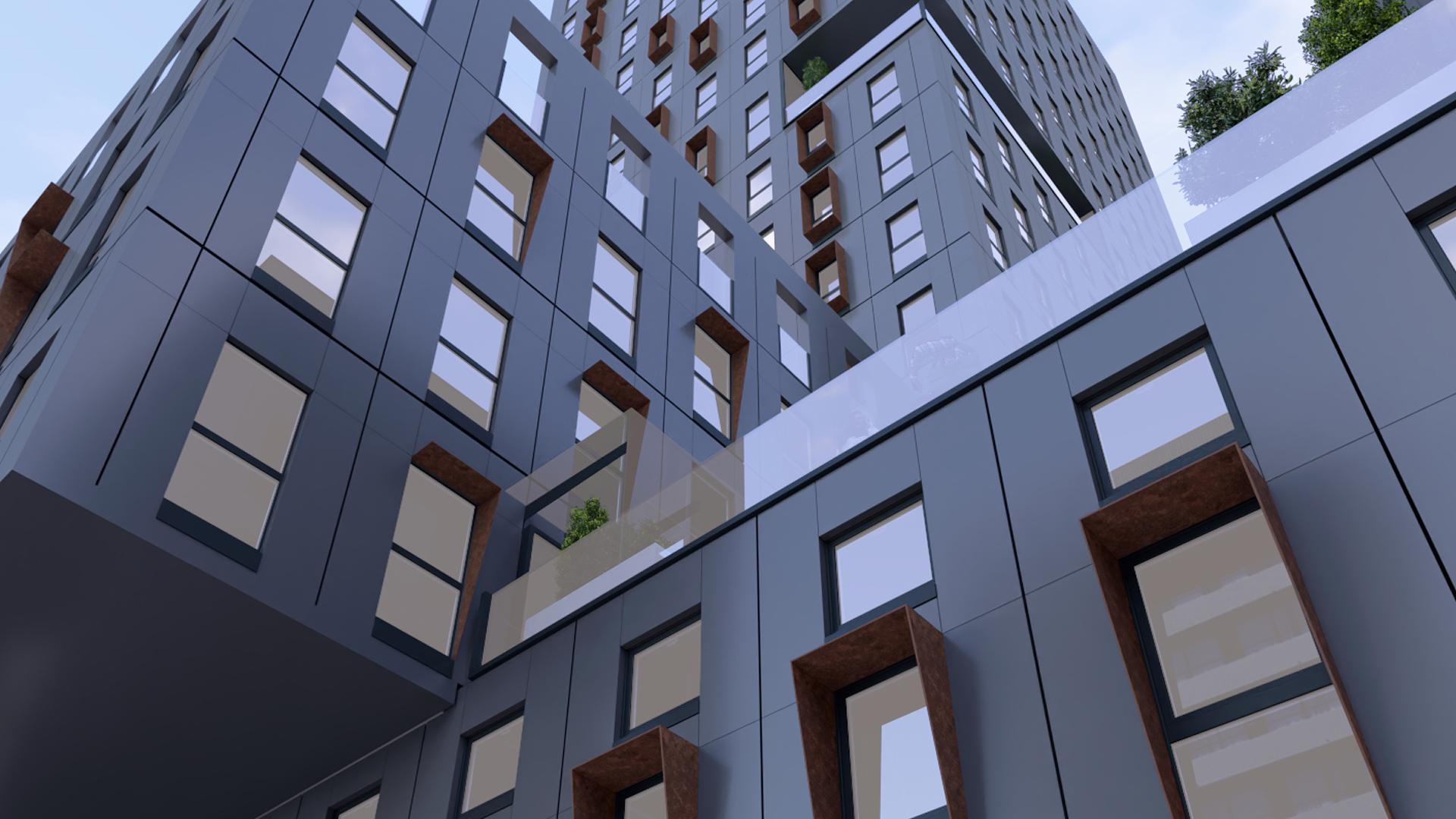
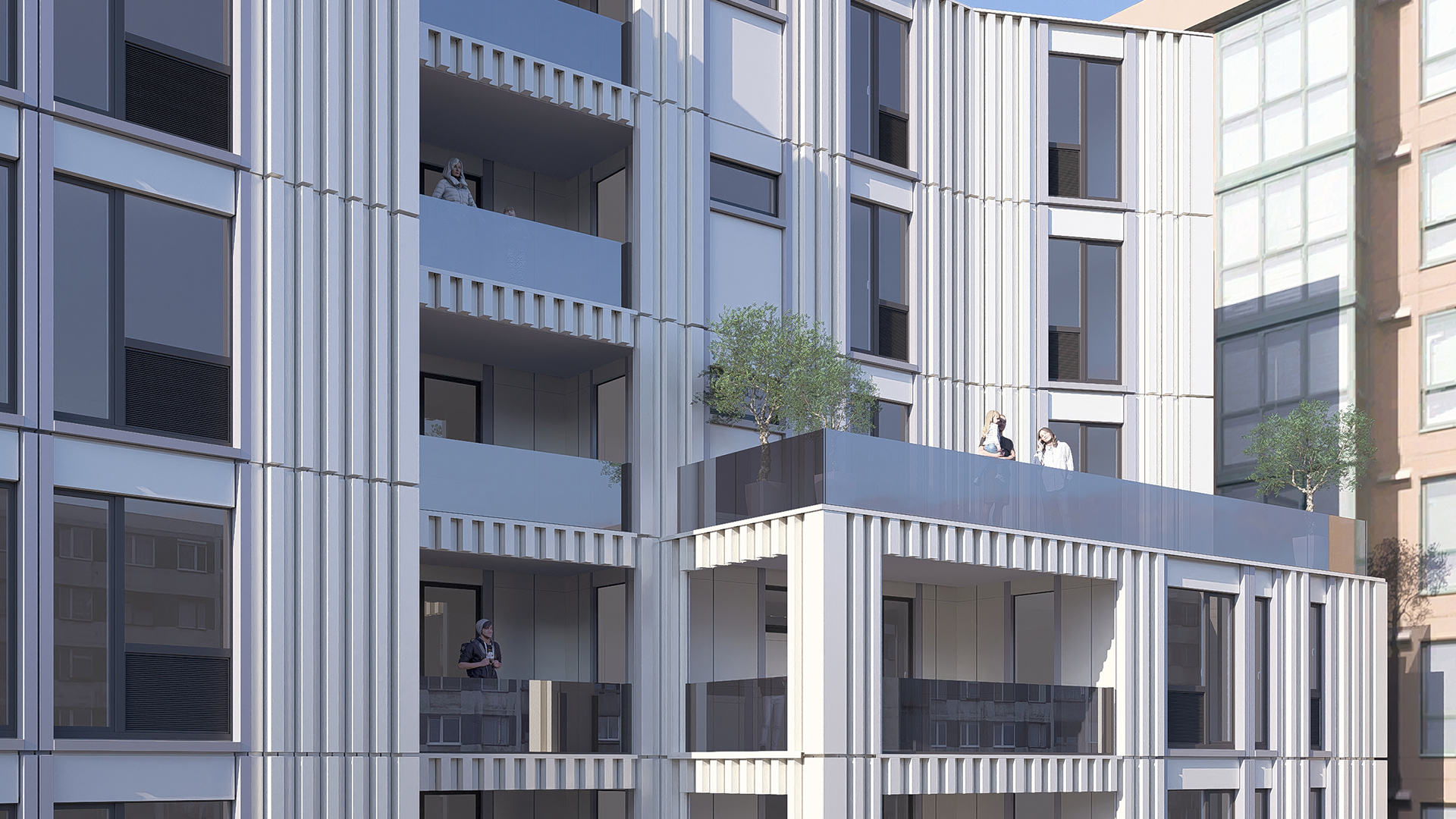
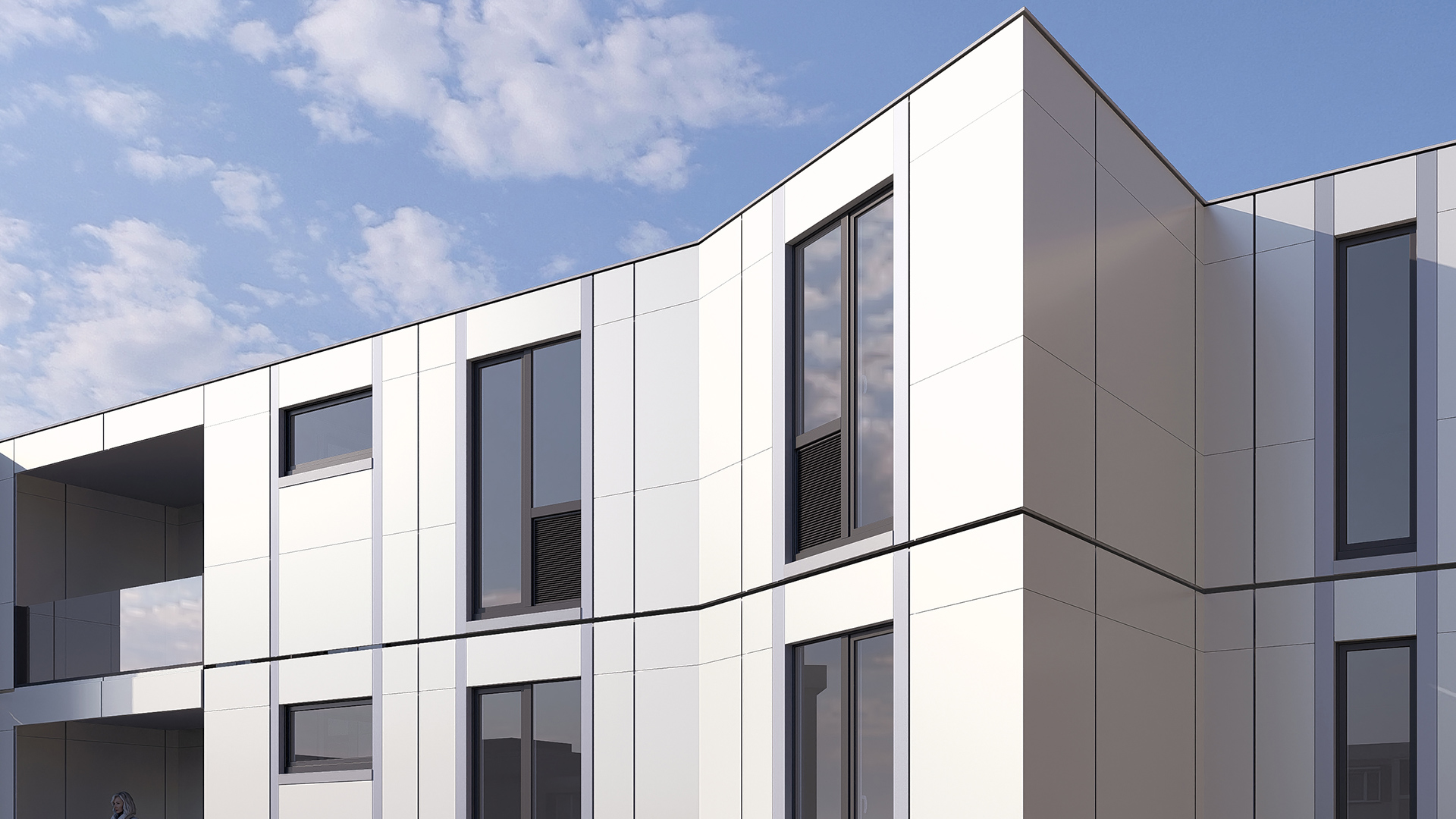
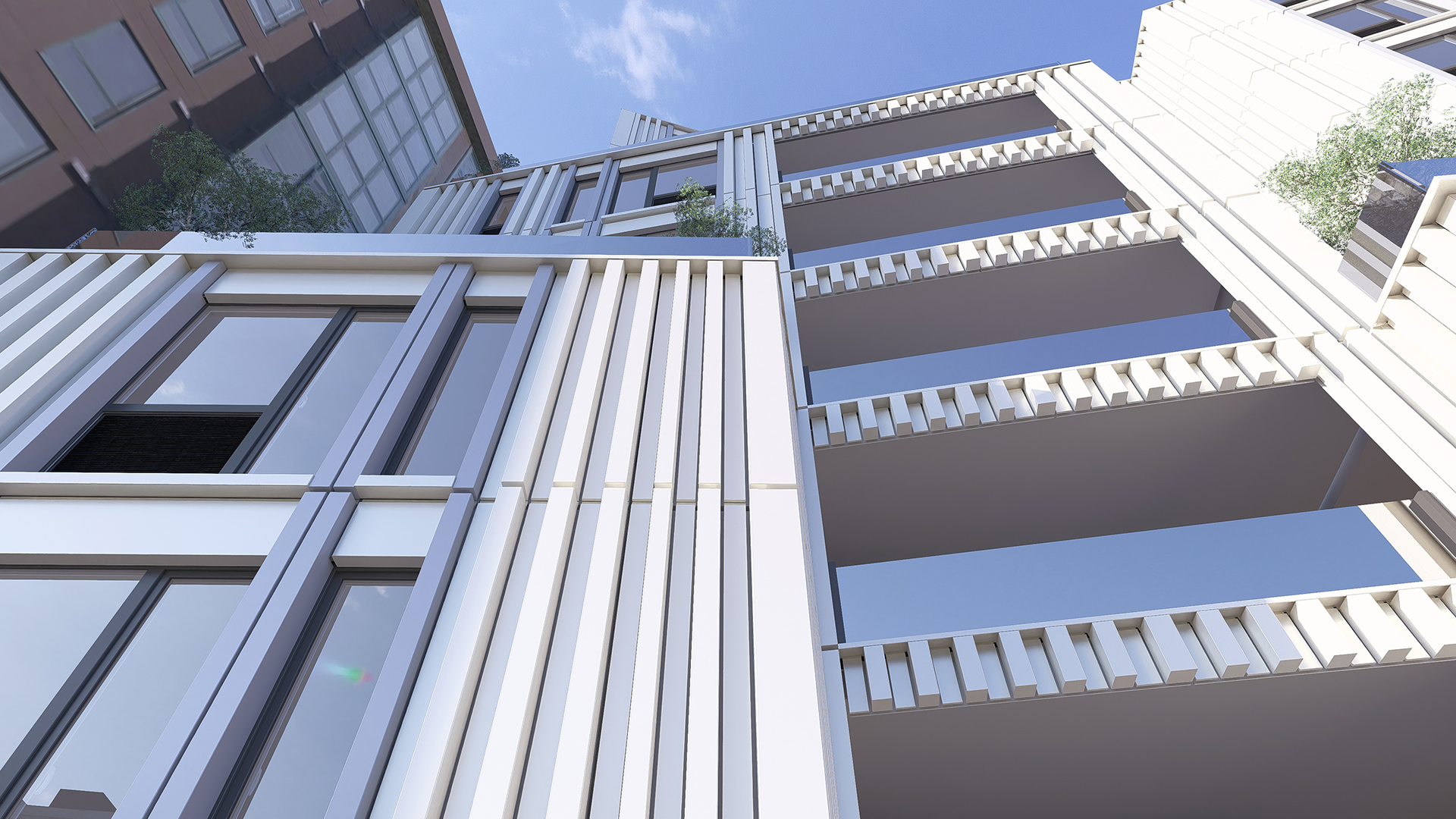
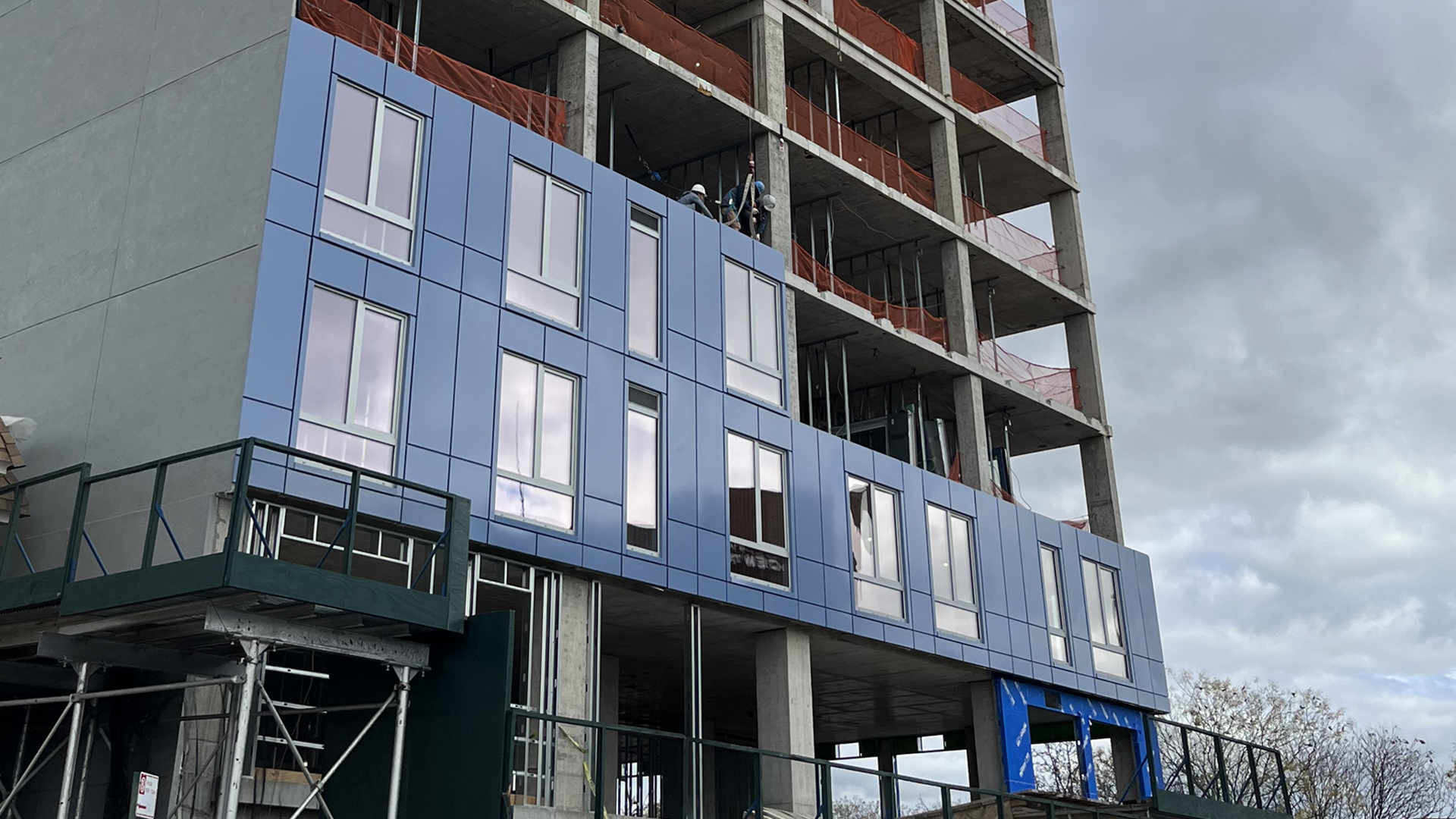
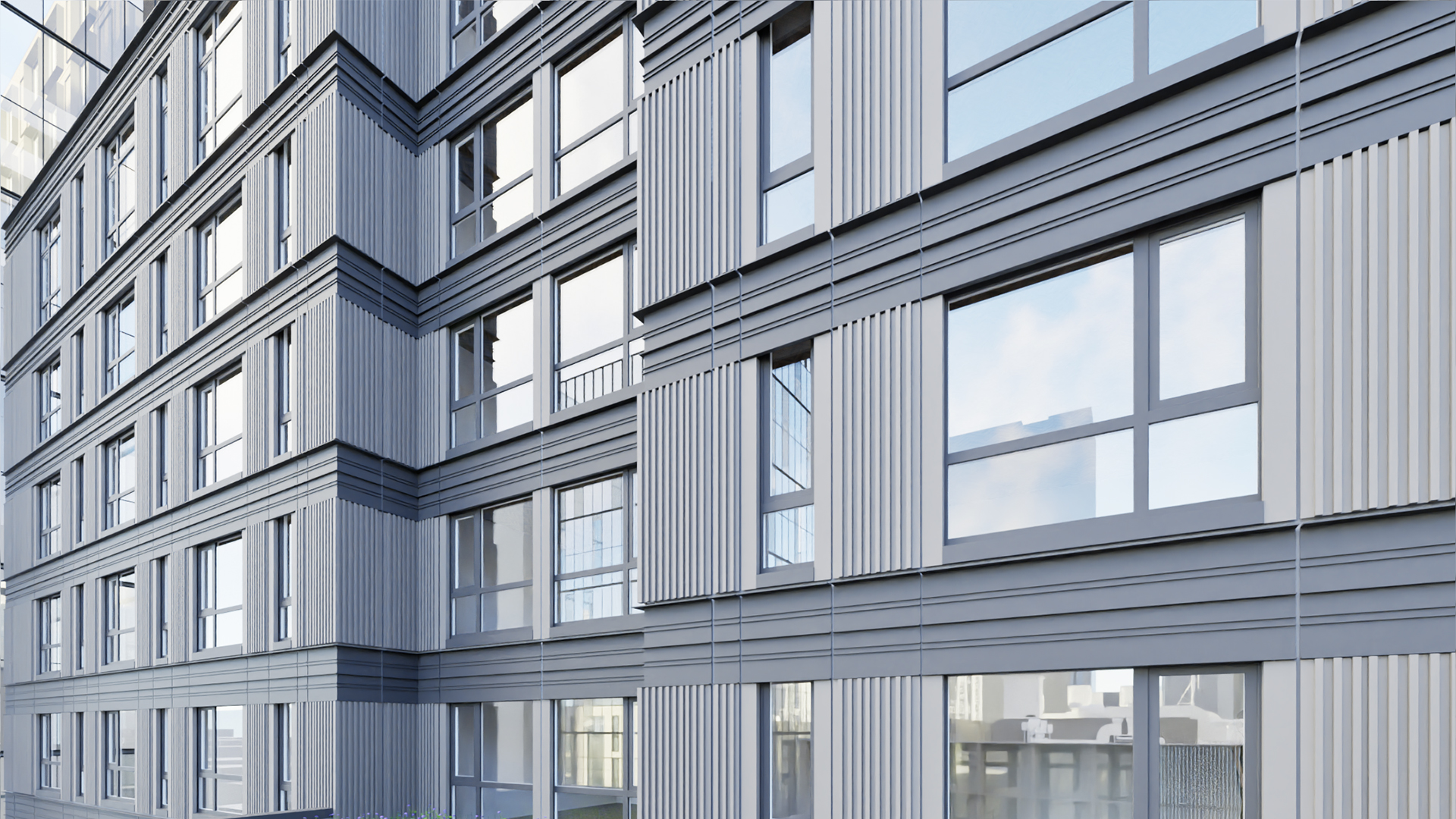
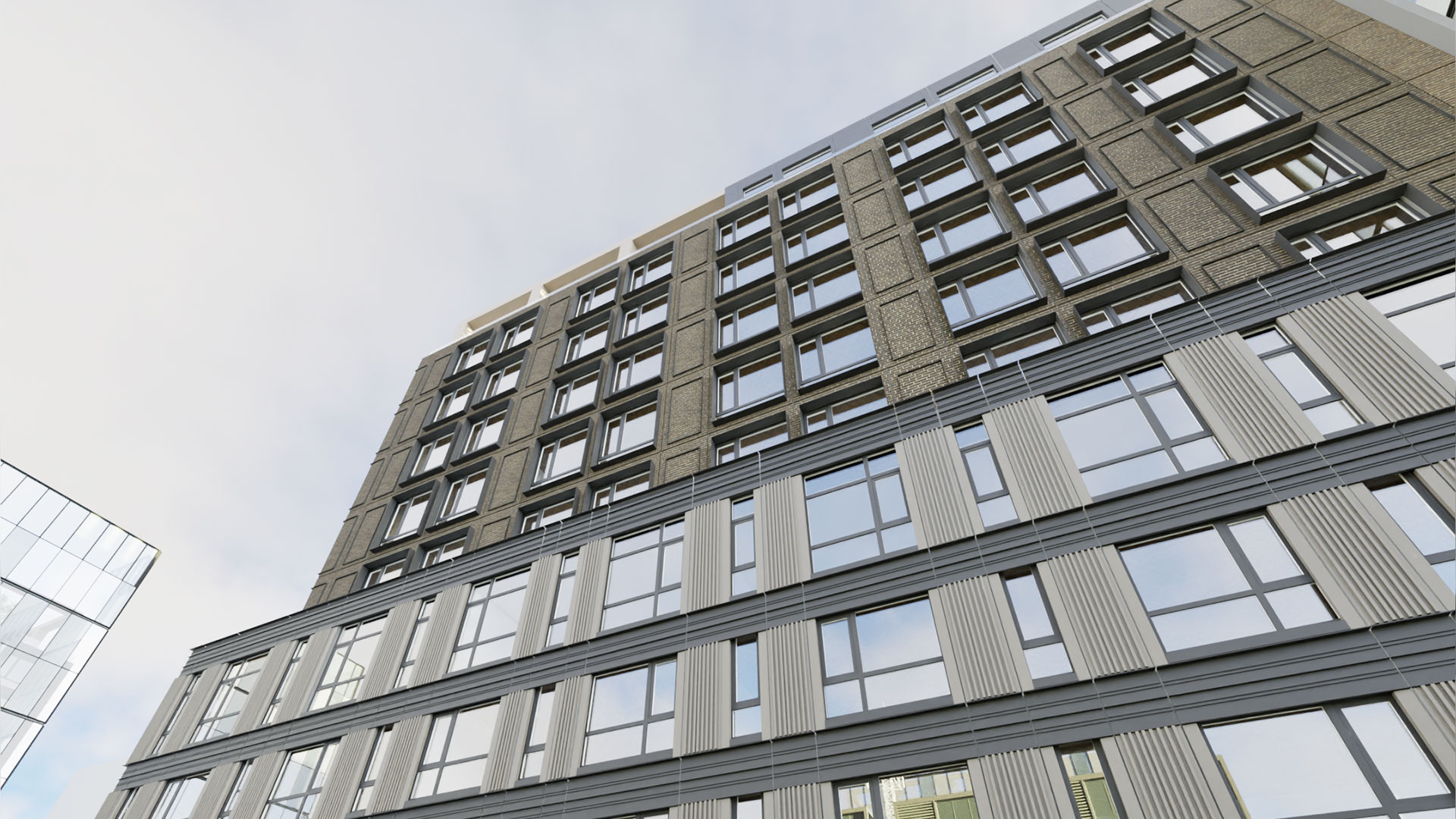
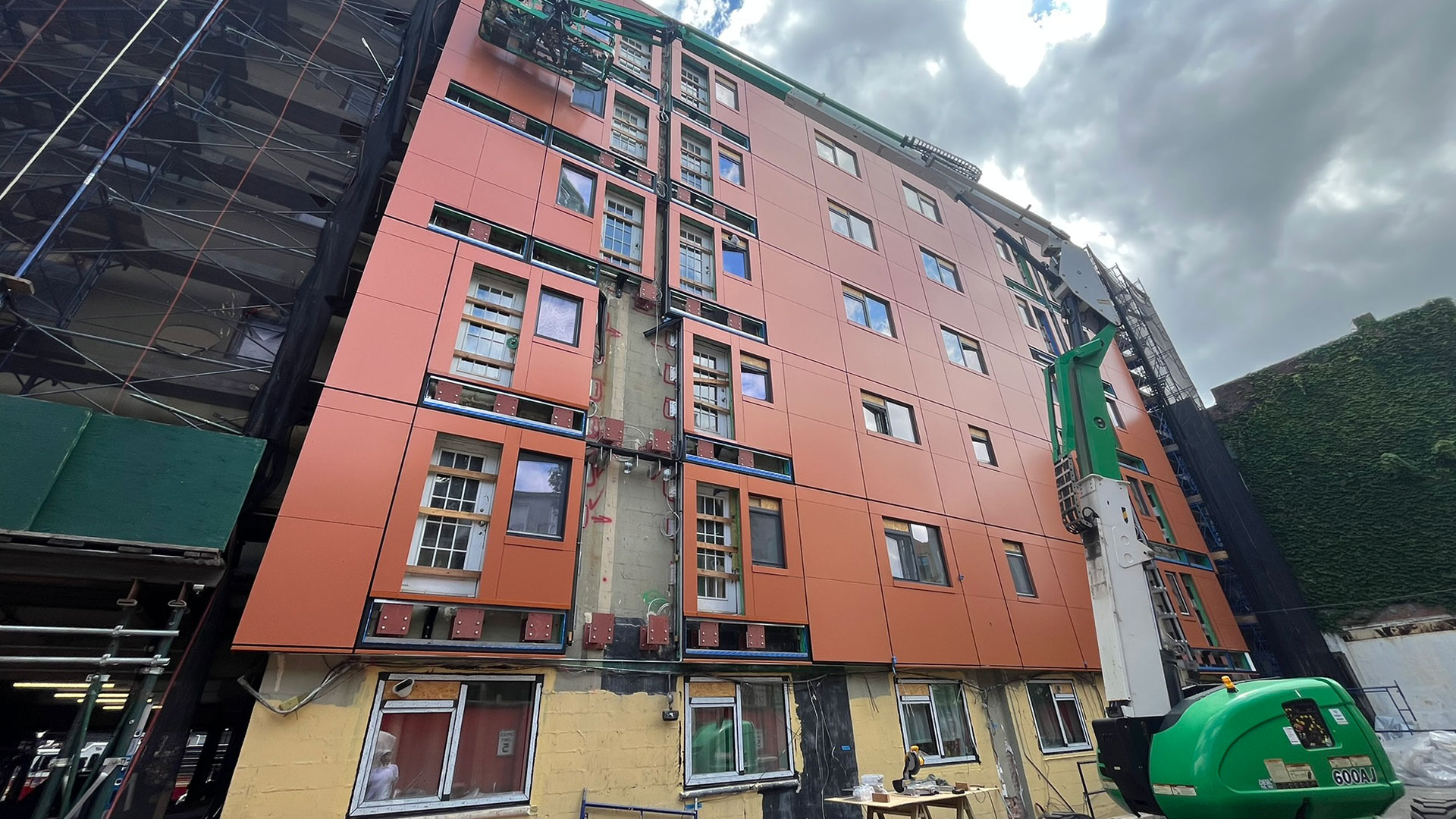
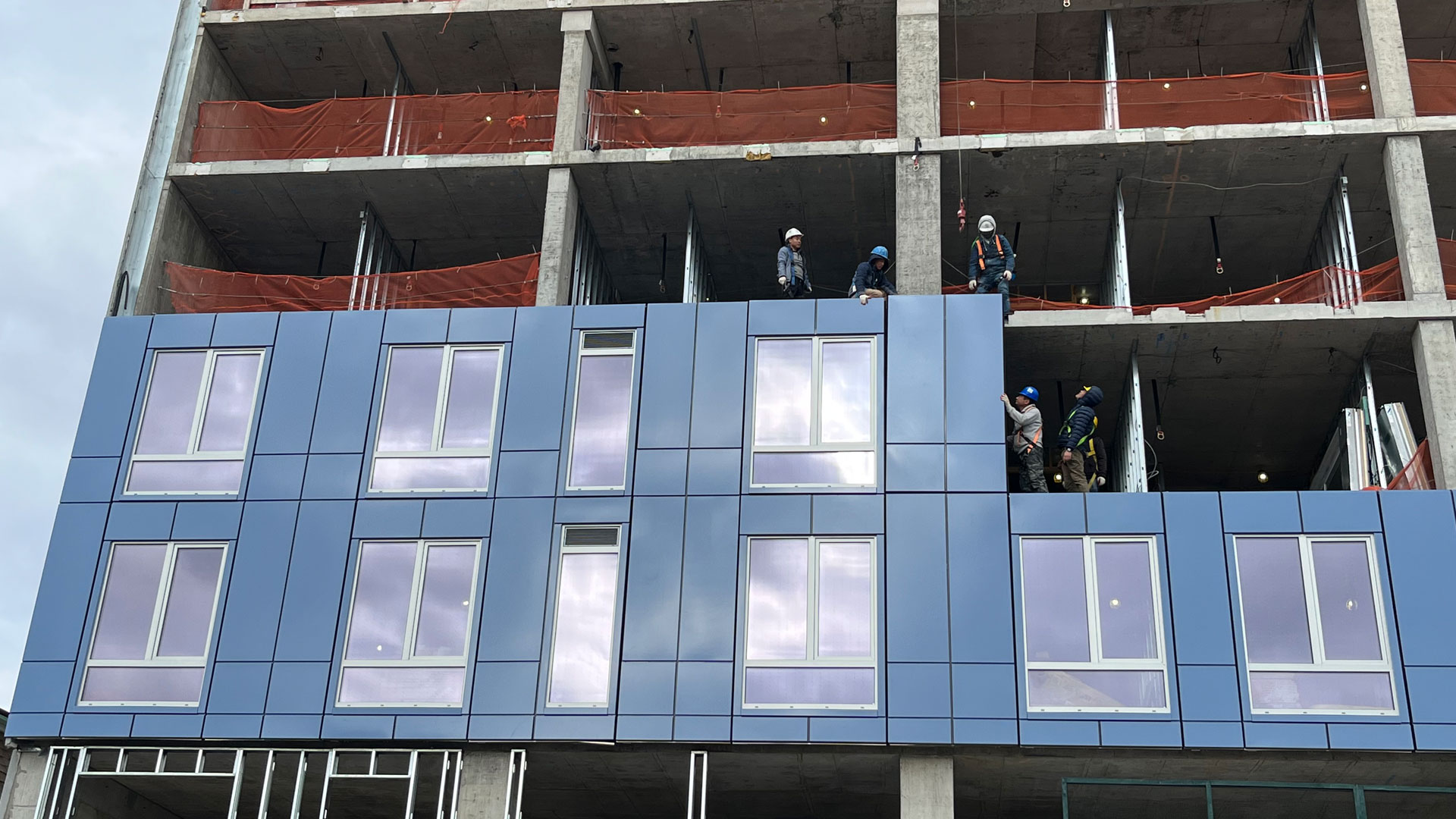
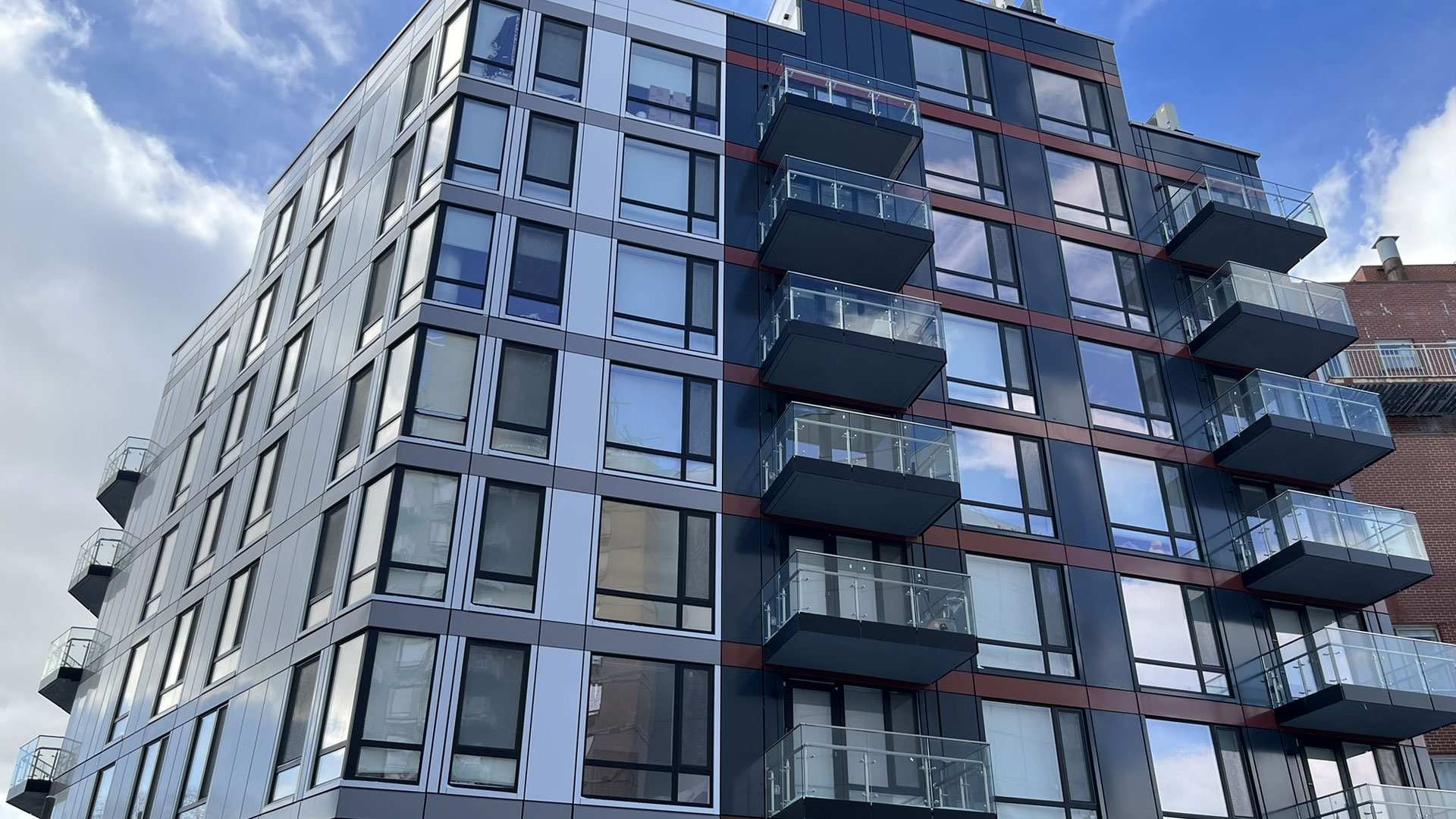
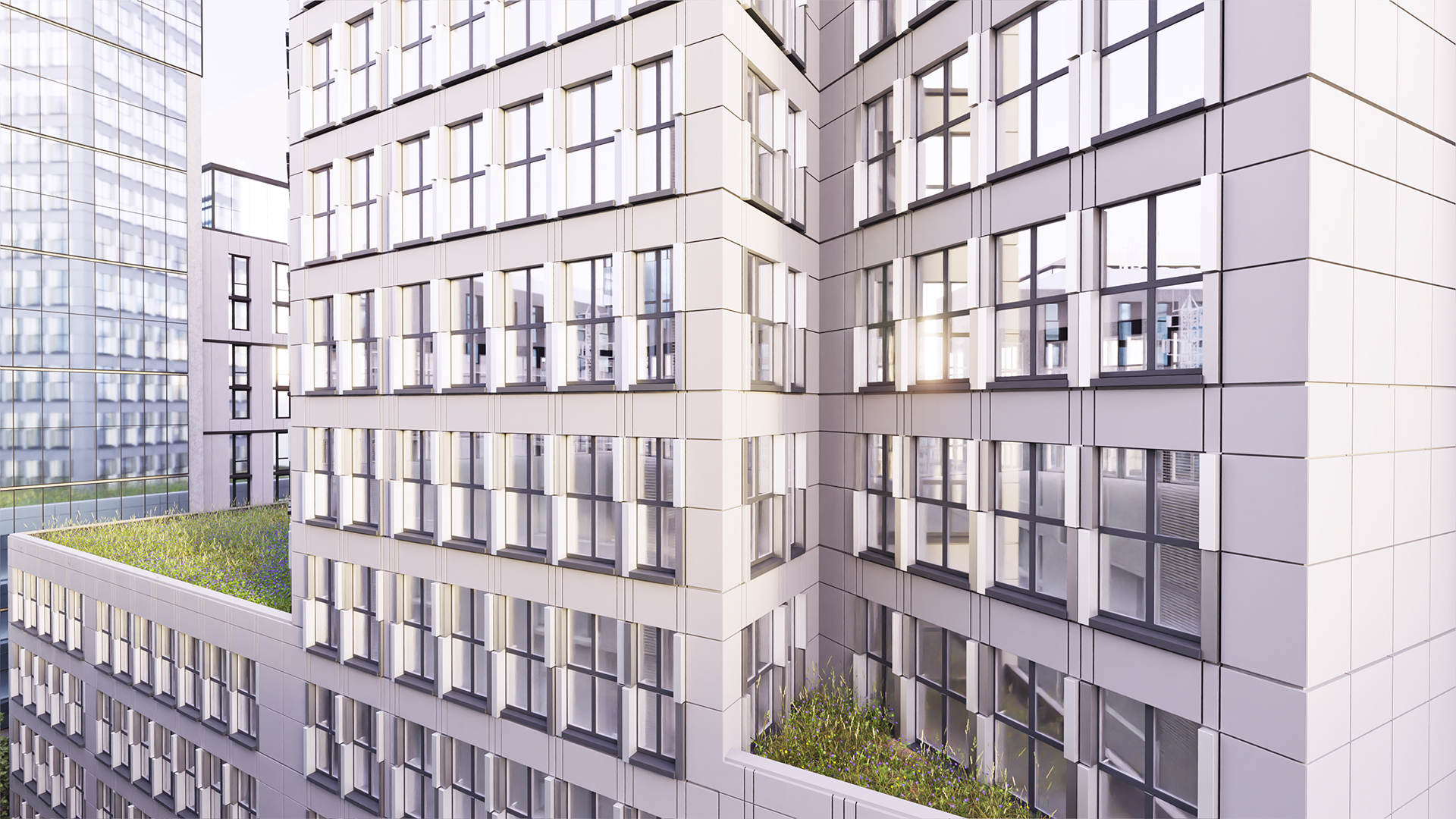
D Wall® modular building components for exteriors are coated to AAMA 2605 as the standard specification. This applies to the aluminum framing components and to the ACM cladding surface finish across all standard D Wall® configurations.
AAMA 2605 is Dextall's default because the markets where D Wall® is most commonly specified — New York City, Boston, Chicago, and Washington D.C. — require it. Urban high-rise facades in these markets face the combination of UV exposure at height, urban pollution, and temperature cycling that AAMA 2605 was designed to address. AAMA 2604 is available upon request for projects where that standard is specified, though the cost differential between the two standards does not typically justify the reduction in long-term performance for commercial high-rise applications.
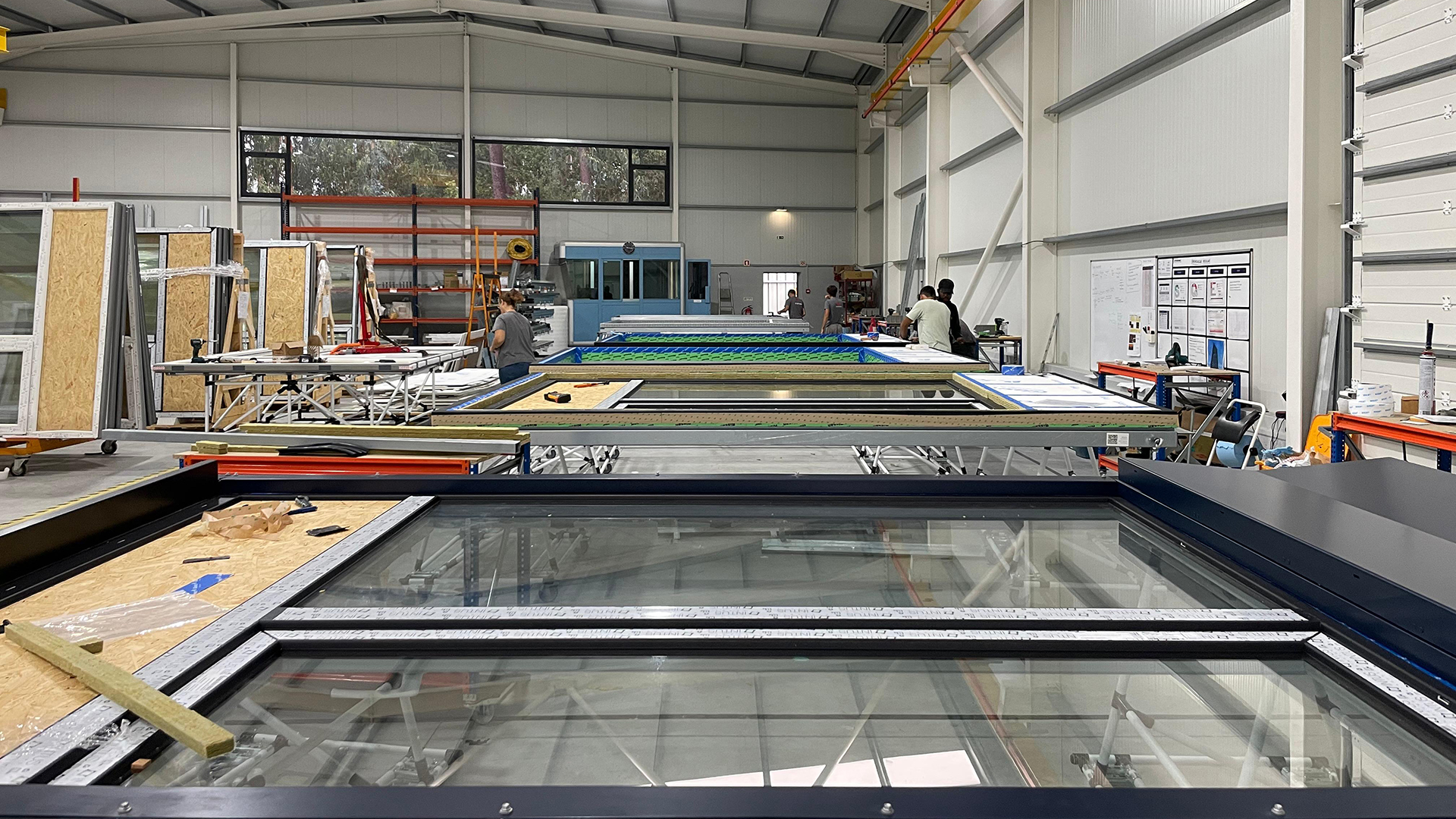
Because D Wall® is factory-assembled, the AAMA 2605 coating is applied under controlled factory conditions — not in the field where temperature, humidity, and substrate preparation vary. Factory application is what allows the full AAMA 2605 test battery to be achieved consistently across production runs. For project-specific coating documentation and color samples, contact Dextall at dextall.com.
Key Takeaways
- AAMA 2605 requires a minimum 70% PVDF resin coating system with 10-year chalk and fade warranty. AAMA 2604 requires 50% PVDF and a 5-year warranty. The performance gap compounds over a building's service life into measurable differences in maintenance cost.
- Specifications that write "AAMA 2604 or 2605" effectively require AAMA 2604 — contractors will select the lower-cost option every time. Name AAMA 2605 directly when that is the design intent.
- AAMA 2605 is the market standard for commercial high-rise exterior aluminum in NYC, Boston, and Chicago. It is appropriate for buildings above 10 stories, coastal locations, dark color specifications, and institutional owners with long-term hold expectations.
- Require AAMA 2605 certification documentation at submittal — not after installation. The coating manufacturer issues this as a standard document for compliant systems.
- Factory application of AAMA 2605 coatings produces more consistent results than field application because temperature, humidity, and substrate preparation are controlled in production.
FAQ
What is the difference between AAMA 2604 and AAMA 2605?
AAMA 2604 requires a minimum 50% PVDF resin content in the coating dry film and a 5-year chalk and fade warranty. AAMA 2605 requires a minimum 70% PVDF resin content and a 10-year warranty. Both use the same test methods — AAMA 2605 simply requires that the coating pass at higher exposure durations and against more demanding thresholds. The result is a coating system that retains color and resists chalking approximately twice as long under outdoor conditions.
When is AAMA 2605 required instead of AAMA 2604?
AAMA 2605 is appropriate for commercial high-rise projects above 10 stories, coastal locations with salt air exposure, dark color specifications on south and west exposures, and projects with institutional owners who expect to hold the building for 30 or more years. In New York City, AAMA 2605 is the market standard for exterior aluminum on new commercial construction. AAMA 2604 is appropriate for low-rise or interior-adjacent applications with less demanding exposure conditions.
Does AAMA 2605 require a specific coating brand?
No. AAMA 2605 is a performance standard, not a brand requirement. Any coating system — regardless of manufacturer — that passes the full AAMA 2605 test battery is compliant. Kynar 500® (Arkema) and Hylar 5000® (Solvay) are the most widely used 70% PVDF resin systems in the market, but the standard does not mandate either brand. The specification should require AAMA 2605 certification from the coating manufacturer, not a specific product name.
How do I verify AAMA 2605 compliance at submittal?
Require the contractor to submit the coating manufacturer's certification letter confirming that the specific color and finish system — including primer, finish coat, and clear coat where applicable — meets AAMA 2605 as applied to the substrate used in this project. This is a standard document that compliant coating manufacturers issue. Certification from the cladding fabricator alone, without a letter from the coating manufacturer, is not sufficient verification.
Can AAMA 2605 be applied in the field?
Technically yes, but field application of AAMA 2605 coatings introduces variables — temperature, humidity, substrate preparation — that make consistent compliance difficult to achieve and difficult to verify after installation. Factory application under controlled conditions is the standard approach for exterior building components, and it is the method that allows the full AAMA 2605 test battery to be replicated reliably across production runs.
Sources
- AAMA 2604 and AAMA 2605 Standards — Fenestration and Glazing Industry Alliance (FGIA)
- ASTM D4214: Standard Test Methods for Evaluating the Degree of Chalking of Exterior Paint Films — ASTM International
- ASTM B117: Standard Practice for Operating Salt Spray (Fog) Apparatus — ASTM International
- D Wall® Modular Building Components — Dextall












.jpeg)
-Compliance-for-NYC-Multifamily-%26-Co-Op-Facades.jpg)













_format(webp).avif)
_format(webp)%20(6).avif)
_format(webp)%20(5).avif)
_format(webp)%20(4).avif)
_format(webp)%20(2).avif)
_format(webp)%20(3).avif)


.avif)
_format(webp)%20(2).avif)