Rainscreen vs. Curtain Wall: Technical Comparison for High-Rise Exteriors

Rainscreen and curtain wall systems are both exterior cladding approaches used on commercial high-rise buildings, but they manage water differently, attach to the structure differently, and suit different project conditions. A curtain wall is an aluminum-framed assembly — typically incorporating glass, opaque spandrel zones, or composite infill — that is hung from the building's structural frame and transfers wind and gravity loads back to the structure through the frame itself. A rainscreen is a cladding layer applied over a separate weather barrier, with a deliberate open or ventilated cavity between the cladding material and the substrate that allows water to drain and air to circulate. Understanding which approach is appropriate for a given project requires clarity on how each manages water infiltration, what each demands from the structural frame, and what each implies for the installation schedule.
The two systems are not interchangeable, and specifying one when the project conditions favor the other creates problems that are difficult to resolve after construction begins. This guide explains the technical basis of each approach, identifies where they overlap and where they diverge, and describes how factory-assembled exterior building components draw on principles from both without being strictly classified as either.
How Curtain Wall Systems Manage Water
Curtain wall systems use one of three water management strategies, each with different performance characteristics and maintenance implications:
- Face-sealed curtain wall — the outermost sealant joint is the primary line of defense against water infiltration. All water management depends on the integrity of the sealant. This approach is the simplest to fabricate but the most dependent on sealant quality and long-term maintenance. When sealant fails — which it will, typically within 10 to 20 years in urban environments — water enters the assembly at the joint. Face-sealed systems are no longer considered best practice for commercial high-rise in most U.S. markets.
- Drained curtain wall — accepts that some water will pass the outer sealant and manages it through internal drainage paths. A secondary drainage plane collects water that enters at joints and channels it to weep holes at the sill. Drained systems perform better than face-sealed systems because they do not rely on sealant perfection, but they require maintenance of the drainage path and weep holes to function over time.
- Pressure-equalized curtain wall — uses an air chamber behind the outer sealant that equalizes air pressure between the exterior and the chamber. Because water infiltration is driven primarily by pressure differential, equalizing the pressure across the outer joint removes the driving force that pushes water inward. Pressure-equalized systems are the most reliable water management approach in high-performance curtain wall design and are the standard specification for high-rise commercial projects in markets with significant wind-driven rain exposure.
The aluminum framing in a curtain wall system carries the structural loads — wind, gravity from the cladding weight, and seismic forces where applicable — back to the building structure through anchor conditions at each floor. The framing is engineered specifically for the building's structural grid, wind speed and exposure category, and the weight of the infill materials. Curtain wall systems typically require detailed coordination with the structural engineer of record to define the anchor conditions at each floor line.
How Rainscreen Systems Manage Water
A rainscreen manages water through physical separation rather than joint sealing. The system consists of three distinct layers:
- The cladding layer — the outer material visible from the exterior. This can be metal, stone, fiber cement, terracotta, brick slips, or other materials. The cladding does not need to be watertight because it is not the primary line of defense against water infiltration.
- The cavity — an air space between the cladding and the substrate, typically 3/4 inch to 2 inches wide. The cavity allows water that passes the cladding to drain downward and out at the base of the assembly. In ventilated rainscreen systems, air circulates through the cavity, drying any moisture that accumulates and reducing the risk of condensation at the substrate surface.
- The weather barrier — an air and water control layer applied to the structural substrate, behind the cavity. This layer — typically a membrane, building wrap, or fluid-applied barrier — is the true line of defense against water infiltration into the building enclosure.
The pressure-equalized rainscreen (PER) takes this principle further. The cavity is divided into compartments by horizontal and vertical barriers at defined intervals. Each compartment equalizes with exterior air pressure, so the pressure differential that would drive water inward across the weather barrier is eliminated. PER systems achieve the highest level of water management performance in the rainscreen category and are specified on high-performance commercial and institutional projects where long-term envelope performance is a design priority.
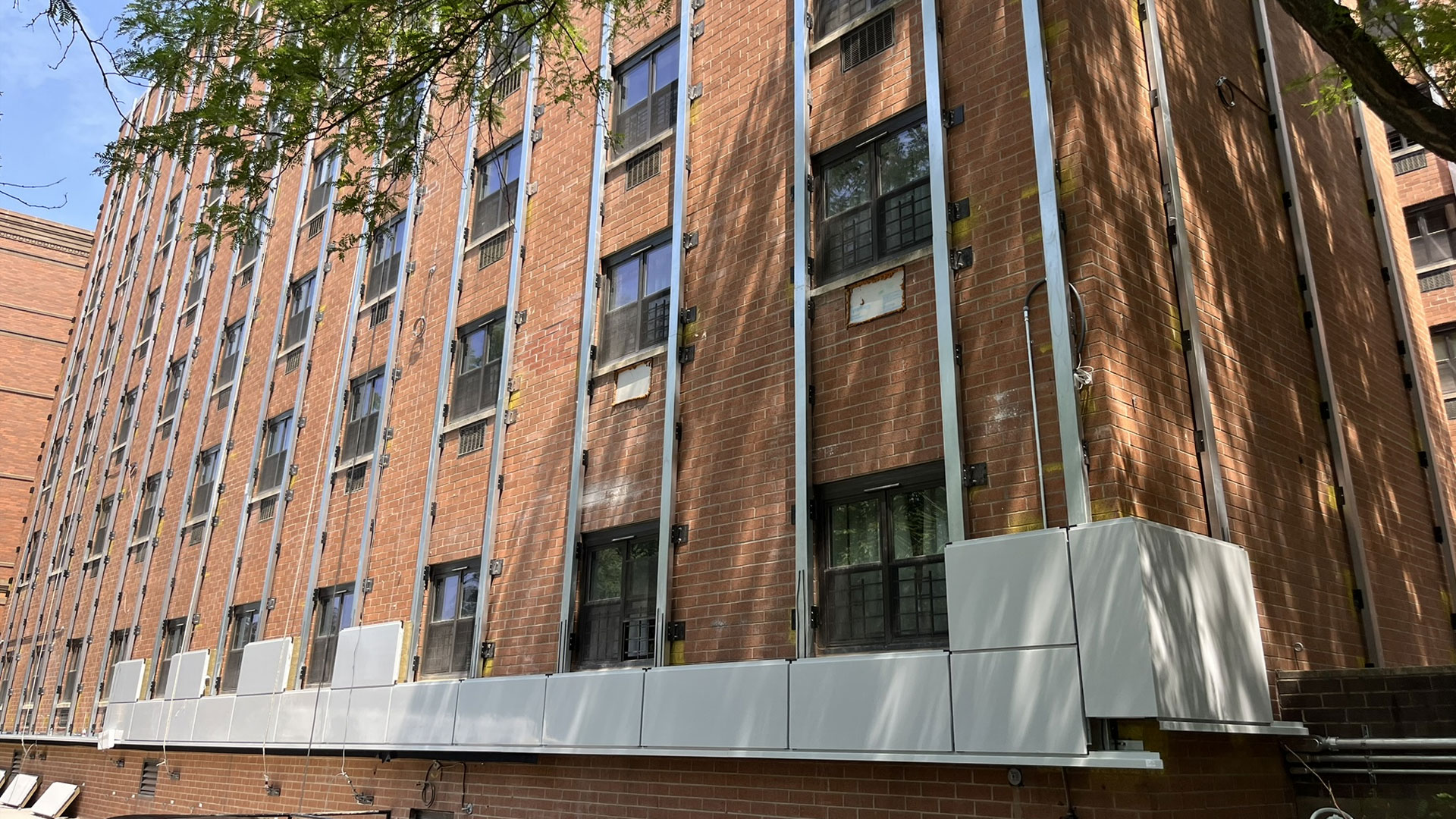
Rainscreen cladding materials transfer their own weight — and wind loads on the cladding surface — to a rail-and-clip subframe or direct-fastened subgrid that is anchored to the structural substrate. The cladding layer itself does not carry structural loads between floor lines in the way that a curtain wall frame does. This distinction matters for anchor coordination: rainscreen anchor spacing is driven by the structural capacity of the cladding material and the subframe, not by the building's floor grid.
Structural and Thermal Implications: What Each System Demands
The structural and thermal performance of each system follows directly from its configuration:
- Thermal bridging — curtain wall aluminum framing creates thermal bridges at every mullion and transom, because the aluminum frame conducts heat between the interior and the exterior continuously. High-performance curtain wall systems use thermal breaks — typically polyamide inserts — to interrupt the conduction path. Rainscreen systems separate the cladding from the substrate with a cavity and subframe, which can be configured to minimize thermal bridging when the subframe connection is designed with thermal breaks at the anchor points.
- Continuous insulation — ASHRAE 90.1-2022 requires continuous insulation for most commercial building types in most climate zones. In a curtain wall system, continuous insulation is located at the spandrel zones, not across the framing members. In a rainscreen system, continuous insulation is applied to the substrate surface, outboard of the structure, before the weather barrier and cavity assembly. Rainscreen systems are generally more compatible with continuous insulation requirements because the insulation layer is physically separated from the cladding attachment system.
- Dead load and slab edge — curtain wall systems transfer cladding dead load to the structure through the frame anchors, typically at each floor. The slab edge must be designed to carry this load, and the anchor condition must accommodate thermal movement and structural deflection over the building height. Rainscreen systems distribute their dead load differently, through the subframe, which can be anchored at more frequent intervals or at locations that suit the structural grid.
Installation and Schedule: Where the Systems Diverge Most
The practical difference between rainscreen and curtain wall systems is most visible during installation. A stick-built curtain wall is assembled component by component on the building — mullions, transoms, anchors, glass or infill, and gaskets — in a sequence that requires sustained access at height for a long duration. Weather interruptions, labor variation, and the difficulty of quality control at height all affect the installed quality of a stick-built curtain wall in ways that are not present in factory-controlled production.
Rainscreen installation is sequential: structural substrate first, then weather barrier, then cavity subframe, then cladding. Each layer must be complete and inspected before the next begins. The advantage of rainscreen installation is that each layer is relatively simple in isolation; the disadvantage is that the sequence cannot be compressed — weather barrier installation cannot begin until the structural substrate is ready, and cladding installation cannot begin until the weather barrier is complete and inspected.
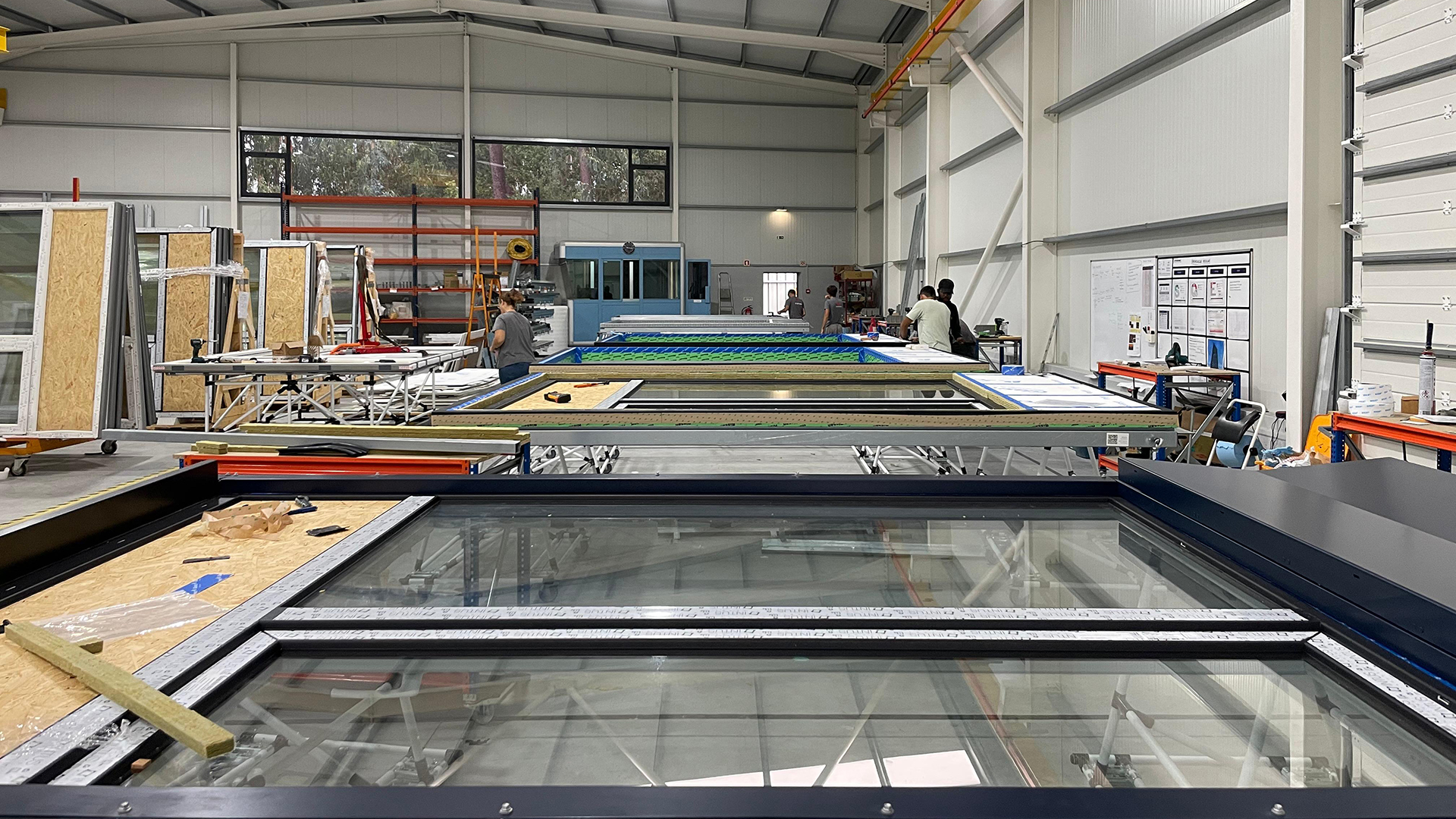
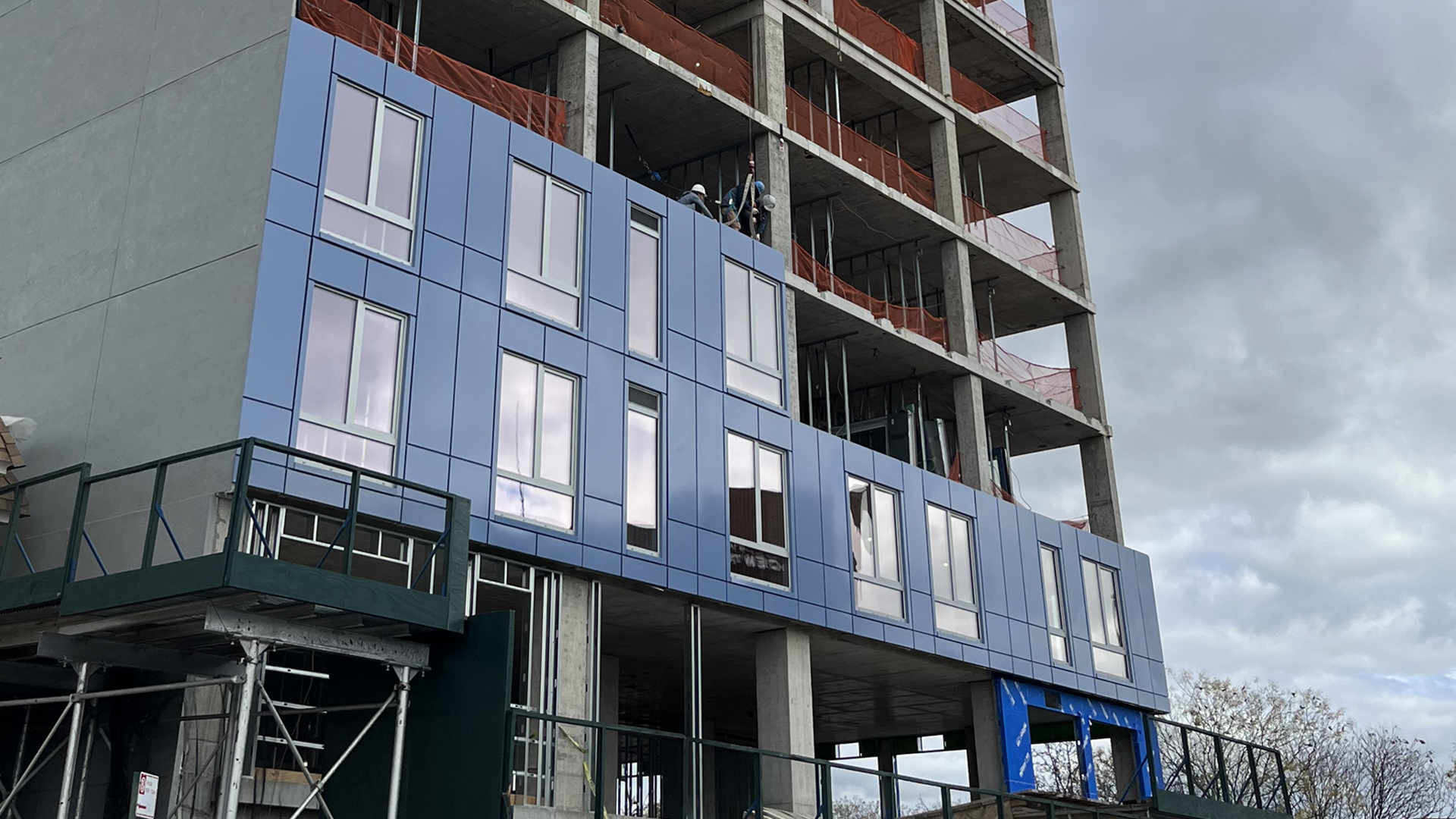
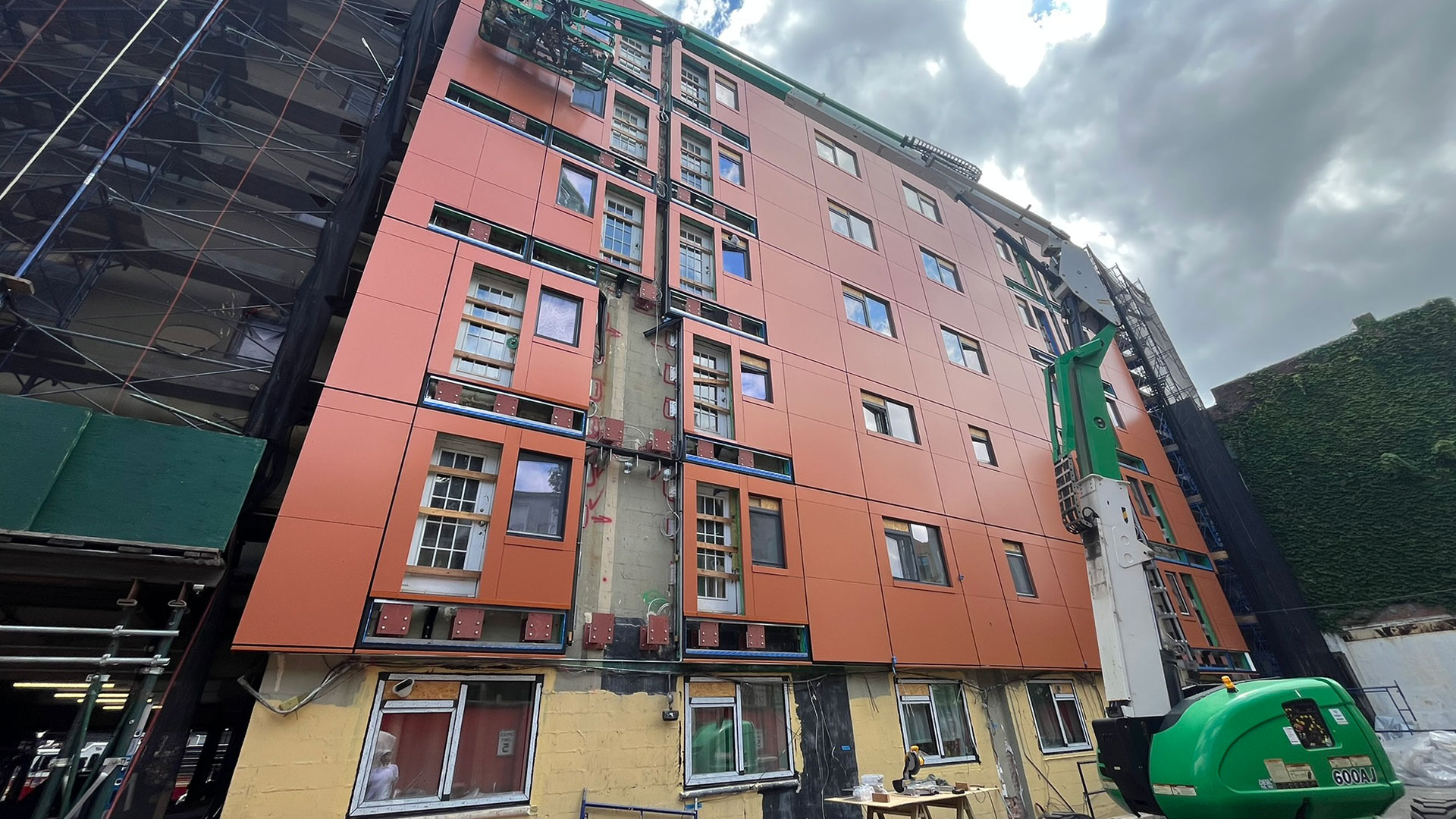
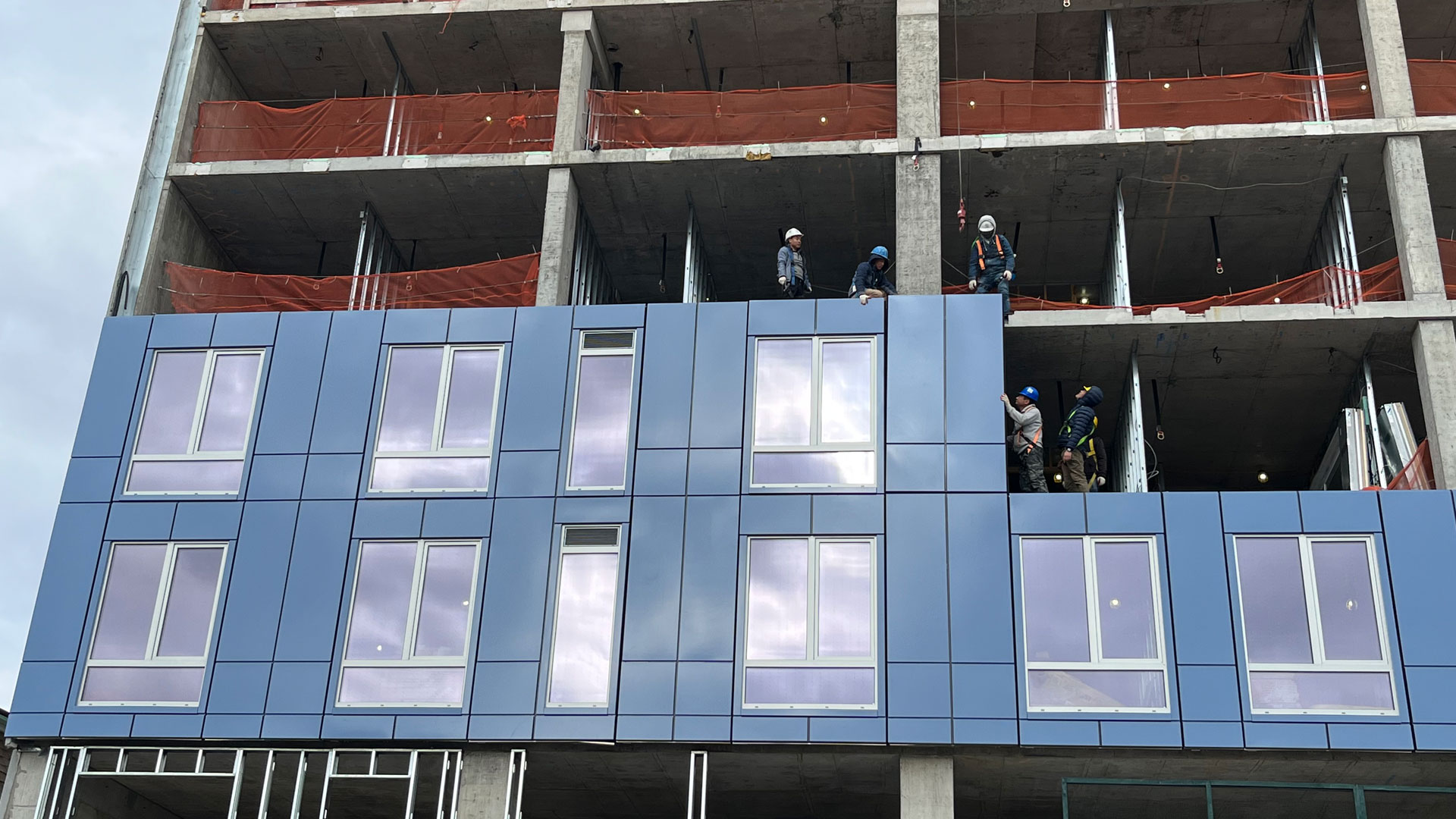
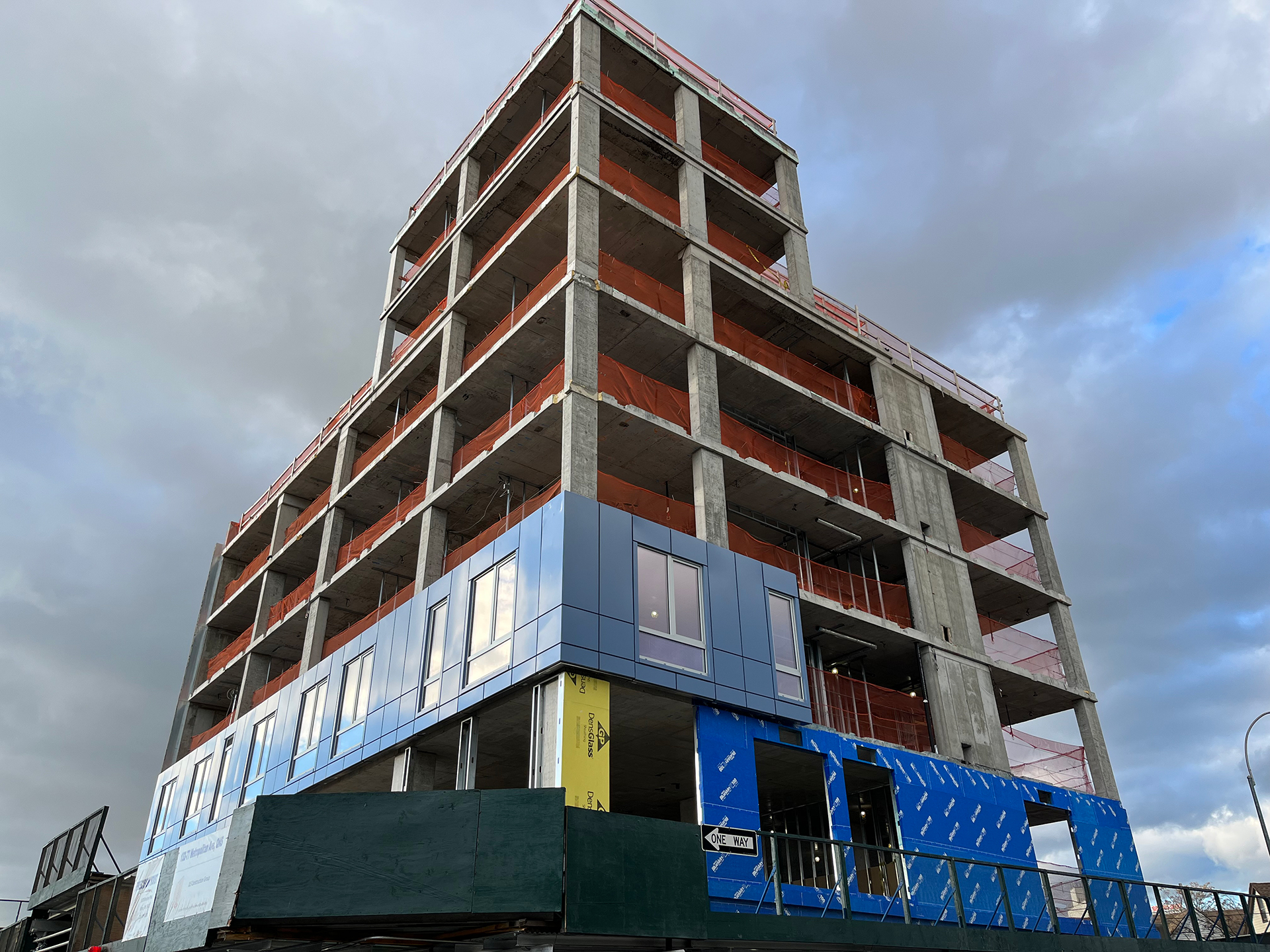
Factory-assembled exterior building components change the schedule dynamics of both approaches. When the framing, insulation, cladding, and joint treatment are assembled in a factory and delivered as a complete unit, the on-site installation sequence compresses to crane, set, and connect — a fraction of the time required for either stick-built curtain wall or sequential rainscreen installation. The quality of the assembly is controlled in the factory, not on the scaffold.
When Each System Is the Right Choice
Curtain wall is the appropriate specification when:
- The design requires significant glazed area — curtain wall framing systems are optimized for glass infill and offer the greatest flexibility in glazed-to-opaque ratios
- The project is on a tight structural grid where anchor conditions at each floor are well-defined and coordinated
- The project team has the capacity to manage detailed shop drawing coordination between the curtain wall contractor, the structural engineer, and the facade consultant
Rainscreen is the appropriate specification when:
- The design is primarily opaque — metal, stone, fiber cement, or terracotta — with punched or ribbon windows rather than full glazing
- The project requires maximum continuous insulation compliance and wants the insulation layer physically outboard of the structure
- The structural grid does not align well with curtain wall anchor spacing requirements
D Wall® Modular Building Components: A Factory-Assembled Alternative
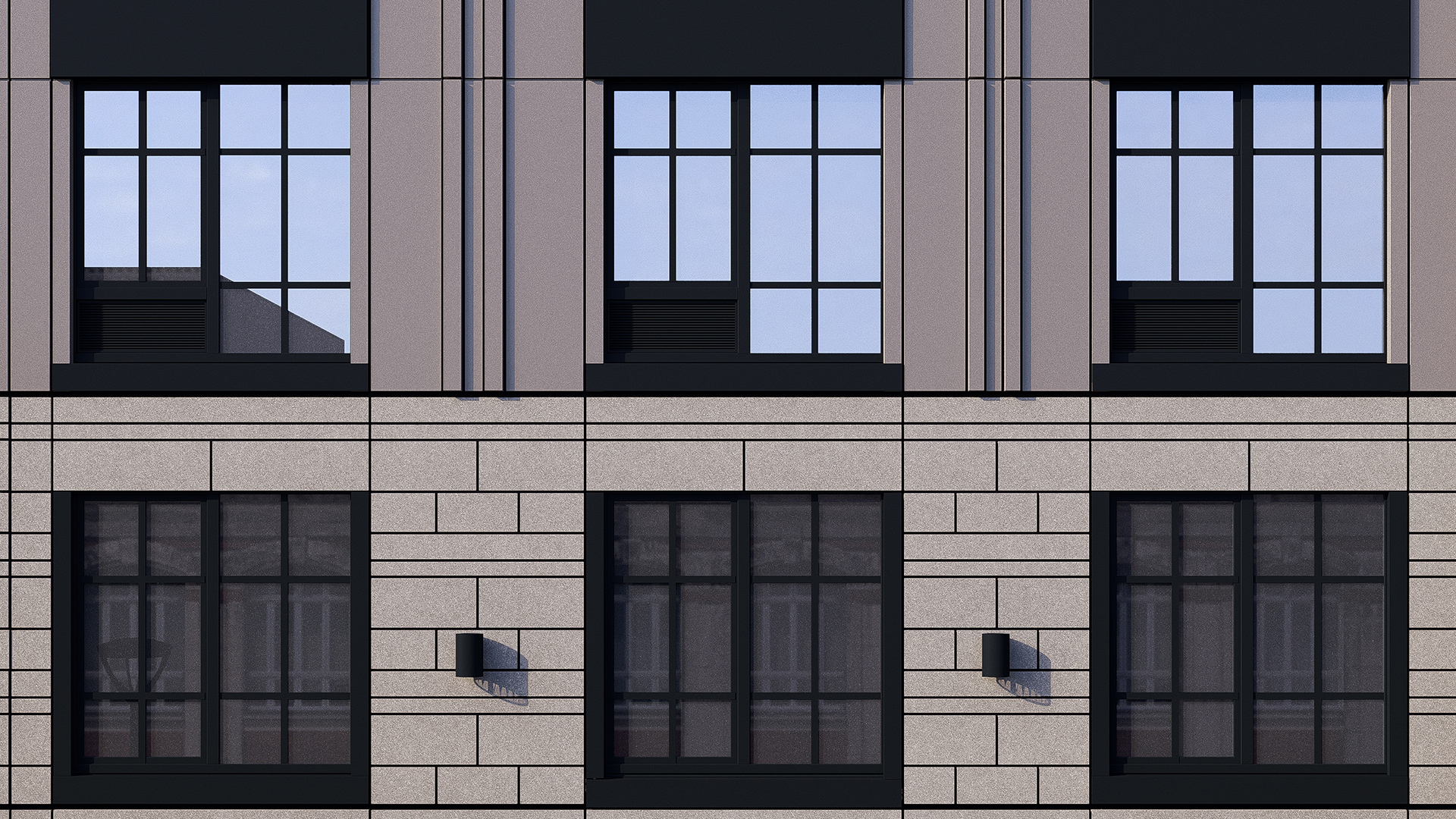
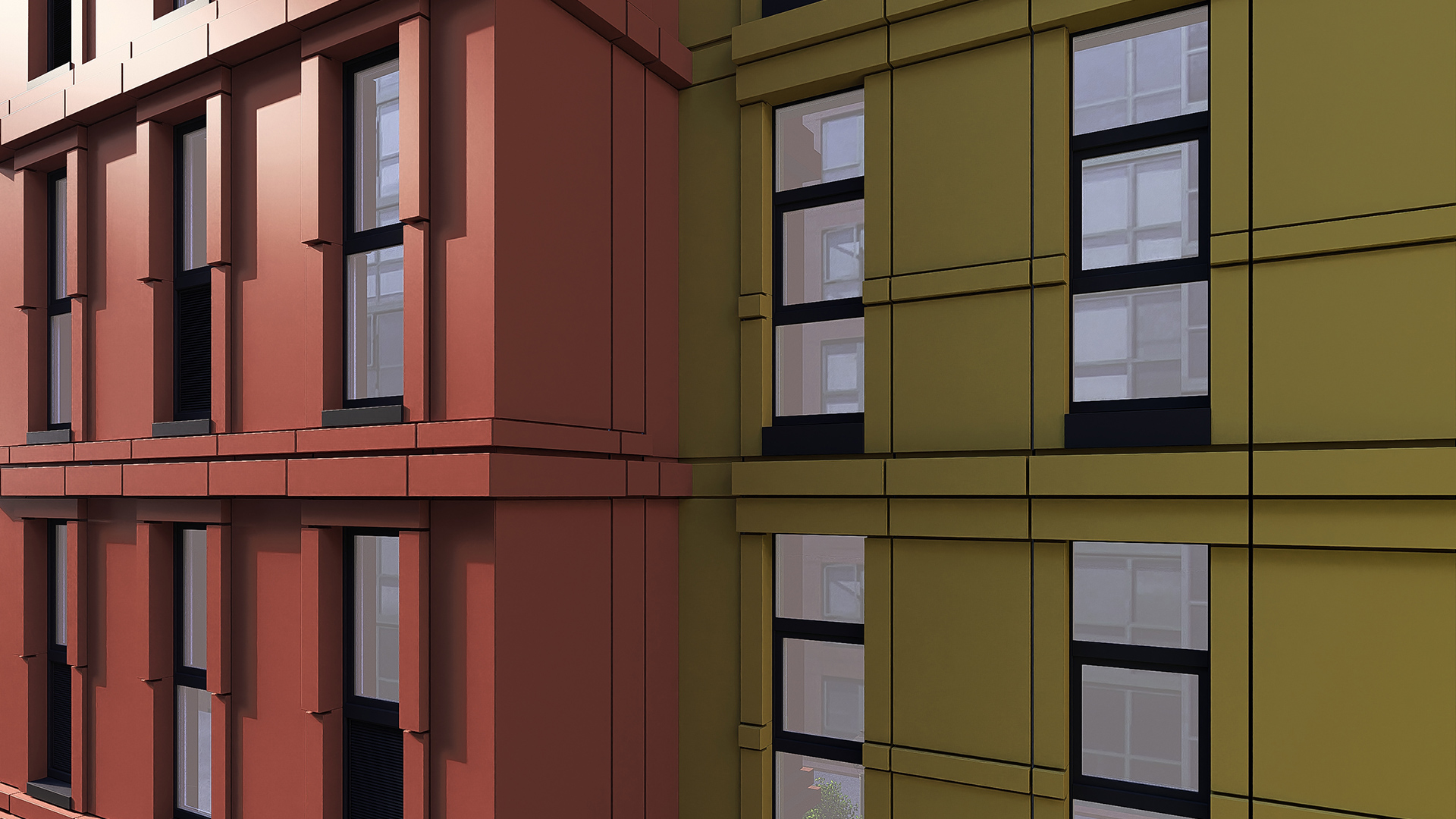
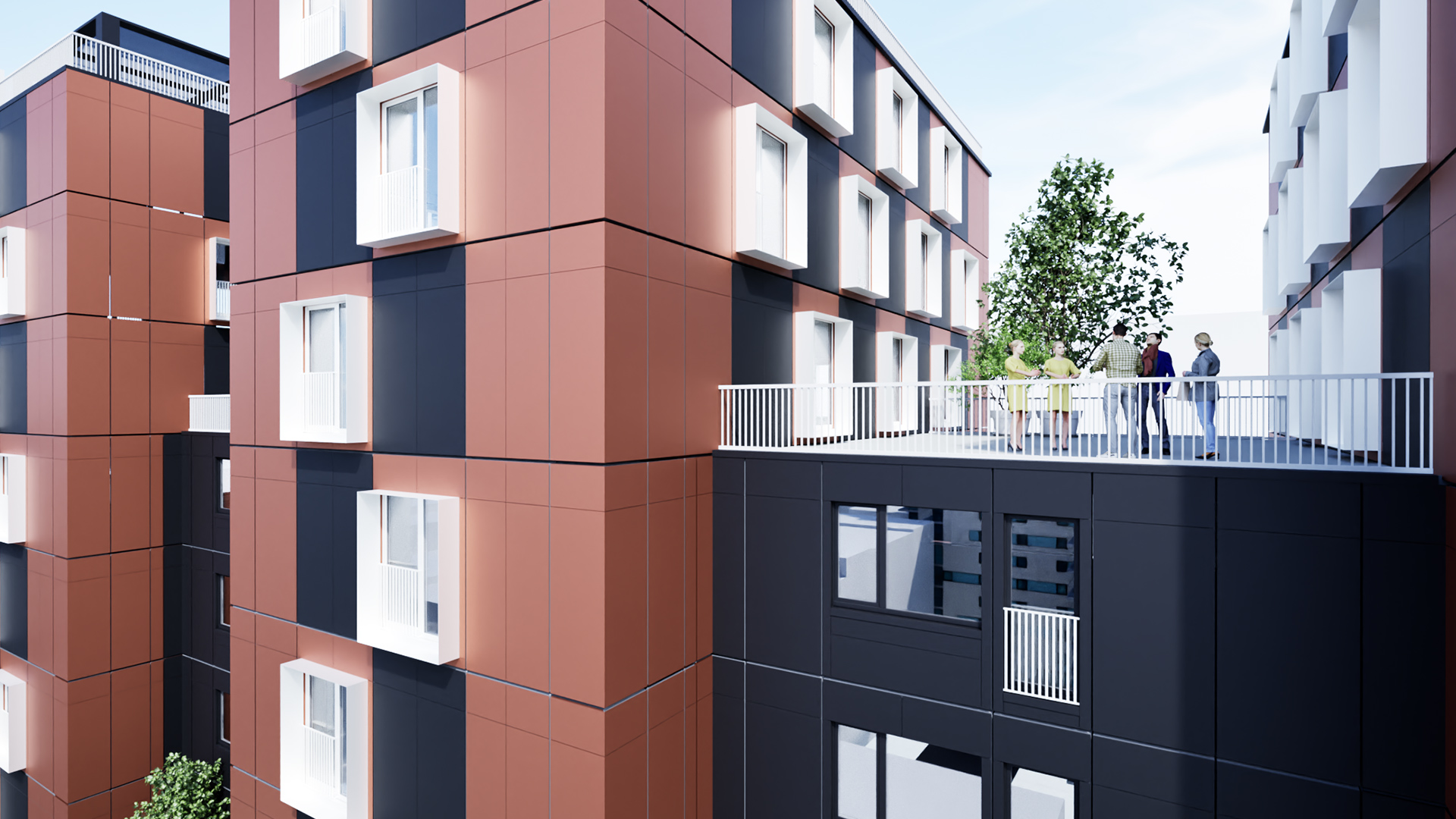
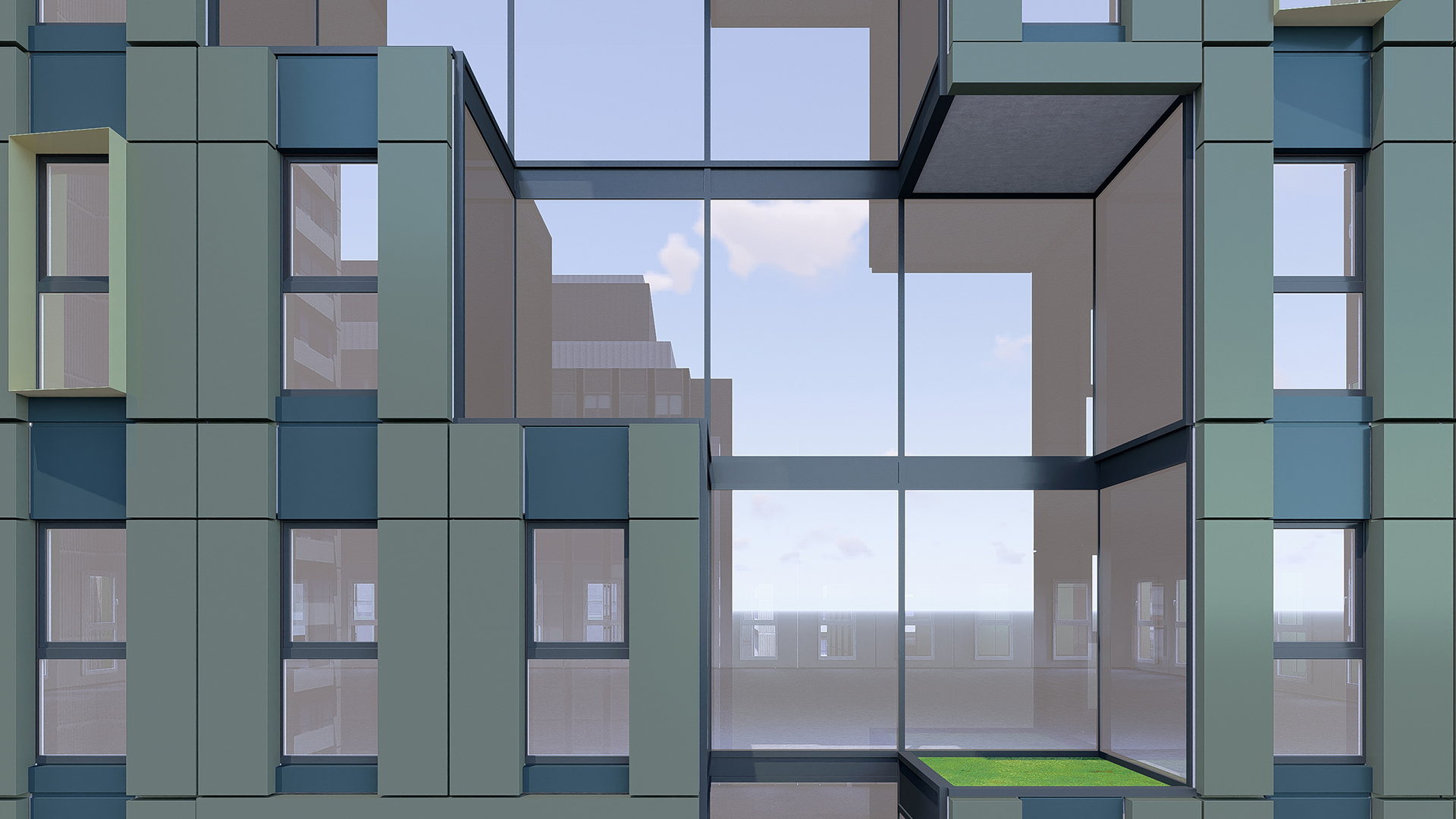
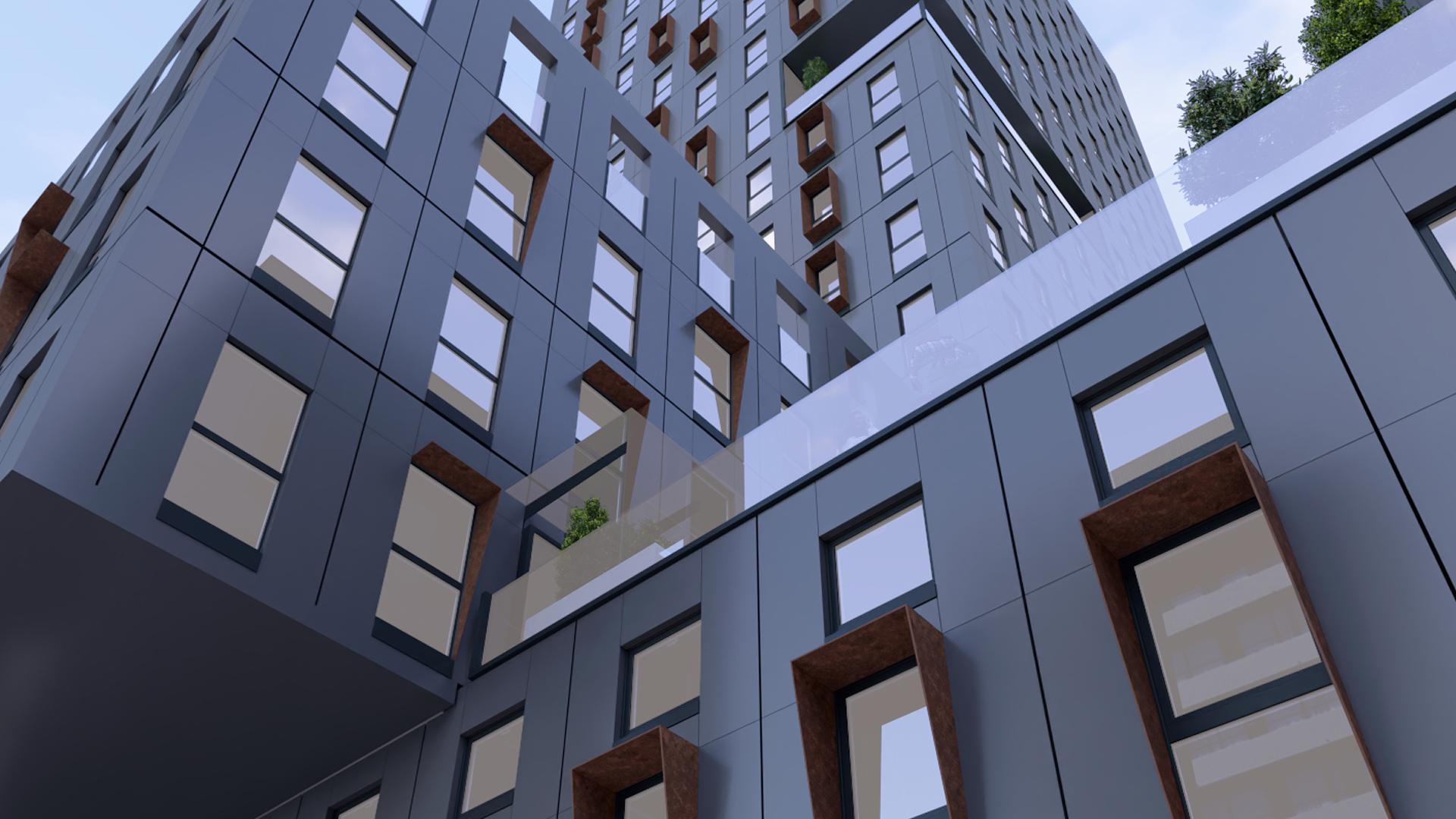
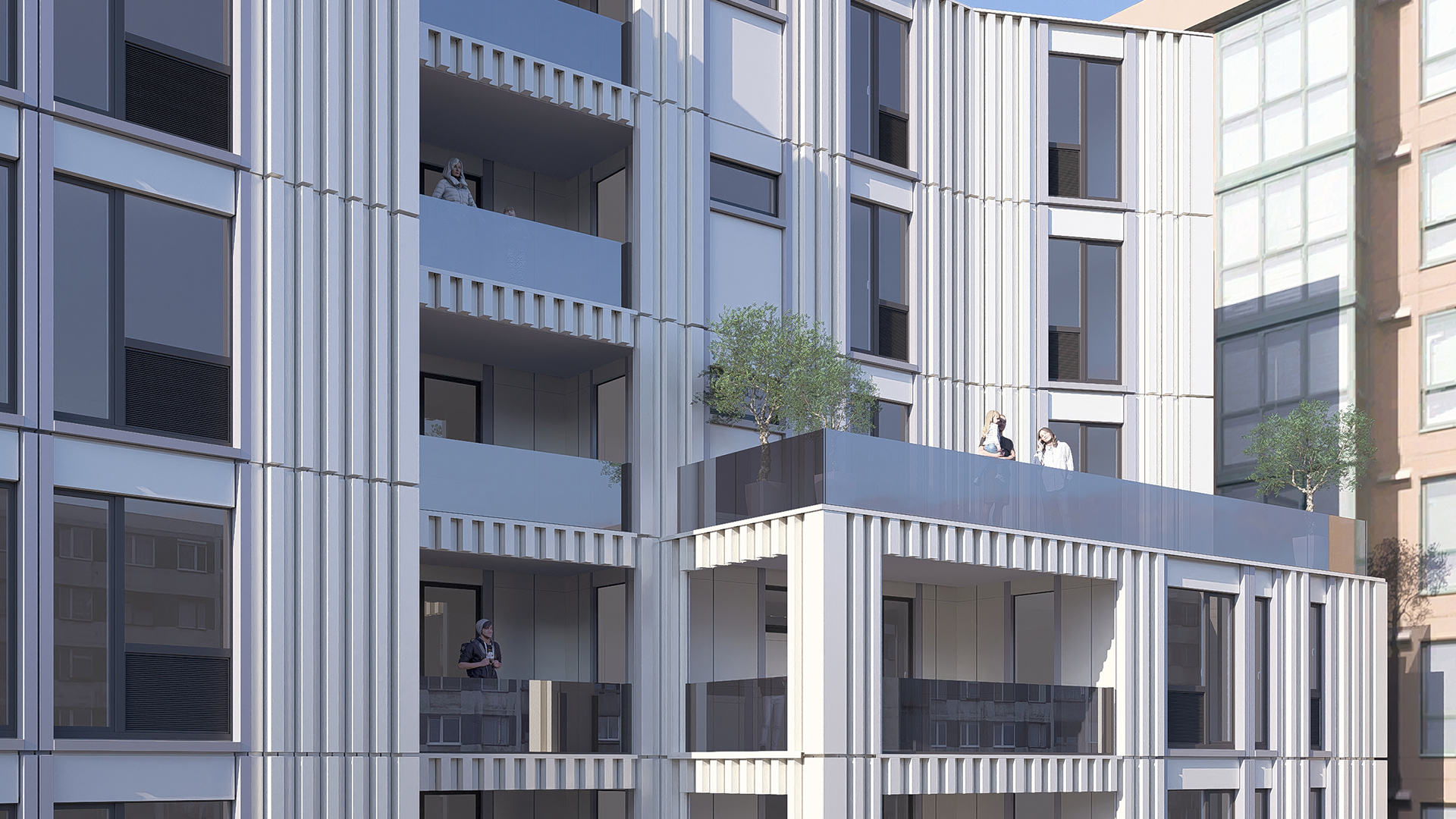
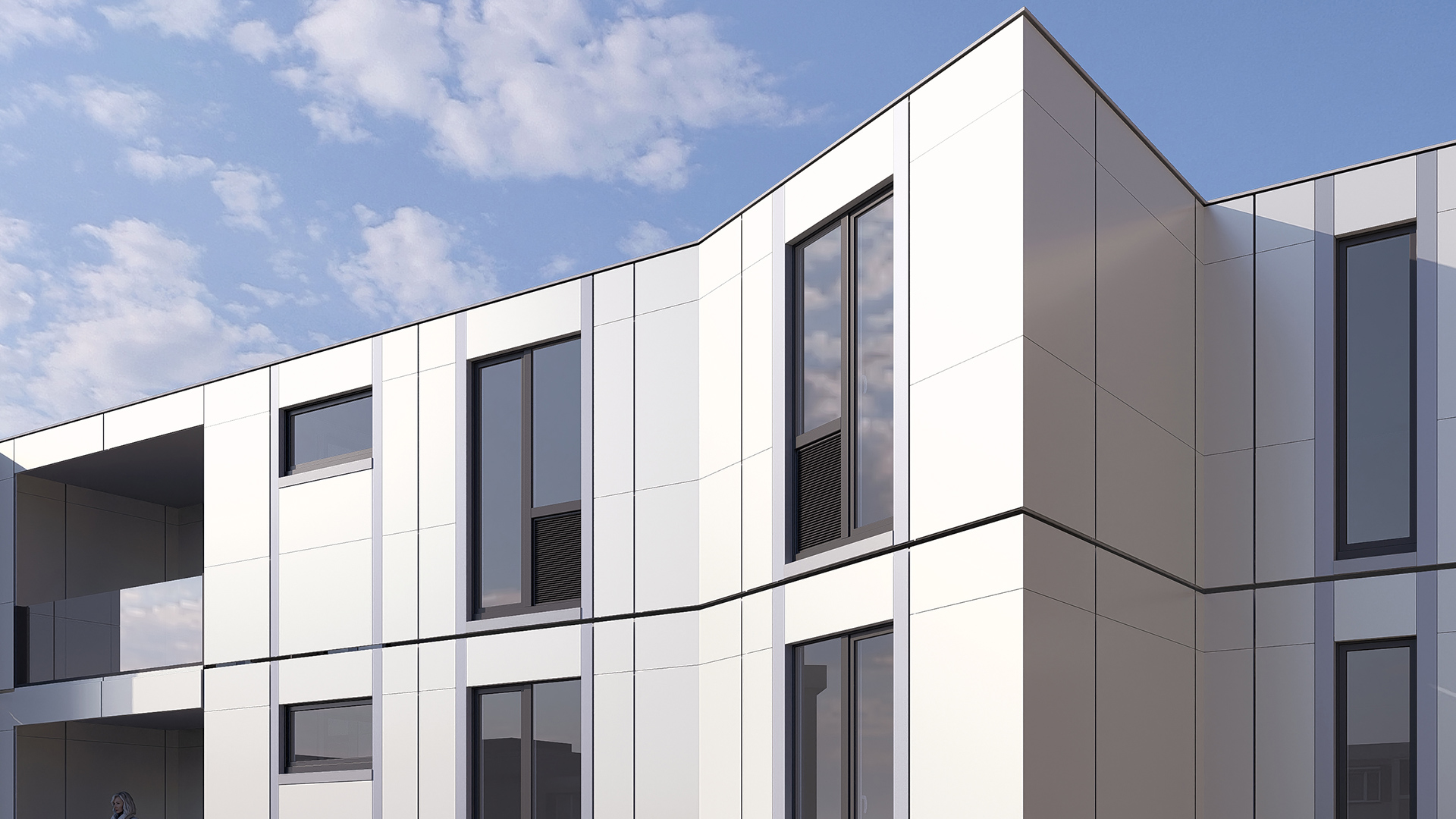
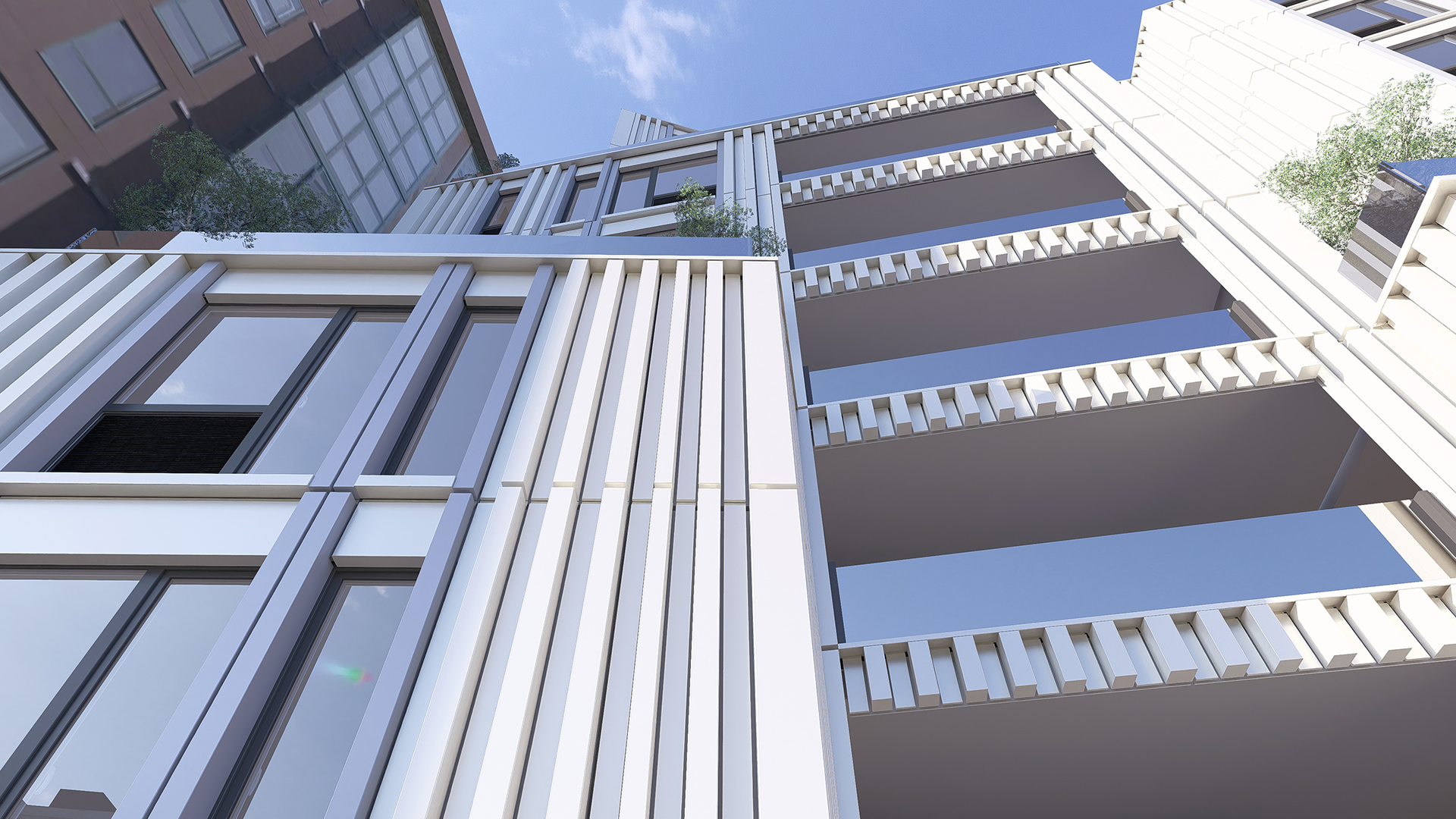
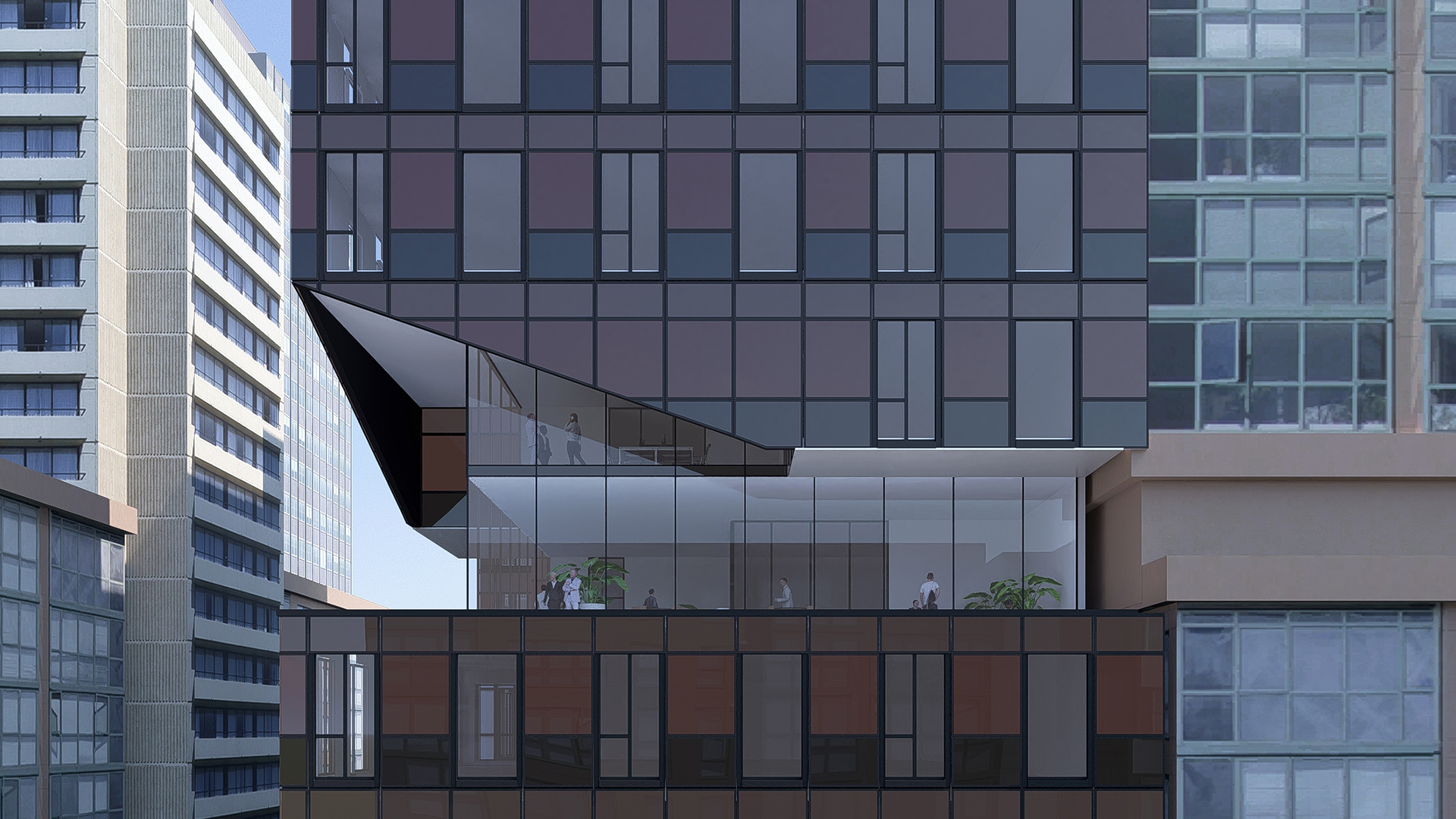
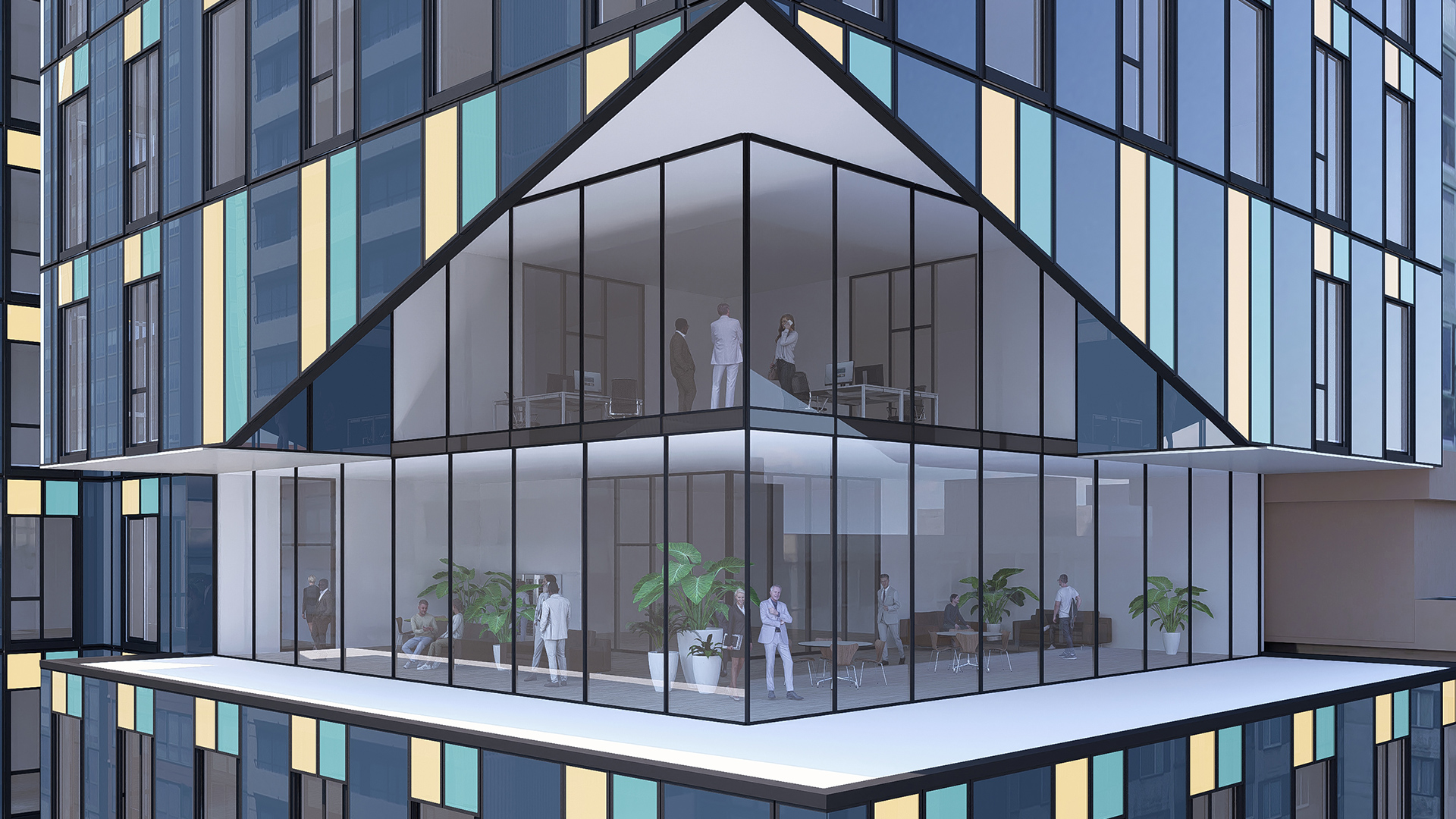
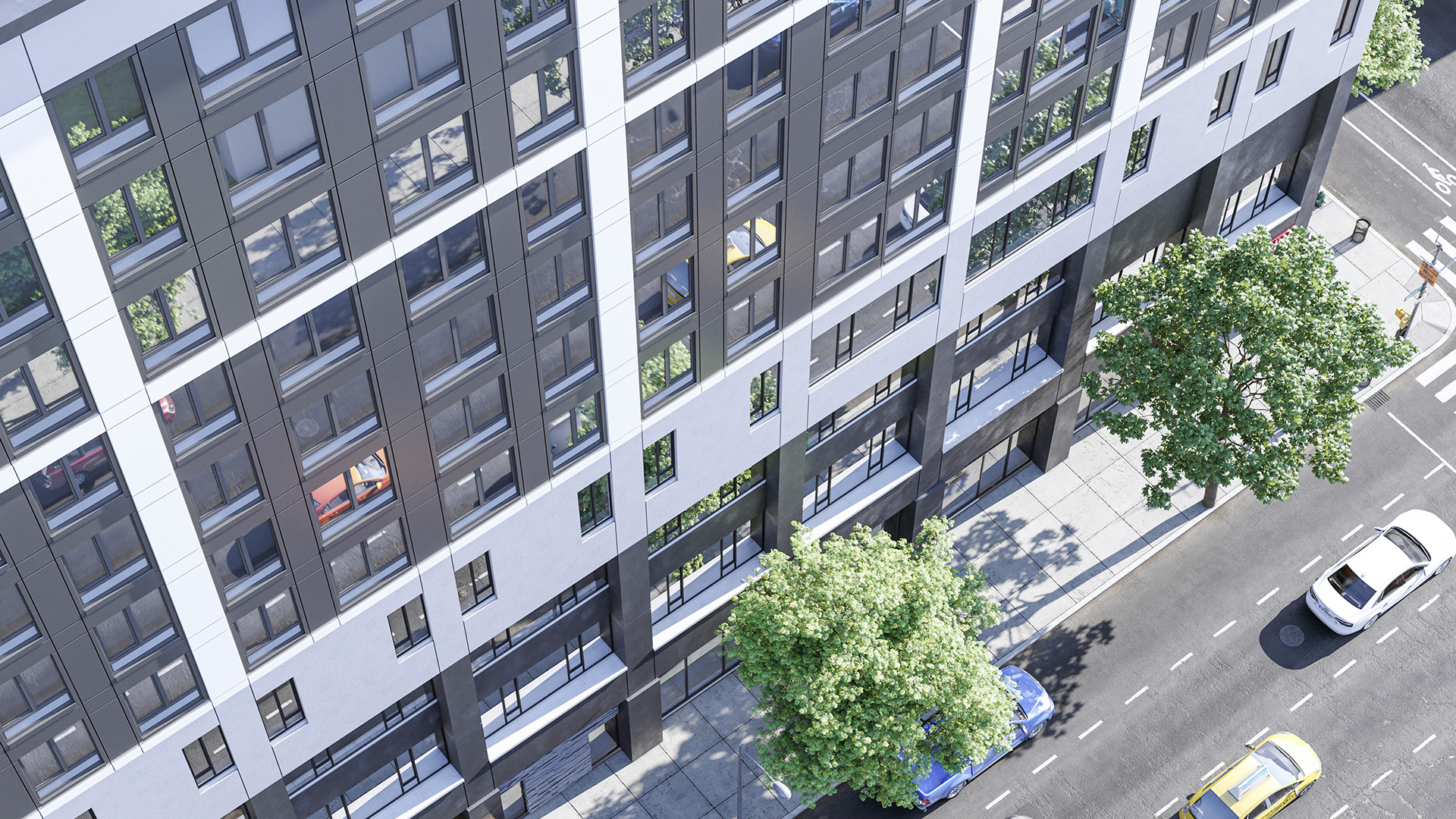
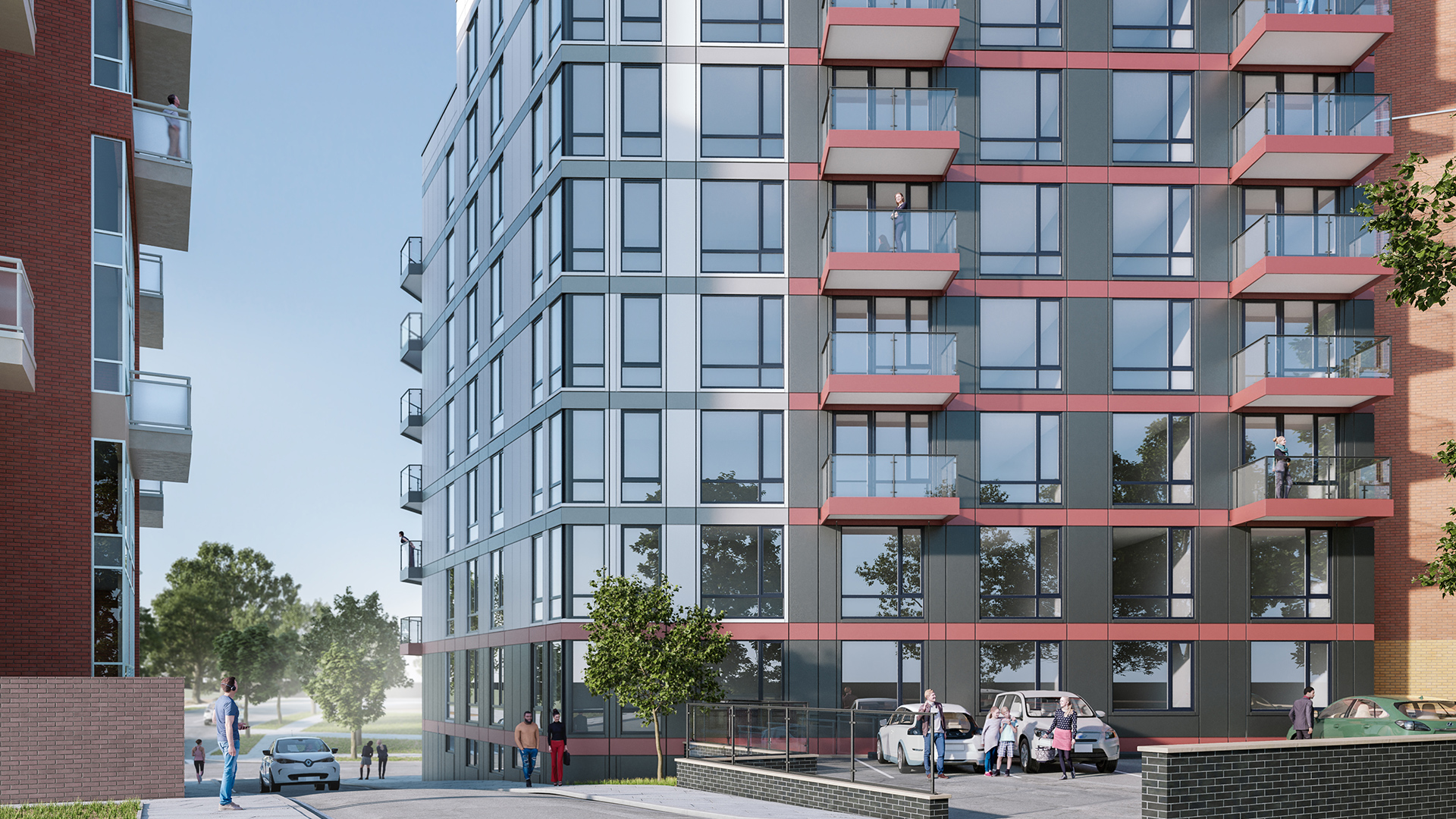
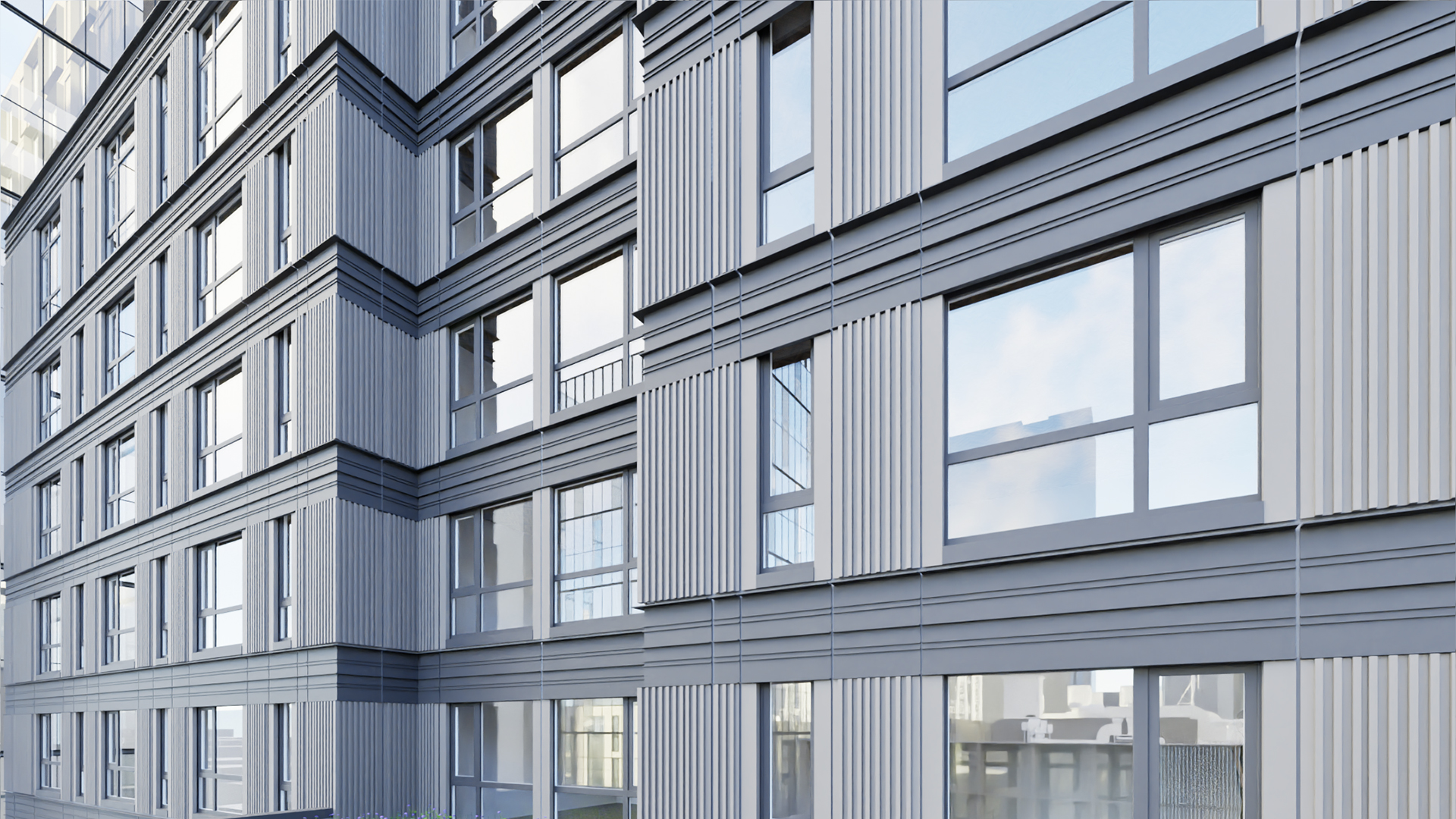
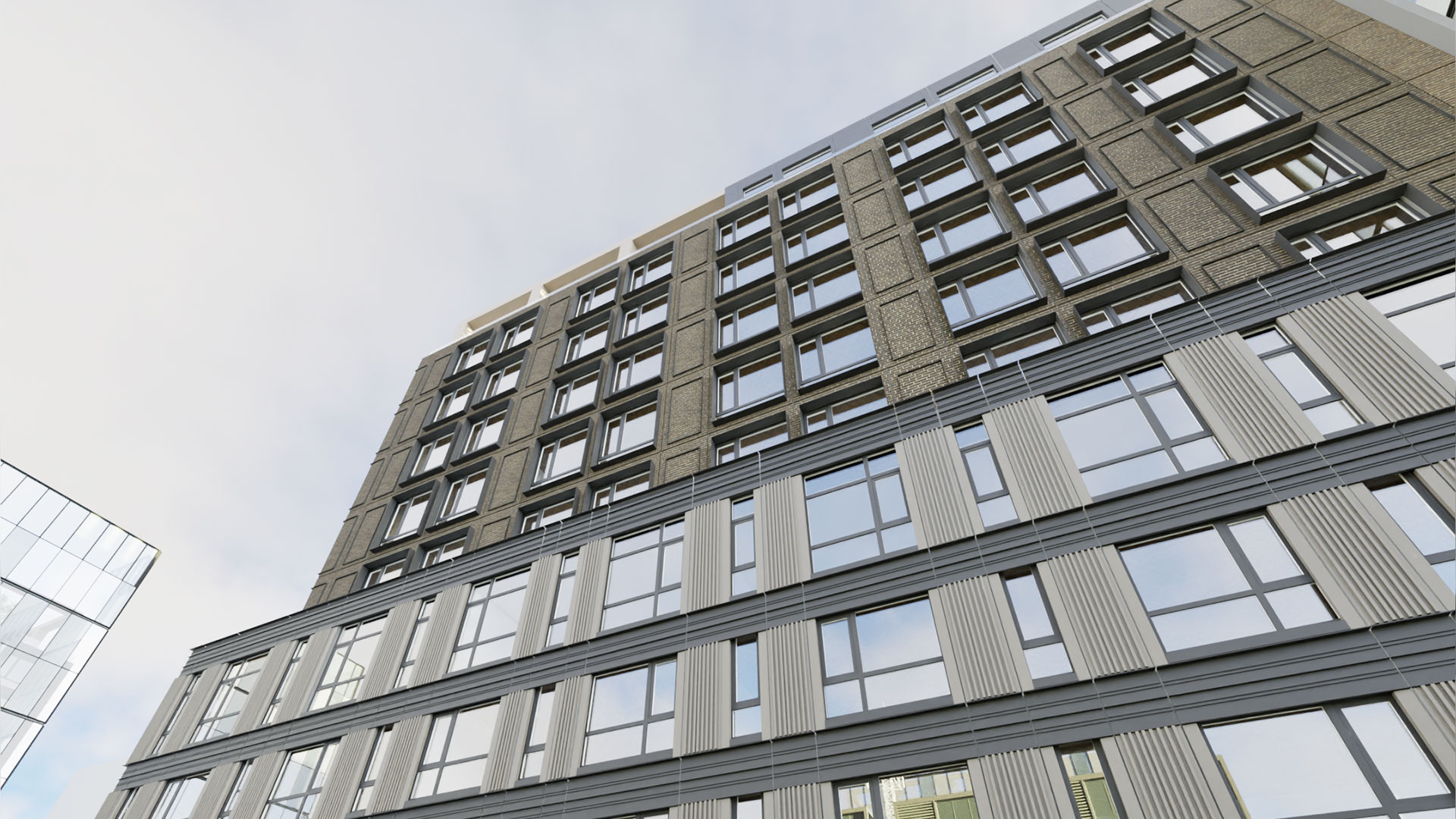
D Wall® modular building components for exteriors do not fit neatly into either the curtain wall or rainscreen category — and that is intentional. D Wall® is a factory-assembled aluminum and ACM exterior building component with engineered water management at the joint level. Each component arrives on site as a complete, tested assembly: aluminum framing, insulation, ACM cladding or Architectural Stone finish, air and water control layer, and factory-sealed joints.
The water management approach in D Wall® operates at the joint between components, with factory-applied gaskets and seals that are applied under controlled conditions rather than by field labor at height. This is not the open-cavity drainage of a traditional rainscreen, nor the face-sealed joint of a conventional curtain wall — it is a factory-controlled joint condition that eliminates the field variability that drives water infiltration failures in both systems.
Because D Wall® is factory-assembled, the on-site installation sequence is compressed. The multi-layer assembly that a rainscreen requires — substrate, weather barrier, cavity, cladding — is consolidated into a single factory-produced component that is installed in one operation. The quality control that curtain wall systems require at height — gasket installation, sealant application, glass setting — is performed in the factory under inspection, not on the scaffold in variable weather.
For architects who need the design flexibility of a curtain wall approach with the installation speed and quality control of factory production, D Wall® modular building components offer a specification path that does not require choosing between the two. Contact Dextall's technical team at dextall.com for project-specific technical documentation.
Key Takeaways
- Curtain wall and rainscreen systems manage water through fundamentally different strategies. Curtain wall relies on joint sealing and drainage within the framing system; rainscreen relies on physical separation of the cladding from the weather barrier with an open or vented cavity.
- Pressure-equalized curtain wall and pressure-equalized rainscreen both eliminate the pressure differential that drives water inward — but through different mechanisms and in different assembly configurations.
- Curtain wall is the appropriate choice for high-glazed facades on tight structural grids. Rainscreen is appropriate for primarily opaque facades where continuous insulation and drainage cavity separation are design priorities.
- Stick-built curtain wall and sequential rainscreen installation both extend the on-site work duration and expose quality to field variable conditions. Factory-assembled exterior building components compress the on-site sequence and move quality control into the factory.
- D Wall® modular building components use factory-controlled water management at the joint level — not a traditional rainscreen cavity or face-sealed curtain wall joint — delivering a tested assembly in a single factory-produced component.
FAQ
What is the main difference between a rainscreen and a curtain wall?
A curtain wall is an aluminum-framed system hung from the building structure that integrates the cladding, framing, and water management into a single engineered assembly. A rainscreen is a cladding layer applied over a separate weather barrier, with an open or ventilated cavity between the cladding and the substrate that allows water to drain and air to circulate. Curtain wall is suited to high-glazed facades; rainscreen is suited to primarily opaque cladding applications where the open cavity drainage principle and continuous insulation outboard of the structure are design priorities.
How does a pressure-equalized rainscreen work?
A pressure-equalized rainscreen divides the cavity behind the cladding into compartments using horizontal and vertical barriers. Each compartment is vented to the exterior, which equalizes air pressure between the cavity and the outside. Because water infiltration is driven by pressure differential, equalizing the pressure across the cladding joint removes the primary driving force. Water that passes the outer cladding drains to the base of the compartment rather than being driven inward by pressure.
Which system is better for continuous insulation compliance?
Rainscreen systems are generally more compatible with ASHRAE 90.1-2022 continuous insulation requirements because the insulation layer is applied to the structural substrate, outboard of the structure and the framing, before the cavity and cladding assembly. In curtain wall systems, continuous insulation is located at spandrel zones and is interrupted by the aluminum framing members, which create thermal bridges that must be addressed through thermal breaks in the frame design.
What makes factory-assembled exterior building components different from curtain wall and rainscreen?
Factory-assembled exterior building components consolidate the multi-layer assembly — framing, insulation, cladding, air and water control — into a single factory-produced unit that is installed in one operation on site. Water management is achieved through factory-applied gaskets and seals at the joint between components, applied under controlled conditions. This eliminates the field labor and weather exposure that drive quality variability in both stick-built curtain wall and sequential rainscreen installation.
When is curtain wall the wrong choice for a high-rise facade?
Curtain wall is not the optimal choice when the facade is primarily opaque — metal, stone, or fiber cement with punched windows — because the aluminum framing system is optimized for glass infill. It is also a difficult specification when the structural grid does not align with curtain wall anchor spacing requirements, or when the project schedule cannot support the extended on-site installation duration that stick-built curtain wall assembly requires at height.
Sources
- Exterior Wall Systems — Whole Building Design Guide, National Institute of Building Sciences
- ASTM E331: Standard Test Method for Water Penetration of Exterior Windows, Skylights, Doors, and Curtain Walls — ASTM International
- ASTM E283: Standard Test Method for Determining Rate of Air Leakage Through Exterior Windows, Curtain Walls, and Doors — ASTM International
- Curtain Wall Systems for Modern Towers — Dextall
- D Wall® Modular Building Components — Dextall


















.jpeg)


-Compliance-for-NYC-Multifamily-%26-Co-Op-Facades.jpg)




















_format(webp).avif)
_format(webp)%20(6).avif)
_format(webp)%20(5).avif)
_format(webp)%20(4).avif)
_format(webp)%20(2).avif)
_format(webp)%20(3).avif)


.avif)
_format(webp)%20(2).avif)