CitizenM Bowery: Prefab Facade Integration in Modular High-Rise Construction
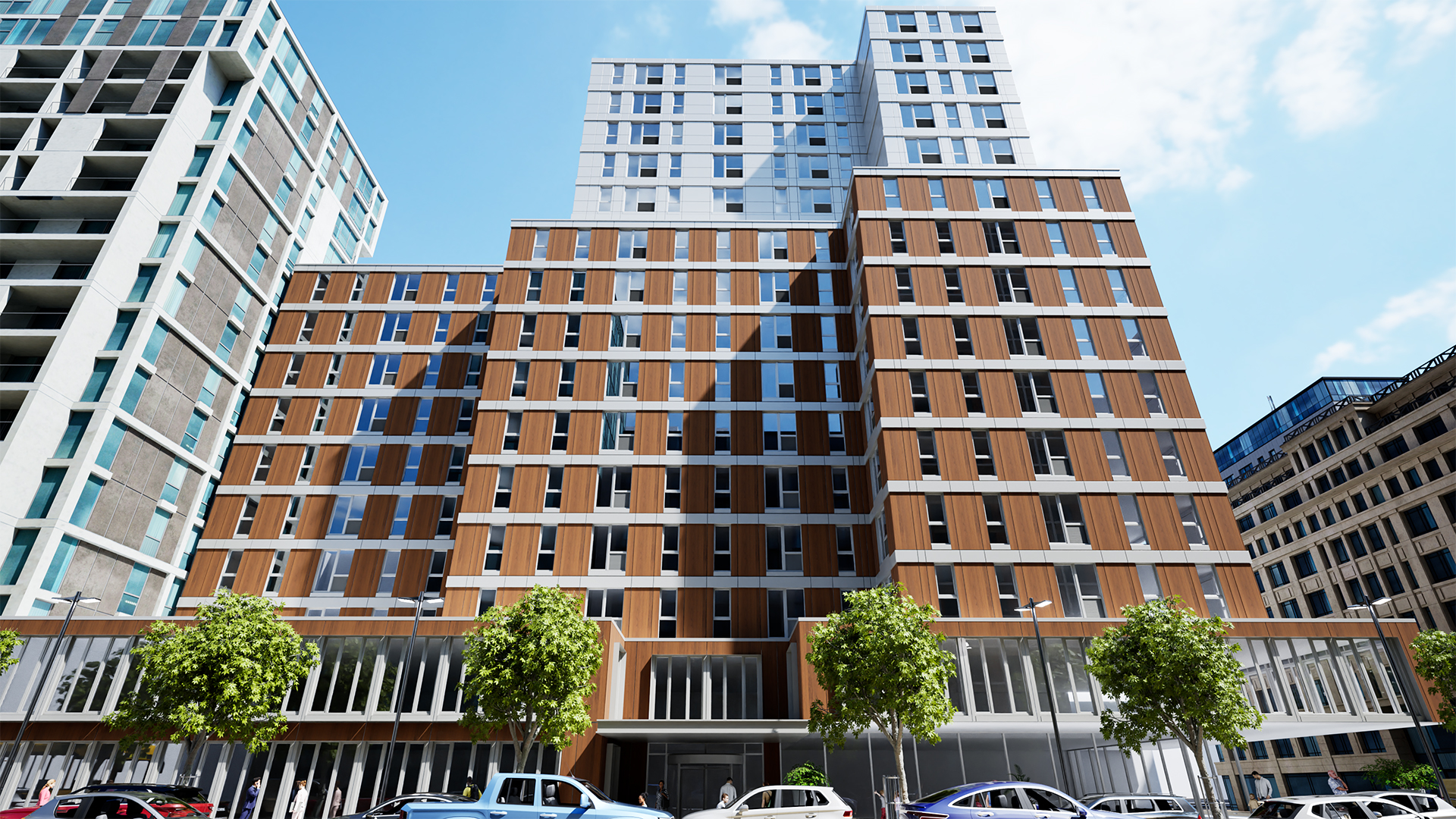
Modular construction compresses schedules. A building that would take two years to erect floor by floor can reach structural completion in months when each floor arrives from the factory pre-built. But the facade — the interface between the building and everything outside — doesn't follow the same factory logic. And that gap creates problems that mid-rise developers rarely anticipate before steel starts going up.
In September 2018, Turner Construction completed the citizenM New York Bowery Hotel at 189 Bowery in Manhattan — 21 stories, 210 factory-built modular units, 300 guest rooms, with facade panels manufactured by Aluprof S.A. in Poland alongside the room modules. The building was the tallest modular hotel in the United States at completion, and the way its facade was designed and installed offers a precise technical case study in what modular-prefab integration actually requires.
What Makes CitizenM Bowery a Benchmark for Modular Facade Integration
210 Modules, One Facade System
The citizenM Bowery rises 21 stories from a four-story concrete podium. Above the podium, 15 floors of prefabricated modular units stack on a poured concrete structural core and a shear wall anchored at the building's southwest corner. Each modular unit measured 48 feet by 8 feet by 9 feet and contained two fully fitted hotel rooms and a central corridor — complete with plumbing fixtures, lighting, furniture, and finishes. Only mattresses and televisions were installed on site.
The facade system was not a separate design decision. Architectural Building Services installed a mullion/transom captured curtain wall using Aluprof's MB-SR50 Hi and MB-60l profiles with hopper tilt-in windows. Aluprof S.A. — the same Polish manufacturer that produced the modular components alongside Polcom Modular — supplied the facade system. Sourcing the facade and the modules from the same manufacturer allowed coordination of tolerances, connection details, and delivery sequencing before the first component arrived in New York.
The Tolerance Problem Nobody Talks About
Modular construction targets tighter tolerances than traditional site-built work. The industry typically aims for ±3mm dimensional accuracy on manufactured units. The problem is that these targets are difficult to maintain once units leave the factory, travel across an ocean, and are stacked by crane on a constrained Manhattan site with limited adjustment capability.
Research published by the UK Government on volumetric modular construction found that real MEP modules, when laser-scanned on site, showed deviations ranging from −25mm to +20mm — well beyond the ±3mm factory target. These deviations compound across floors. An offset at level 3 accumulates at level 7 if not accounted for in the facade connection design. A facade system with fixed attachment points will show this accumulation in open joints, compressed sealant, or cracked gaskets.
Factory Sequence vs. Field Sequence — a Different Construction Logic
In conventional construction, the structural frame goes up first, facade follows, and the schedule is linear. In modular construction the sequence is different: modules are fabricated in parallel with foundation work, delivered in sequence, stacked floor by floor. The facade cannot trail the modules by much — weather-tight status is needed quickly — but it also cannot be pre-attached to modules without creating interference at the inter-module joints.
The citizenM Bowery solution separated the facade system from the module body. The mullion/transom curtain wall ran as a continuous system across module boundaries, attached to the structural frame rather than to individual modules. This meant the facade could accommodate variation in module position without transferring stress across unit joints.
How Modular Construction Rewrites the Facade Schedule
Modules First, Cladding Second
The construction pace at citizenM Bowery was one floor of modular units per week. At that rate, the structural stack was substantially complete before facade installation reached the upper floors. This compressed timeline inverts the typical facade procurement logic: specification, shop drawing approval, fabrication, and delivery must all happen before the modules are stacked — not after.
Conventional facade procurement typically allows 12 to 18 months from contract to site delivery. Modular construction timelines are incompatible with this sequence. Facade systems on modular projects must be procured and detailed in parallel with module fabrication, with earlier decisions about facade geometry, connection details, and thermal strategy than most project teams are accustomed to making.
BIM Coordination at LOD 400–500
The coordination requirement for modular-facade integration is substantially higher than for conventional construction. Research on volumetric modular projects identifies BIM models developed to Level of Development 400–500 — component-level detail capturing connections, tolerances, and installation logic — as necessary for effective facade coordination. At this level, the model shows not just where facade panels go, but exactly how each connection interfaces with each module corner, what happens at the inter-module joint, and how positional deviations are absorbed by the connection system.
At citizenM Bowery, this coordination ran across two countries: modules and facade components were manufactured in Poland and installed in Manhattan by separate trade contractors. The BIM model served as the primary coordination document that made this possible without extensive field modification.
One Floor Per Week — What That Requires from the Envelope
Installing one floor of modular units per week creates a different site rhythm than conventional construction. The envelope closure must keep pace. If facade installation falls several floors behind the structural stack, open floors become a weather risk — for the completed interiors in modules below and for the connection hardware being installed above.
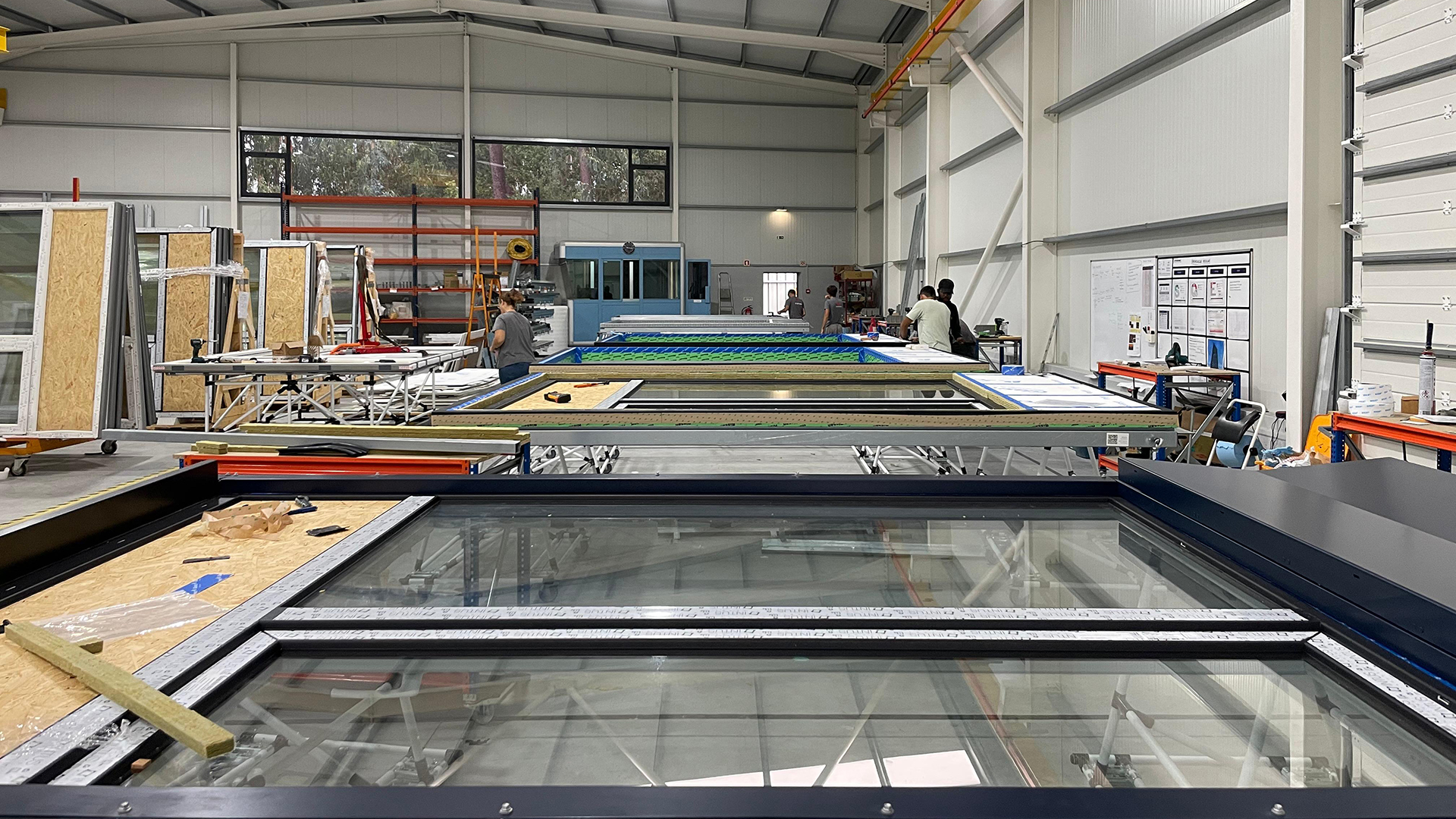
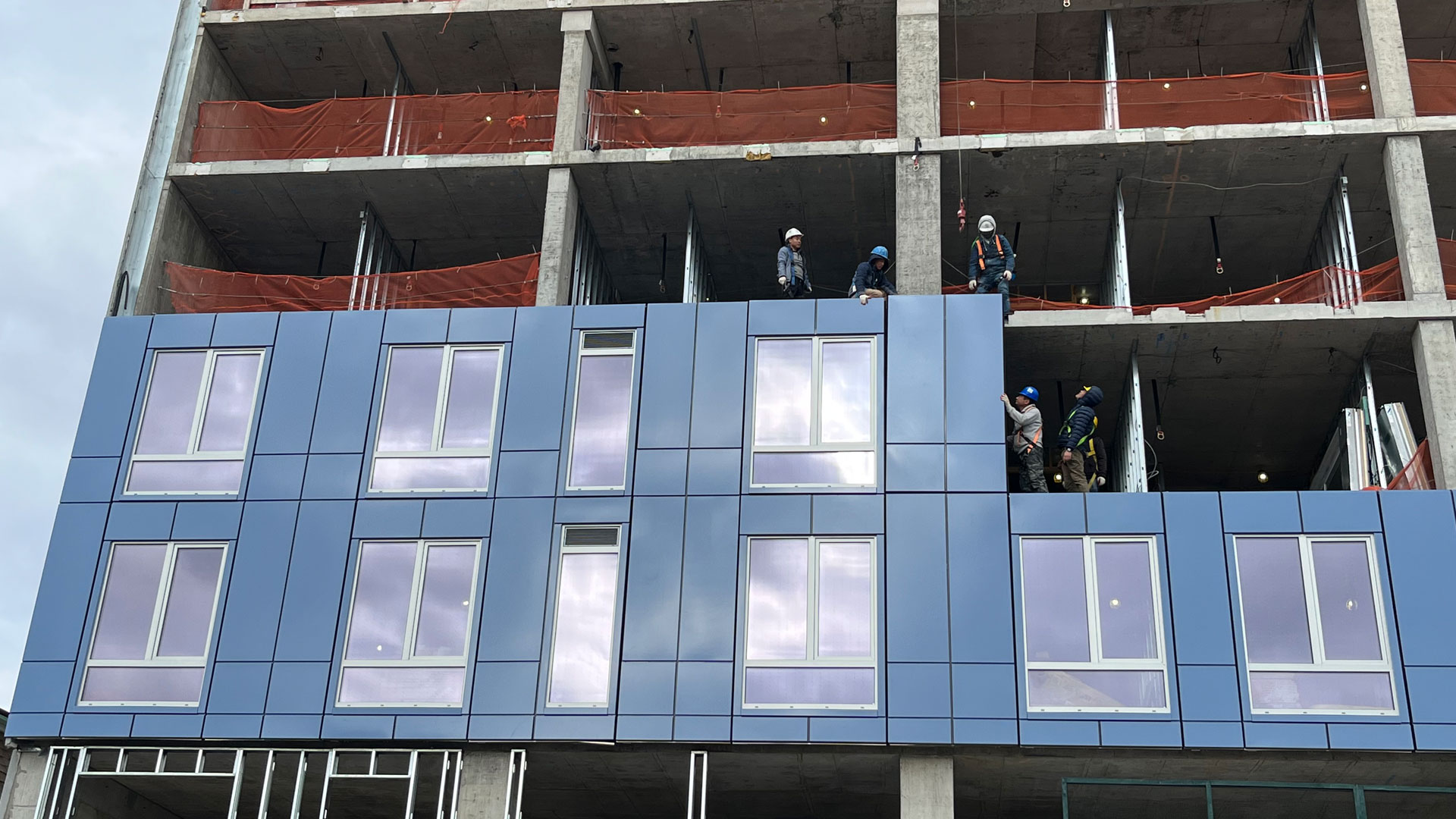
Unitized facade systems — where each panel arrives as a complete, pre-glazed unit — are the natural match for this pace. A panel that arrives pre-glazed, with all gaskets and seals in place, can be anchored and made weather-tight in the same day. Stick-built curtain wall, which requires sequential installation of mullions, glazing, and seals, cannot match this rate on a modular project.
Lessons for Mid-Rise Developers Considering Modular
Tolerance Stack-Up Across Floors
The most demanding aspect of modular facade coordination is tolerance management across the full building height. Individual modules may be close to ±3mm at the factory; by the time 15 floors are stacked on a constrained urban site, accumulated deviations can exceed the adjustment range of facade connections designed for traditional construction.
The solution is to design facade connections with explicit adjustment range — slotted holes, shim packs, or three-axis adjustable brackets — that accommodate deviations of ±20mm or more without affecting facade performance. This is not a compromise on quality. It is a design requirement specific to modular construction that standard facade detailing does not address.
Facade Independence from the Modular Contractor
Post-project reviews of modular buildings consistently identify the boundary between the modular contractor's scope and the facade contractor's scope as the highest-risk interface on the project. Each party designs to their own tolerances; neither is responsible for what happens at the joint.
The cleanest solution is to design the facade as a system that runs continuously across module boundaries, attached to the primary structural frame rather than to individual module faces. This approach — used at citizenM Bowery — means facade performance depends on the structural frame's geometry, not on the dimensional accuracy of each module. The facade contractor works to a single, consistent anchorage substrate rather than 210 individual module edges of varying position.
Weather-Tight Closure on a Compressed Timeline
A mid-rise modular project in New York, Chicago, or Boston that begins envelope work in spring can reach weather-tight status before the heating season — if the facade system is ready to install at the pace the modular stack requires. Specifying the facade system is a day-one decision, not a value-engineering exercise after design development.
The facade must be detailed in parallel with the modules, tested for tolerance compatibility before fabrication begins, and delivered to site ready to install at one floor per week or faster. Developers who treat the facade as a conventional follow-on procurement will lose the schedule advantage that modular construction was chosen to provide.
Practical Applications for Dextall Market
Unitized Panels That Work with Modular Structure
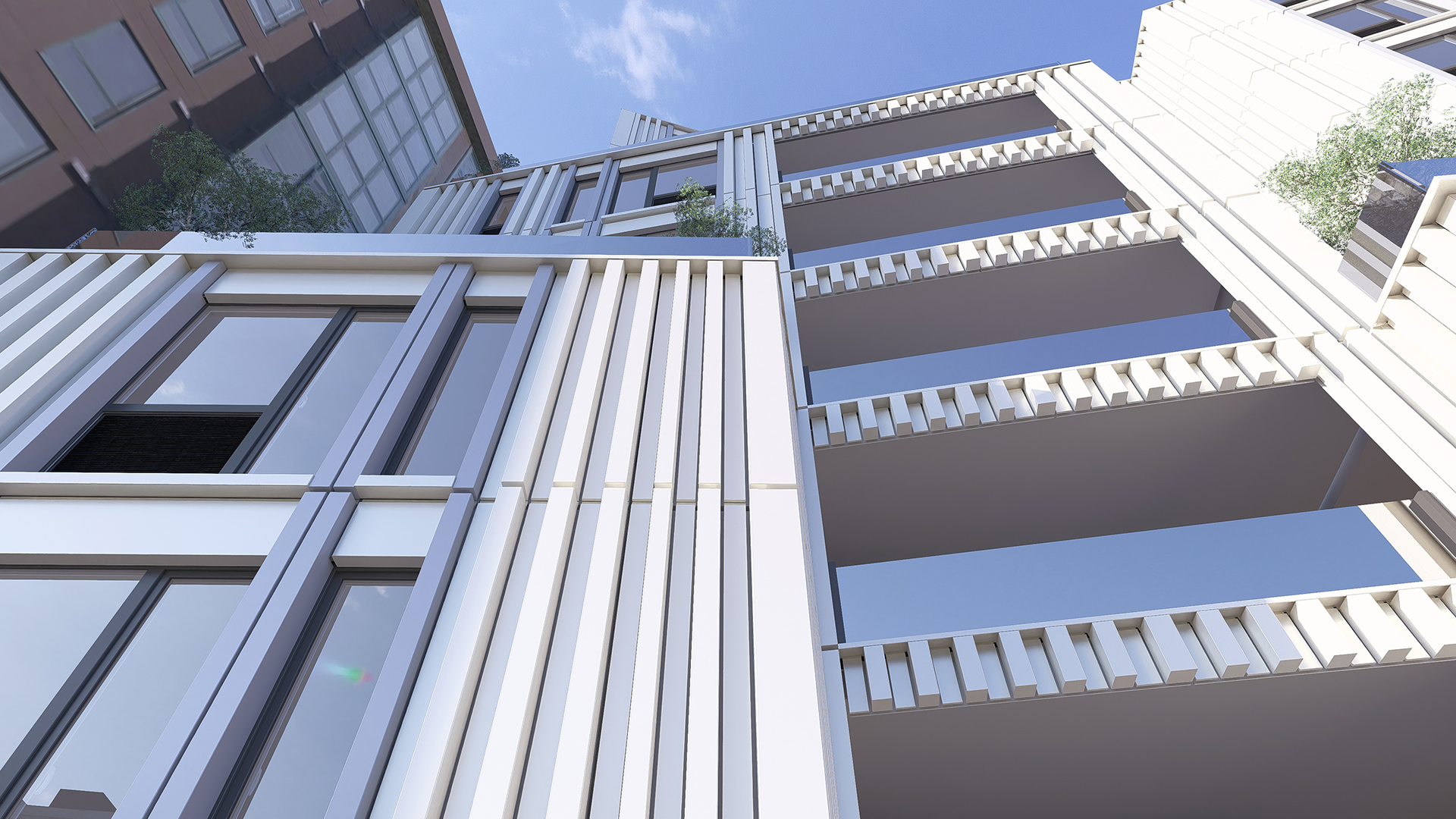
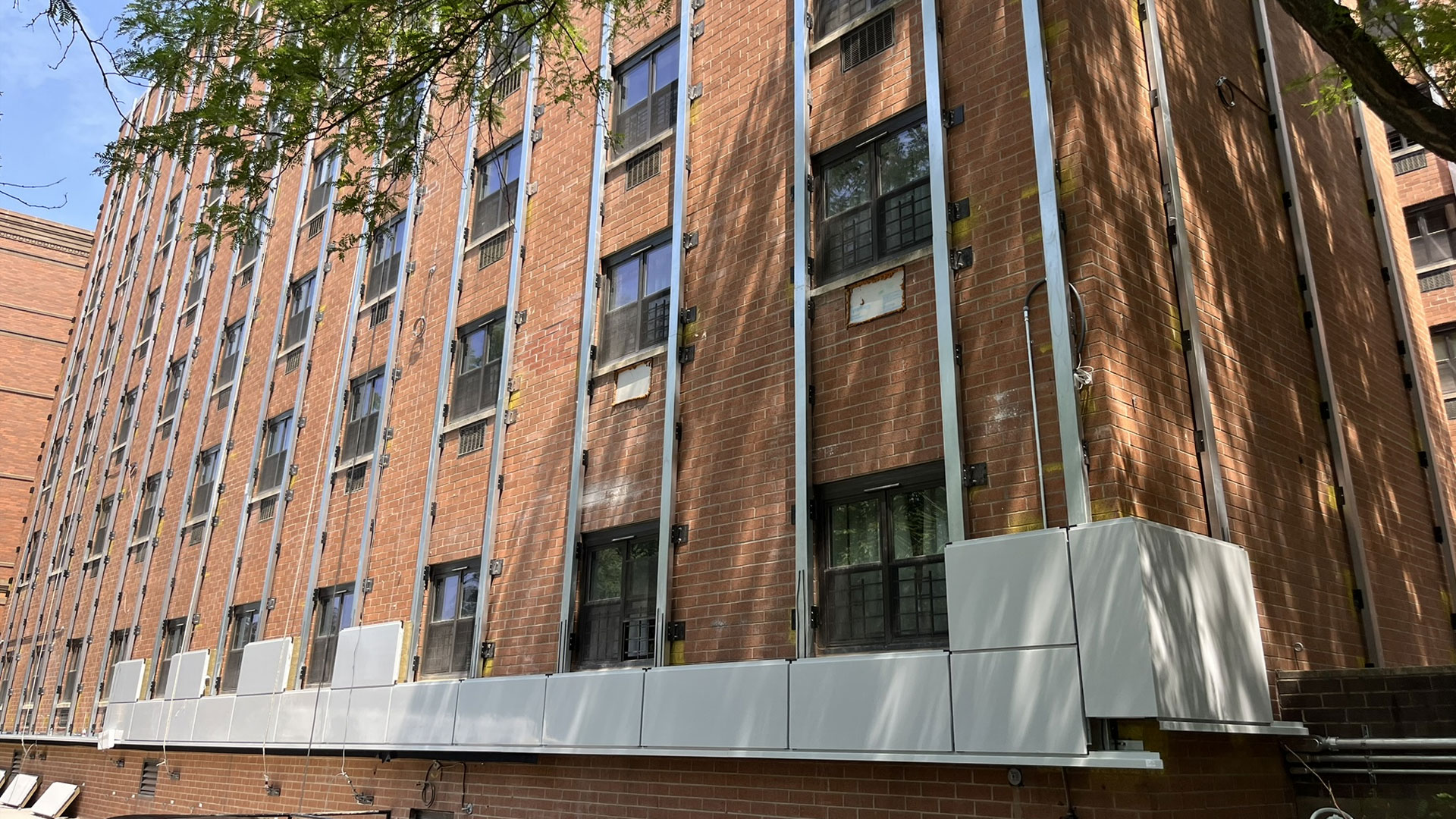
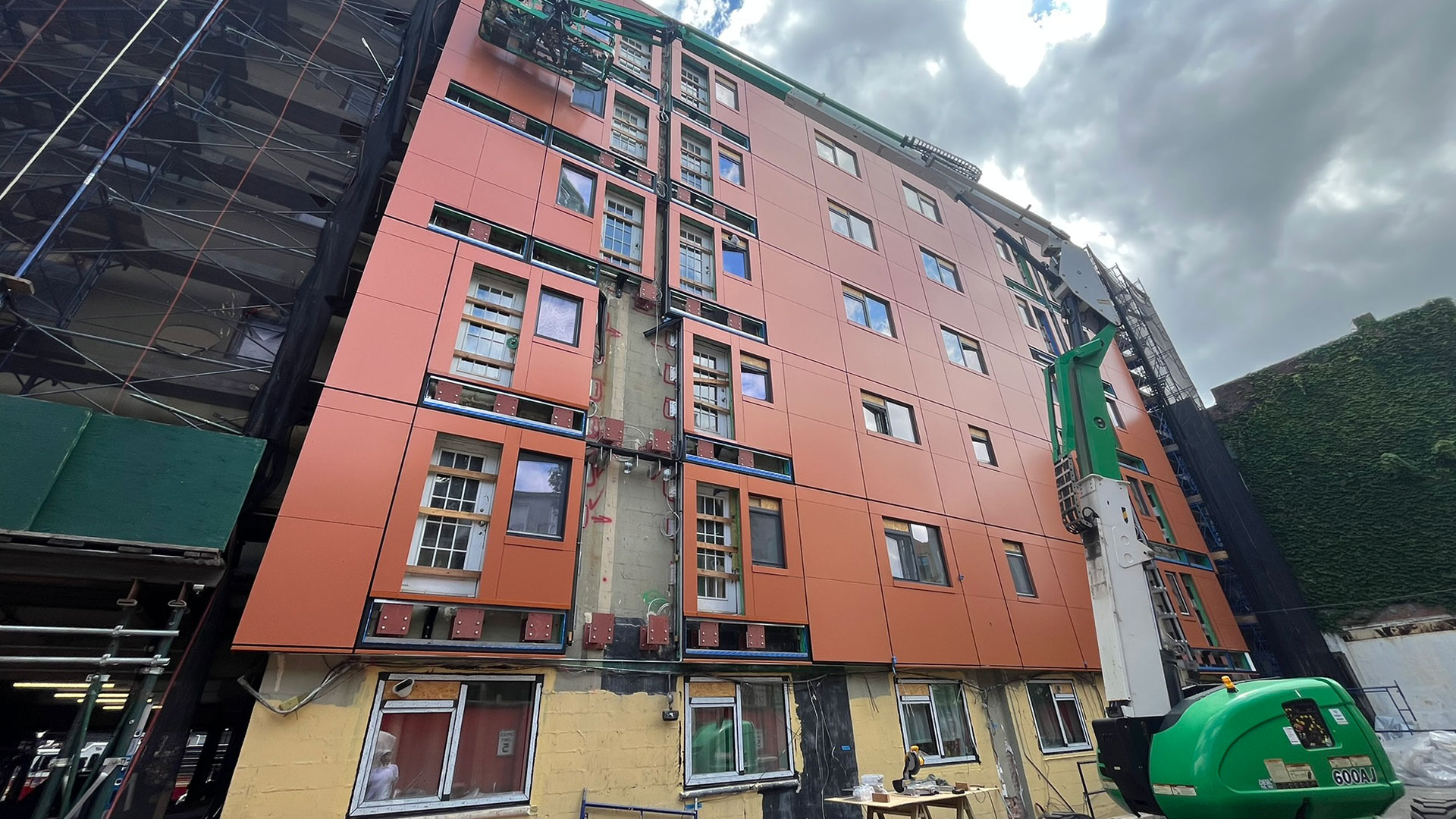
Dextall's D Wall® prefabricated facade panels are designed as independent systems — attached to the building's primary structure rather than integrated into the framing strategy of any individual floor. This structural independence is exactly what modular buildings require. Panel connections accommodate field adjustment, panels arrive pre-fabricated and ready for anchorage, and the installation sequence can match the pace of modular stacking.
For a mid-rise modular project in New York City, this approach reduces the primary interface risk. The facade contractor does not need to coordinate with the modular contractor at every connection point. Both work to the same structural frame, with the facade acting as an independent layer that closes the envelope after the structural stack is complete.
Factory Documentation as the Common Language
One consistent challenge in modular-facade integration is documentation. The modular contractor has shop drawings for each module; the facade contractor has shop drawings for each panel. These documents rarely speak to each other unless the project team creates an explicit coordination layer.
The Dextall Studio design platform generates facade configurations natively compatible with BIM workflows, allowing direct integration with the structural model at the level of detail modular projects require. When the facade shop drawings and the modular shop drawings reference the same coordinate system and connection geometry, tolerance conflicts are identified before fabrication — not during installation. This is the difference between a smooth modular project and one that accumulates rework claims at every floor transition.
NYC Mid-Rise Modular Pipeline — A Growing Opportunity
New York City's modular building pipeline has grown steadily since citizenM Bowery demonstrated the approach at scale. Mid-rise residential and hospitality projects across the five boroughs have used volumetric modular or panelized modular approaches in subsequent years. Each requires a facade system coordinated with modular tolerances, delivering at the pace of modular installation, and documented to the standard BIM coordination requires.
Dextall's presence in New York — with projects in Brooklyn, Newark, and Manhattan — positions the D Wall® system as a natural specification choice for modular developers who need a facade partner that understands industrialized construction from the factory floor outward. The same principles that governed facade coordination at citizenM Bowery — factory sequencing, tolerance accommodation, structural independence — apply directly to the 8- to 20-story projects that define Dextall's market.
Key Takeaways
- CitizenM Bowery's 21-story modular stack achieved one floor per week — a pace only unitized, pre-glazed facade panels can match.
- Real-world modular deviations reach −25mm to +20mm across stacked floors; facade connections must explicitly accommodate this range.
- Facade systems attached to the primary structural frame — not to individual modules — eliminate the highest-risk interface in modular construction.
- BIM coordination at LOD 400–500 is required to resolve tolerance conflicts between modular structure and facade before fabrication begins.
- Prefabricated facade panels with factory documentation and structural independence are the natural match for mid-rise modular projects in dense urban markets.
FAQ
What is volumetric modular construction and how does it differ from panelized prefab?
Volumetric modular construction delivers three-dimensional, room-sized units — fully finished on the inside — that are stacked on site to form the building. Panelized prefab delivers flat panels (walls, floors) assembled on site. Volumetric modular achieves the fastest on-site assembly but creates more complex facade coordination requirements because modules must be precisely aligned before the facade closes over them.
What tolerance requirements apply to facade systems in modular buildings?
The volumetric modular industry targets ±3mm dimensional accuracy at the factory, but UK government research found real on-site deviations of −25mm to +20mm after transport and stacking. Facade connection systems for modular buildings should accommodate adjustment of at least ±20mm in all three axes — beyond what standard curtain wall connections typically provide.
How does BIM coordination work between modular structure and curtain wall?
Effective modular-facade BIM coordination requires models developed to LOD 400–500, capturing component-level connection details and tolerance accommodation. Both the modular and facade contractors must work from the same structural reference coordinate system, with interface conditions modeled explicitly. This coordination must happen in parallel with module fabrication, not after structural completion.
Can unitized facade panels be used on any modular building regardless of module manufacturer?
Yes, provided the facade system is designed to attach to the primary structural frame rather than to individual module faces. A system attached to the structural frame is independent of the module manufacturer's dimensional accuracy. Connection design must include explicit adjustment range to accommodate modular tolerance accumulation across the full building height.
What are the schedule advantages of prefab facades in modular construction?
Modular construction commonly achieves one floor of structural assembly per week. Only unitized, pre-glazed facade panels — which arrive complete and can be anchored and weatherproofed in a single day — can match this pace. Stick-built curtain wall, requiring sequential mullion, glazing, and sealant installation, typically cannot keep up with modular stacking rates.
Disclaimer
Dextall is not involved in the citizenM New York Bowery Hotel project. This article analyzes publicly available information about the project's design and construction to explore how principles from large-scale modular building projects can inform mid-rise construction strategies in the U.S. market. For questions about citizenM properties, contact citizenM directly. For information about Dextall's prefabricated building envelope solutions, visit dextall.com.
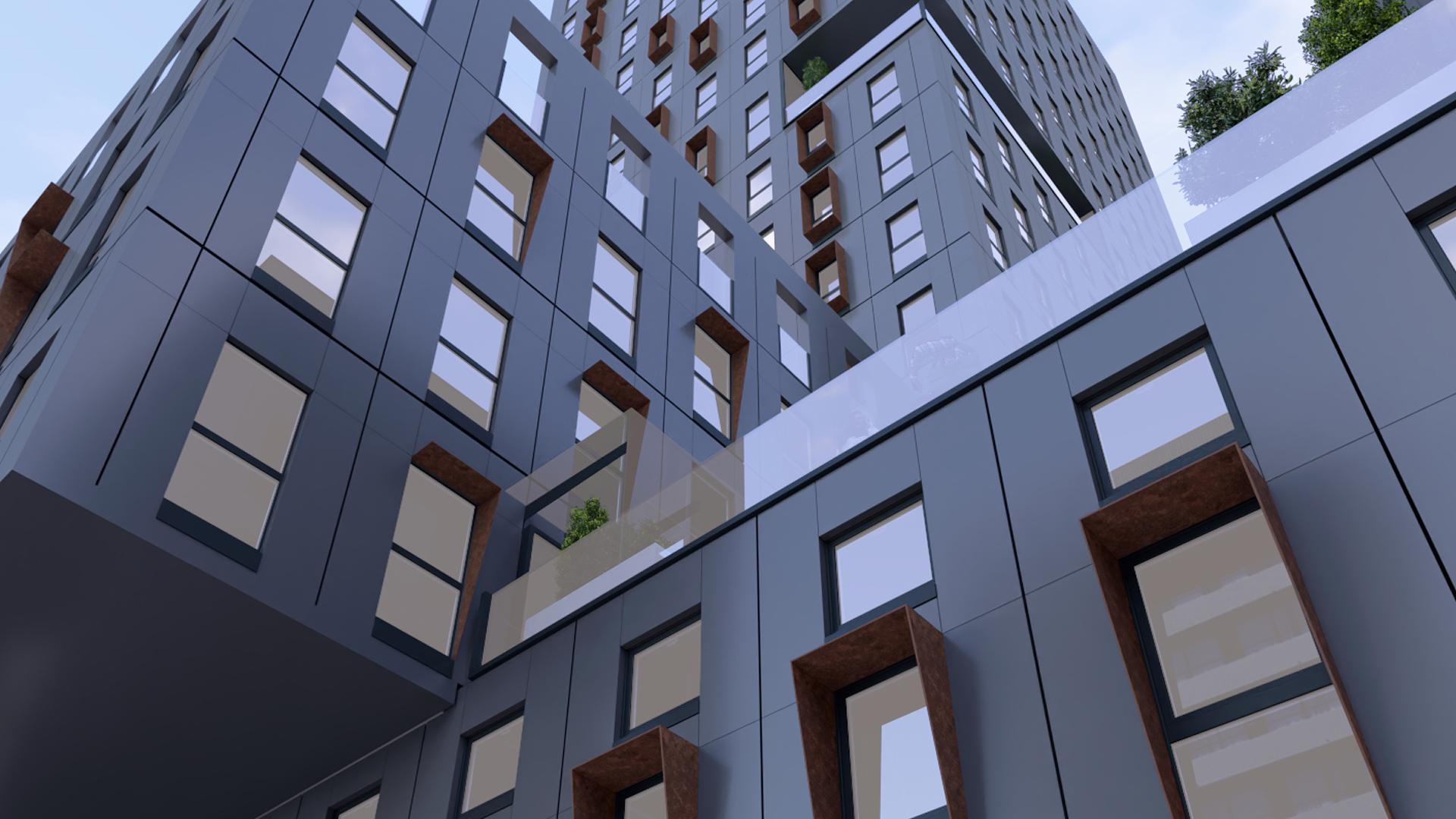
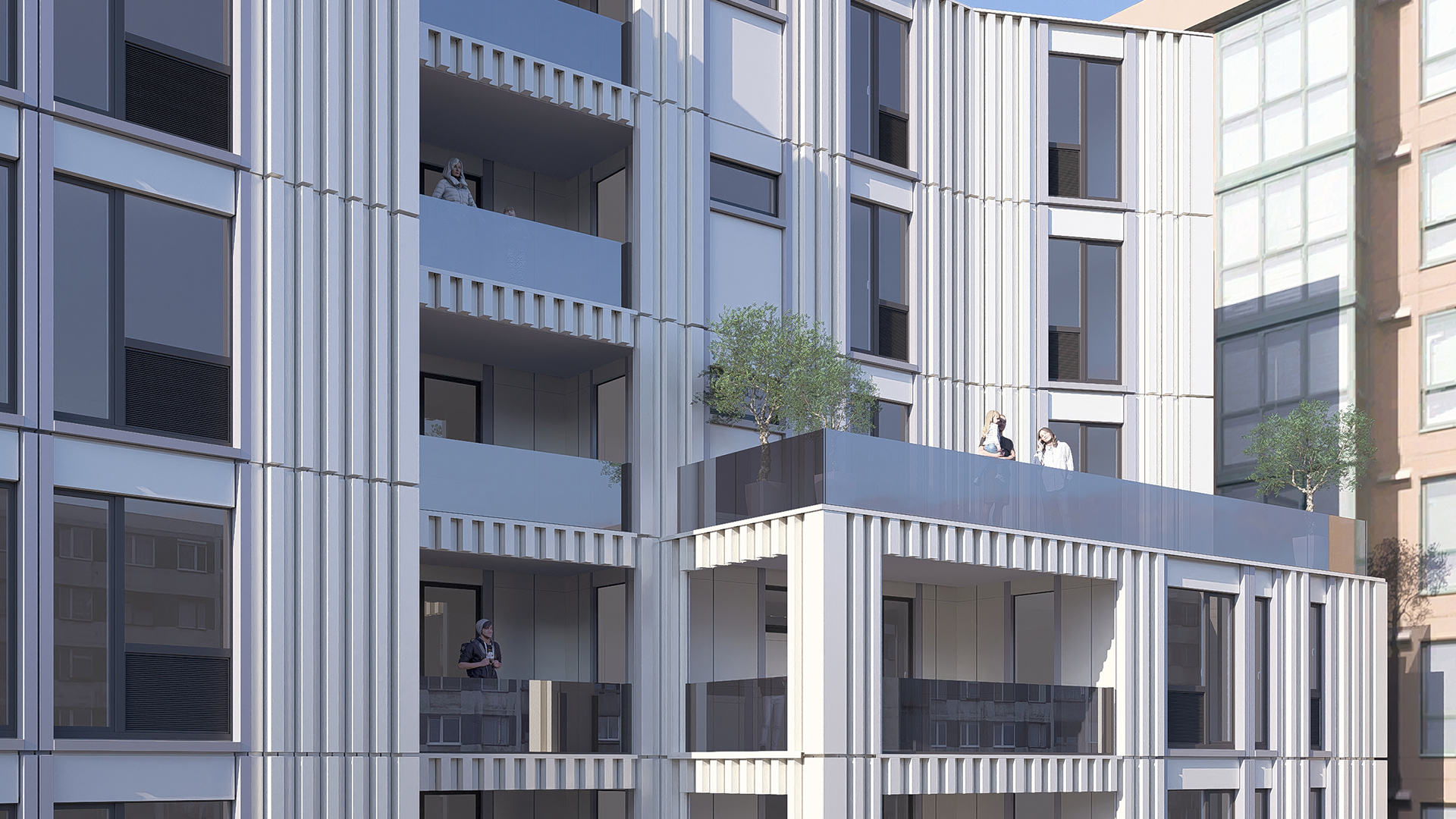
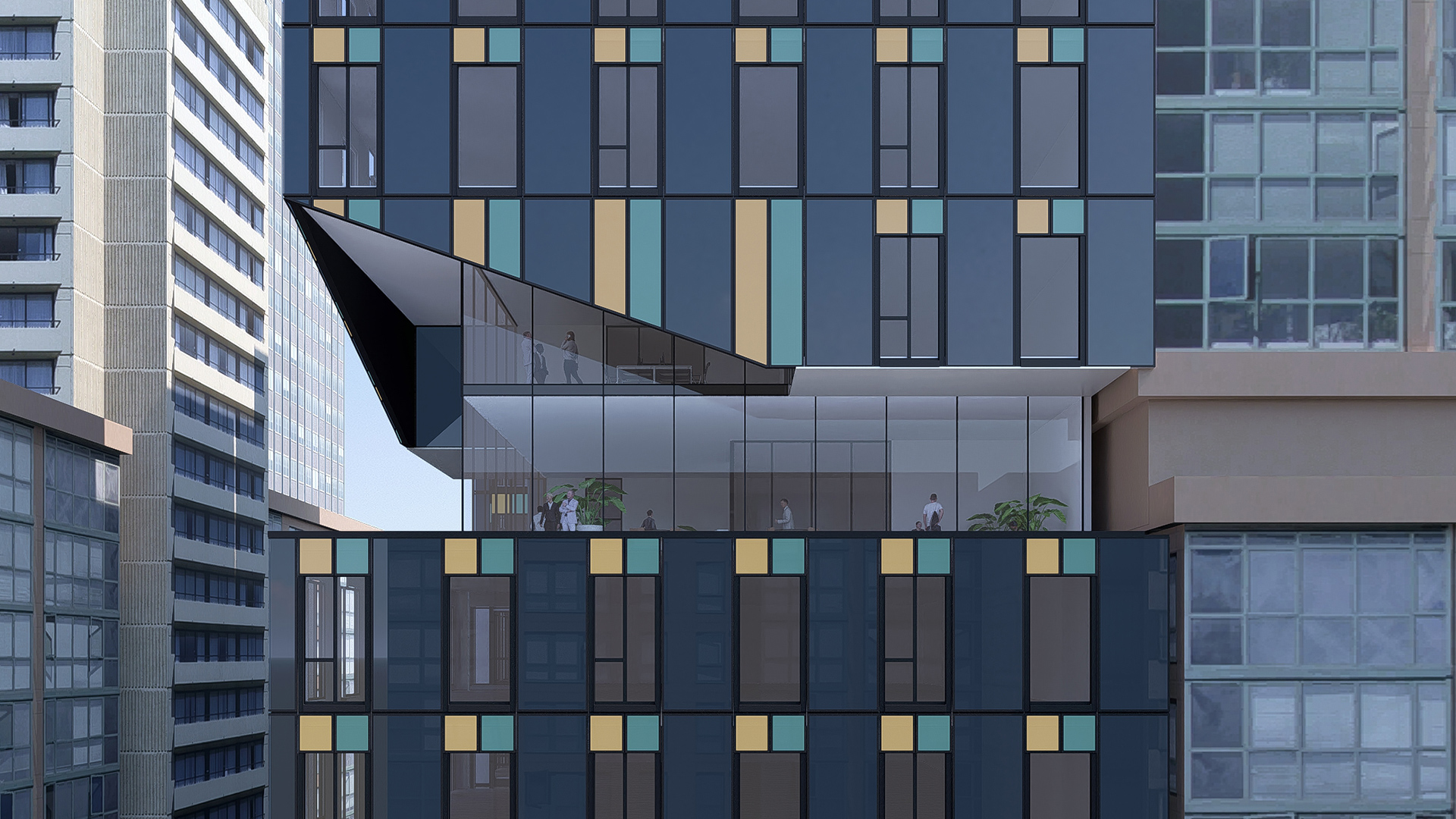
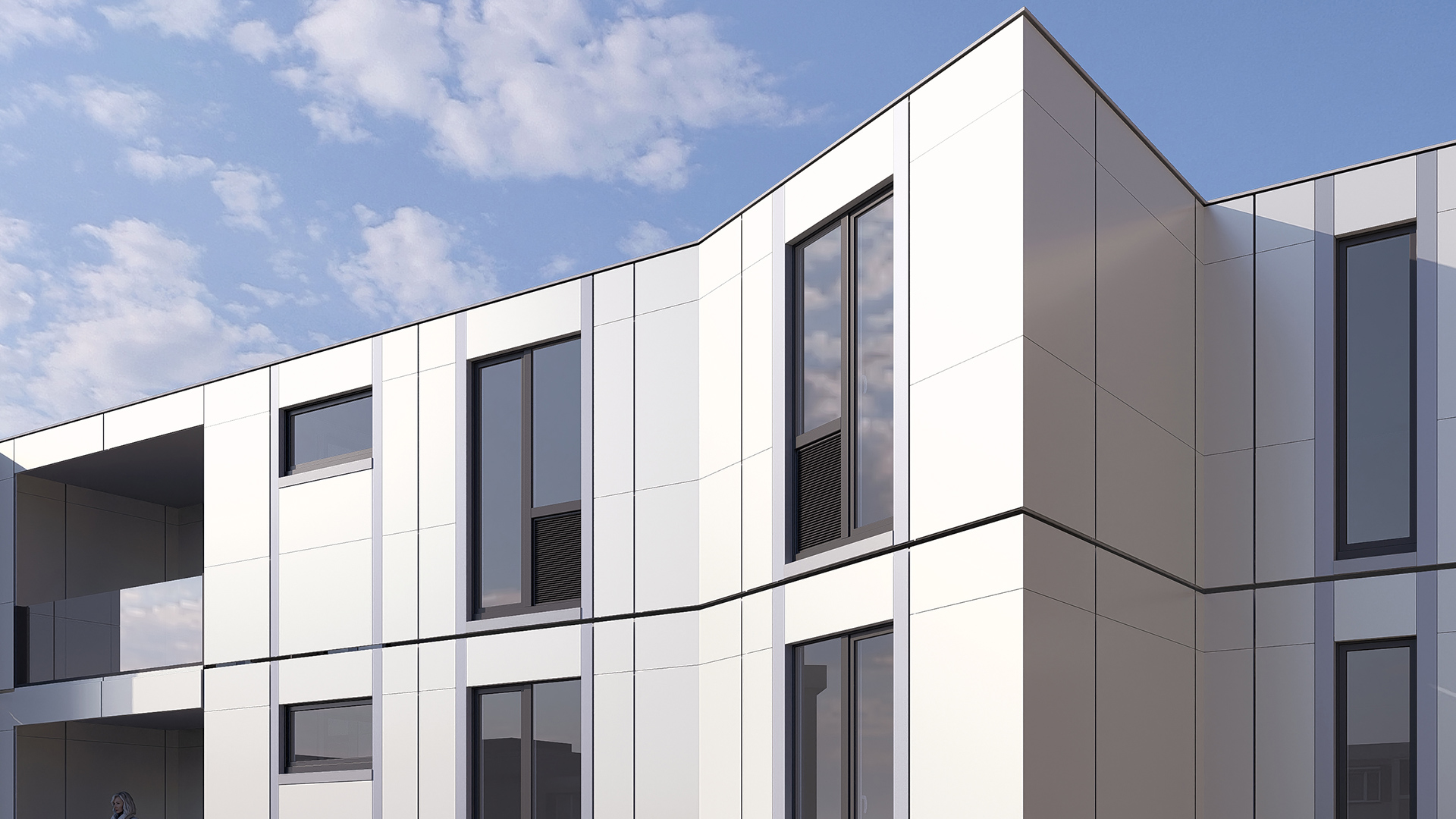
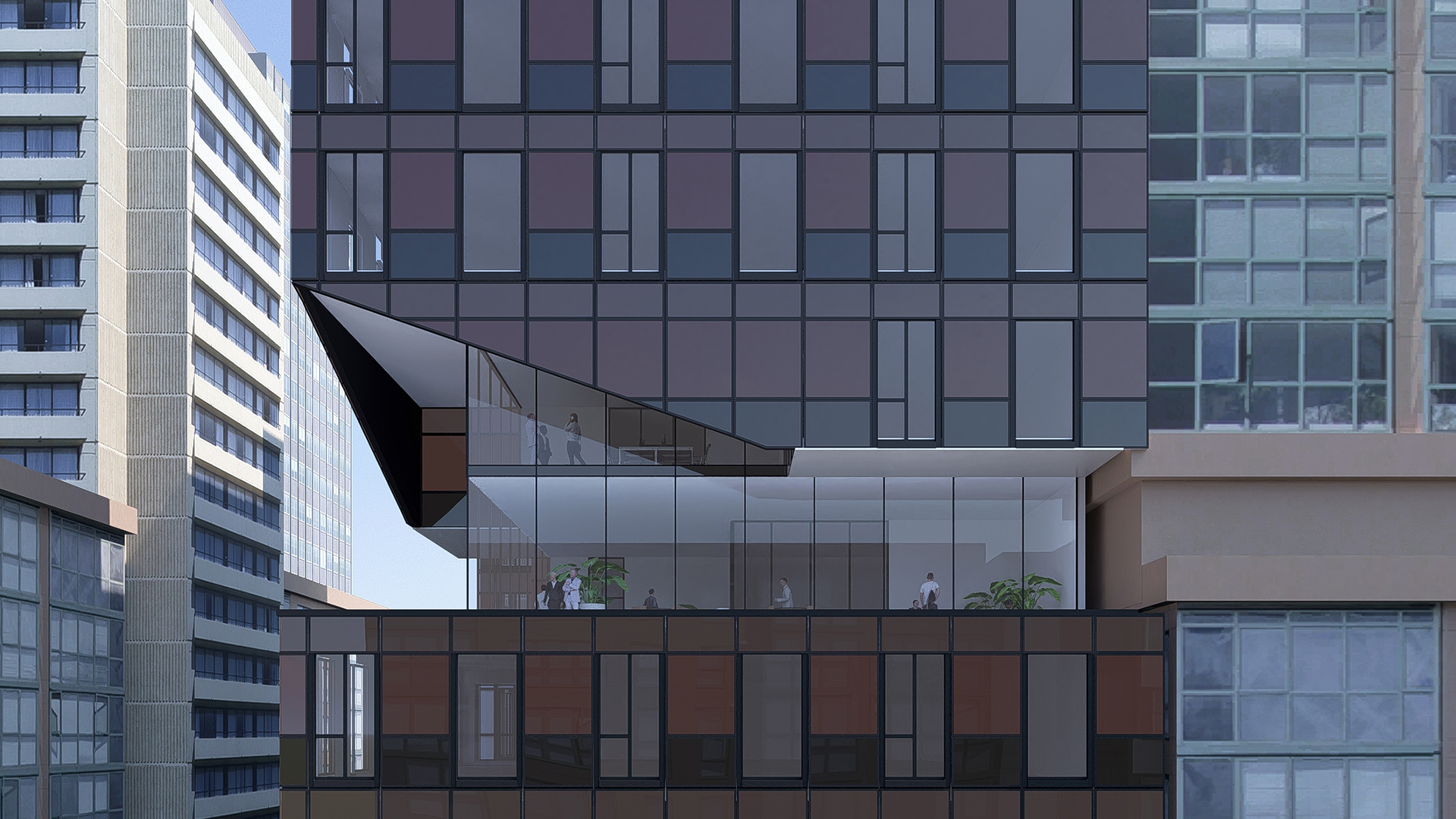
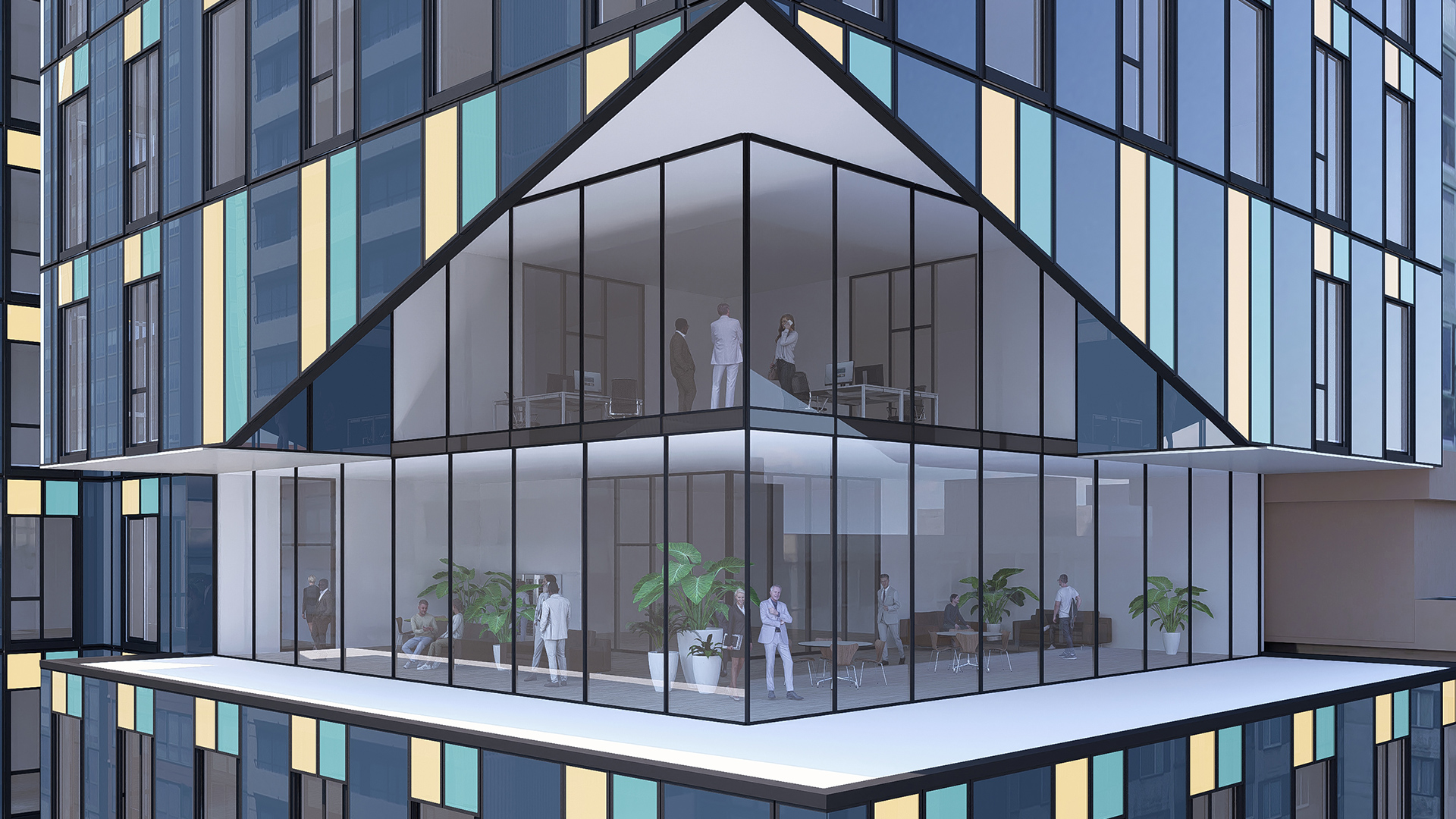
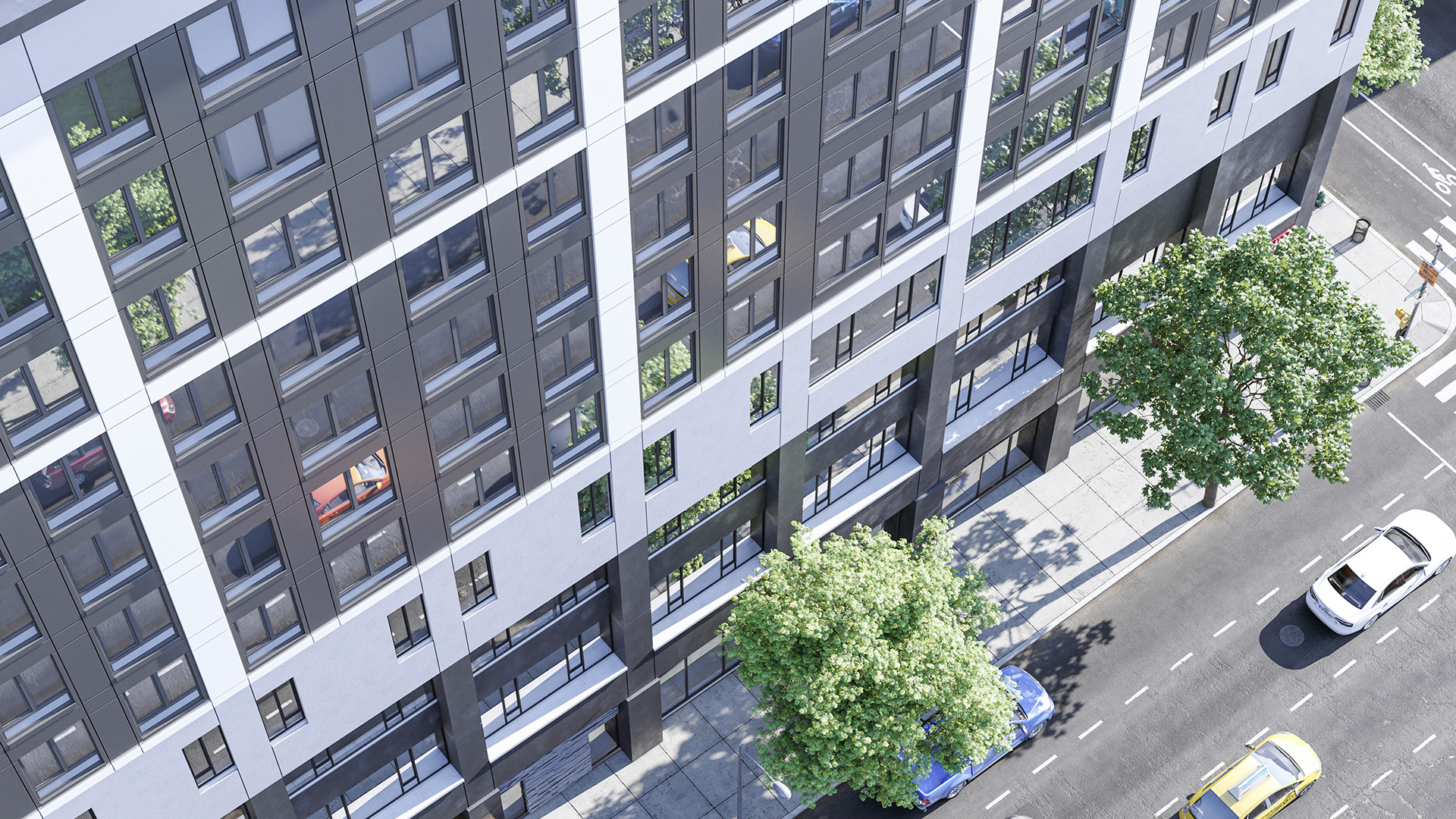
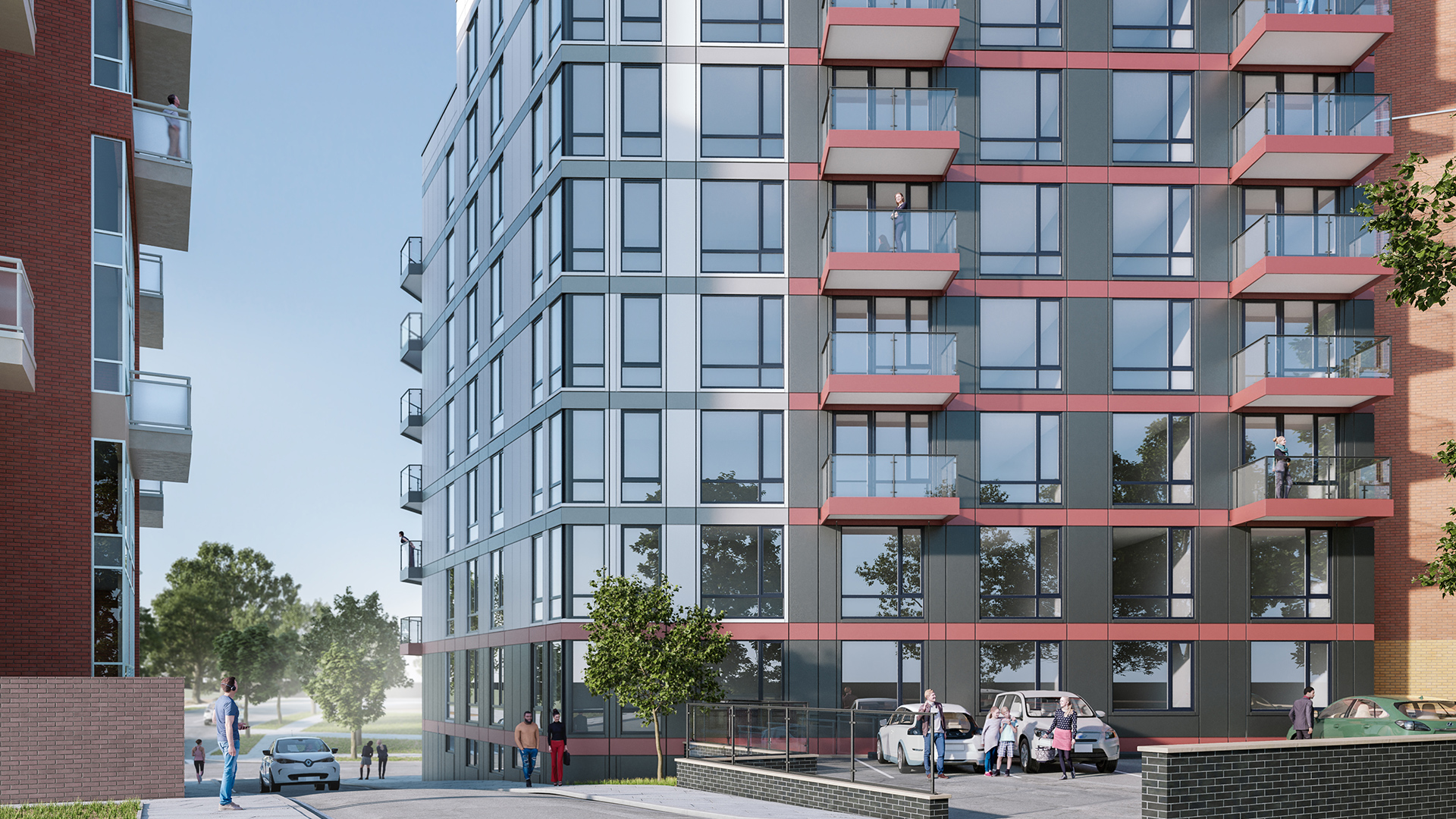
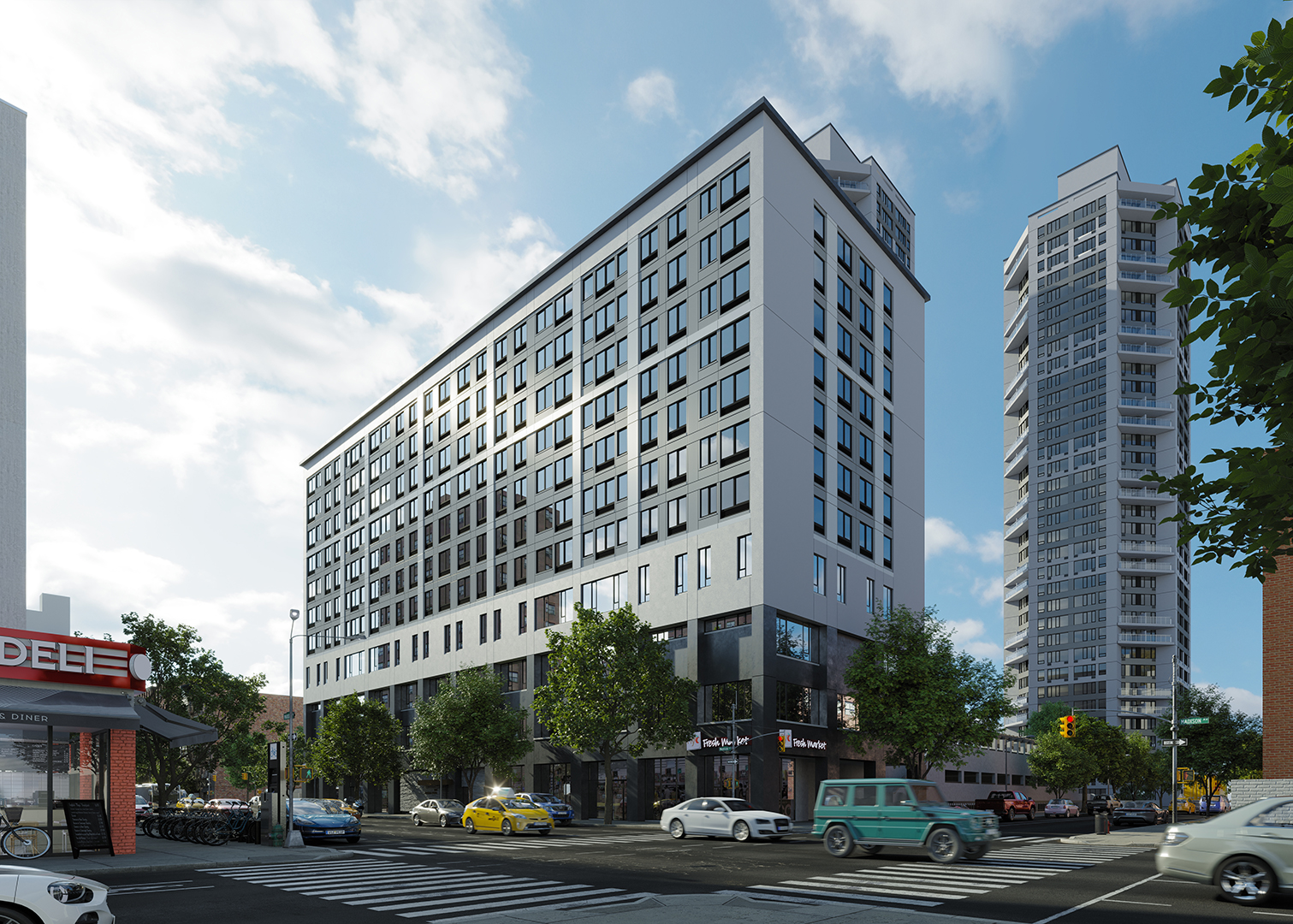
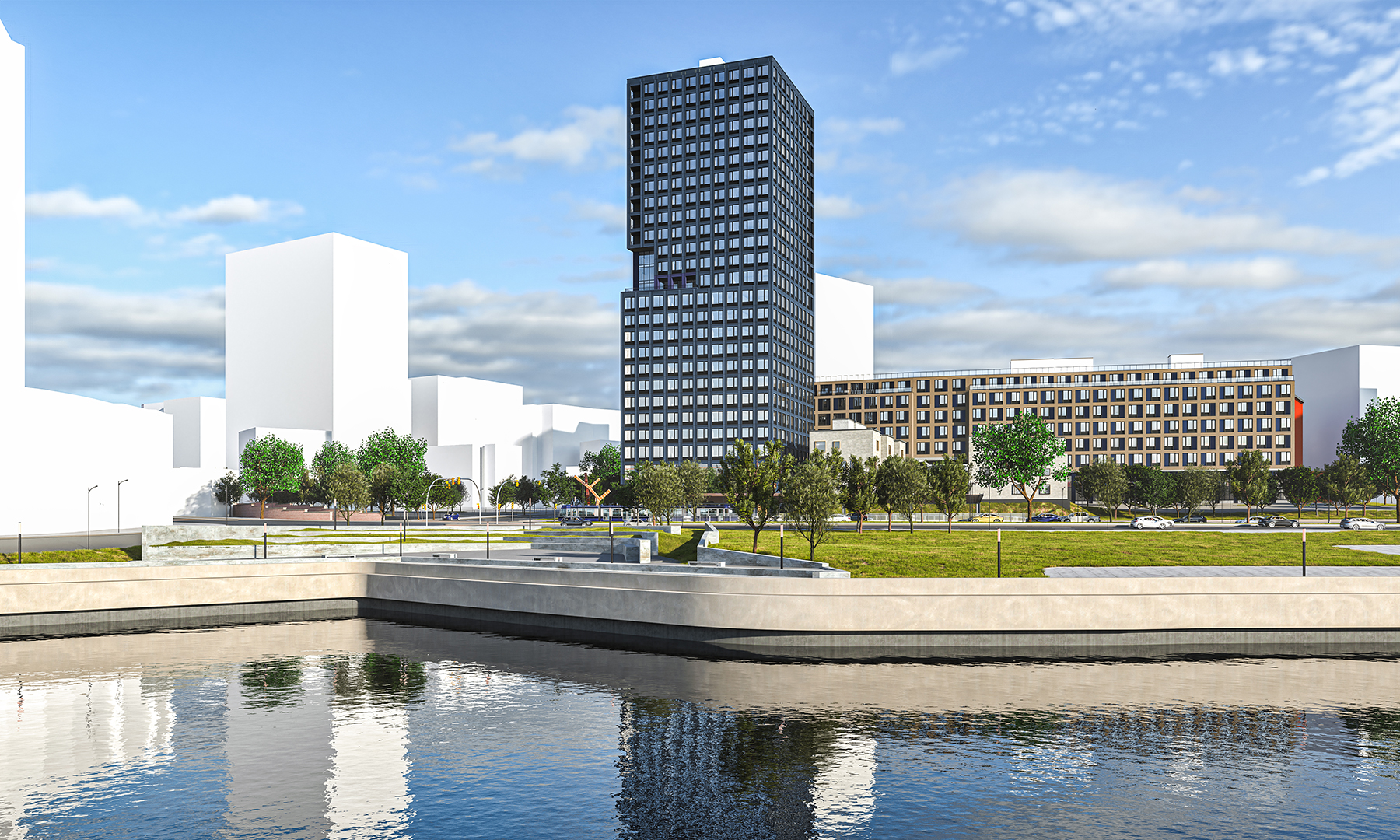
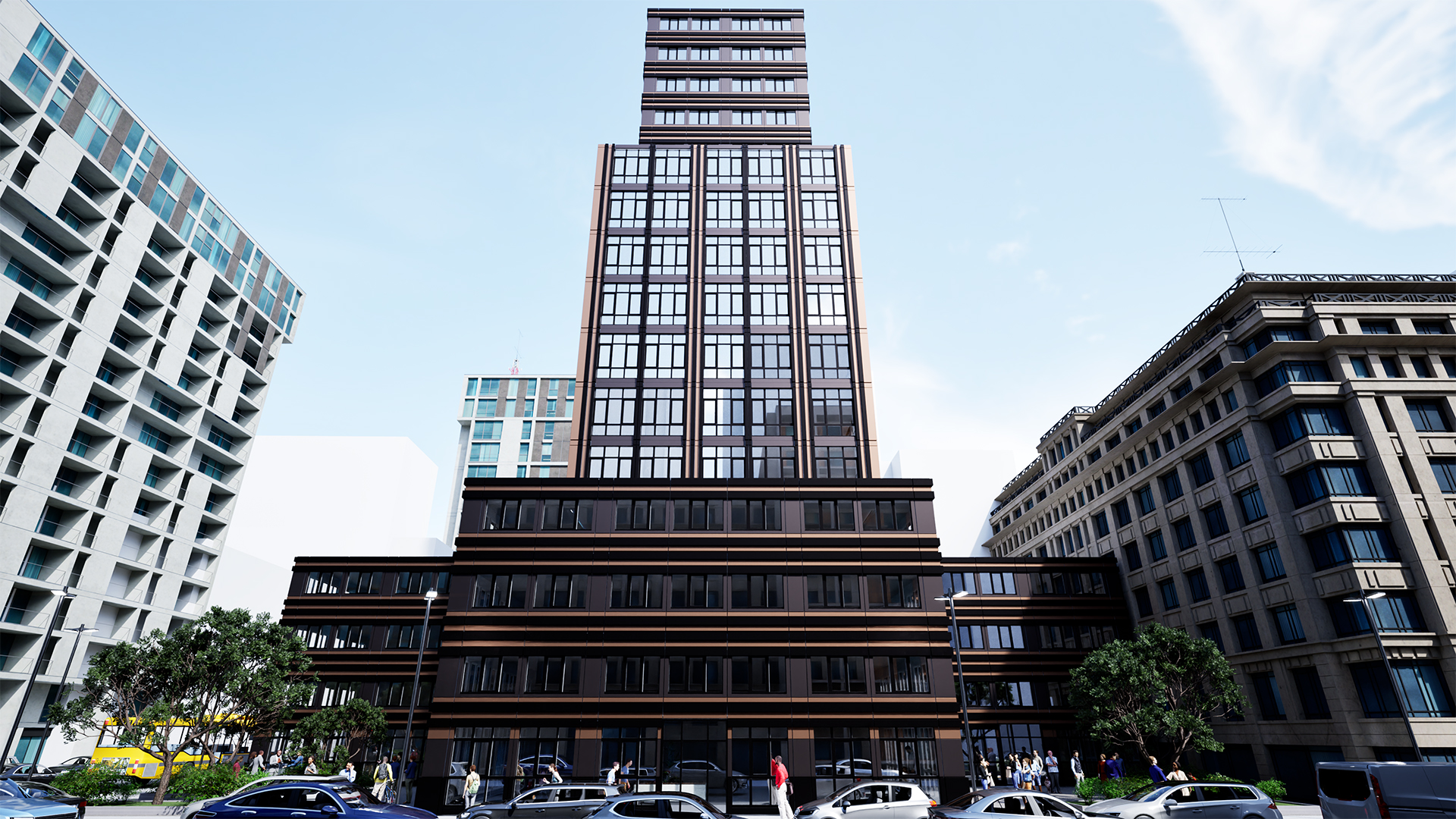
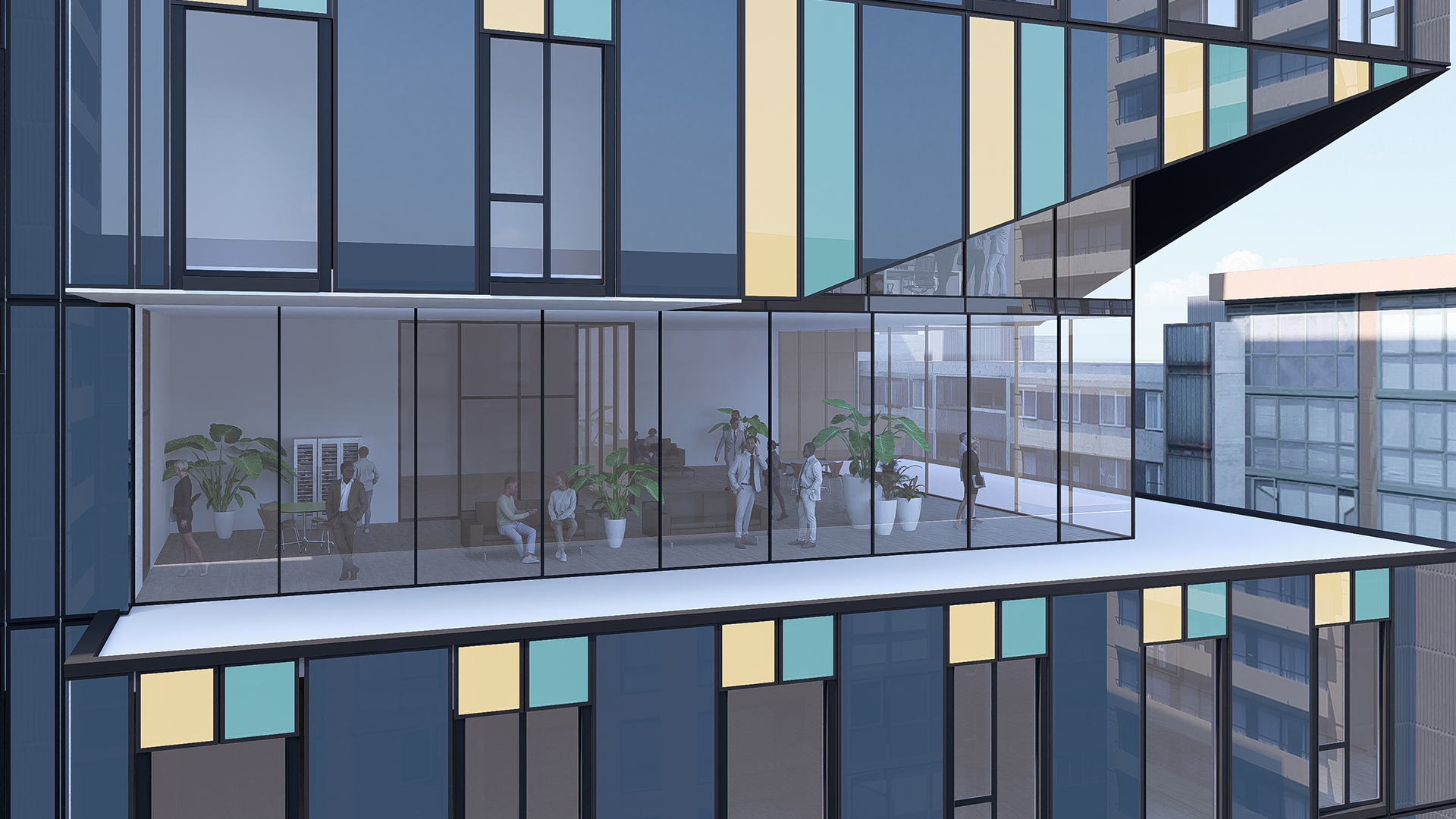
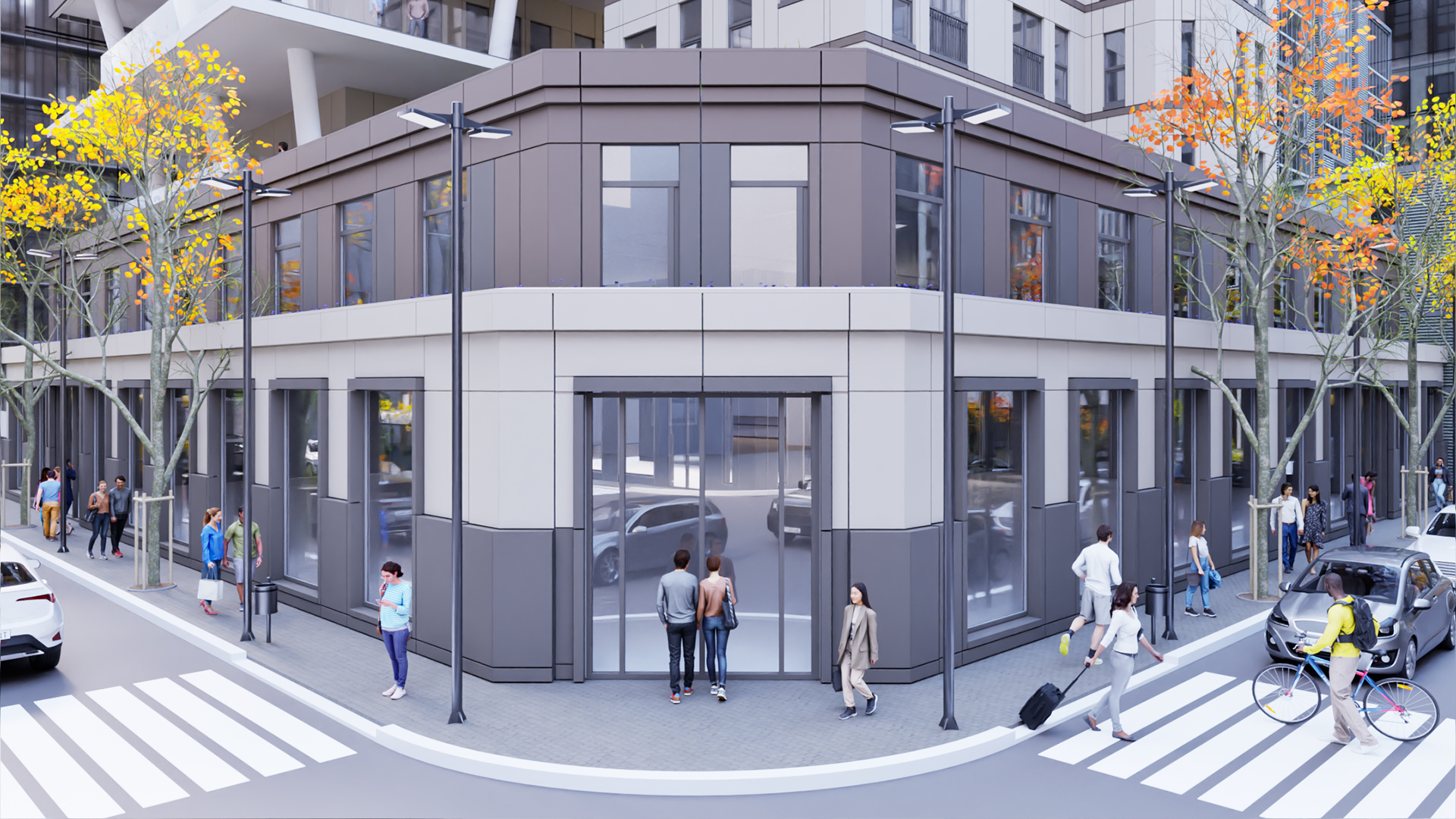
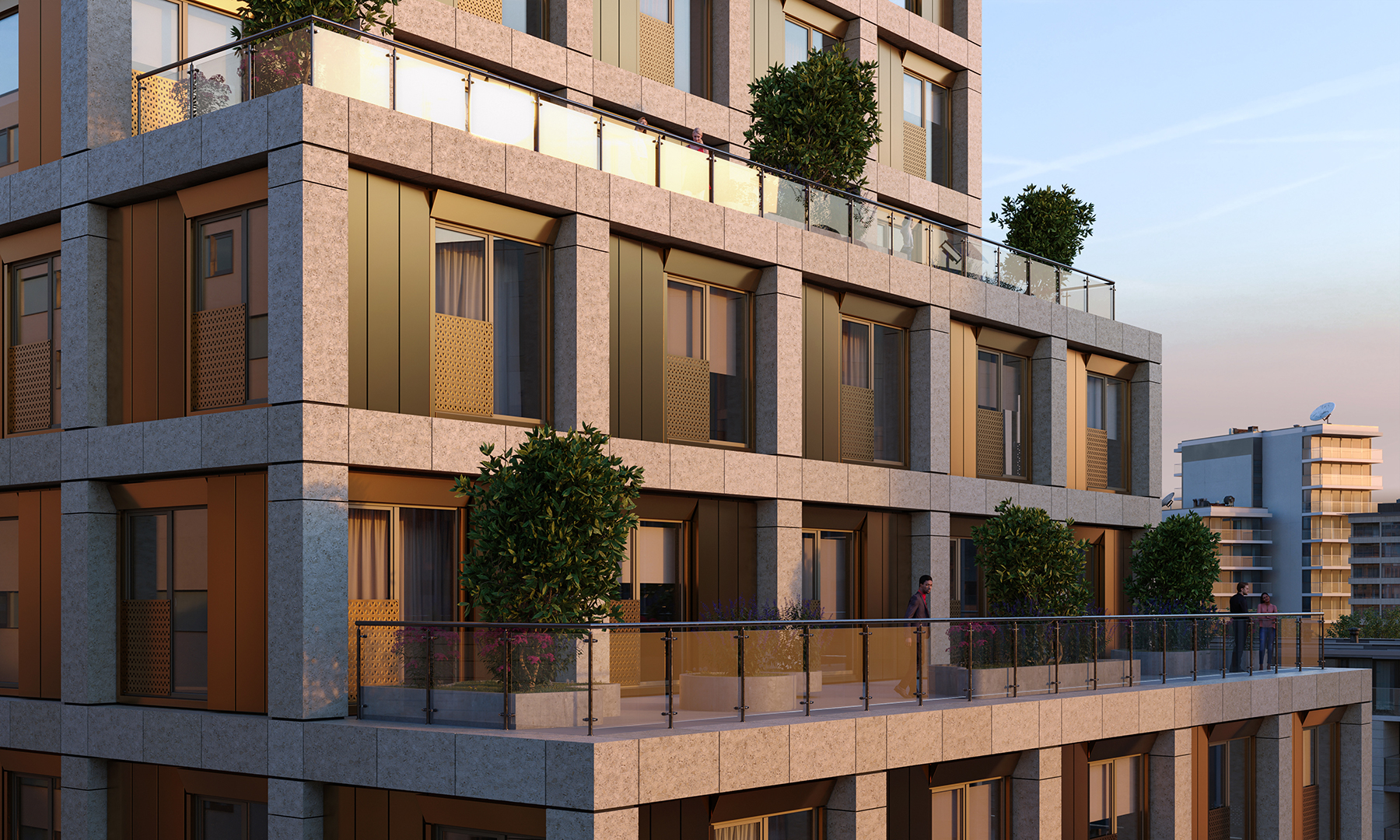
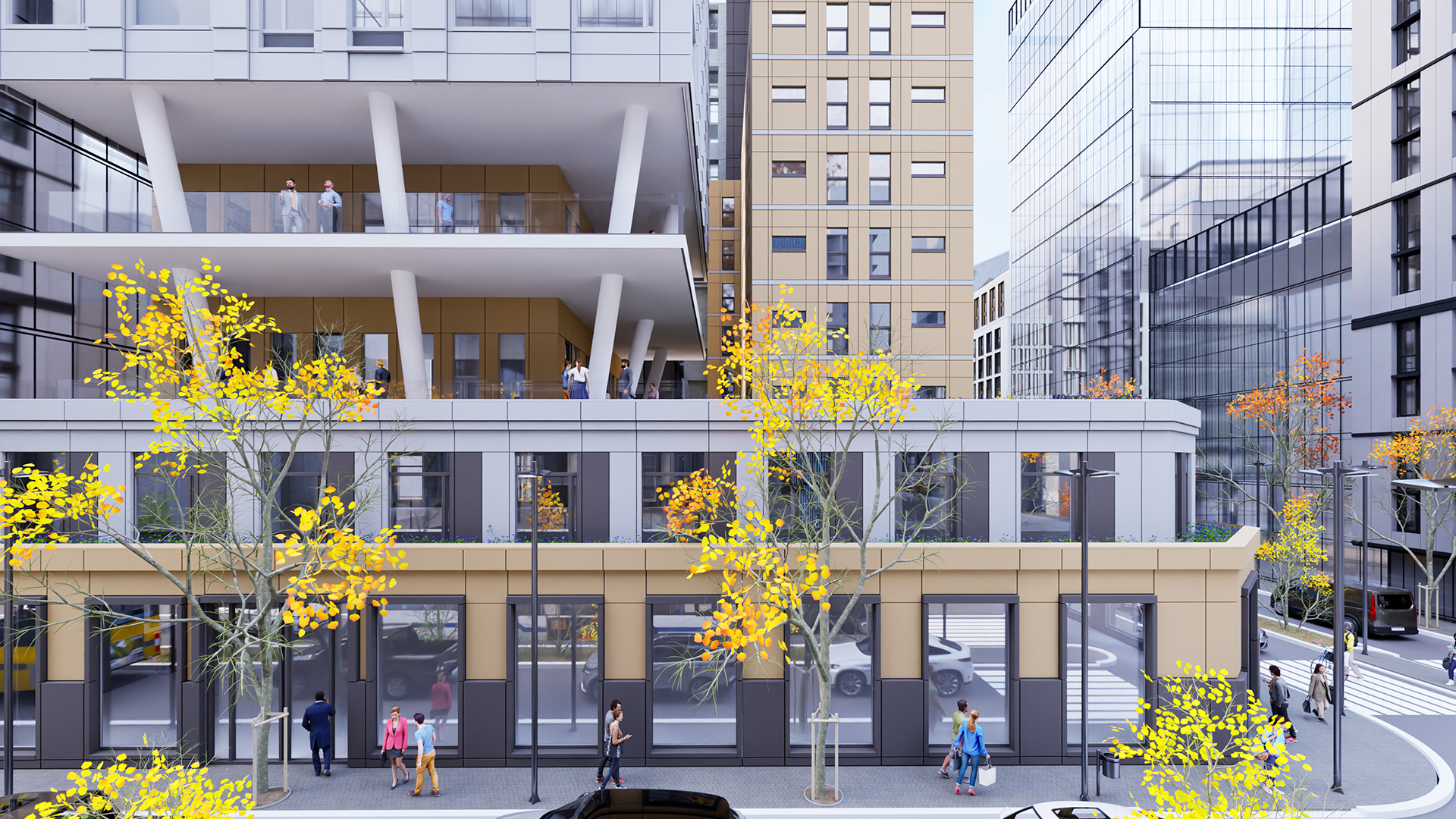
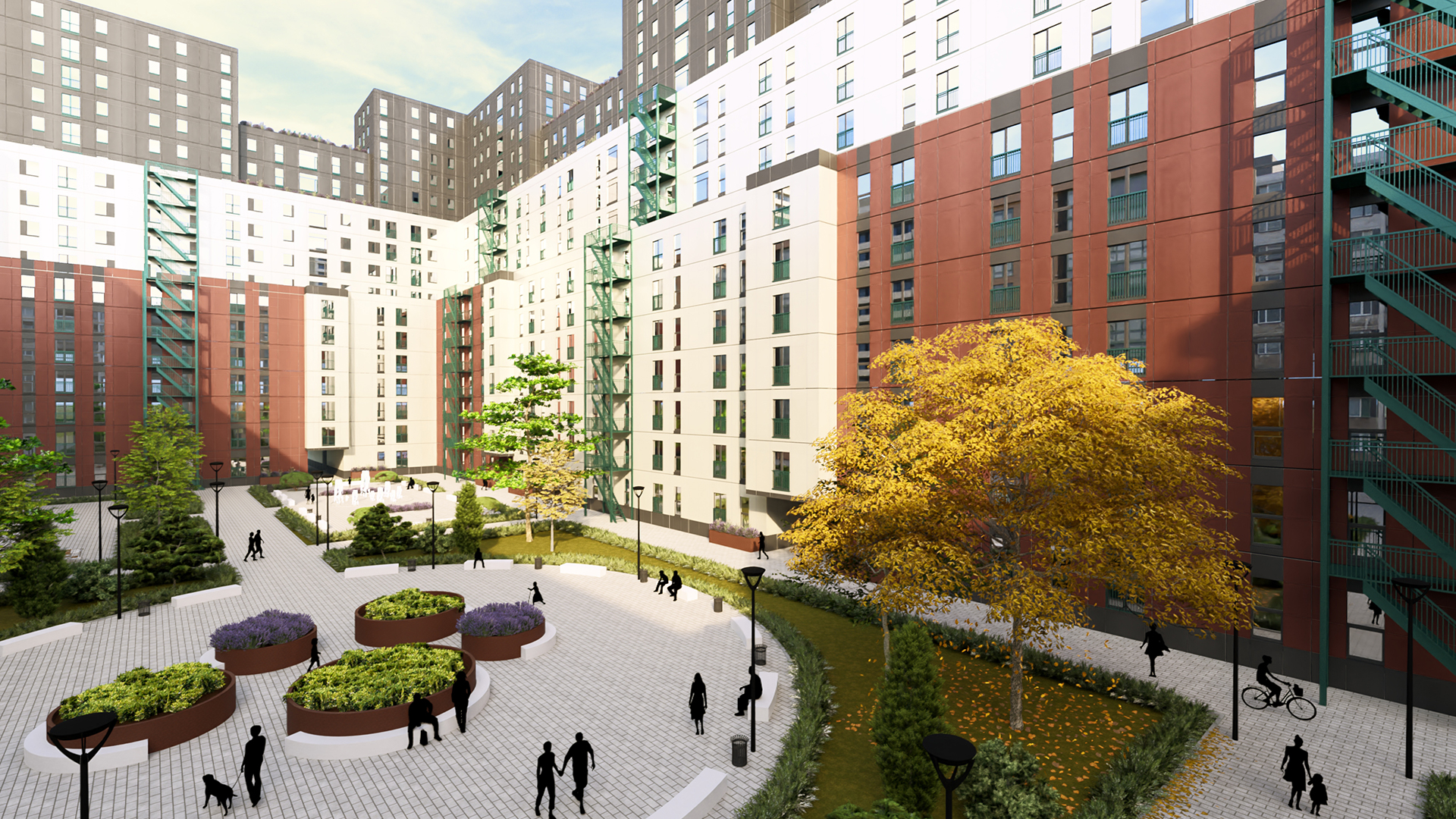
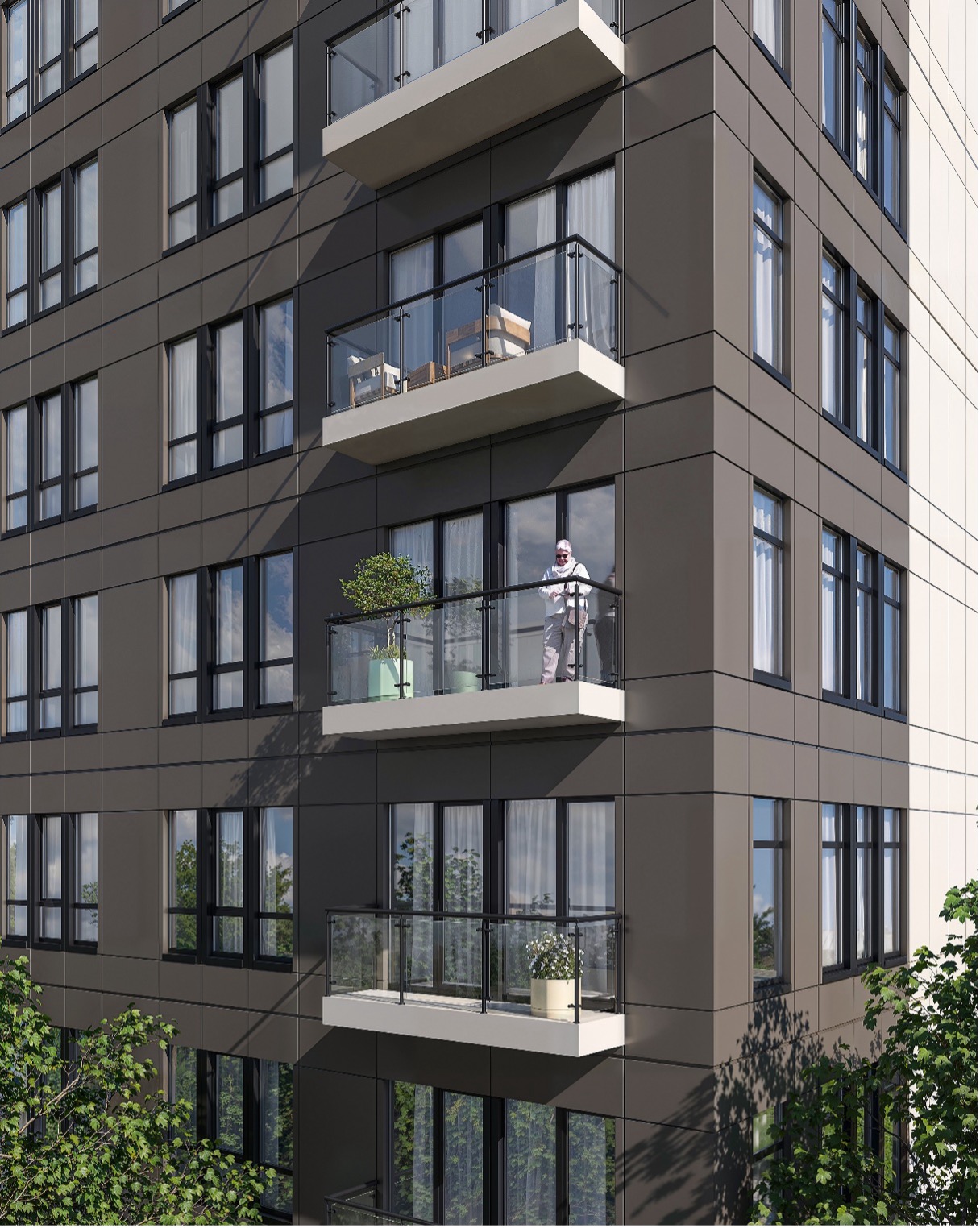
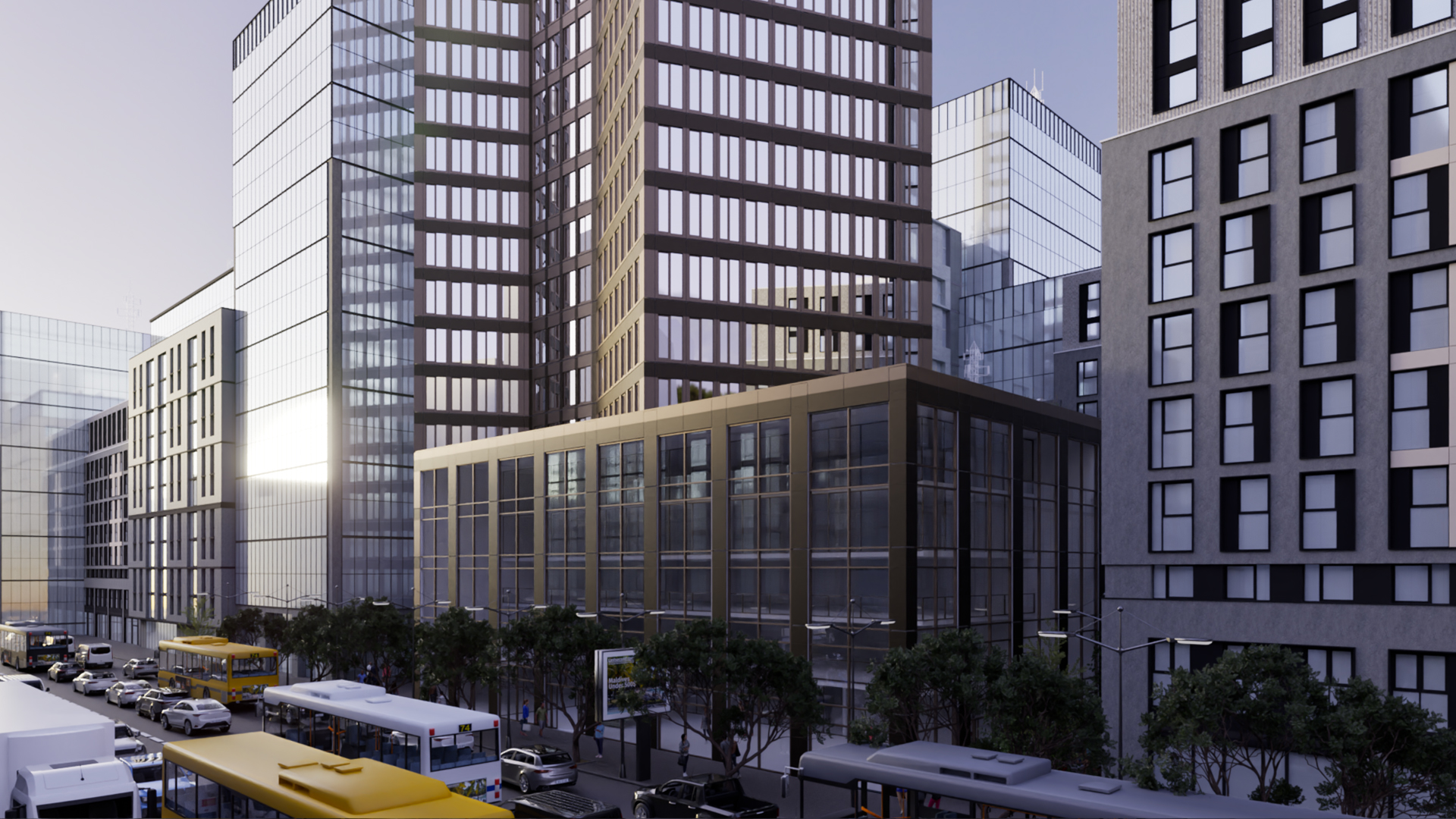
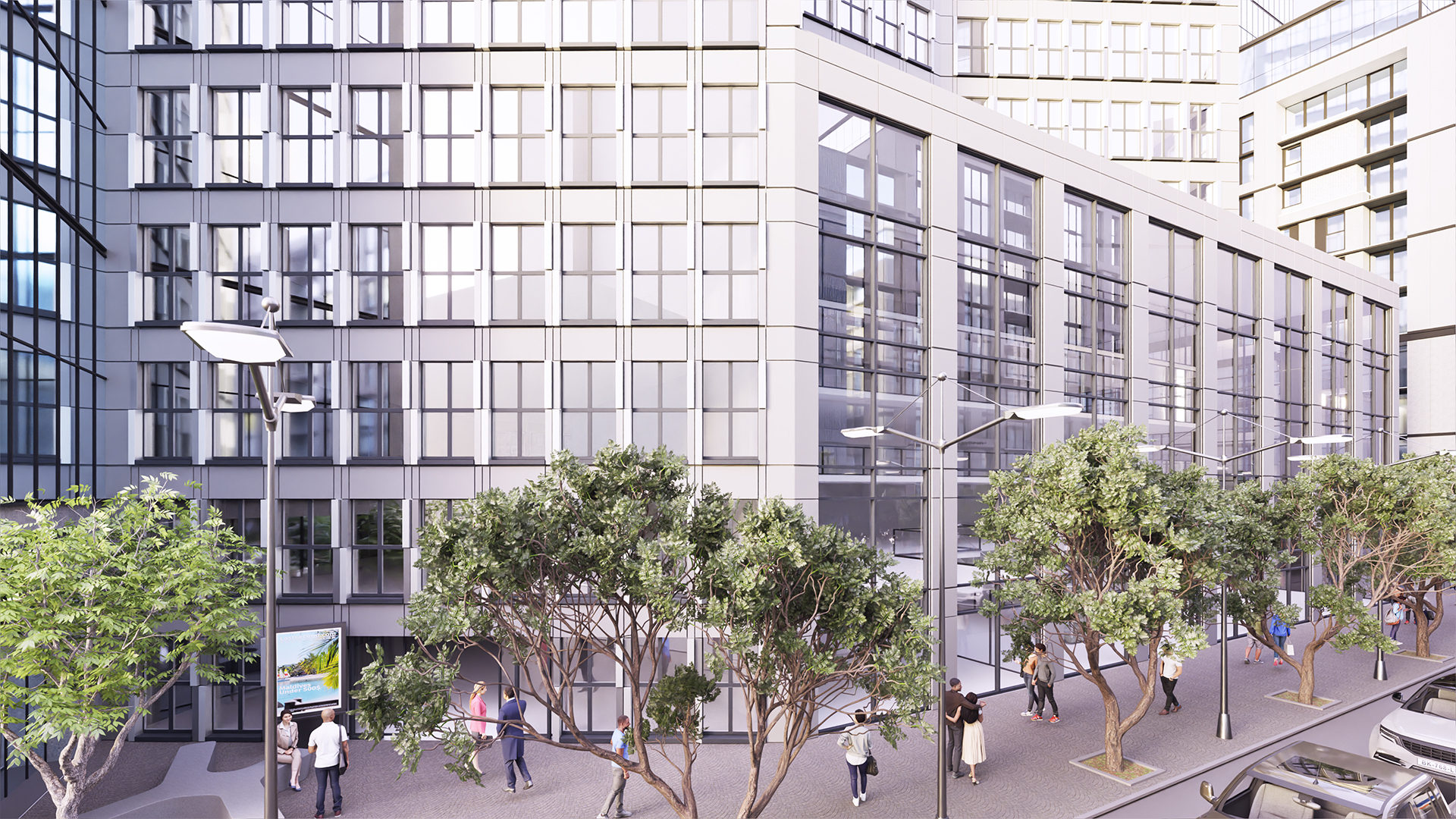
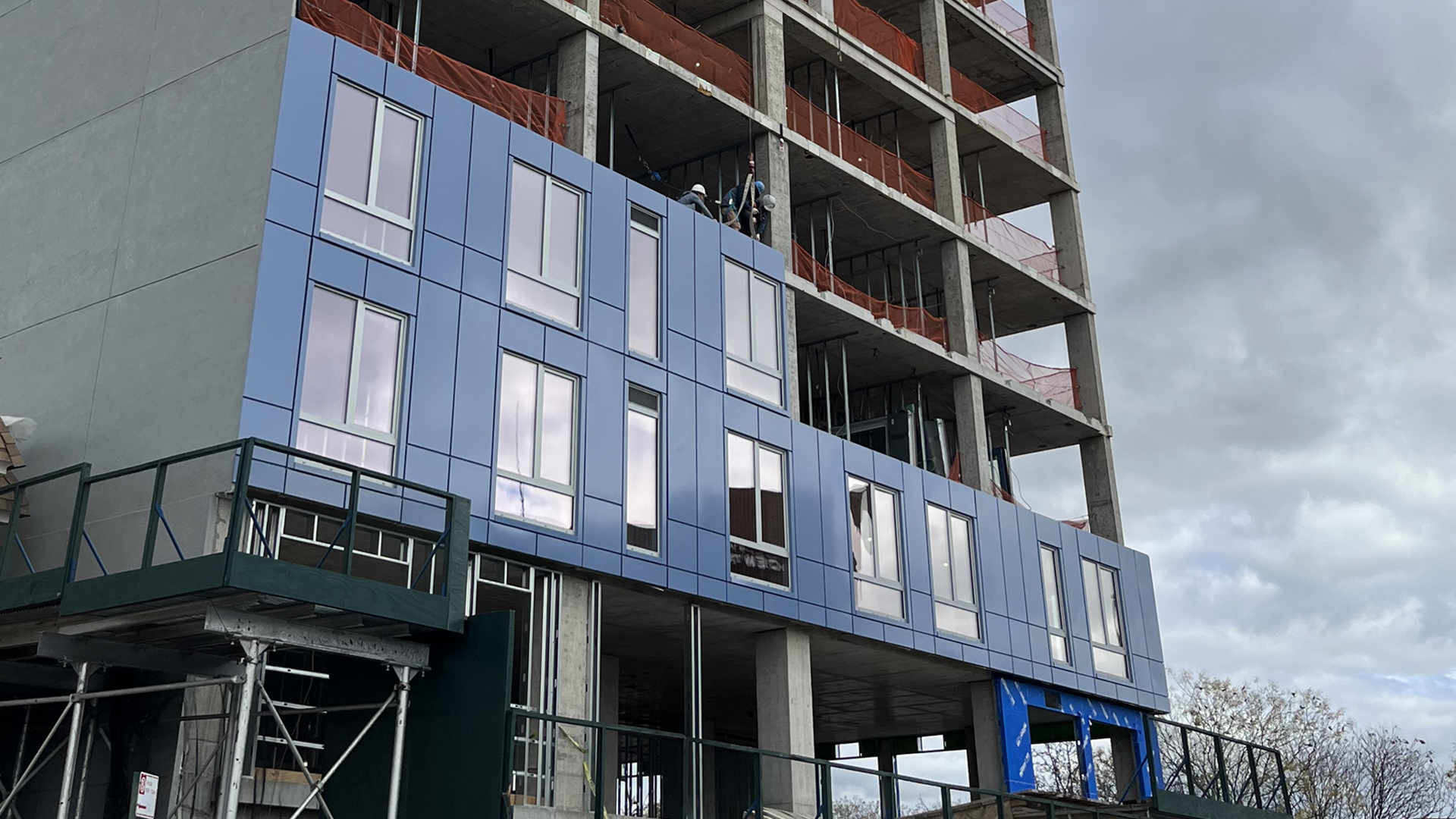
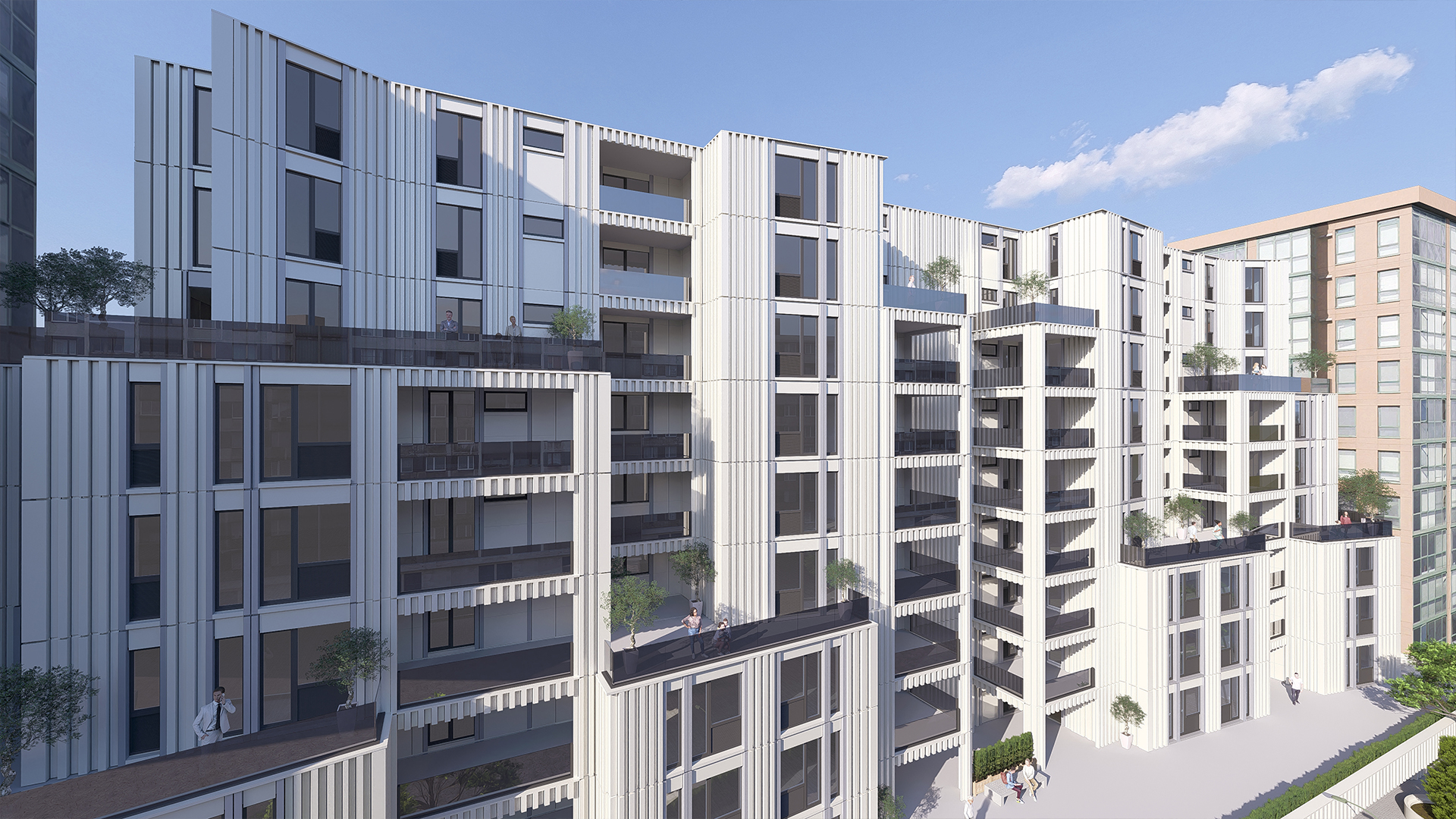
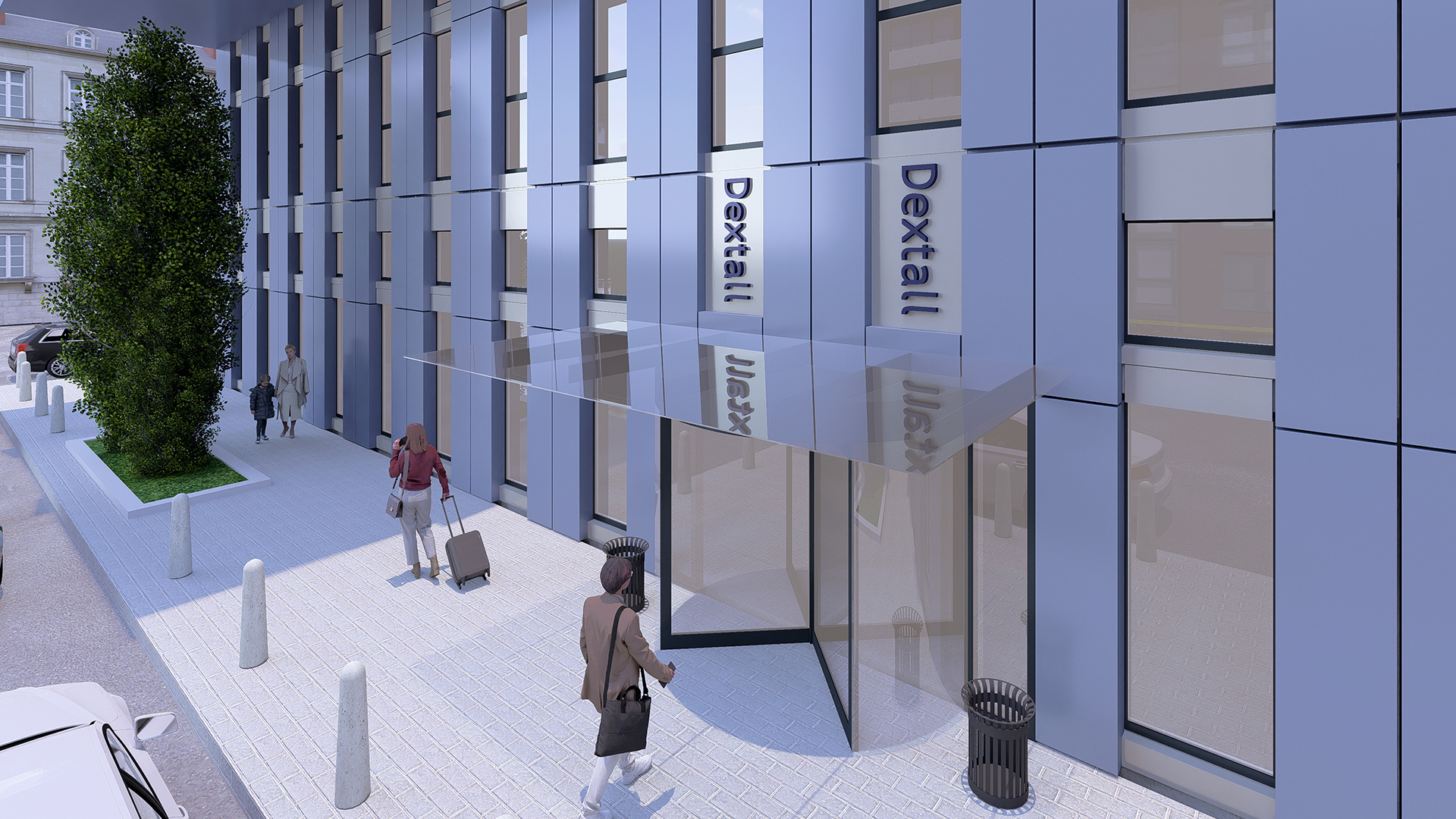
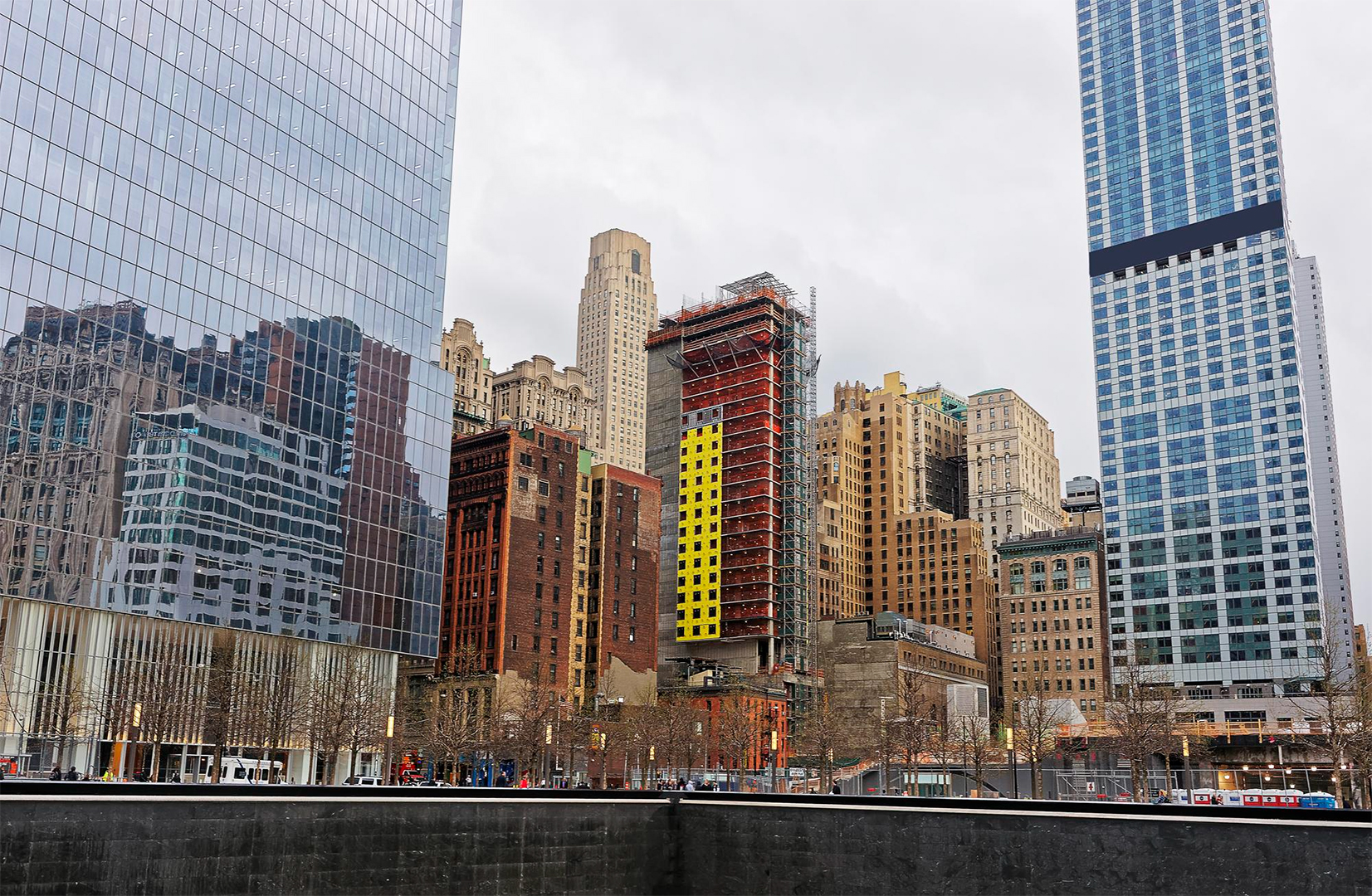
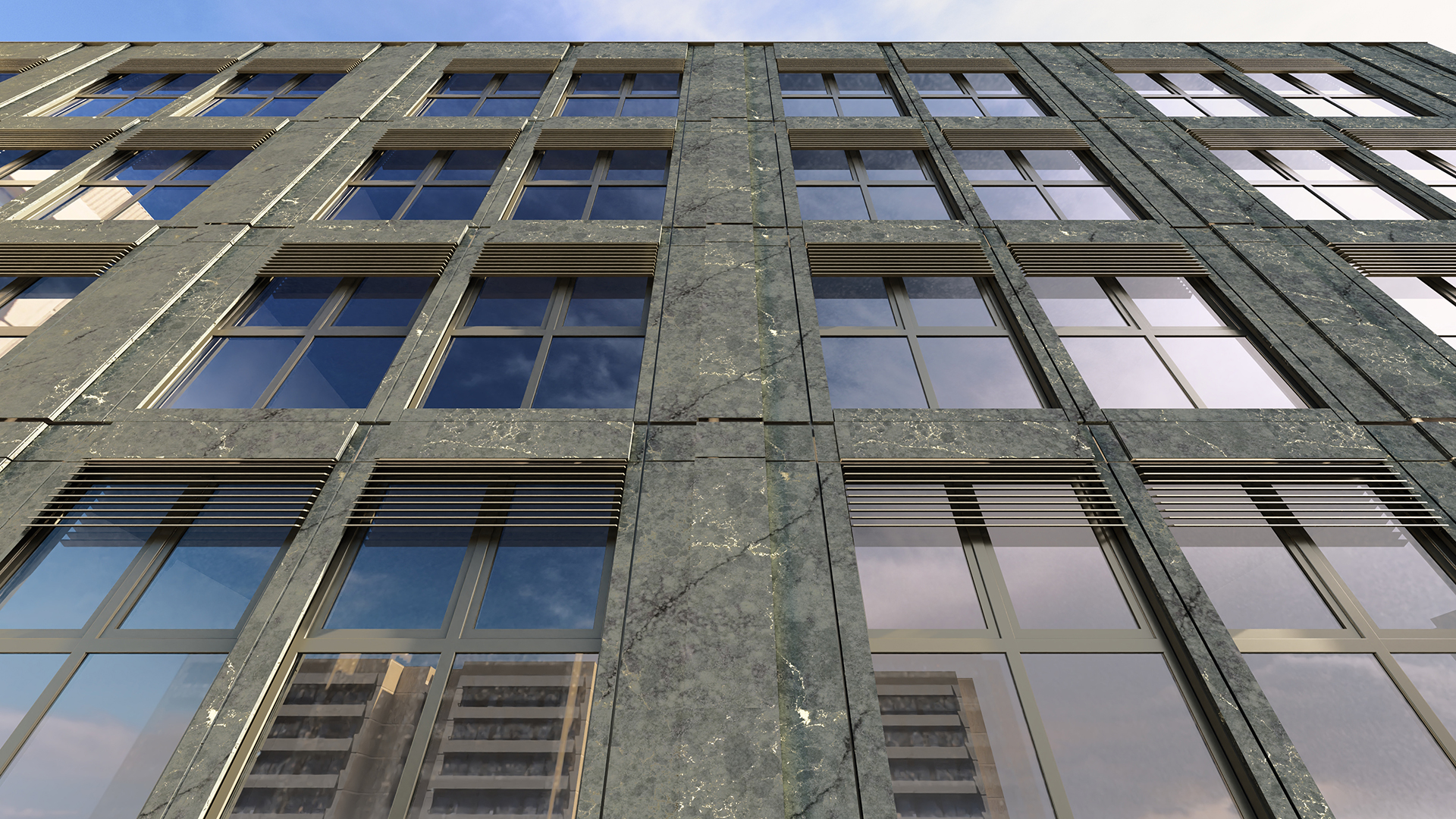
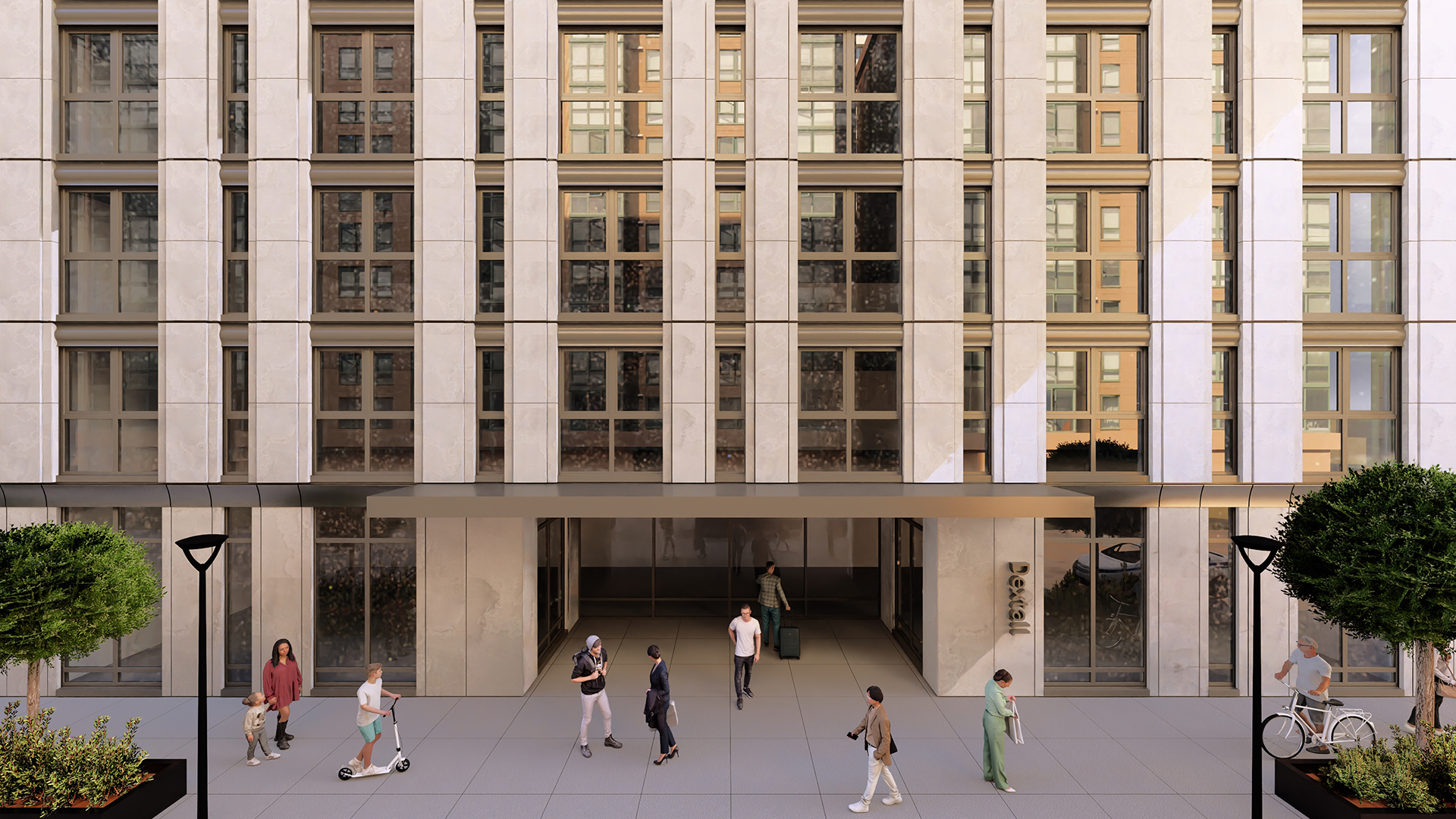
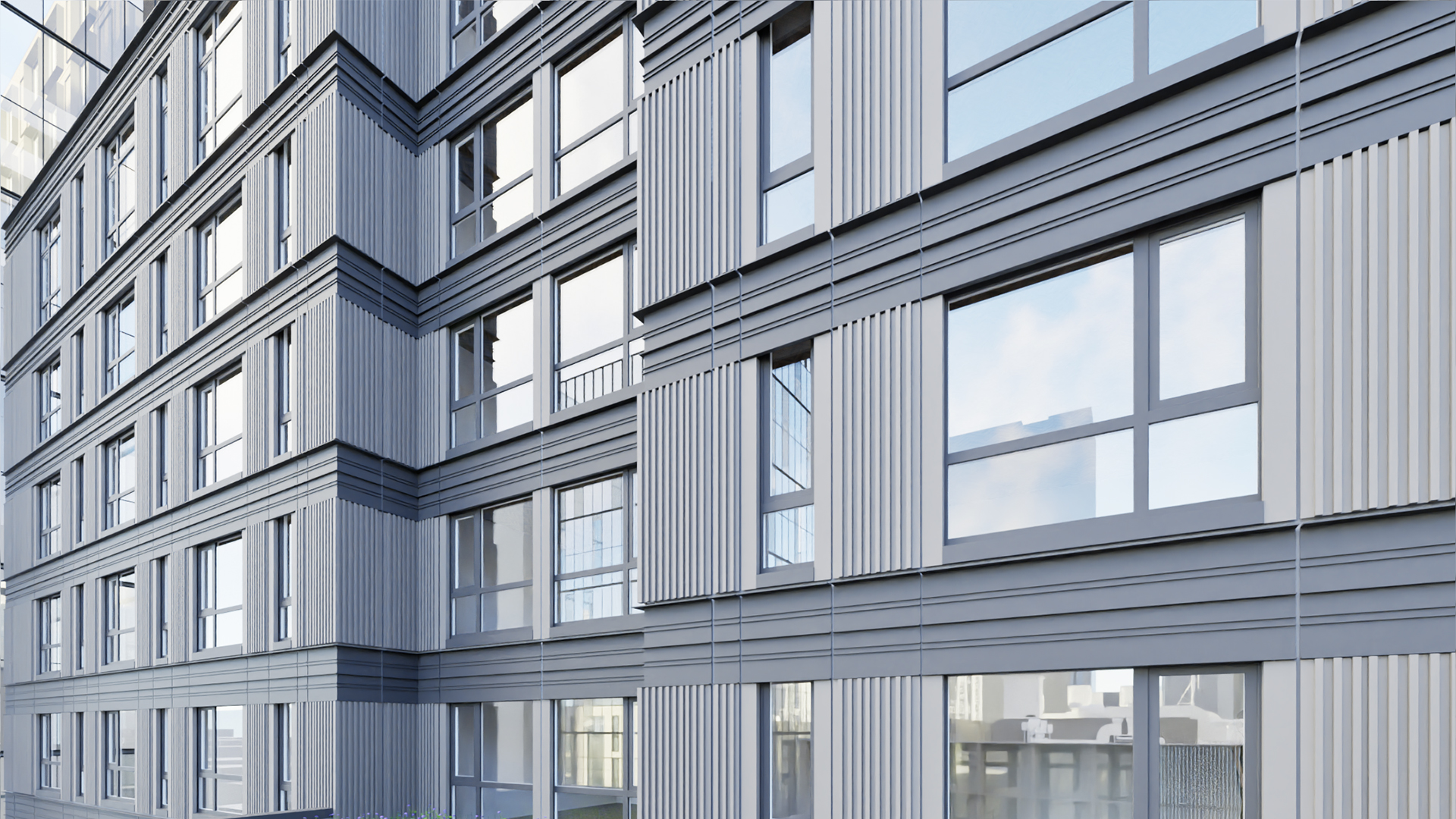
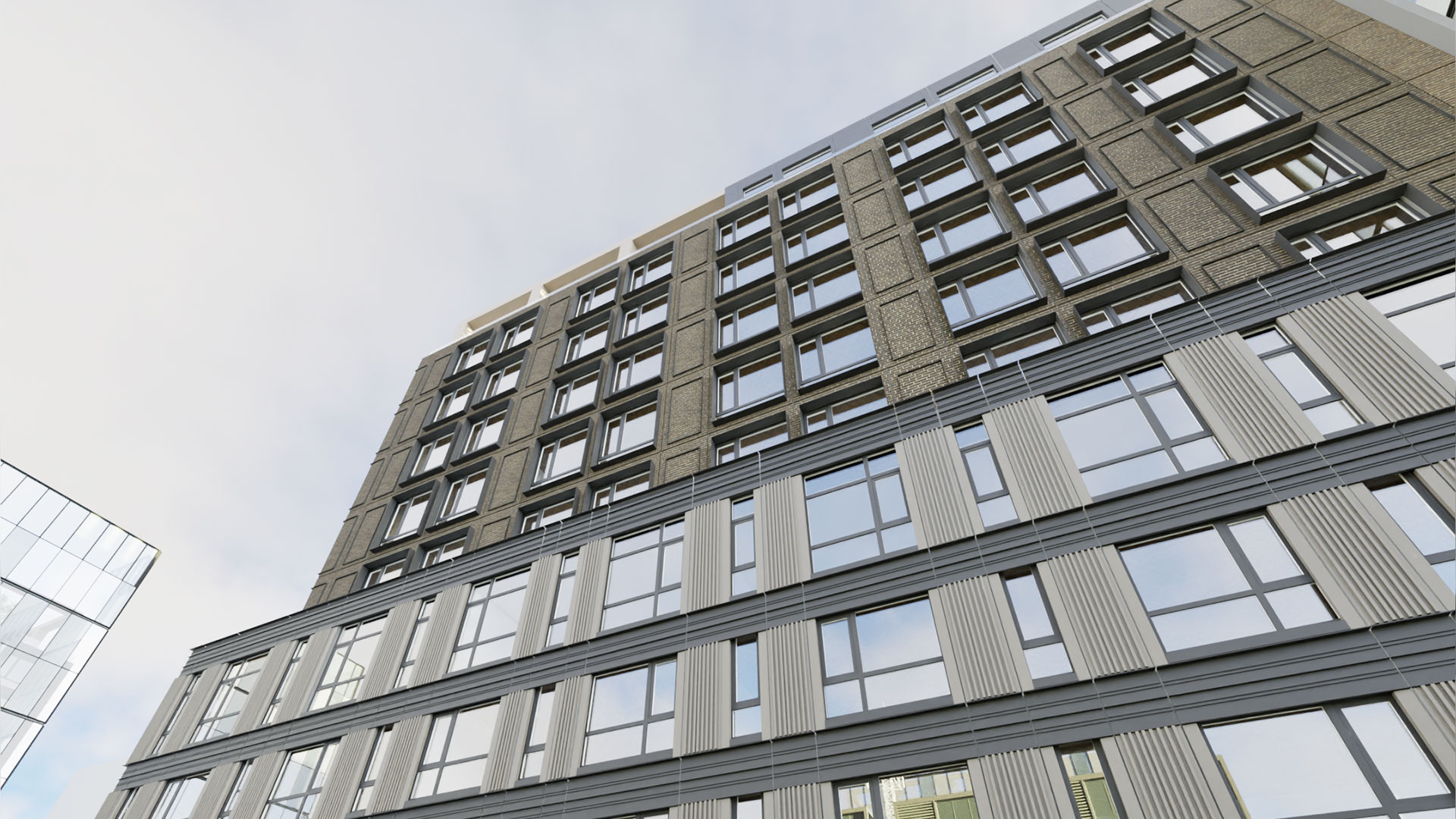
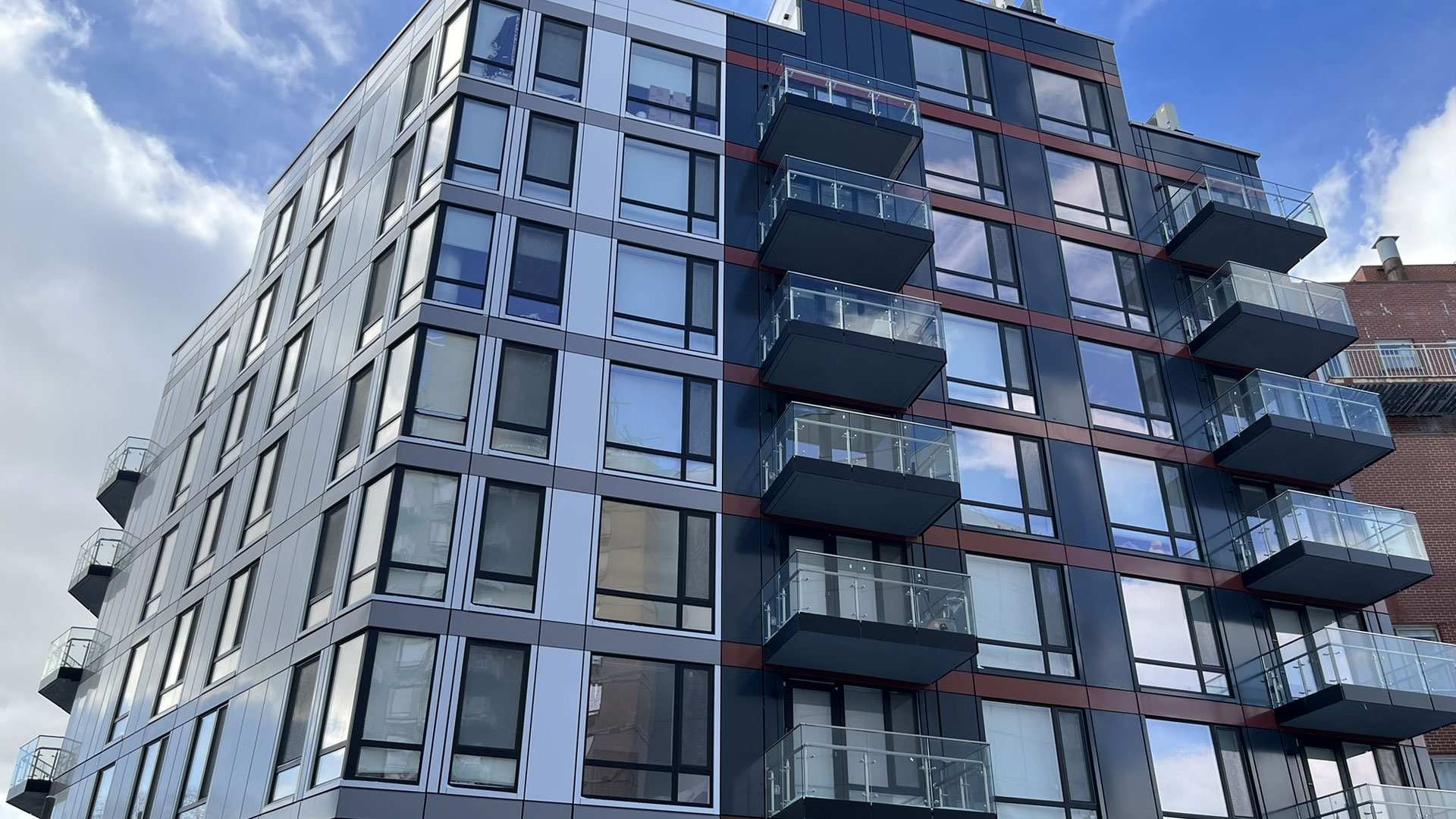
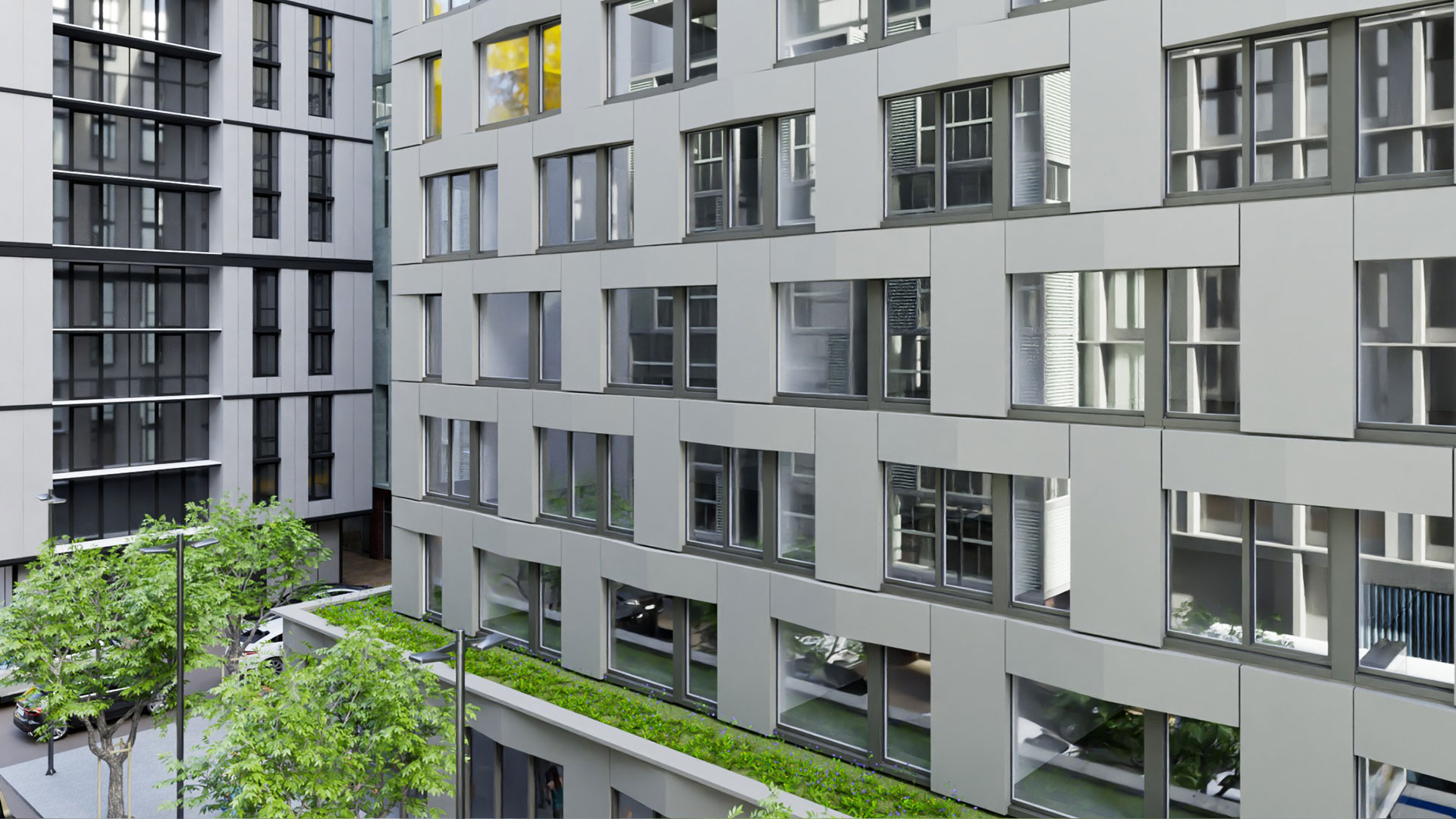
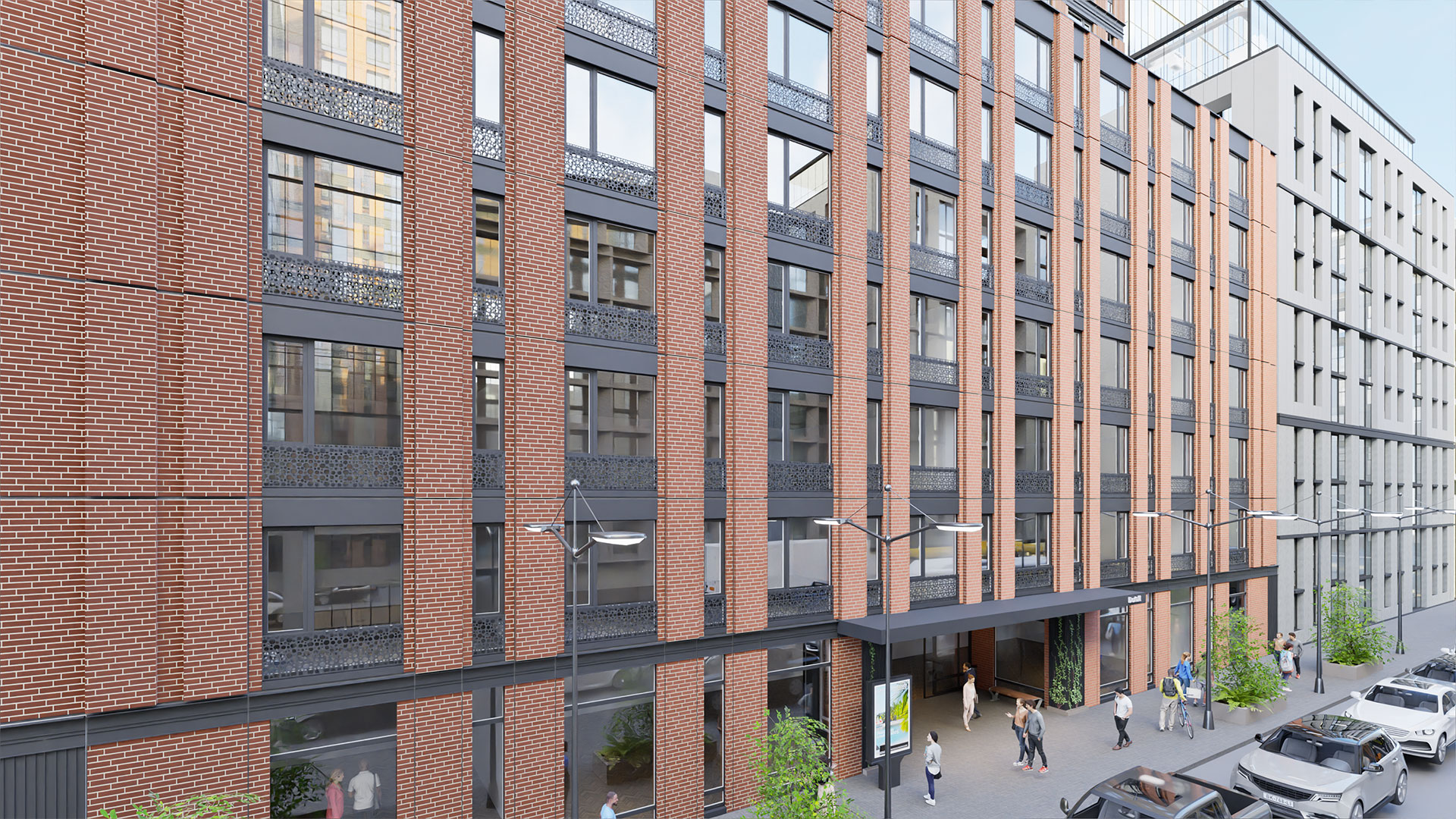
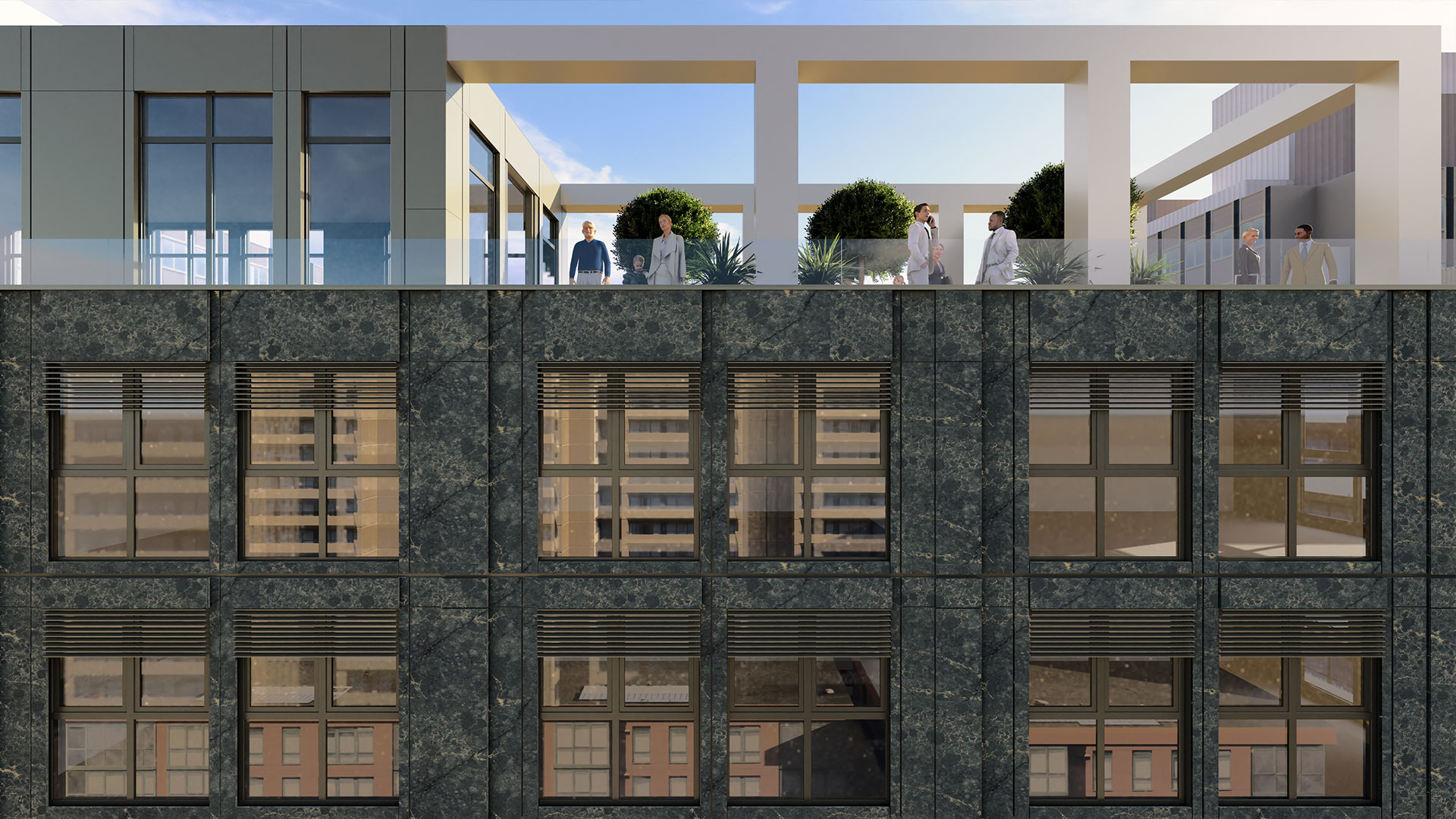
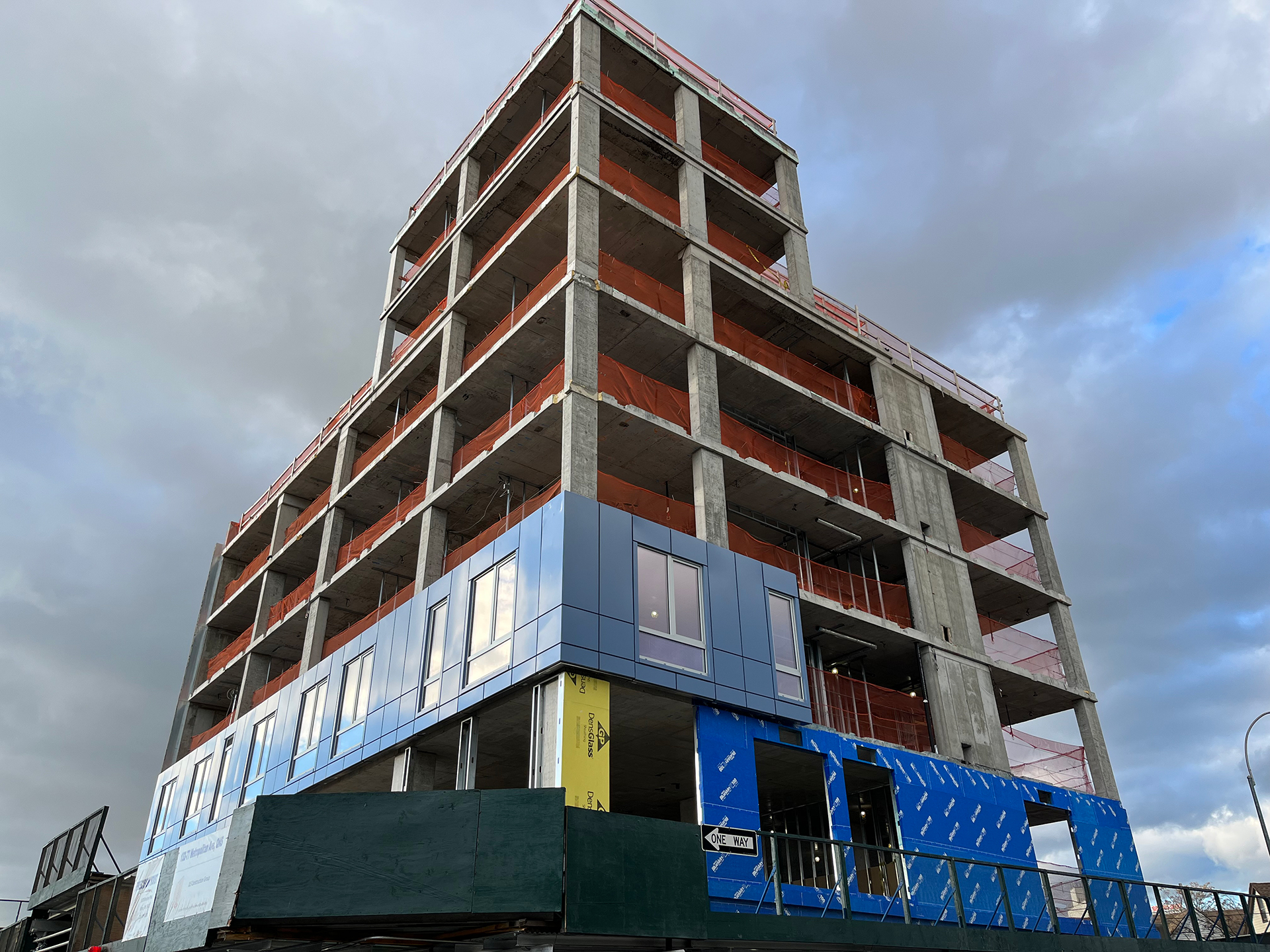
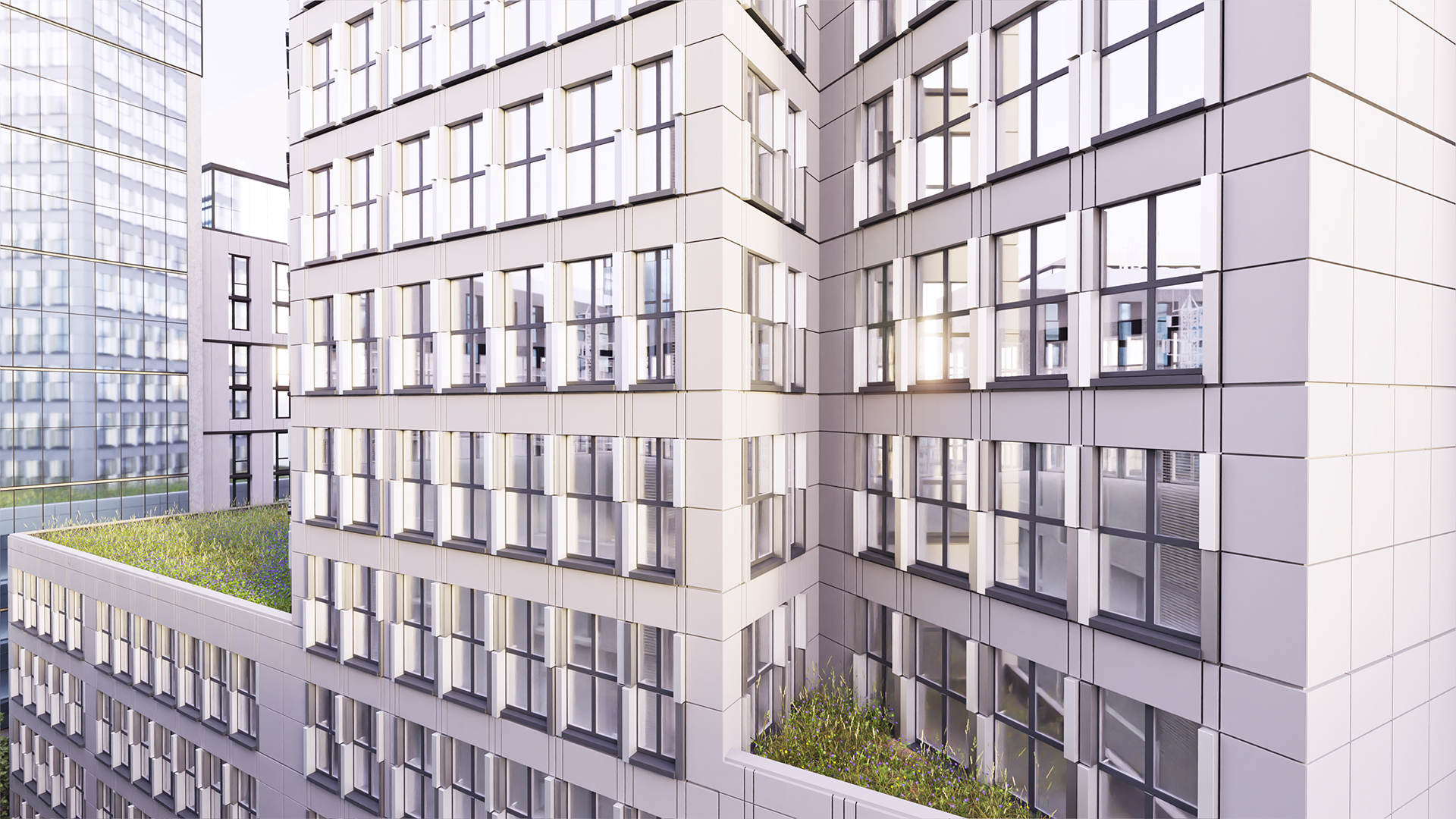
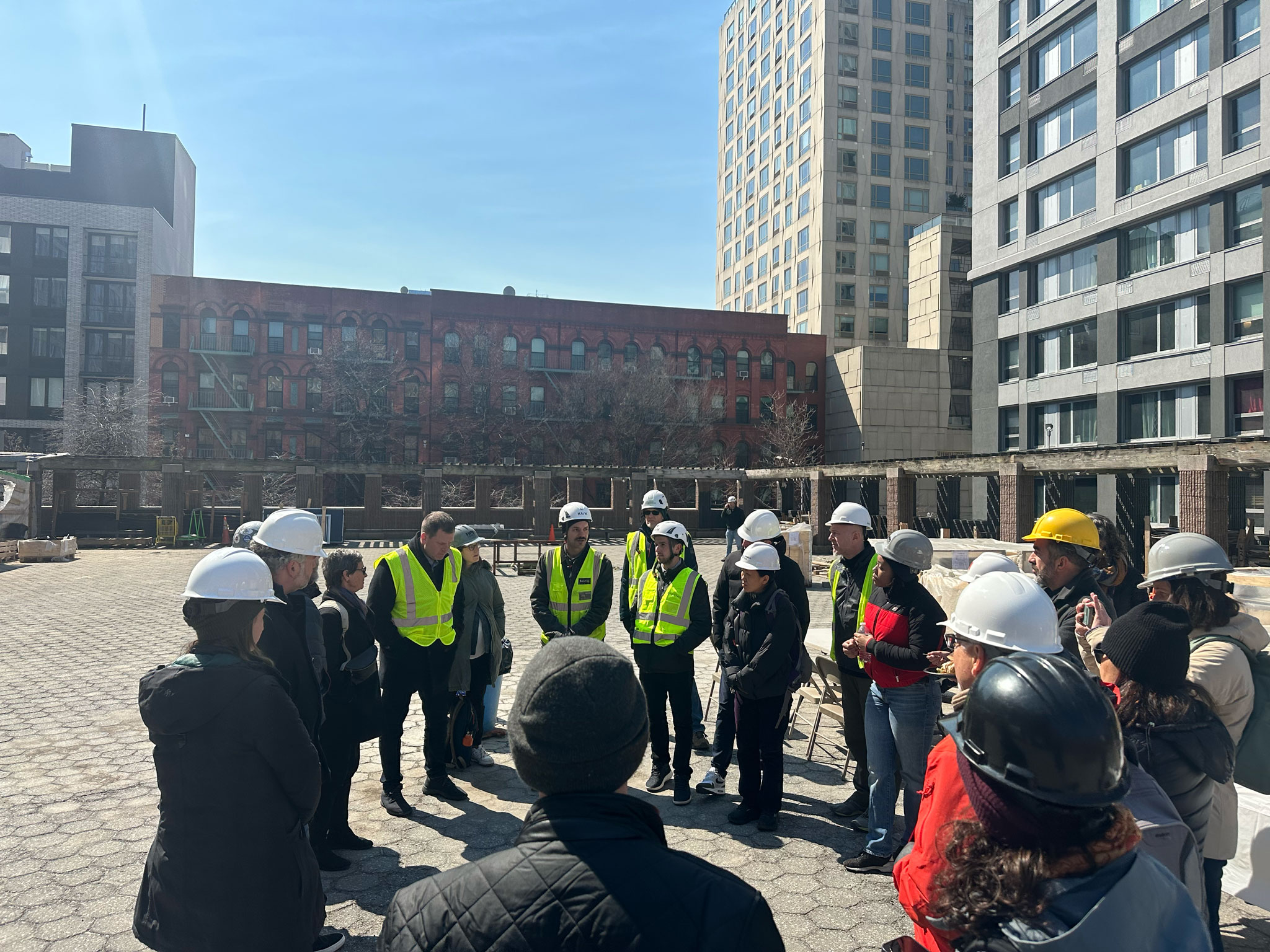
Images featured in this article depict Dextall's projects and are used for illustrative purposes only.
Sources














.jpeg)

-Compliance-for-NYC-Multifamily-%26-Co-Op-Facades.jpg)

















_format(webp).avif)
_format(webp)%20(6).avif)
_format(webp)%20(5).avif)
_format(webp)%20(4).avif)
_format(webp)%20(2).avif)
_format(webp)%20(3).avif)


.avif)
_format(webp)%20(2).avif)