The Spiral NYC: How BIG Solved Terrace-Facade Integration at 1,031 Feet
A terrace on a high-rise floor plate is not just a design feature. It is a deliberate interruption of the building envelope — a point where the insulated, weatherproof skin stops, concrete extends outward, and the thermal continuity that engineers work to maintain throughout the rest of the facade is compromised. Handle the junction correctly and the terrace becomes an asset. Get it wrong and it becomes a source of heat loss, water infiltration, and long-term maintenance liability.
The Spiral at 66 Hudson Boulevard in Hudson Yards, completed in 2023, poses this challenge at every floor. The 66-story, 1,031-foot office tower designed by Bjarke Ingels Group with Adamson Associates features cascading outdoor terraces that wrap around the building from street level to the top. Curtain wall consultant Heintges developed three distinct facade systems to close the building envelope across all 66 floors of continuous terrace transitions. The technical decisions behind this approach offer a precise case study for any mid-rise developer or architect planning outdoor terraces in a multi-story building.
What Makes The Spiral a Benchmark for Terrace-Facade Integration
Three Facade Systems, One Continuous Envelope
Heintges divided The Spiral's facade into three systems, each addressing a different thermal and visual condition created by the cascading terrace geometry. The Office Glazing covers standard floor-to-ceiling areas of the tower: a reflective low-E insulating glass unit designed for solar control and thermal performance across the office floors. The Spiral Glazing — used in areas directly behind the terrace recesses — shifts to a high visible light transmittance low-E coating, more transparent than the office glass, creating a visual distinction between the occupied tower and the terrace openings. The Terrace Cladding consists of custom precast concrete panels designed to match the terrace paving material, inspired by the surface texture of the nearby High Line.
All three systems use floor-to-floor unitized curtain wall panels. Despite the visual and performance differences between the systems, the underlying delivery method is consistent: factory-assembled units that allow each zone to be detailed and fabricated independently while maintaining a continuous installation sequence up the building's full height.
Precast Terrace Cladding — Where Architecture Meets Waterproofing
The precast concrete terrace cladding is the most technically demanding element at The Spiral's envelope. At every terrace edge, the facade transitions from glazing to solid panel to the terrace surface itself — a sequence that must be weathertight, thermally continuous, and structurally stable under the combined effects of thermal movement, wind loading, and New York's full seasonal temperature range.
The custom precast panels serve multiple roles simultaneously: they provide the architectural finish of the terrace parapet, close the opaque zone of the envelope where the structural slab edge occurs, and define the visual language that ties the building's exterior to its outdoor spaces. Because no two floor plans at The Spiral are identical — the continuous setbacks mean every floor has a different terrace geometry — each terrace level required its own panel configuration.
No Two Floor Plans Identical — What That Means for Fabrication
The Spiral's terraces step continuously around the building, so the floor plate geometry changes at every level. Mid-section floors range from 40,000 to 50,000 square feet; upper floors narrow to approximately 37,000 square feet. Ceiling heights vary from 10 to 15 feet depending on the floor.
This means curtain wall panels — including the terrace edge panels — are not repetitive units. Each terrace level required its own panel geometry, its own waterproofing detail at the slab edge, and its own structural anchorage configuration. For a unitized system, this is manageable: the factory fabrication process handles geometric variation within a consistent panel framework. For a field-built stick system, the same variation would translate directly into field labor, increased tolerance accumulation, and extended installation time on every floor.
The Thermal Bridge Problem at Every Terrace Edge
Balcony Slabs as Linear Thermal Bridges — ASHRAE 90.1-2022
Every balcony or terrace slab that penetrates the building envelope is a linear thermal bridge. Concrete conducts heat faster than the insulated wall assembly it interrupts, so a slab that extends from a heated interior to an exposed outdoor surface carries heat directly through the building's thermal barrier — in winter, heat escapes outward; in summer, heat flows inward.
ASHRAE 90.1-2022 — the energy standard adopted by New York City's energy code and the basis for commercial compliance across most U.S. markets — explicitly addresses balcony and terrace slabs as linear thermal bridges. The standard defines balcony projections as a category of linear thermal bridge alongside floor edges, parapets, and facade columns. Section 5.5.5.2.2 limits the total length of mass floor assembly projections serving as balconies or floor overhangs that penetrate the building envelope as a percentage of total building perimeter. This is a direct numerical constraint on how much terrace slab area can penetrate the code-compliant building envelope.
Compliance Paths: Thermal Break vs. Continuous Insulation
ASHRAE 90.1-2022 provides three compliance paths for thermal bridge mitigation. The prescriptive path — the most straightforward — requires either continuous wrapped insulation at the slab edge or a minimum R-3 thermal break through balcony and parapet connections. Thermal break products — typically glass fiber reinforced polyamide elements inserted between the interior and exterior portions of the balcony slab connection — allow the structural slab to continue through the facade while interrupting the conductive heat path.
For a building like The Spiral, where terraces occur at every floor over 66 stories, the cumulative impact of unmitigated thermal bridges at each slab edge would be substantial — in both energy performance and condensation risk. The interior surface temperature at an uninsulated slab edge drops well below the rest of the interior wall in New York winters, creating conditions for moisture condensation, finish damage, and mold risk in ceiling zones adjacent to terrace transitions.
Drainage and Waterproofing at the Facade-Terrace Junction
The junction between a curtain wall panel and a terrace slab is one of the most failure-prone details in commercial construction. Water that reaches this junction — from rain, from terrace drainage that cannot keep pace with rainfall, or from ice melt — must be directed away from the building interior and from the curtain wall's pressure-equalization cavity.
The standard approach is a flashing system at the slab edge, integrated with the curtain wall's drainage plane, that directs water outward and downward without allowing it to enter the wall assembly. At The Spiral, where each terrace level has a different geometry, the flashing and drainage details were customized at each floor. The precast concrete terrace cladding, acting as a parapet at each terrace edge, required waterproofing membrane continuity beneath the panels and sufficient overhang detailing to prevent water from tracking back toward the glazing below.
Lessons for Mid-Rise Developers Adding Outdoor Terraces
Design the Terrace and Facade as One System, Not Two
The most consistent failure mode in mid-rise terrace design is treating the terrace and the facade as independent scopes — one managed by the architect's exterior design team, one by the facade contractor. At The Spiral, Heintges served as the single envelope consultant responsible for both the glazing and the terrace cladding. This unified responsibility meant the junction between systems was owned by one party, not split between two.
For mid-rise projects, the implication is direct: terrace-facade junctions should be specified as a single assembly with one trade responsible for the waterproofing membrane, flashing, cladding, and adjacent curtain wall panel. Projects that split this responsibility between a glazing contractor and a waterproofing contractor routinely produce scope gaps that become water infiltration paths.
Unitized Panels at Terrace Edges — Tolerance and Sequencing
The terrace edge is the most dimensionally variable part of a mid-rise facade. Cast-in-place slab edges accumulate forming tolerances; structural deflections after shoring removal shift the slab position; thermal movement across seasons changes the gap between the slab edge and the facade anchor. A field-built facade system fitted to this varying edge is exposed to all of these variables simultaneously.
Unitized panels — with integrated adjustment range at the anchor connections — absorb slab edge variation without requiring field modification of the panel itself. The panel arrives from the factory complete; the anchor is adjusted to the actual slab position. For developers planning terraces on mid-rise residential or mixed-use projects, this tolerance accommodation is one of the clearest functional advantages of a unitized prefab system over field-built alternatives.
The Cost of Getting the Junction Detail Wrong
Water infiltration at terrace-facade junctions is among the most expensive construction defect categories in New York City. Remediation — typically involving removal of terrace pavers, replacement of waterproofing membranes, resealing of curtain wall anchor connections, and repair of interior finishes — costs several times what correct detailing would have required at the original construction stage.
The lesson from The Spiral is to specify the terrace-facade junction with the same rigor as any other high-performance envelope detail: the same level of BIM coordination, the same shop drawing review, the same mock-up testing, and the same installation responsibility assignment as a window-to-wall junction or a curtain wall corner condition.
Practical Applications for Dextall Market
D Wall® Panels at Terrace Transitions
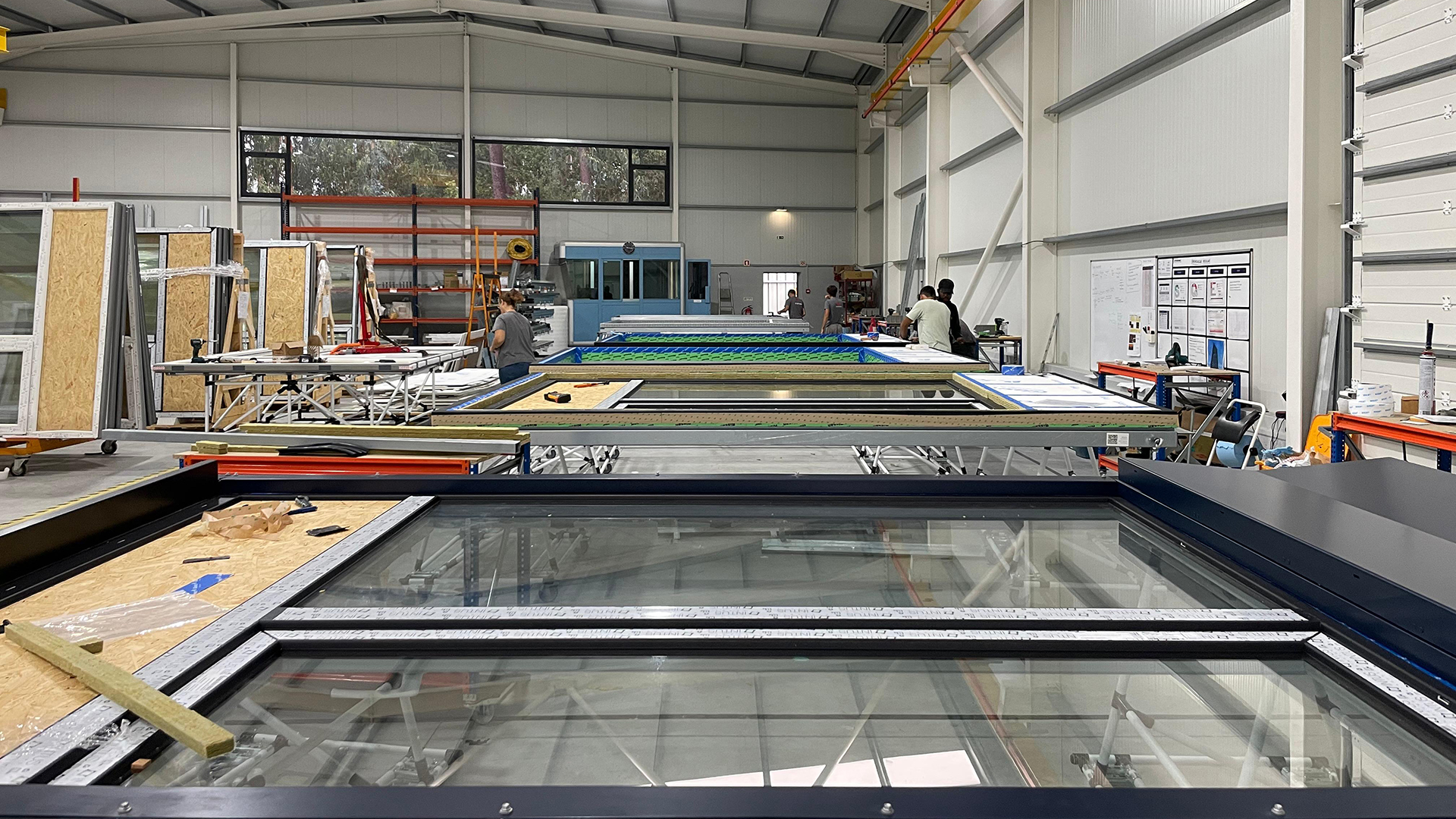
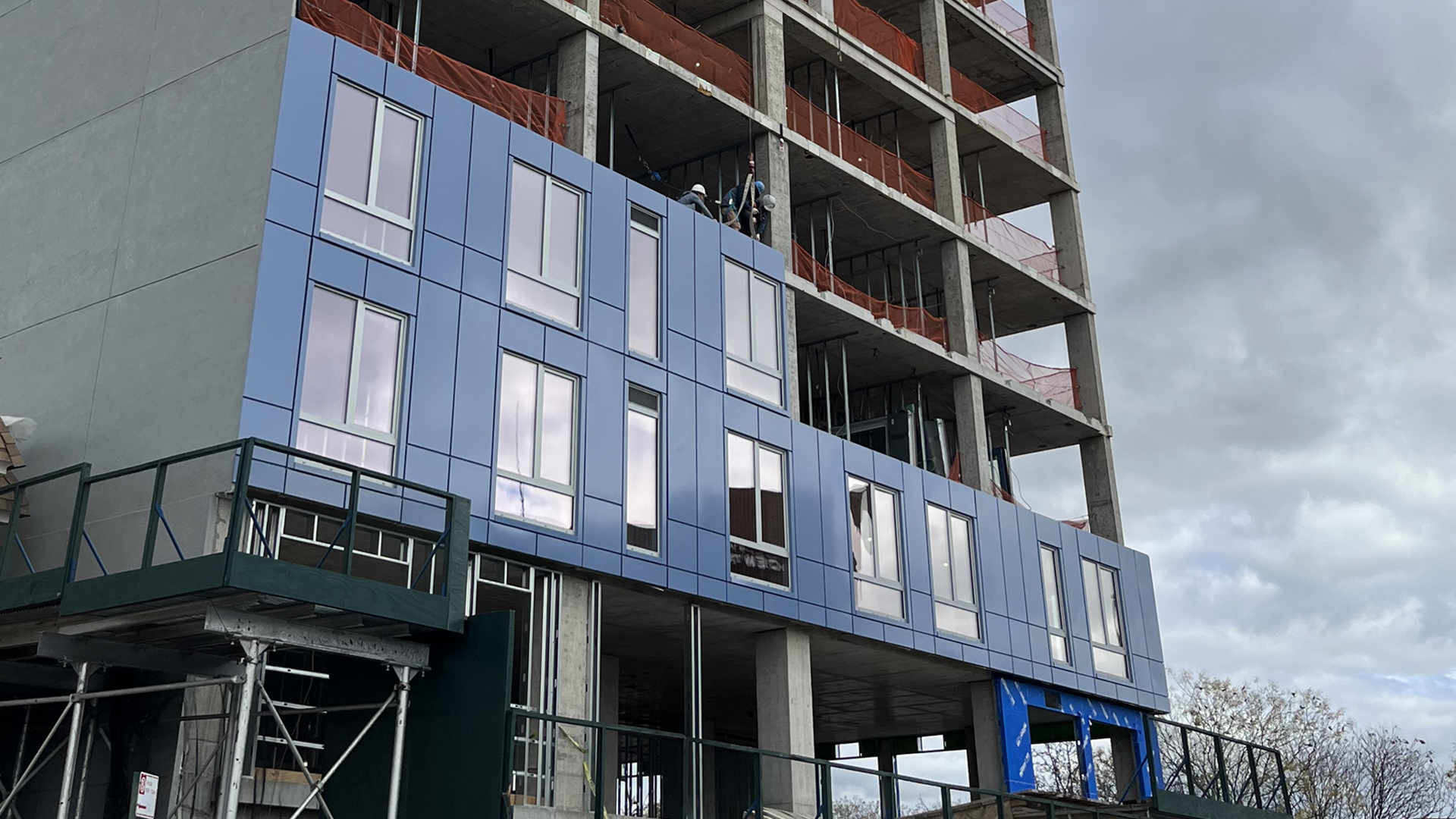
Dextall's D Wall® prefabricated facade panels are designed as structurally independent systems that attach to the primary building frame at each floor rather than bearing against the slab edge. This independence is a direct advantage at terrace transitions, where the slab geometry changes at every floor and the edge condition is rarely uniform across the building perimeter.
The prefabricated panel arrives with all glazing and insulation in place; the anchor connects to the structure, not to the slab edge. The terrace edge condition — its position, its deflection, its forming tolerances — does not propagate into the panel geometry. The facade closes the envelope at the terrace transition on its own terms, independently of the slab's dimensional accuracy. Earlier projects in this series, including Brooklyn Tower and 400 Lake Shore Drive, demonstrate how structurally independent unitized systems perform across varying floor-to-floor conditions in demanding urban construction environments.
BIM Coordination at Terrace-Facade Junctions
Terrace junctions are among the most detail-intensive conditions in a mid-rise BIM model. The junction involves the structural slab, waterproofing membrane, flashing, terrace paver system, facade panel anchor, and the panel itself — all within a few inches of each other, from different trades, all requiring coordination before any component reaches the site. The Dextall Studio platform models facade panel configurations at the level of detail necessary to coordinate these trades in BIM before fabrication begins, identifying interference conditions and scope gaps at the junction before they become field problems.
NYC Residential Mid-Rise — Terraces as a Market Differentiator
Outdoor terraces are among the most consistently valued amenities in New York City residential development. Terrace units command price and lease premiums over interior units at the same square footage. For developers building 8- to 20-story multifamily or mixed-use projects in Brooklyn, Queens, and Manhattan, the facade-terrace junction is not an incidental detail — it is a premium feature that, handled correctly, supports the project's revenue story and, handled poorly, generates long-term liability.
The Spiral demonstrates what is achievable when the terrace is treated as a fully integrated facade element. For mid-rise projects that cannot absorb a three-system curtain wall approach, the core lesson is simpler: specify the junction with the same rigor as any other high-performance envelope detail, and select a facade system whose installation logic accommodates the dimensional variability that terraces inevitably produce at every floor.
Key Takeaways
- The Spiral's three facade systems — Office Glazing, Spiral Glazing, and Terrace Cladding — are all floor-to-floor unitized curtain wall panels, allowing a consistent installation method across 66 floors of continuous terrace variation.
- ASHRAE 90.1-2022 explicitly classifies balcony slabs as linear thermal bridges for the first time, requiring either continuous insulation or a minimum R-3 thermal break at every slab penetration of the building envelope.
- No two floor plans at The Spiral are identical due to continuous setbacks; unitized panel fabrication handles this geometric variation within a consistent framework that field-built systems cannot match at the same pace.
- Terrace-facade junctions should be specified as a single assembly with unified trade responsibility — splitting waterproofing and glazing scopes is the most common source of water infiltration at terrace transitions.
- NYC mid-rise residential terraces carry measurable revenue premium; correct detailing at the facade junction protects both the premium and the developer's long-term liability exposure.
FAQ
What is a thermal bridge at a balcony slab and why does it matter?
A balcony slab thermal bridge occurs when a concrete floor slab extends from the heated interior through the building envelope to an exposed exterior. Concrete conducts heat faster than the insulated wall assembly it penetrates, creating a path for energy loss. In cold climates, this also reduces interior surface temperatures at the slab edge, which can cause condensation, finish damage, and mold growth in ceiling zones near the terrace.
How does ASHRAE 90.1-2022 address balcony thermal bridging?
ASHRAE 90.1-2022 explicitly classifies balcony and terrace slab penetrations as linear thermal bridges for the first time. Table 5.5.5.2.2 limits the total perimeter length of balcony projections as a percentage of the building's total above-grade perimeter. Compliance requires either continuous wrapped insulation at the slab edge or a minimum R-3 thermal break through balcony and parapet connections.
What is the difference between Office Glazing and Spiral Glazing at The Spiral?
Office Glazing uses a reflective low-E insulating glass unit optimized for solar control across standard office floors. Spiral Glazing — used in recessed areas directly behind outdoor terraces — uses a high visible light transmittance low-E coating that is more transparent, creating a visual distinction between the occupied tower and the open terrace zones. Both systems use floor-to-floor unitized curtain wall panels.
How do unitized curtain wall panels handle terrace edge transitions?
Unitized panels attach to the primary structural frame through adjustable anchor connections rather than bearing against the slab edge directly. Dimensional variations at the terrace slab edge — from forming tolerances, structural deflection, or thermal movement — are absorbed by the anchor adjustment without affecting the panel geometry. The panel arrives factory-complete and is positioned to the actual slab condition at installation.
What are the waterproofing risks at curtain wall-terrace junctions?
The junction between a curtain wall panel and a terrace slab is one of the most failure-prone details in commercial construction. Water must be directed outward and downward through an integrated flashing system tied to the curtain wall's drainage plane. Common failures include flashing discontinuities at anchor penetrations, inadequate membrane continuity under terrace pavers, and gaps in responsibility between glazing and waterproofing contractors.
Disclaimer
Dextall is not involved in The Spiral project. This article analyzes publicly available information about Bjarke Ingels Group's design and Heintges' curtain wall engineering to explore how principles from large-scale terrace-integrated facades can inform mid-rise construction strategies. For questions about The Spiral, contact Tishman Speyer. For information about Dextall's prefabricated building envelope solutions, visit dextall.com.
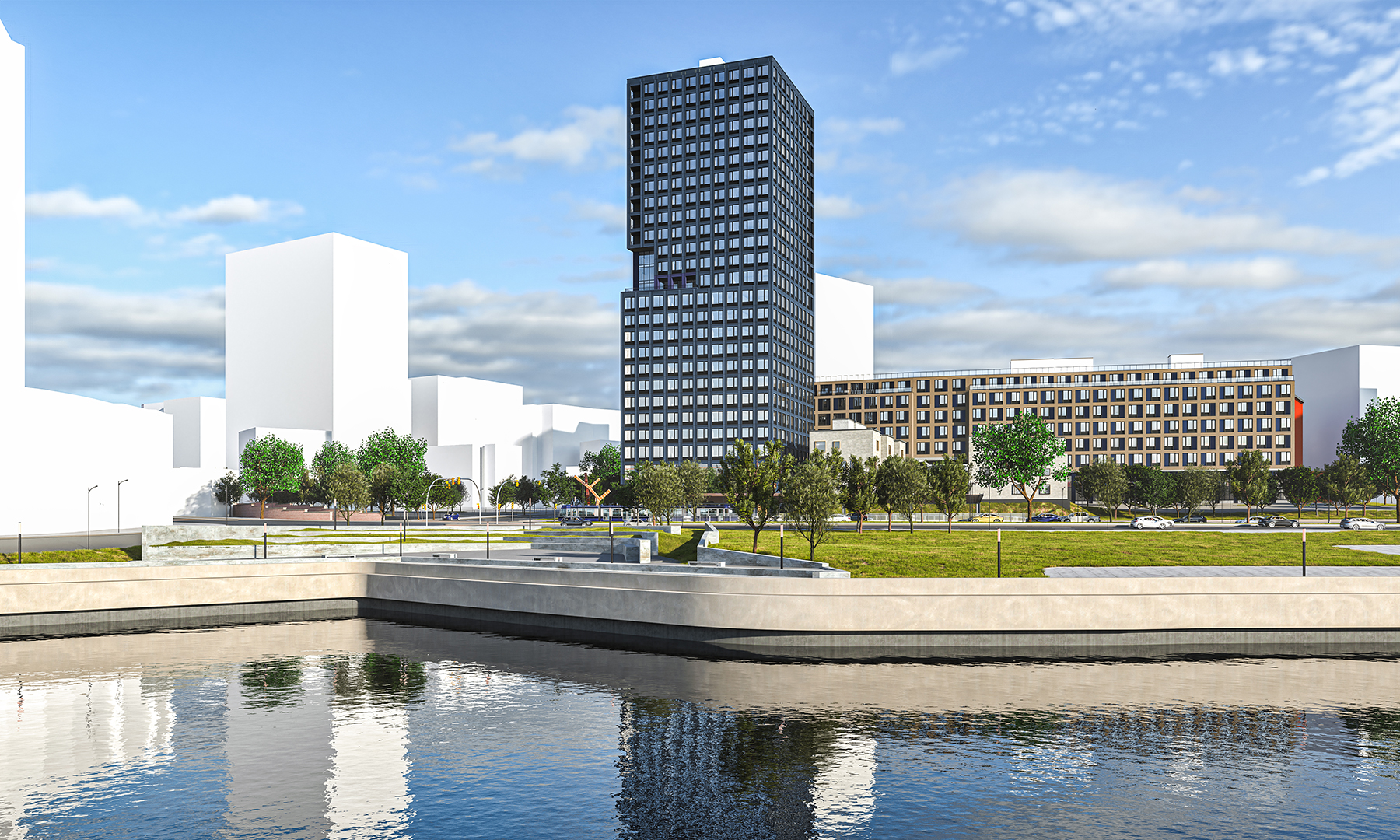
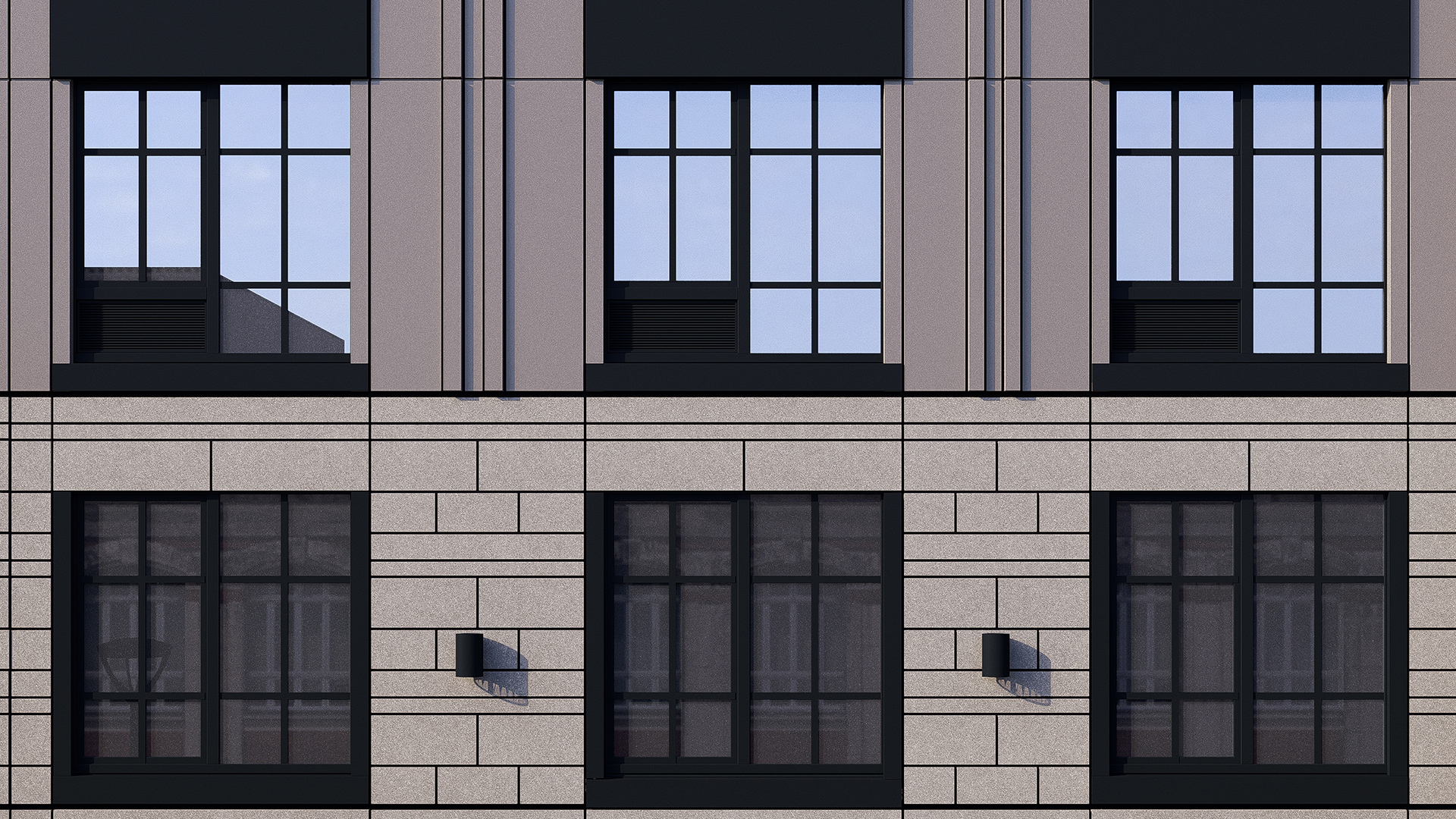
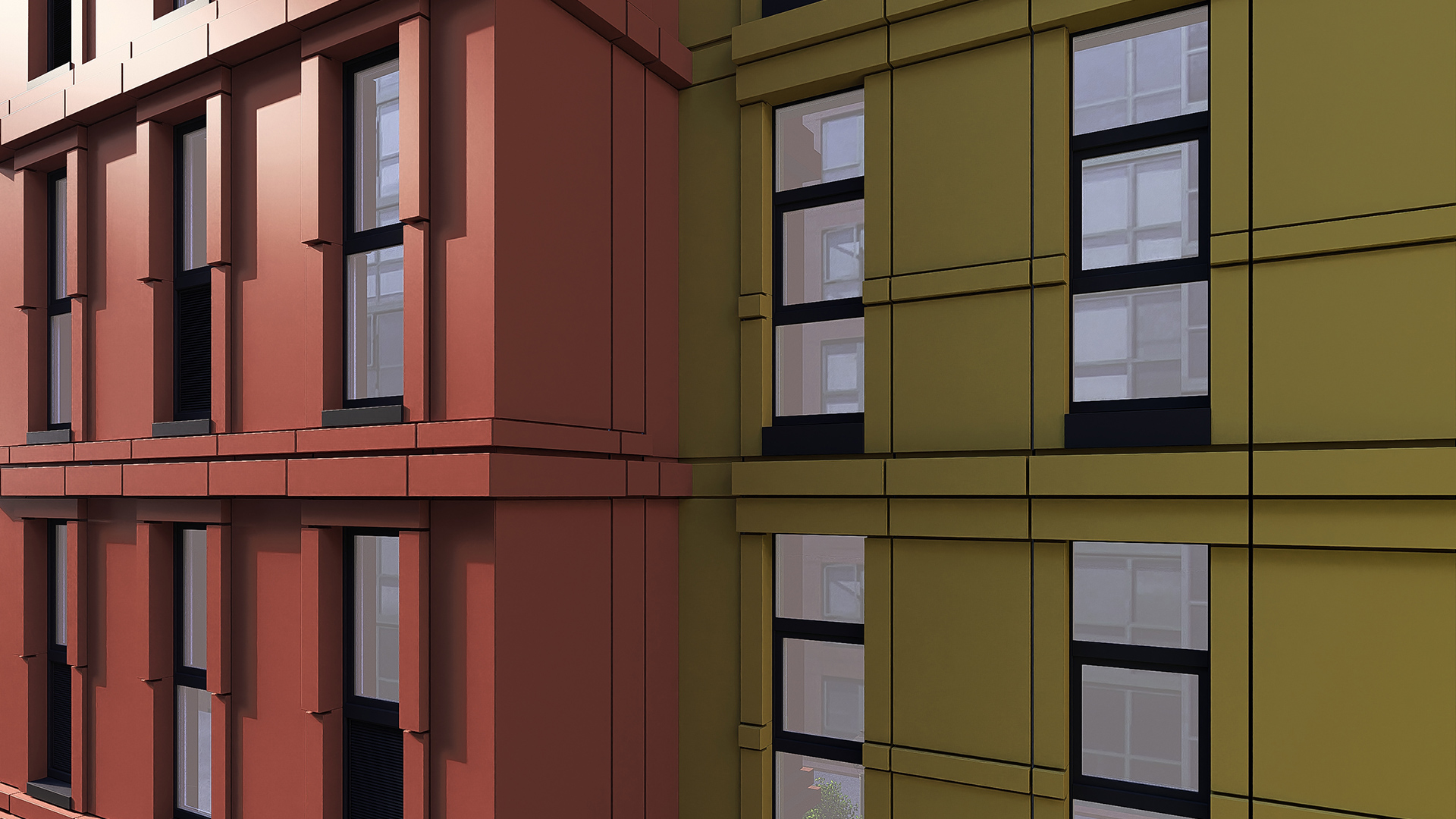
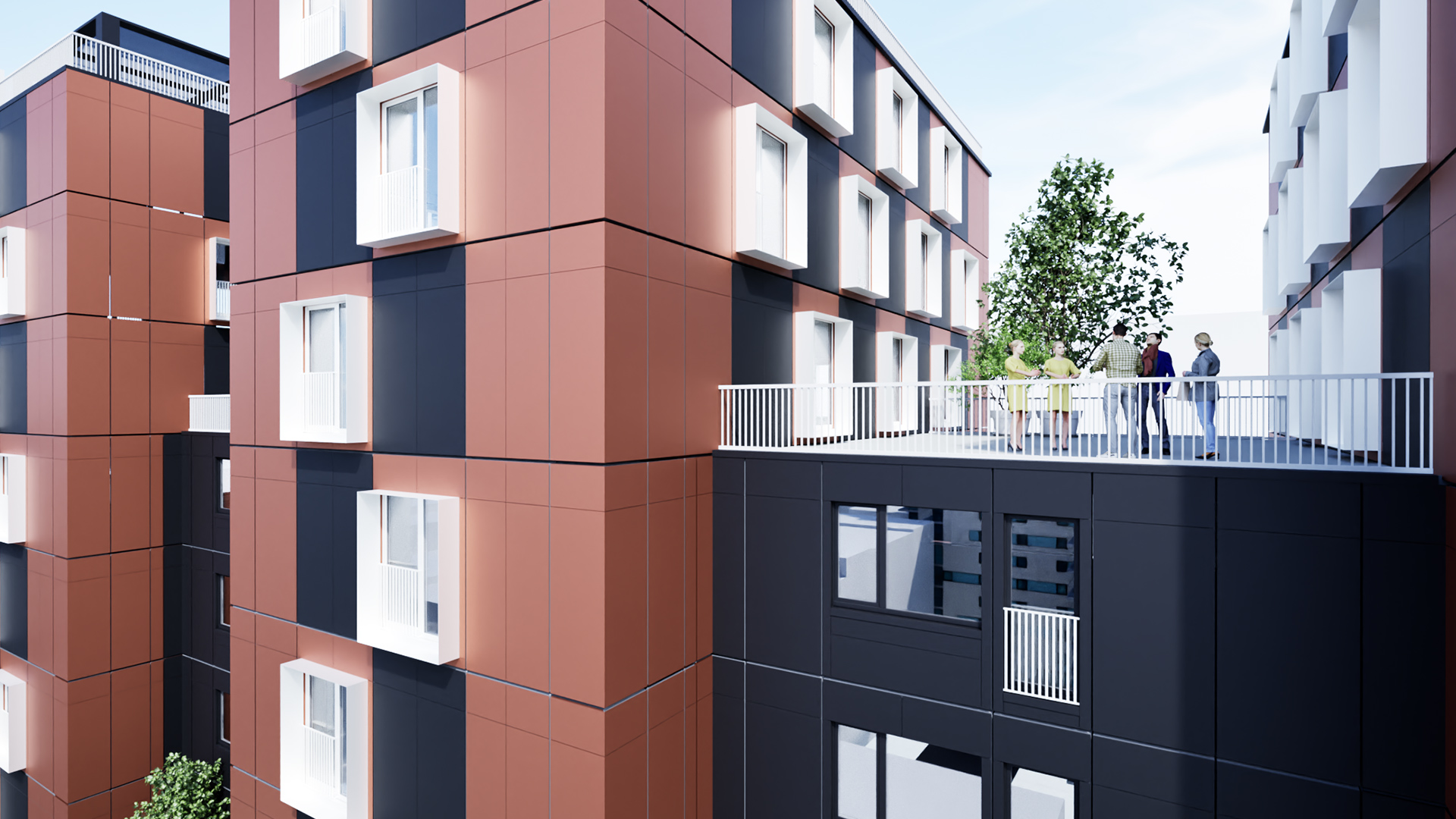
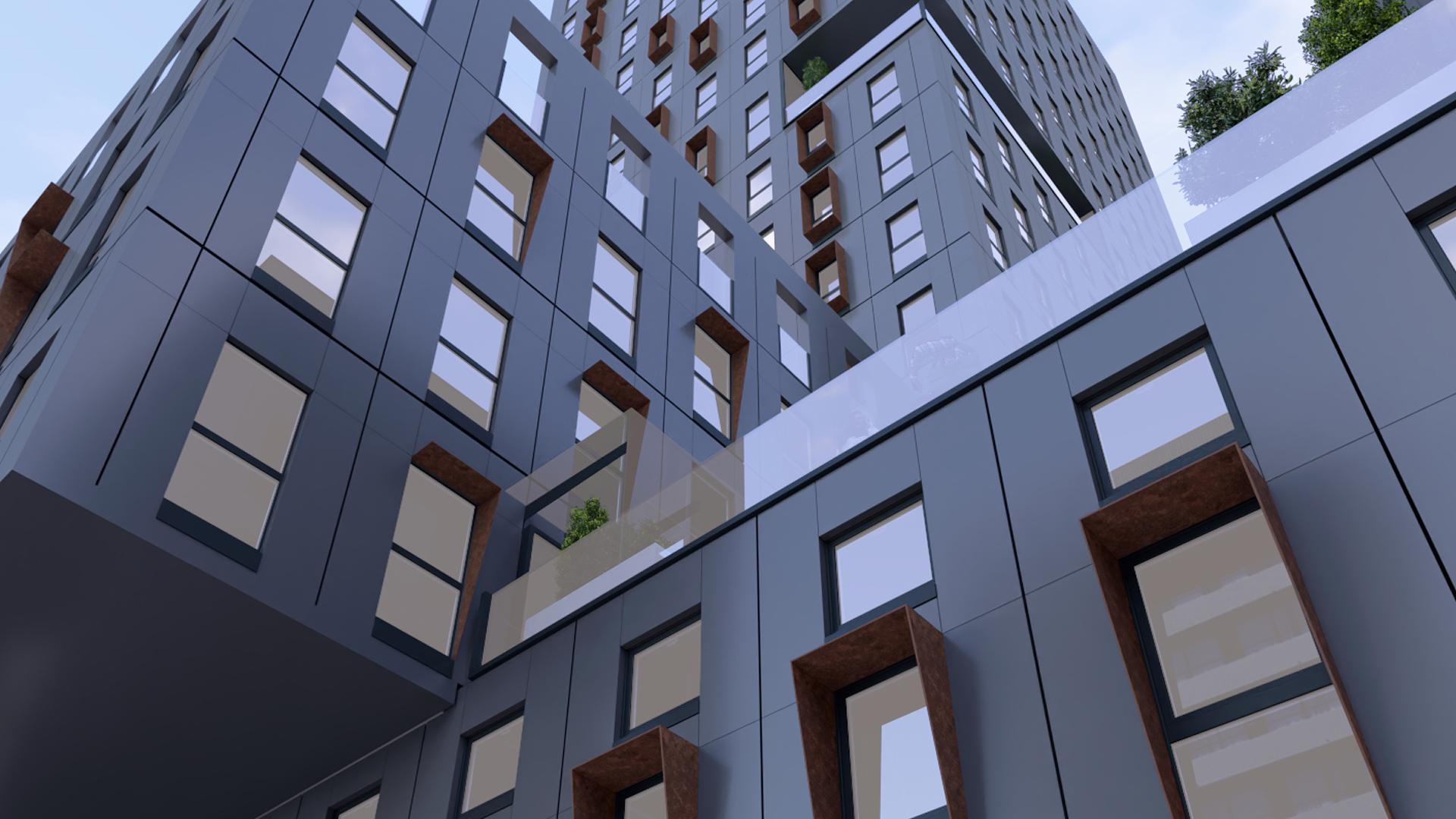
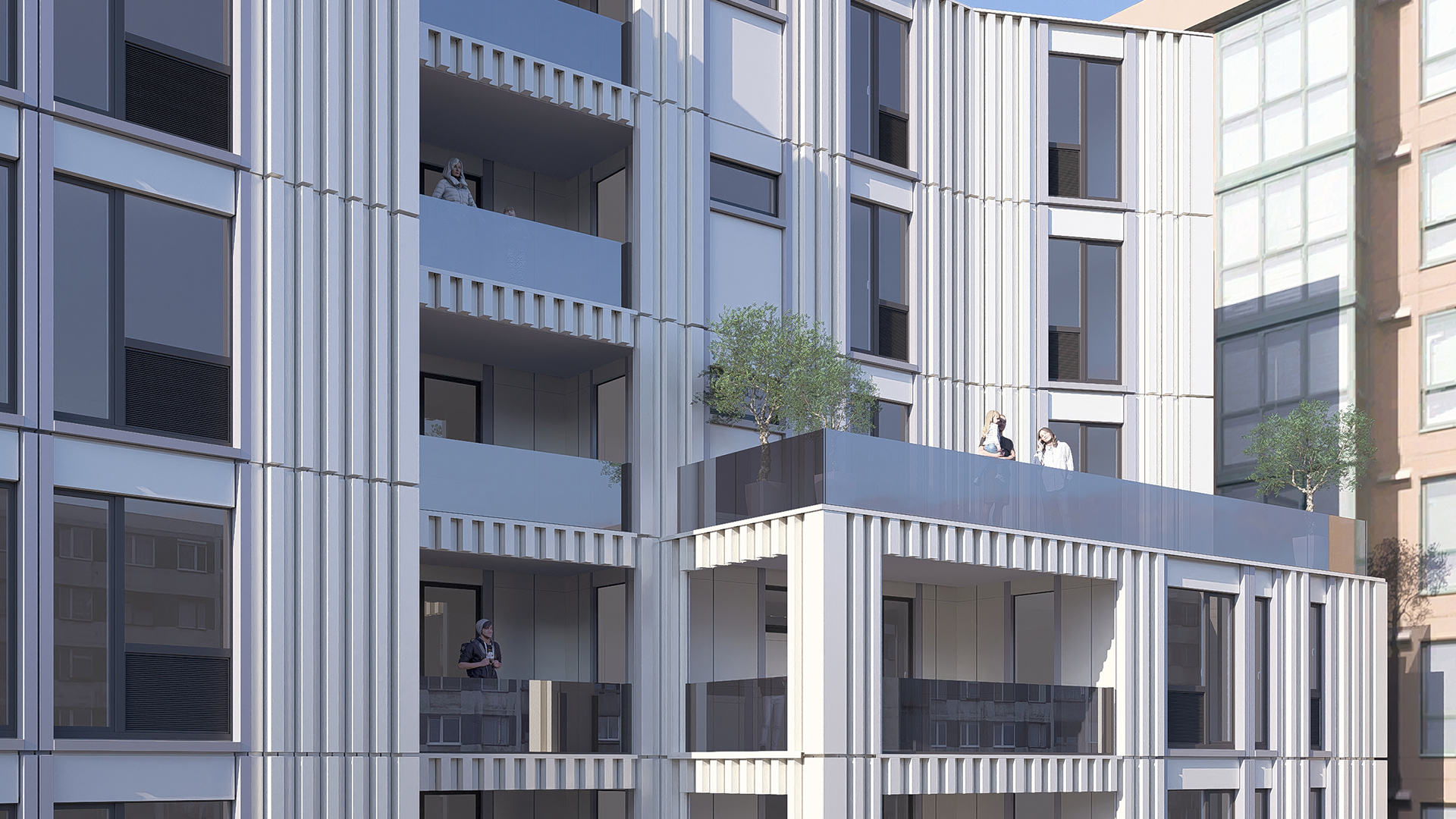
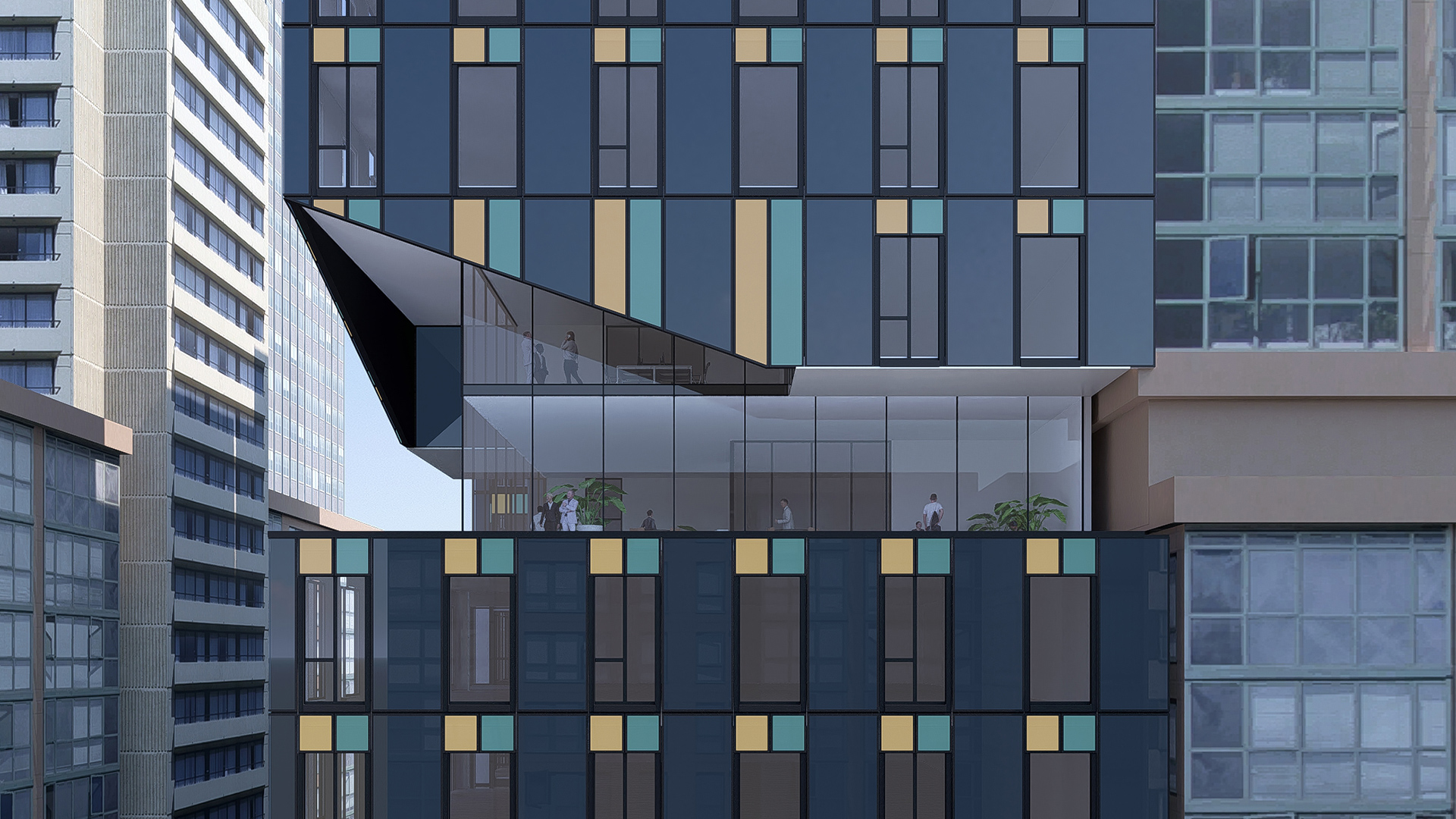
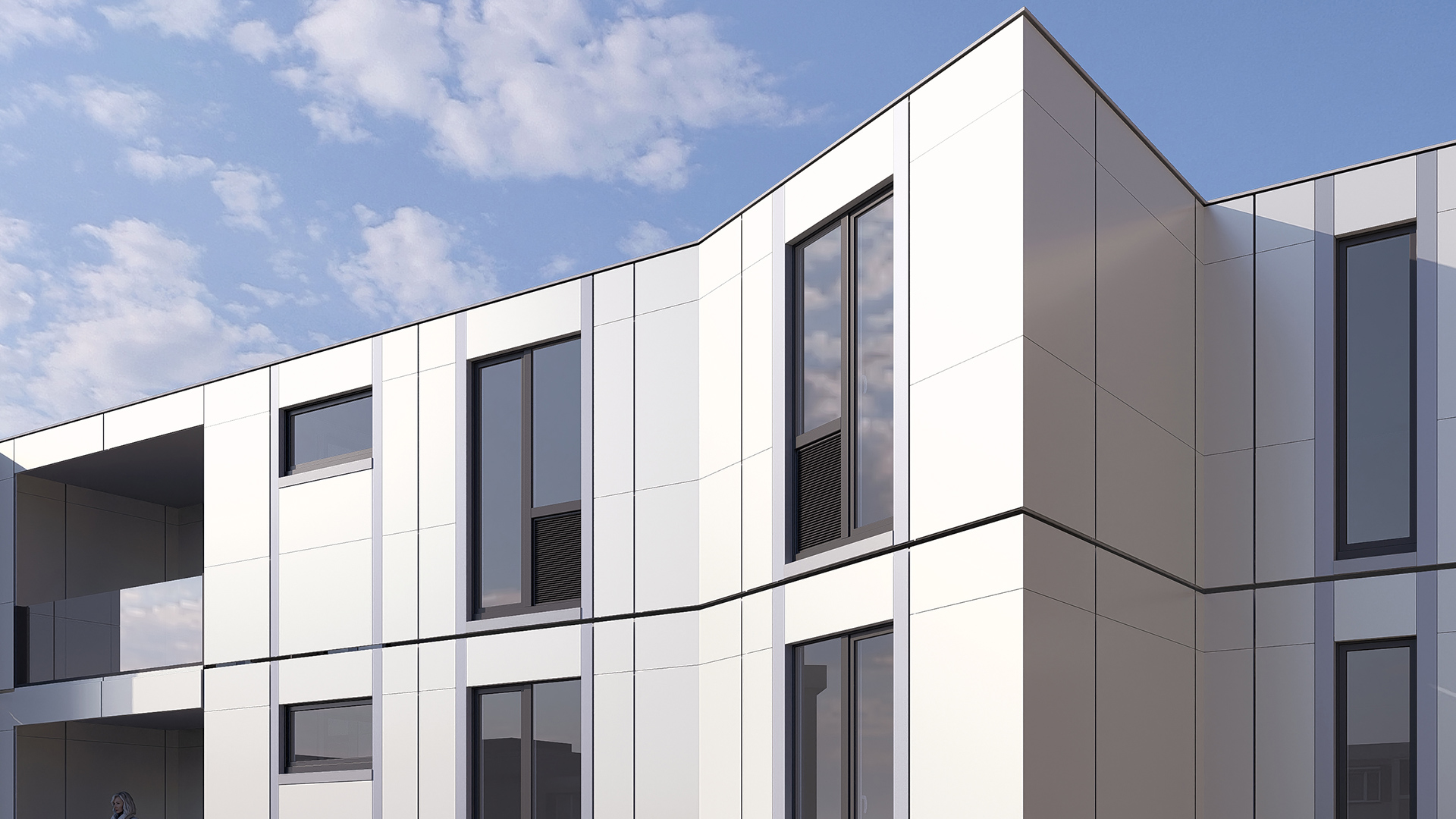
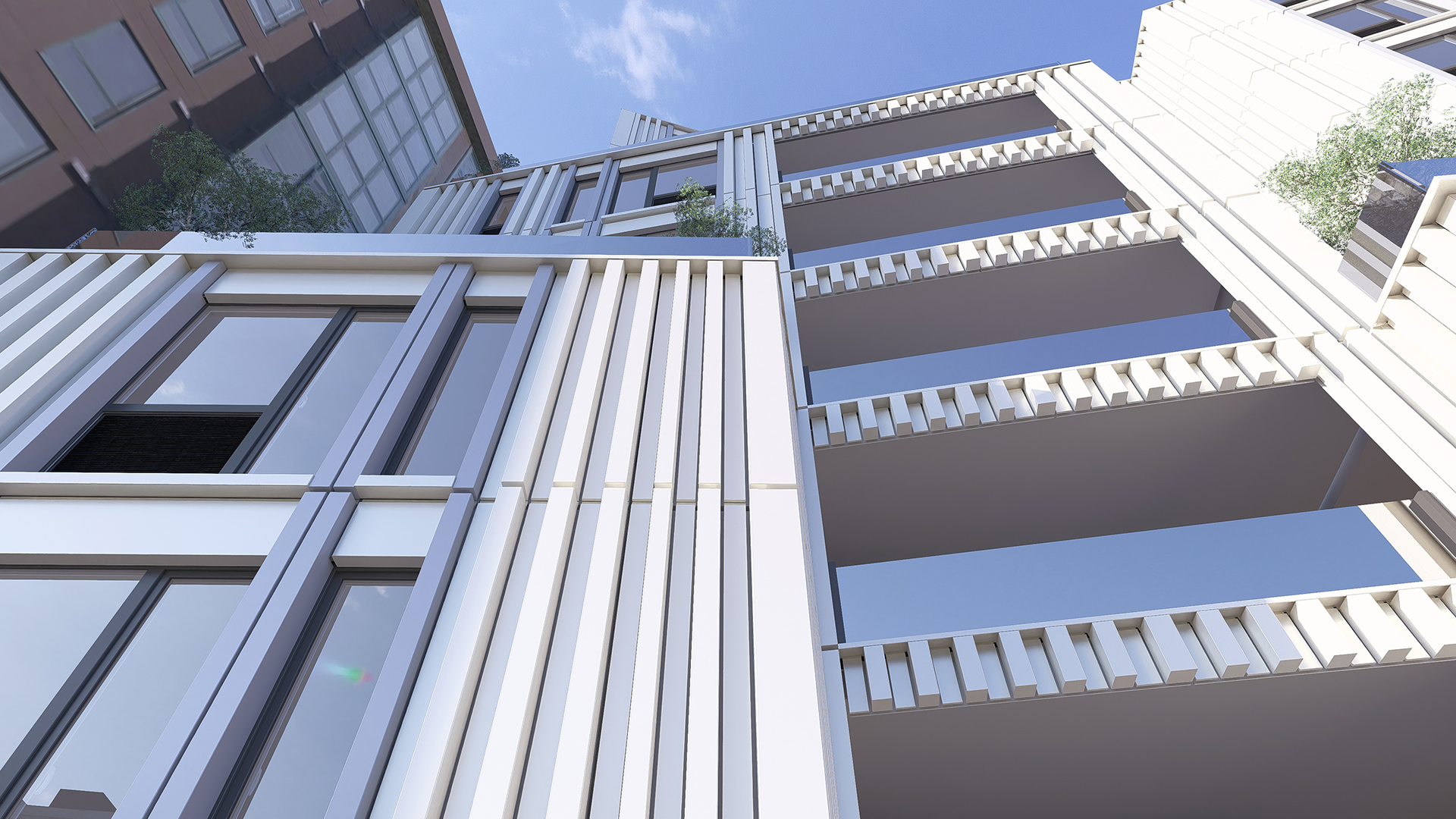
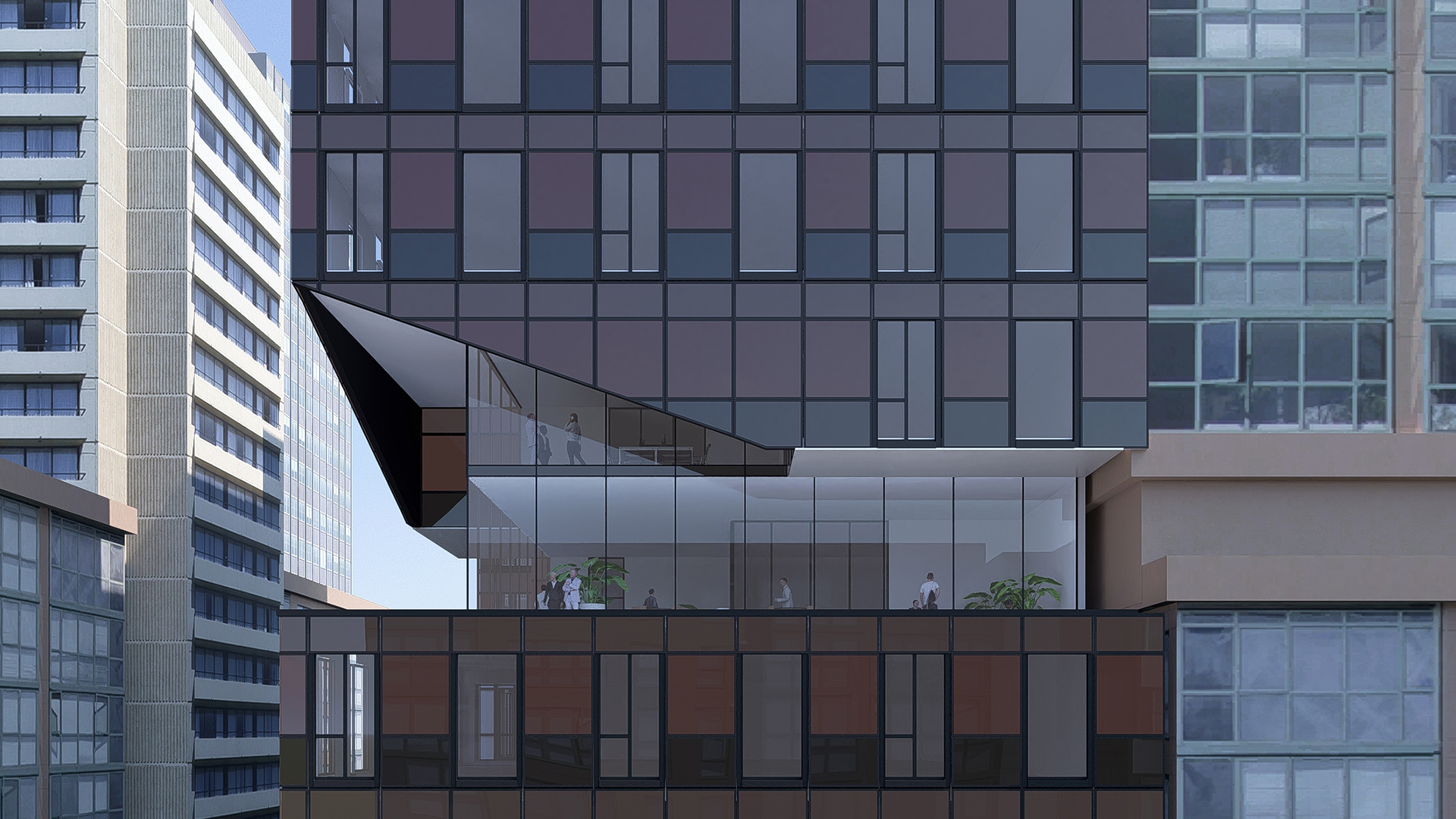
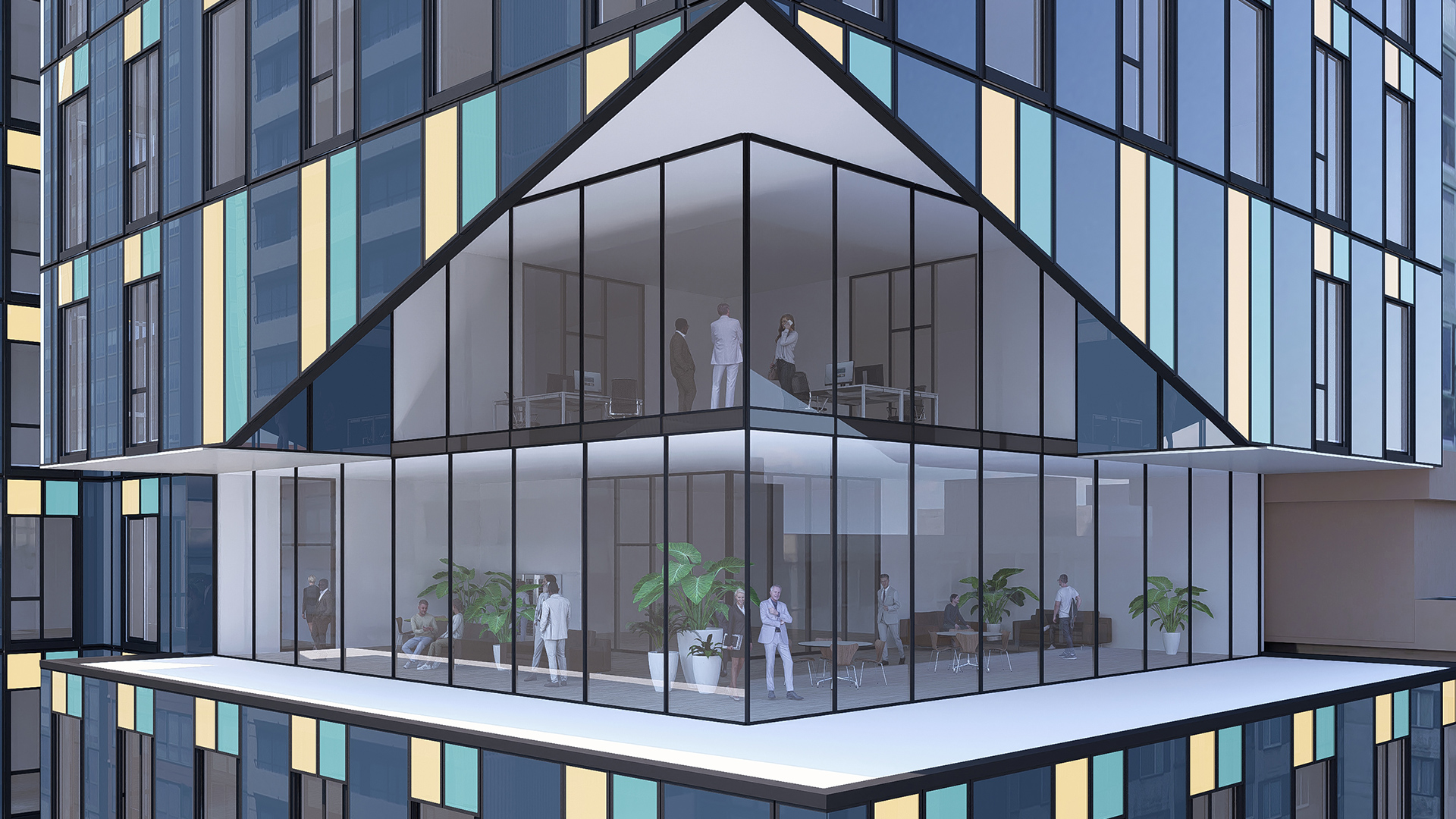
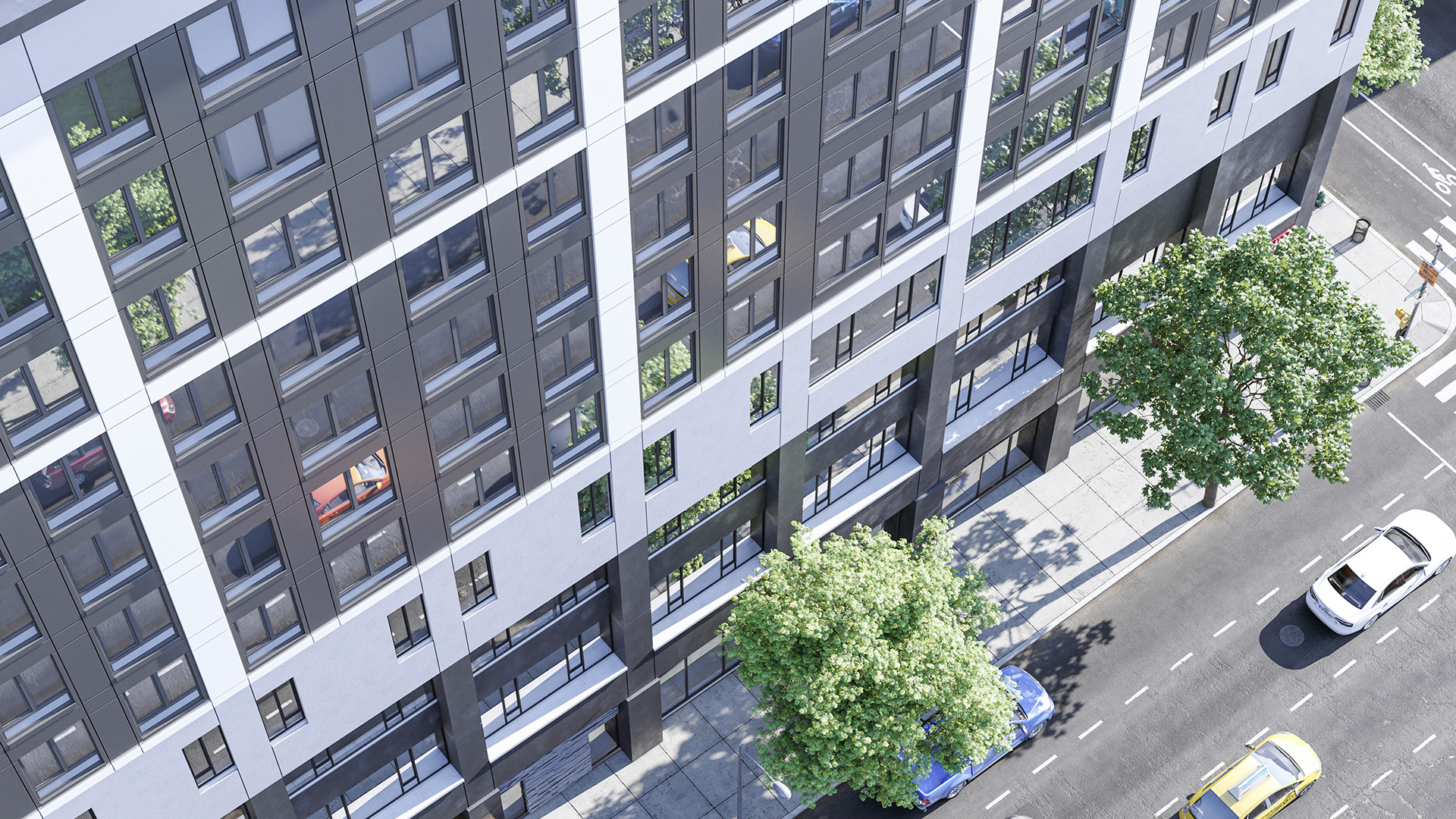
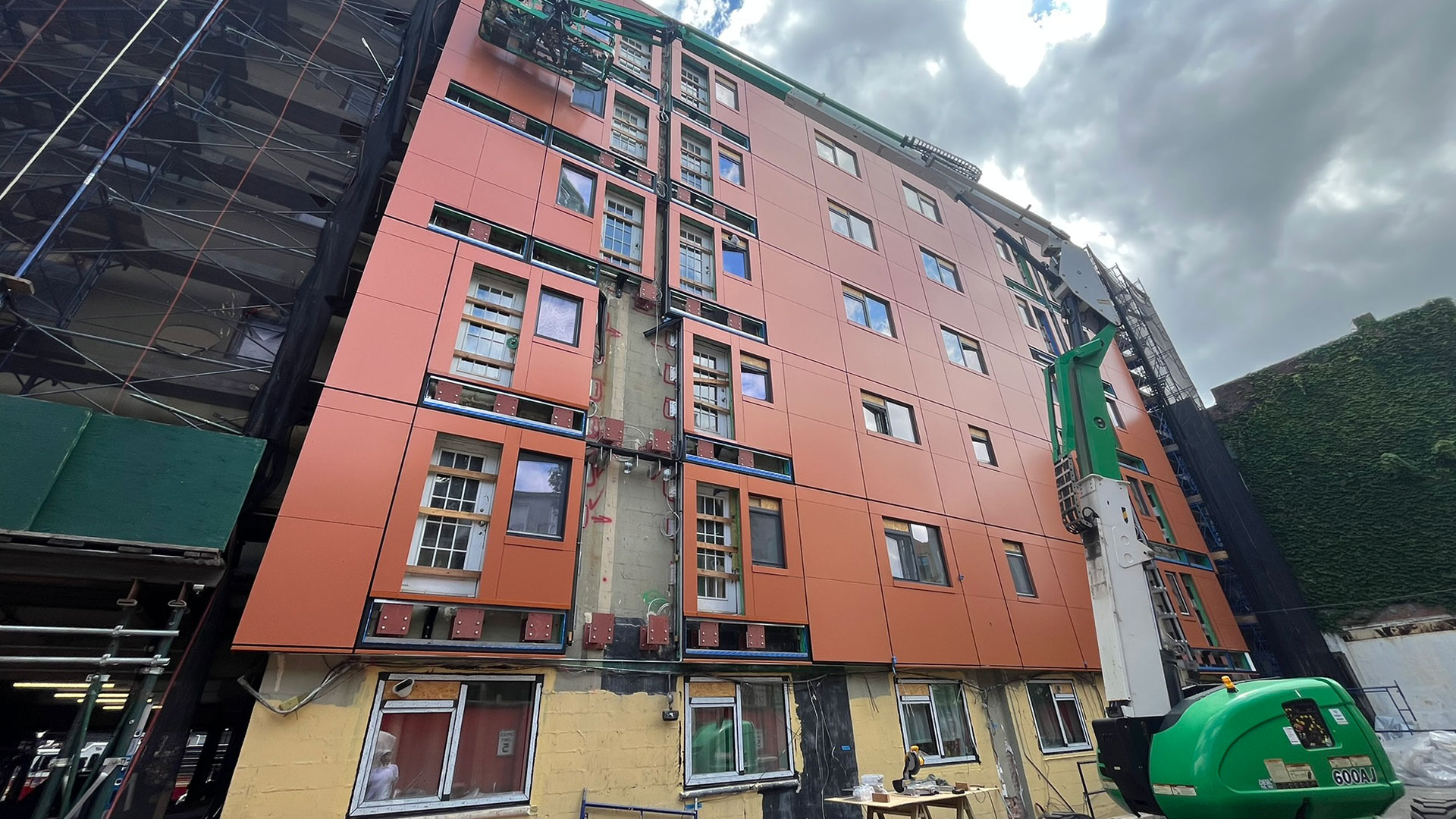
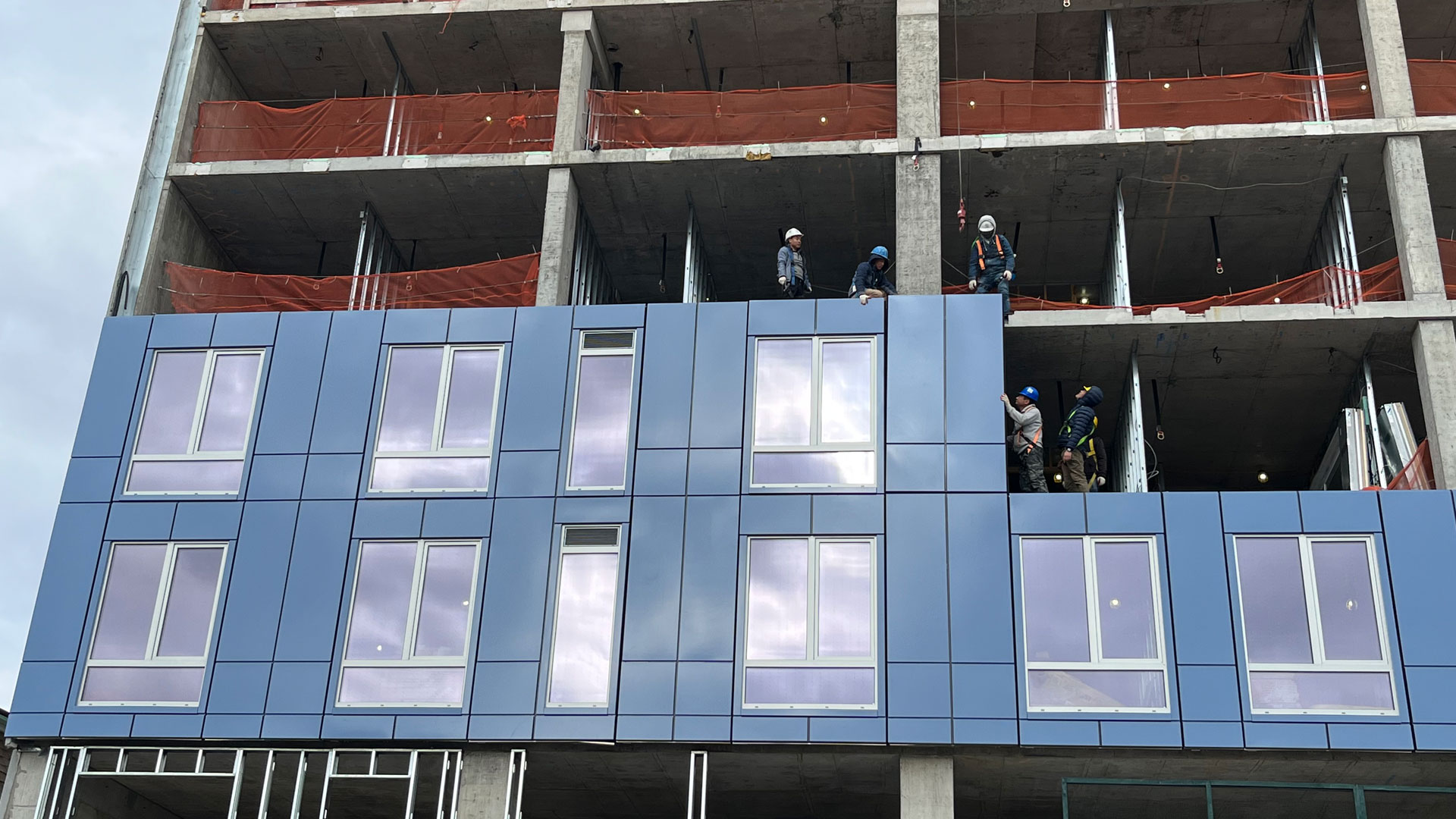
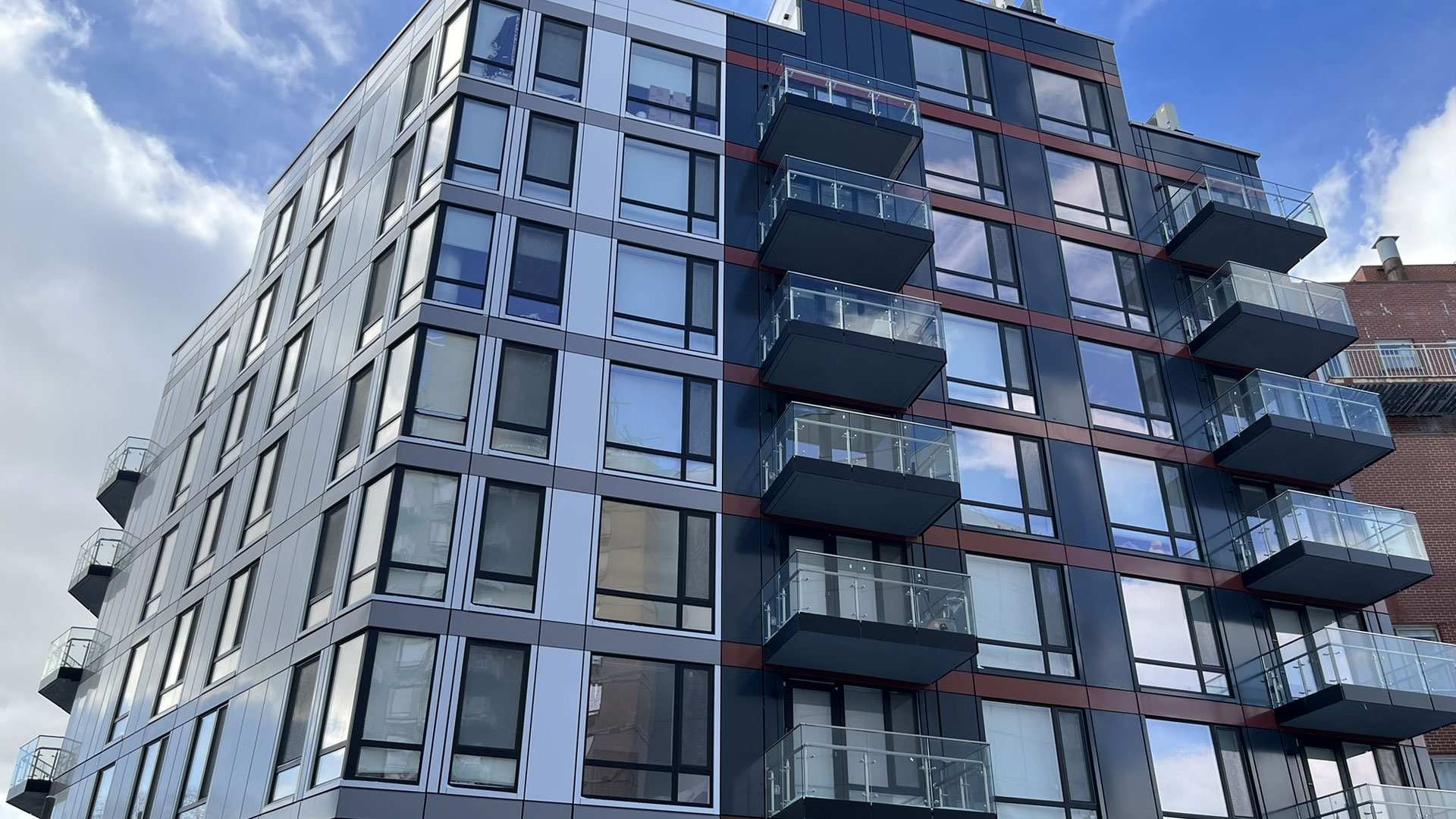
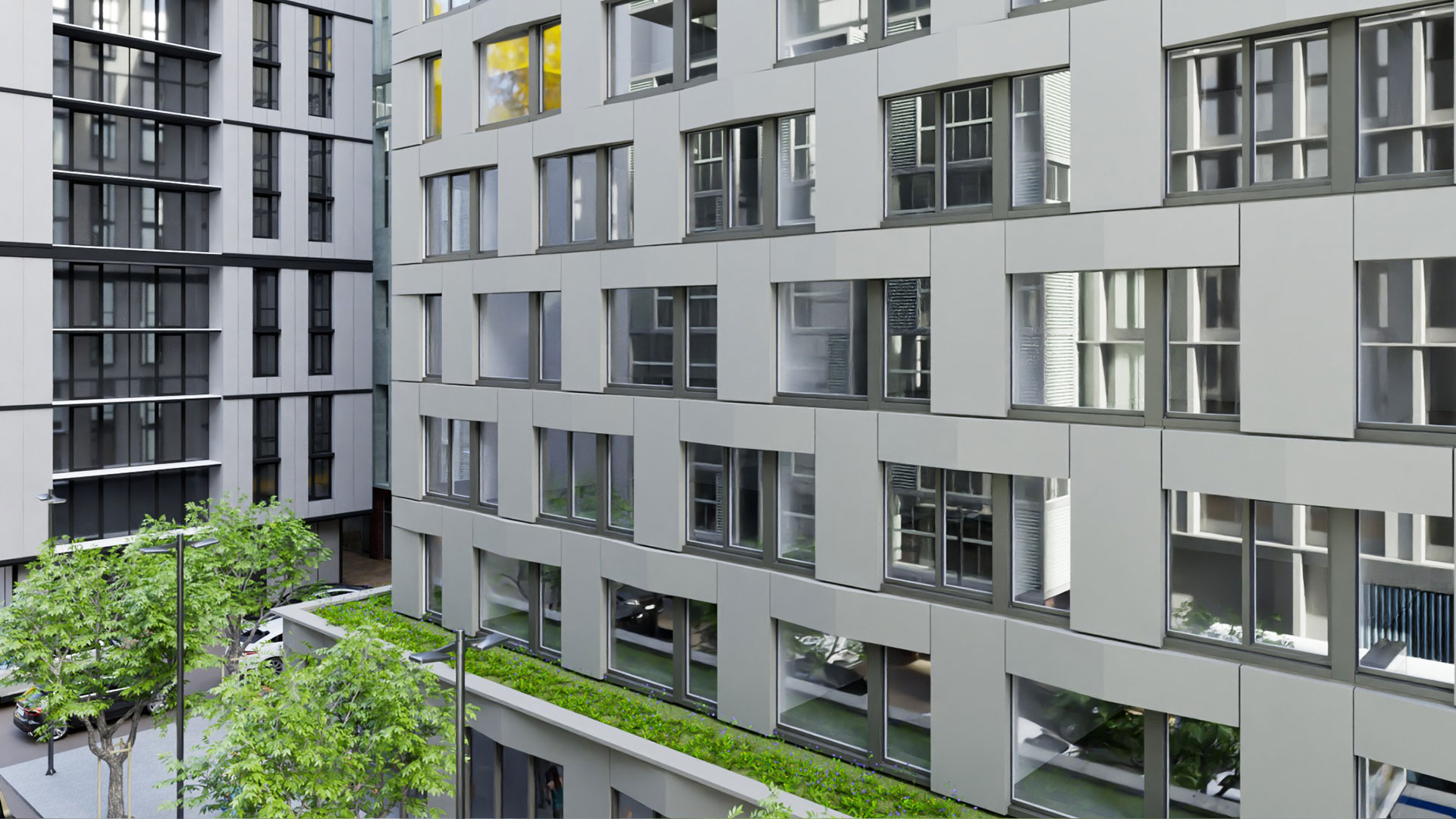
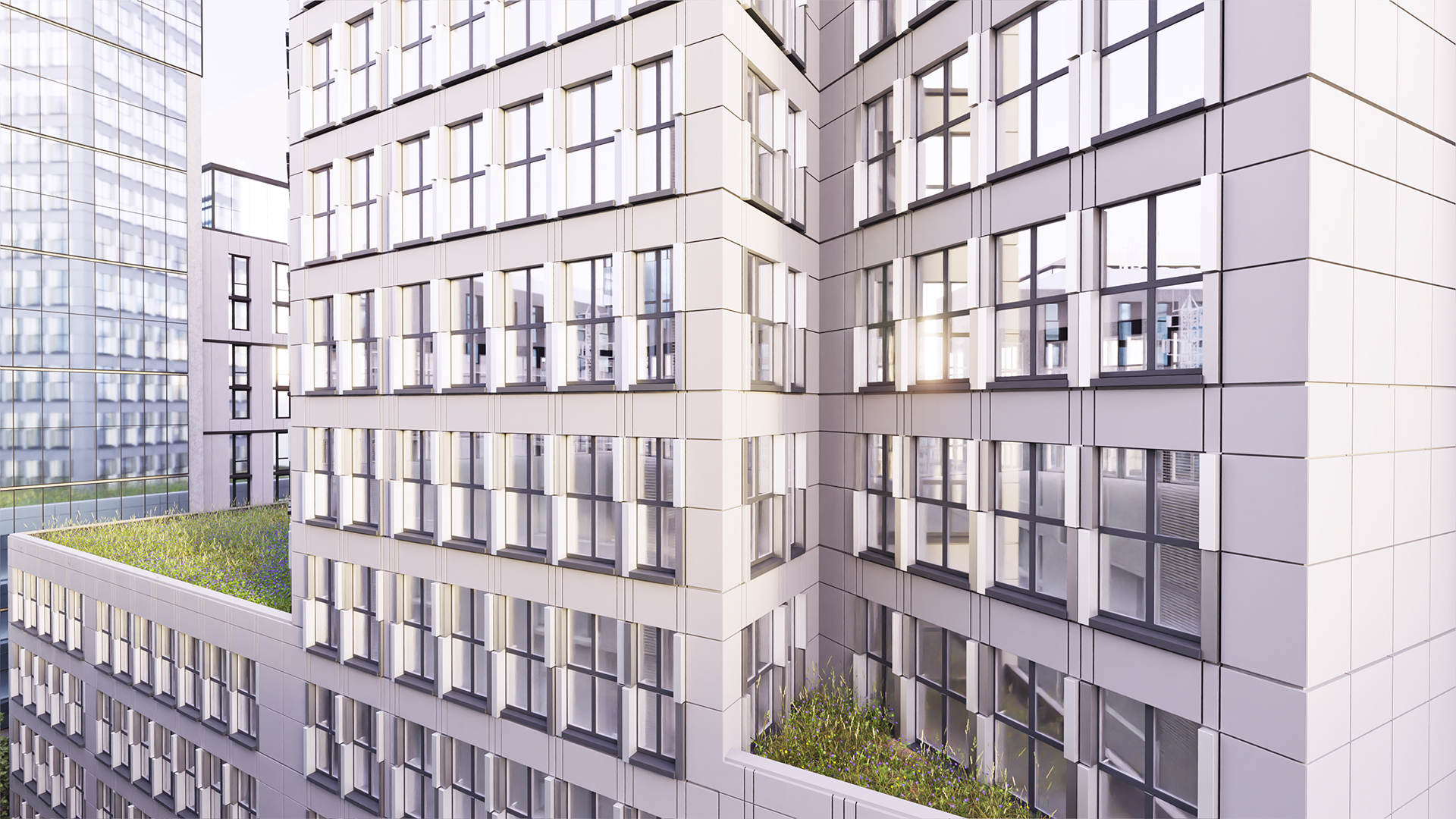
Images featured in this article depict Dextall's projects and are used for illustrative purposes only.
Sources














.jpeg)

-Compliance-for-NYC-Multifamily-%26-Co-Op-Facades.jpg)














_format(webp).avif)
_format(webp)%20(6).avif)
_format(webp)%20(5).avif)
_format(webp)%20(4).avif)
_format(webp)%20(2).avif)
_format(webp)%20(3).avif)


.avif)
_format(webp)%20(2).avif)