ART DECO
Reimagined in Terracotta,
Stone, and Brick
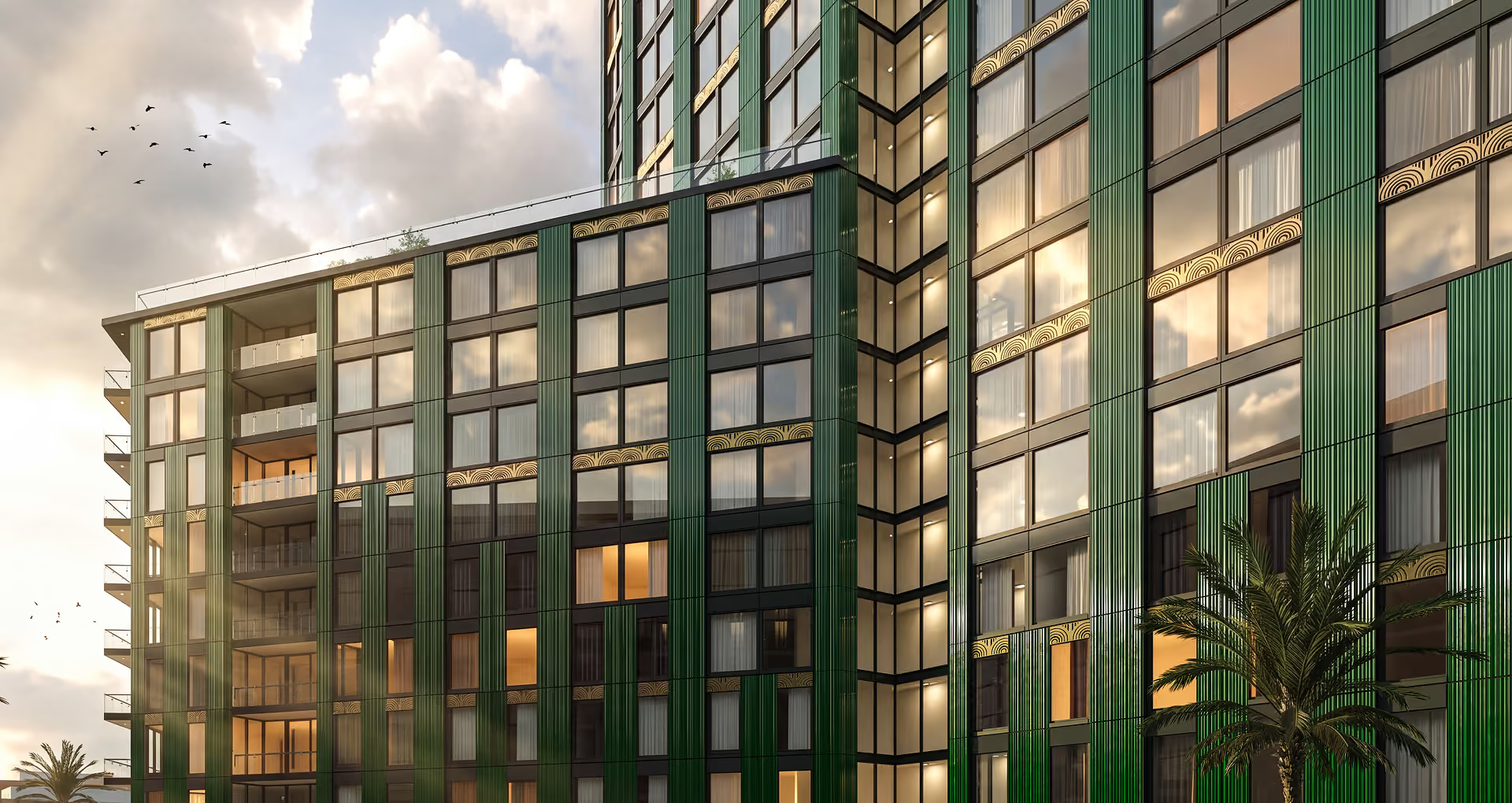
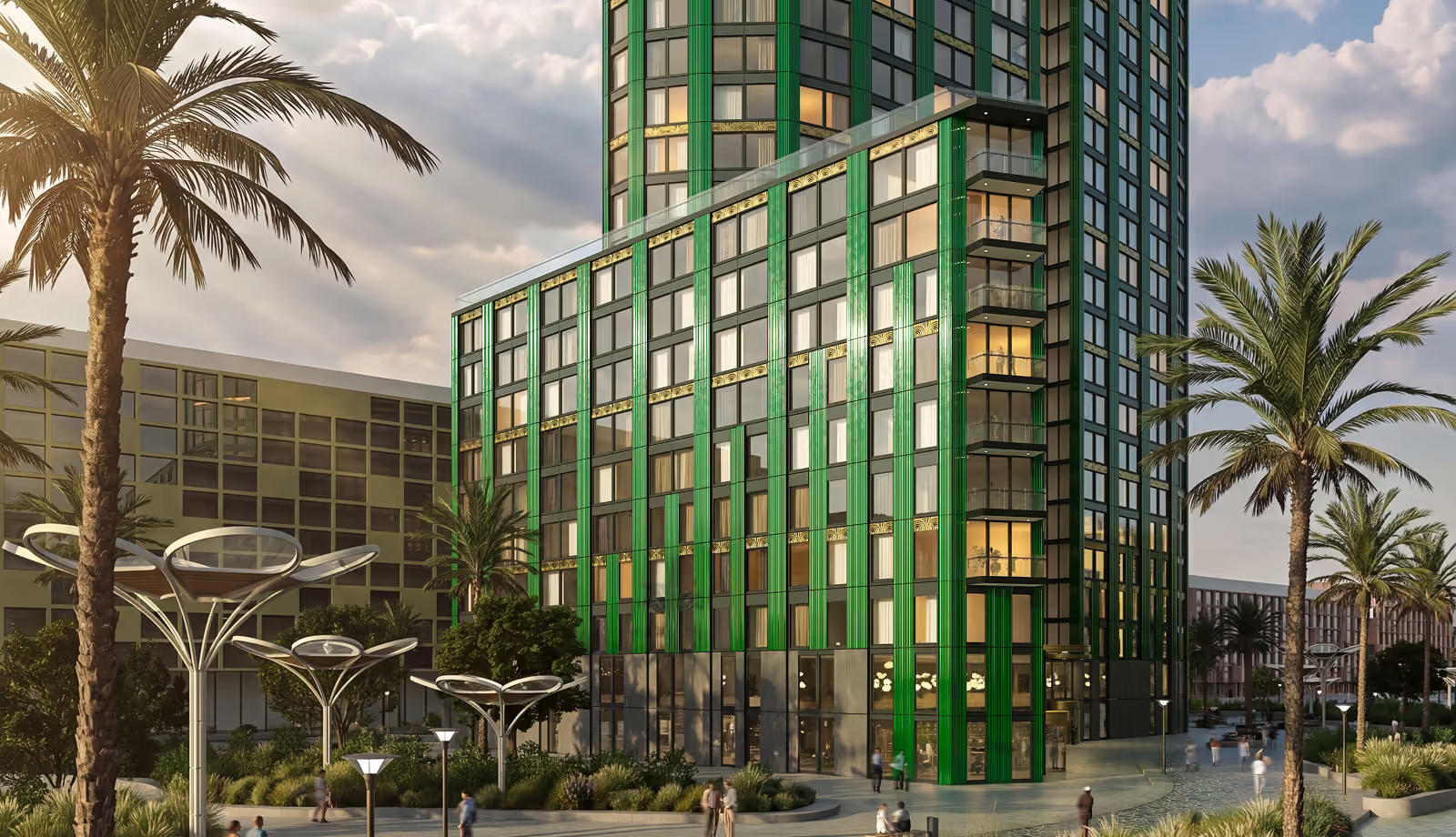
Thirty stories above a landscaped plaza, a tower rises in emerald — terracotta reimagined as something alive, its fluted piers catching light like folds of fabric, its gold spandrels glinting between windows like jewelry against skin. At its crown, the form splits open, framing a private terrace against the sky.
Here, Art Deco finds a new voice: the vertical drama, the tripartite composition of base, shaft, and crown, the unmistakable silhouette of 1925-1940 New York — all reborn in a color the era never imagined.
Rise, and What It's Made Of
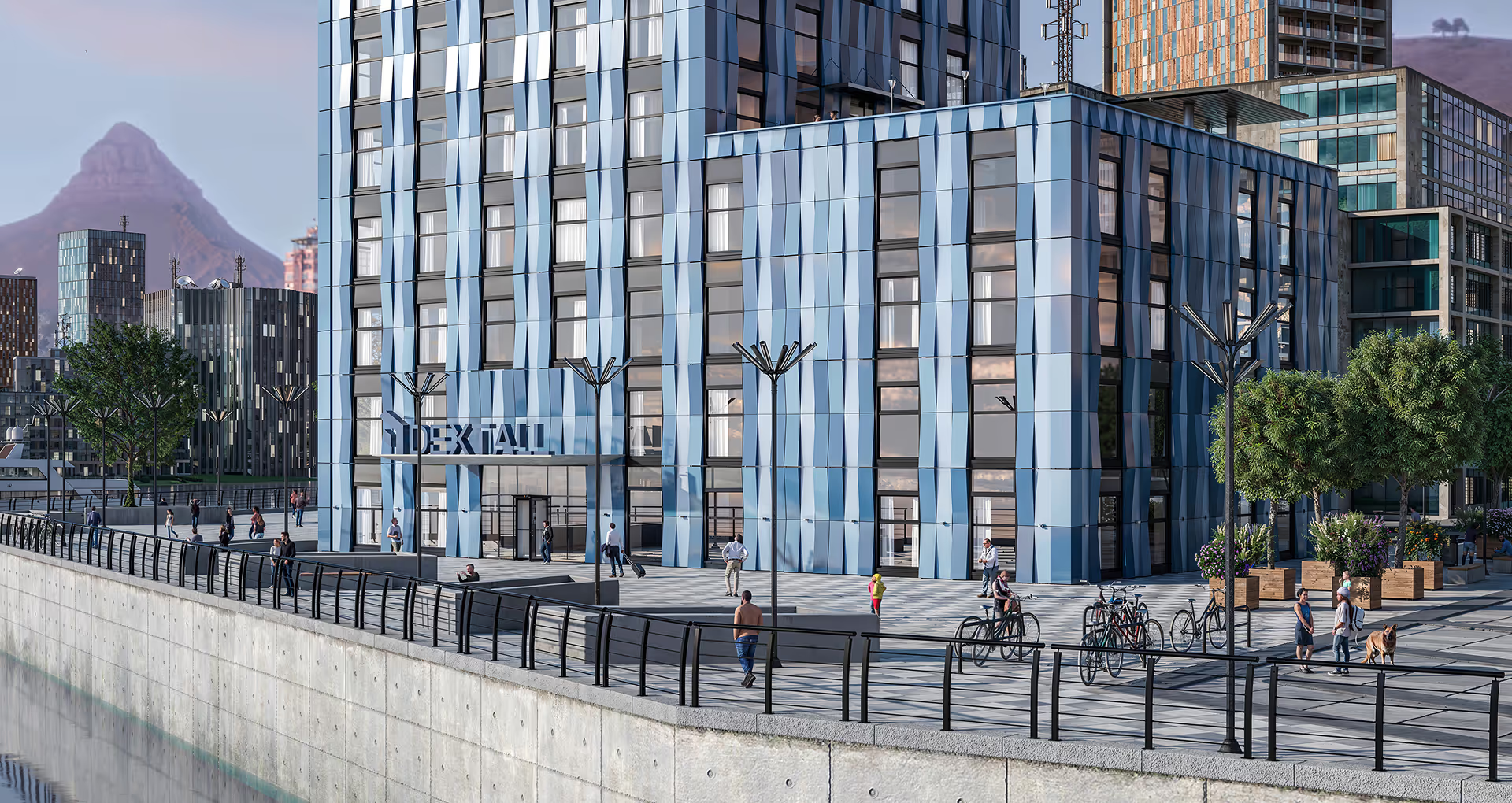
Seen from below, the tower doesn't just rise — it multiplies upward, its fluted green piers converging toward a sliver of sky like a forest canopy rendered in ceramic and gold. This is piered-shaft in its purest form: verticality made relentless, uplifting by design rather than accident. Turn the corner, and that same rhythm softens into conversation: glass meets metal meets glazed fin meets living green — the mixed material palette this facade depends on, each surface catching the late light differently, each edge a small negotiation between old craft and new performance.

One Language, Three Materials
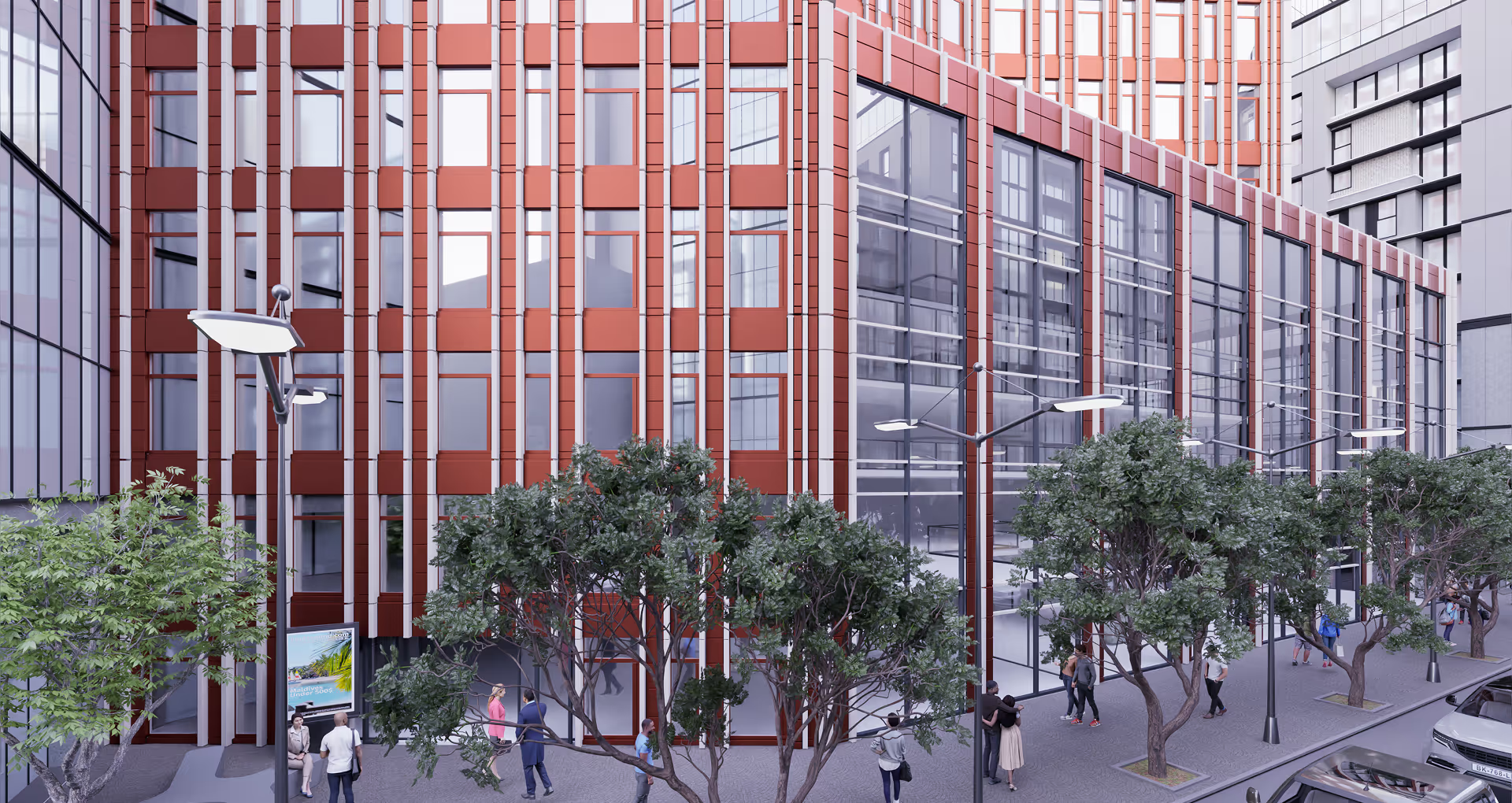
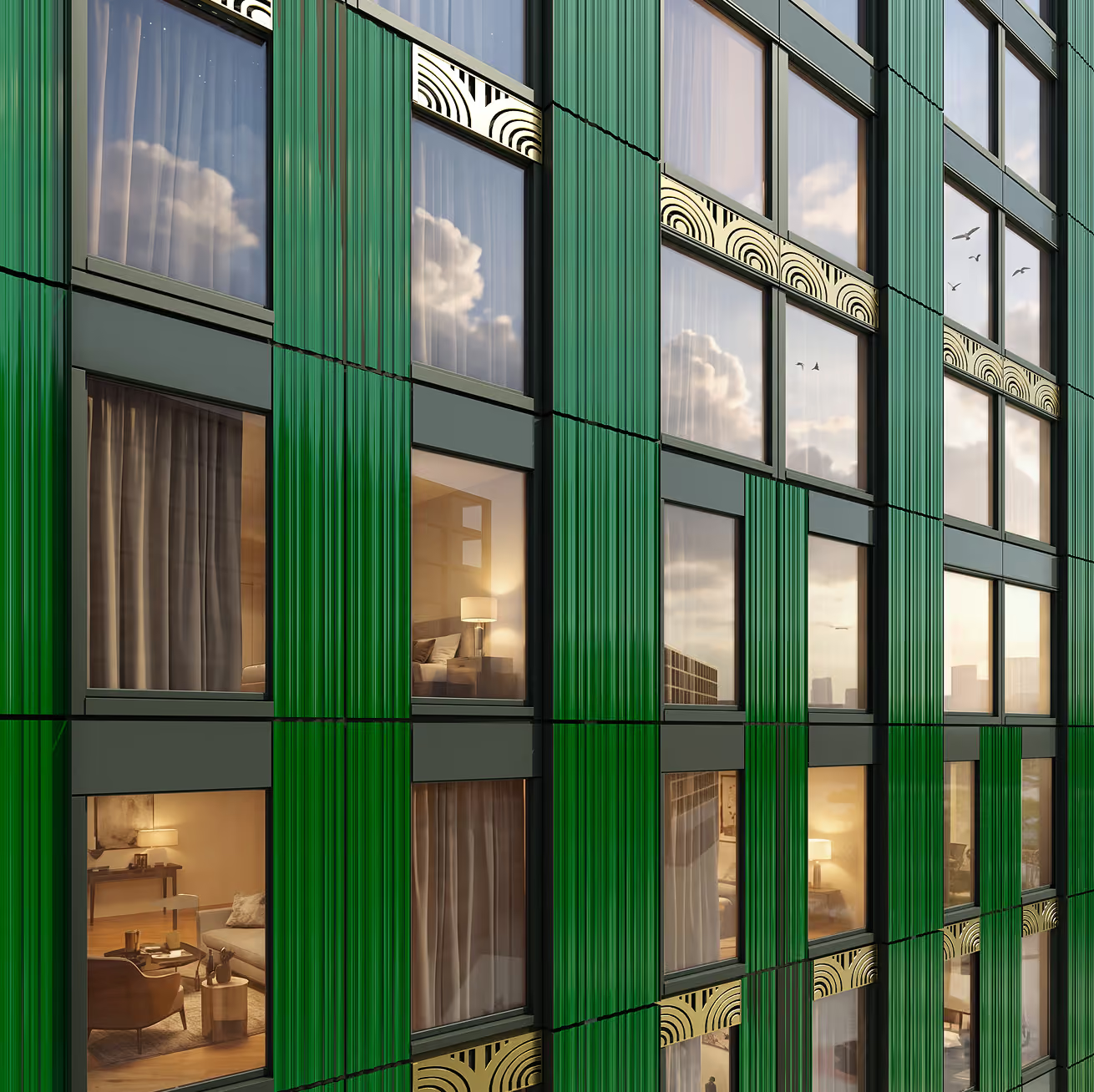
Terracota

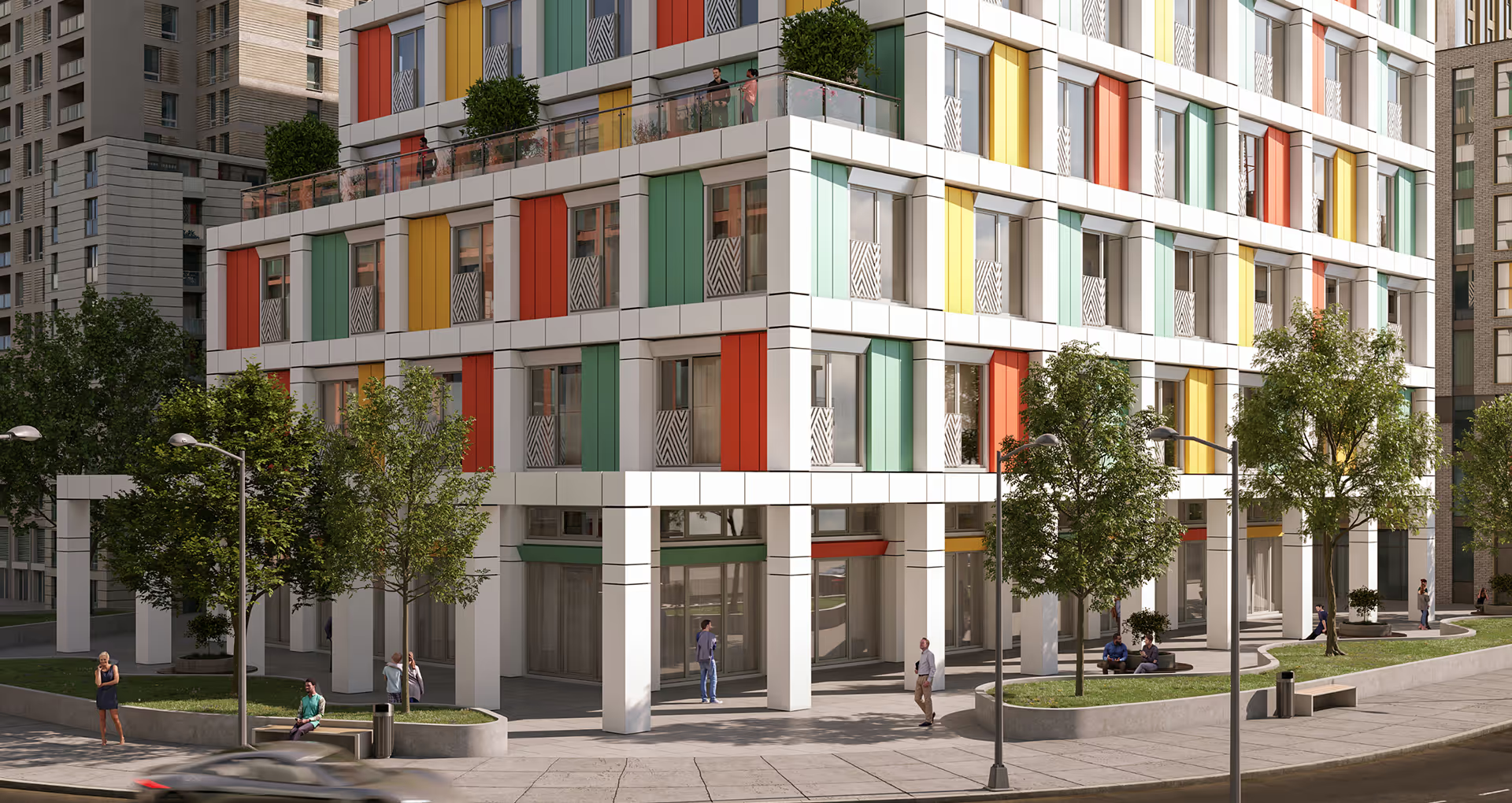
Stone


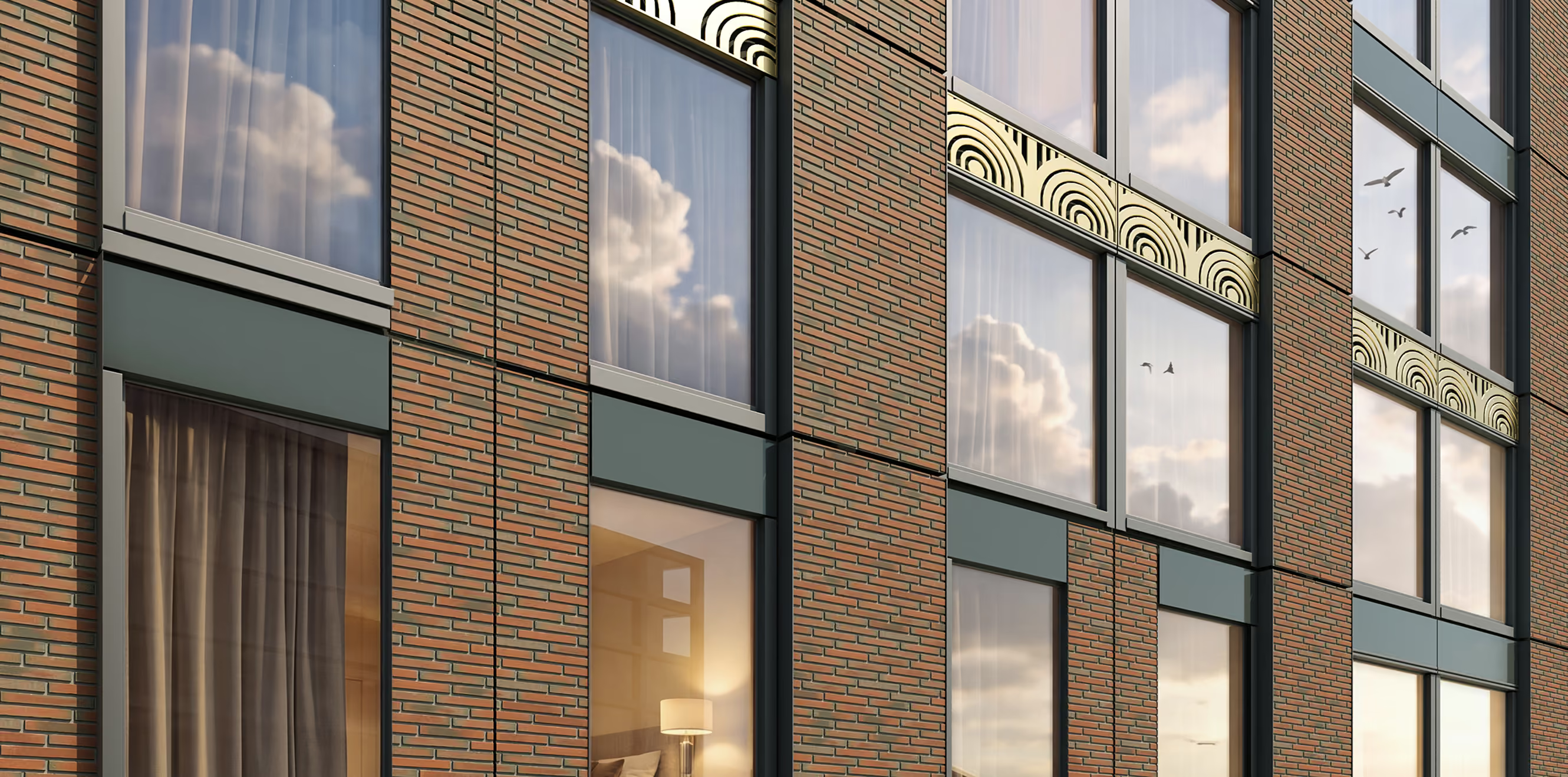
Brick
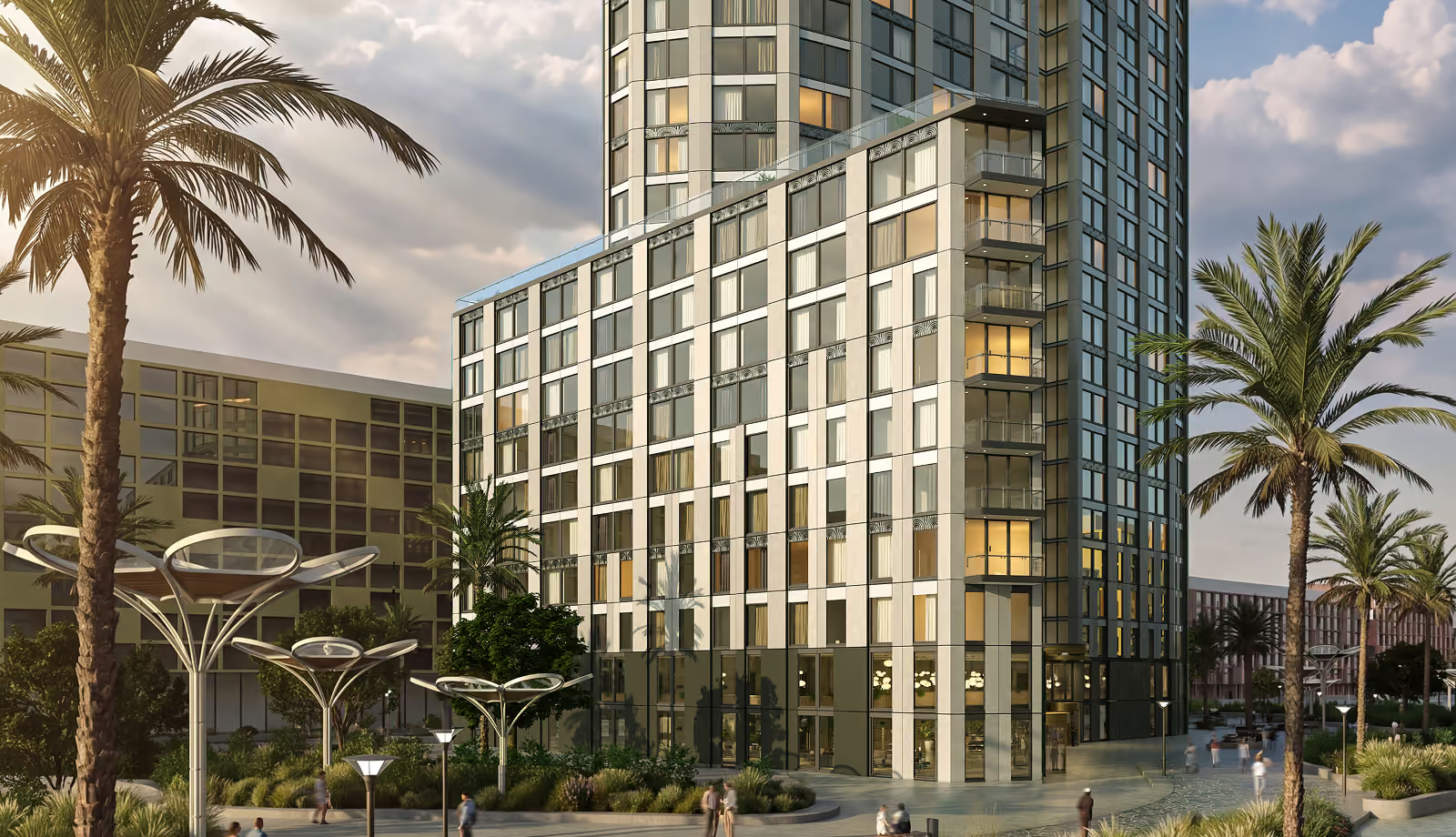
At street level, the tower settles onto a solid stone base — a polished-plinth grounding all that verticality exactly where people walk, sit, and enter.
Above the entrance, a brushed brass canopy echoes the revolving door below, that same metal reappears as a scalloped ornamental-spandrel between window courses — a deliberate counterpoint to the cool green fins framing it.
At the corner, the tower's verticality yields to a polished-plinth — smooth, grounded, and lit from within by lobby chandeliers, where the facade stops reaching upward and starts meeting the ground.


The piers never pause — even at the setback and terrace break, that rhythm stays continuous, running straight through balconies and glass from base to sky.